Like most authors, I am both excited and terrified when, upon hearing that I’m an author, someone will ask, “So what kind of stories do you write?” Suddenly, I become this person with whole worlds and characters in her head who immediately morphs into a tongue-tied, introvert. When you’re an author of fantasy, especially romantic fantasy, there’s this fear that the general population will, at the least, think you rather silly, or at the worse, smile and give you that vague “how nice” before politely changing the subject..
The conversation gets far more interesting when I try to explain that my debut novel is about a female tooth fairy. Their general response is usually something along the lines of, “oh…so you write children’s books.” Explaining that my books are actually romcoms written for adults always raises a few eyebrows. This is because modern pop culture equates a fairy, or “faerie” in its archaic spelling, as a happy, helpful, tiny winged creature, portrayed most famously in the 1953 Disney classic, Peter Pan, and exclusively in the domain of children’s stories. According to mythological tradition, nothing could be further from the truth.
Faeries, or the Fae as they are sometimes called, have been part of oral and written literature long before J. M. Barrie wrote his play about the boy who refused to grow up. There are ancient references to faeries in Greek mythology, also called dryads and nymphs, who it was said were created by the gods and goddesses to care for the well-being of the earth. The earliest mention of faeries in English literature is often attributed to the historian Gervase of Tilbury, who described these magical creatures in his 13th century writings. The concept of faeries, however, were part of the oral story-telling tradition of many cultures for hundreds of years before Gervase was born.
These ancient, mythical creatures are a far cry from the sweet, wood-dwelling benefactors so many are familiar with. Pre-modern Fae folk were originally feared as being magically powerful and quite dangerous, and they could be both kind to humans as well as cruel and mischievous when they felt insulted or ignored. Early Fae were described as human-like, wingless creatures of captivating beauty, and no matter which culture you research, general knowledge argued that it was best to leave the faery folk be, lest you incurred their wrath.
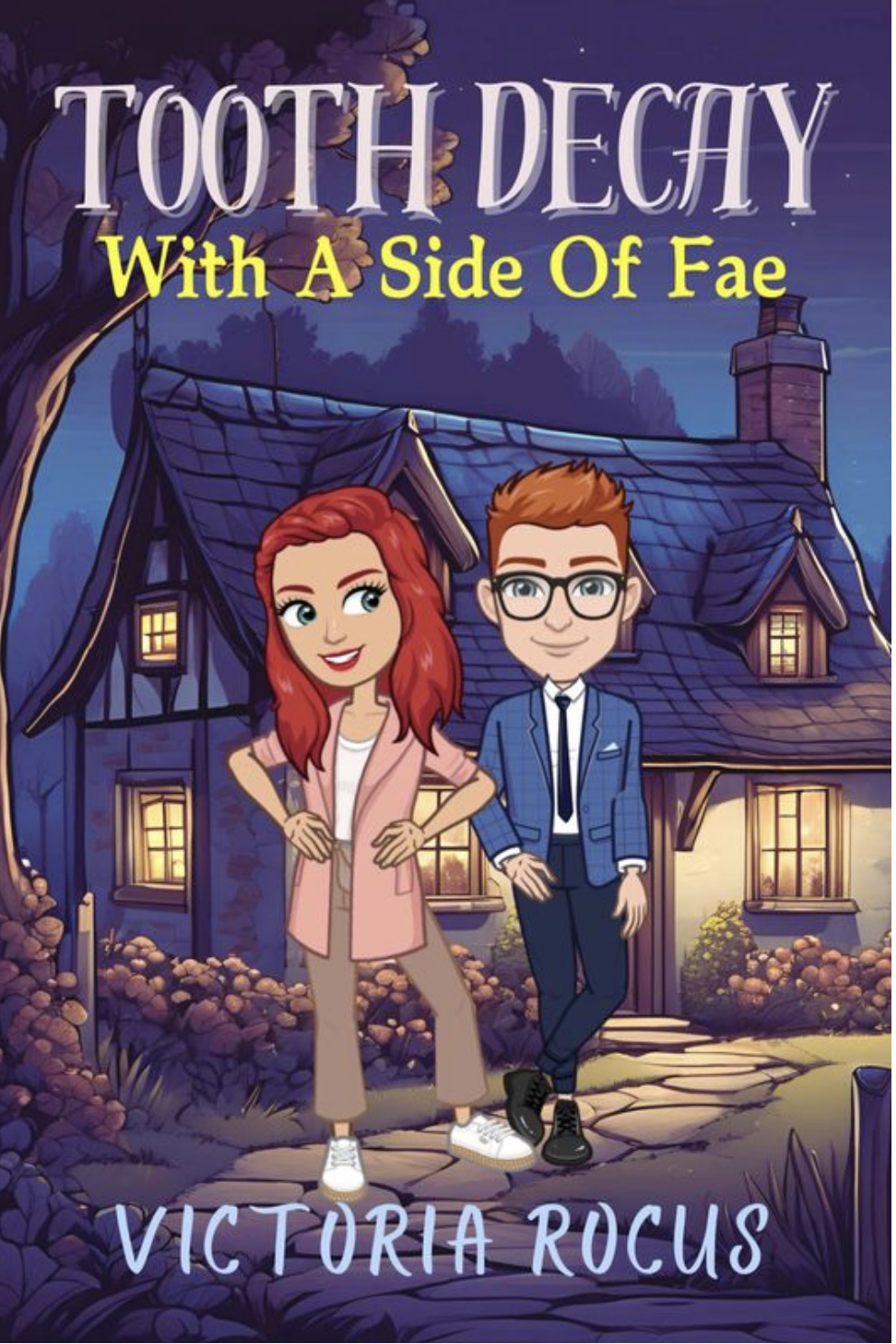
Some of my favorite faery stories are found in Celtic mythology, the old stories of Ireland, Scotland and Wales, which has since become the foundation for the world and character building in my Tooth Fairy Chronicles, as well as its sister series, The Merlin/Morrigan Tales, which is currently awaiting future publication. Originally, these mythological beings were said to live in “faery mounds” found all over Ireland. However,within my own imaginary Otherworld, these Sidhe, a Gaelic word for the mysterious Fae folk, have lived among the human population for over a thousand years, with the Fae Otherworld being separated from the “Mundane” world by a magical “Veil” that can only be breached by those possessing a genetic Otherworldly bloodline. For example, the main character in Tooth Decay With a Side of Fae, Dr. Rosie Parker, D.D.S., is a tooth fairy through her mother’s family tree even while she is her mom’s second daughter, her older sister not possessing a single cell of Fae DNA, and thus born without any magical ability and unable to cross the Veil. In my version of Otherworld social hierarchy, tooth fairies are at the lowest level of magical power and skill, with most of them having a mixed human and Fae bloodline, while their Otherworldly abilities are only available to them from sunset to sunrise due to the interference of the sun’s metaphysical energy. This is the reason tooth fairies have the job they do, collecting the baby teeth at night, which are then used for ritual magic in the Otherworld. Without giving away any spoilers, let me add that in my story, humans in the Mundane world also greatly desire these baby teeth, but that’s all I’m going to say about that in this post. 😉
On the other side of the magical spectrum lie the Tuatha de Danann, the “ shining ones,” who became the mythical heroes, kings, queens, and warriors of the ancient Celtic world. Most of the writings we have about this race of supernatural beings comes from the literature of the medieval age and were likely written by Christian authors. Thus, the Tuatha de Danann are often described as “fallen angels” who sided with neither God nor Lucifer, and were therefore forever punished by being sent to our earthly world. Other historians of the time consider them to be humans who had somehow found the secret to immortality while conquering the bending of energy to will, i.e., “magic.” Because of these abilities, they were often worshiped as gods and goddesses. There are even some very controversial historians in our modern culture who argue that the Tuatha de Danann were actually alien visitors who sought out human mates and left behind gifted mixed-blood offspring. As I said, that hypothesis is still very much in the minority of educated thinking..
No matter which theory you might find plausible, there’s no denying the stories of the Celtic Fae are captivating. Like their counterparts in the Greek Pantheon, the gods and goddesses of Ireland, Wales and Scotland are portrayed as having the same emotions as their human brothers and sisters. Their tales are rife with burning lust, blinding jealousy, and destructive greed, and it’s no secret that in these old tales the Fae were more than willing to share their “affections” and bloodline with the human population, thus creating a wealth of demi-god characters with a foot in both worlds.
One of my all-time favorite characters is The Morrigan, the goddess of war, destruction, and fertility who had the ability to shape-shift into a raven. Some ancient writings describe her as part of a triple goddess, Badh, Macha and Neiman, representing the feminine life cycles of maiden, mother and crone. She’s undoubtedly one of the most powerful female figures in the Celtic tradition, and one I found I couldn’t resist adding to my stories. In both of my fantasy series, The Morrigan is the current Queen of I Idir (“The In Between”), the Otherworldly kingdom the Fae call home. She plays the role of “Puppet Master” in my tales, pulling the strings behind events that change the lives of her subjects and subtly threatening them when they don’t comply. She’s a wonderful character to write, morally gray while being equally hero and villain.
Celtic mythology is also loaded with tales of other Fae creatures: Brownies, Pookas and Selkies, to name just a few, all with varying degrees of magical ability and roles in the Otherworld hierarchy. I’ve been able to add these colorful personalities and histories to my ongoing stories, making them all subjects of The Morrigan’s kingdom.
Even if fantasy is not in your normal reading wheelhouse, my Tooth Fairy Chronicles offers you a chance to enjoy these fascinating ancient tales without the sword battles and complex magical systems people usually associate with the high fantasy style of Lord of the Rings or Game of Thrones. I often joke that I write “fantasy stories for people who hate fantasy.” My characters regularly move their settings back and forth between the urban modern world of today and the Regency-style Otherworld of my imagination, often leaving professional “Mundane World” day jobs as doctors, lawyers and accountants to cross the Veil and partake in a living fairytale-like existence. As Dr. Rosie Parker, the main character of the Tooth Fairy Chronicles, has been known to say, “Going to I Idir in the Otherworld is like going to a Ren Faire on steroids… where everyone is busy throwing magical energy all over the place.” If you’re looking for something just a little bit different, with plenty of adventure along with some swoony, slow burn, closed door romance, maybe you should give the first book in my tooth fairy series, Tooth Decay With a Side of Fae, a try. I guarantee you won’t be disappointed.
Tooth Decay With a Side of Fae Releasing October 21, 2024 Available for pre-order
Tooth Aches and Wedding Cakes Releasing November 18, 2024
Also available from Serenade Publishing
Author Bio:
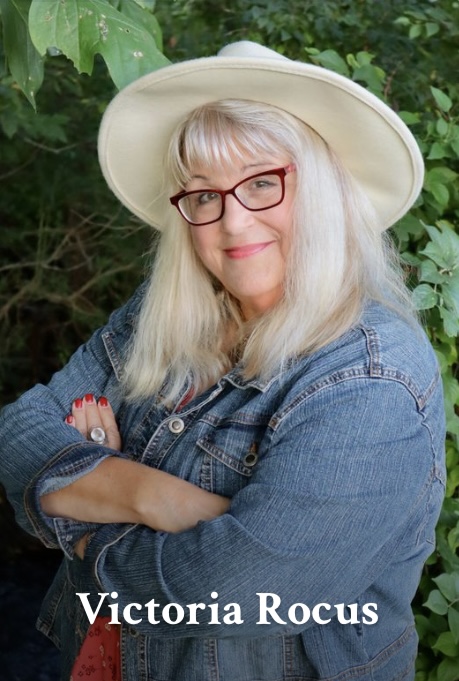
Victoria Rocus is a retired educator, accomplished miniaturist, and full-time author living south of the home of country music, Nashville, Tennessee, USA. When she’s not writing new adventures for her imaginary friends, catering beach parties for mermaids, or finding homes for orphaned dragons, she’s building and rehabbing one-of-a-kind dollhouses and accessories, just like her favorite character, Dr. Rosie Parker. Many of these miniature buildings are 1/12 scale replicas of settings from her many fantasy stories. Victoria started her writing career as a weekly blogger while still teaching middle school language arts, and once retired, she’s been able to make writing a full-time adventure, penning several fantasy and romance stories for a popular serial platform currently available only in the US. Tooth Decay With A Side Of Fae is her debut novel and the fulfillment of a life-long dream.





 Mariella Hunt
Leave a comment