• This random bit of fiction I started writing for fun will be a novella soon. Over the course of four days, it’s grown into a plot full of potential, and it’ll be a lot of fun to expand. If you’ve been reading it all this time, I hope you enjoyed it, and thank you!


    “Stop lying. What do you see in the mirror?” the looking-glass faery demanded, taking a threatening step closer to the man, who peered into the reflection with uncharacteristic interest.

    “Why would I go to the trouble to lie?” asked the traveler. “I see you in this reflection. You’re standing in my way. Whatever does it mean?”

    Wrenching the looking-glass away, she looked at the surface, determined to prove he was making it up. Then she let out an exasperated sigh—because when she looked at her reflection in the glass, she was indeed standing in the traveler’s way.

    “How difficult can it be to tell me what you see?” she cried.

    “I told you what the looking-glass showed me. Do you not see it, too?”

    The faery glared at her reflection in the mirror, so deceptively like what the traveler claimed to have seen, and something inside of her snapped. She’d been deceived a third time, and could not find in her the energy to keep arguing.

    She hurled the looking-glass against a nearby tree and listened to it shatter. Never again would she read a mortal’s fortune. Never again would she stand on this road waiting for new clients. This traveler had taken the joy and passion out of her gift.

    “Well, then,” she said furiously, “if in your future I am in your path, I intend to follow you for the rest of your days.” With a wicked grin, she took a step closer. “Don’t you wish you’d been honest with that reflection now? You will never get away from me. Never!”

    But the traveler’s eyes shone with amusement. “No, I’m quite glad I said what I did. I’ve always wanted a travel companion. Don’t you wish you would be more careful with your words?”

    “You will pay for this!” the faery cried, taking another step towards him.

    “I suppose we’ll have to see,” said the traveler with a boyish grin, “won’t we?” And he broke into a run up the road, laughing at her anger.

    The faery could not leave him alone—it was against her nature to break a promise, even one made by accident. She would prove herself to be a horrific travel companion. She would make him pay for having outsmarted her three times.

    Revenge in her heart, she stormed after the traveler, leaving the shattered pieces of her looking-glass in the forest behind her.

    The End

  • The Looking-Glass, Part III


    The traveler returned on his own a day later, his nephew nowhere to be seen. He closed the distance between them, watching her with bored acceptance. “Fine, then,” he said. “We made a deal. Where’s the looking-glass?”

    The faery didn’t reply immediately, puzzled. She’d grown accustomed to superstitious villagers seeking her out for her ability. This man’s lack of interest was almost offensive. She eyed him suspiciously for several heartbeats.

    “I sent the boy to find you,” she said, stalling. “Where is he?”

    “Oh, him? He can’t find his own head,” came the nonchalant reply.

    “I sent him on a specific mission to find you. I should track him down.” Once I finish my business with you, she added silently.

    As if he had heard her thoughts, he asked, “Why does it matter whether you see my fortune or not? I’m one person.”

    “You’re not special, if that’s what you’re asking,” she said irritably. “Your fortune is probably gray and dull. The only reason I need to read yours is because you made me agree to a deal—that I would wait here for a week and then you would look into the mirror.”

    “Is that it?” asked the traveler, looking surprised. “You can’t find a loophole? I thought the Fae were oathbreakers.”

    Ignoring that remark, she continued. “I’ve never yet broken a promise, trivial as it may be. Until I finish my business with you, I cannot leave this spot on the road.”

    “I see,” he said, putting his hands in his pockets. The faery didn’t like his thoughtful expression as he continued. “Out of curiosity, what would happen if I walked home now? Would you be forced to wait another week?”

    The looking-glass faery clenched her fists, resolving never to make a deal again. If someone refused to look at their reflection, she would not agree for them to return. It wasn’t worth the trouble of hunting them down.

    “And what would happen if you broke a promise?” he continued, ignoring her glare. “Would you lose your wings—or worse, your looking-glass? Why is it so important for you to be honest about giving away bad fortunes?”

    She ignored his questions, holding out the looking-glass, hoping it would hide the desperation on her face. “Aren’t you a little bit curious about what you’ll see? It could answer a question about your future. It could settle a mystery from your past. It may open exciting new doors, or close dreadful old ones. Take a look, and tell me what you see.”

    He peered at her for several seconds, with an expression she could not trust. She held her breath, prepared to fight him if he tried to walk away again. It was a great surprise when he looked into his reflection without arguing any more.

    The faery waited, heart pounding. She could finally get off this road and go somewhere else. She would never come back.

    The traveler cleared his throat and said, “I see you.”

    To Be Continued…

  • The Looking-Glass, Part II


    Read the first part here!


    In the week that followed that deal, curiously few pedestrians passed on the looking-glass faery’s dirt road. She sat on a fallen log, waiting for someone to do business with; all she got was a chill and a cranky temper.

    It was evening on the seventh day when the bored traveler returned, deep in conversation with a younger man who accompanied him. The faery stood and waited for them to meet her. She’d been thinking about his fortune for days now, and was determined to read it.

    When the traveler spotted her, he rolled his eyes. “Still here, I see.”

    “We made a deal,” the faery retorted, “and I’ve been waiting for a week. Now I will see your fortune.” She held out the looking-glass.

    “Sitting here for a whole week?” he asked, glancing at the young man, who smirked. “Don’t you have somewhere to go?”

    The faery spoke through gritted teeth, glaring at him. “Take—it!”

    He laughed. “She swears she’s going to tell me a truth that’ll disturb me,” he told his companion, “if I just look at my reflection.”

    “Oh, really?” The young man looked curiously at the glass. “Does it have to be disturbing?”

    “That depends on the sort of person you are,” said the faery. “Do you want your fortune told, too?”

    He took the looking-glass and peered into his reflection. “Why would you pass up the chance to have your fortune told, Uncle?”

    “I was in a hurry. Do you see anything?” the traveler asked his nephew, who had the expression of wonder worn by other regular mortals. It was enough to calm the faery’s temper; she didn’t like thinking that somehow she’d lost her ability to charm.

    But his reply was surprising. “No, nothing special.”

    The faery narrowed her eyes at him. No one looked into that reflection without seeing something unusual; perhaps the two had made some sort of pact to drive her insane. “Have you taken in all the details?” she asked.

    “I have. Should I recite some kind of spell?”

    She took the looking-glass and wiped its surface with a sleeve, doubtful that it would help much. “Clear your mind and take a look at the reflection until something appears to surprise you.”

    He did, staring at it with a look of comical concentration. Rubbing away goosebumps from the chill, she waited, anxious to get it over with and hand the mirror to his uncle. They still had a deal to carry out.

    “I swear I don’t see anything,” he said, after several heartbeats. “Do you, Uncle?” Looking up, he frowned. “Where did he go?”

    Oh, I should have known. Clenching her fists, the faery turned and peered down the road, but the man she made a deal with was nowhere to be seen. He’d seized the opportunity to escape while she was distracted.

    “Go find him,” she told the baffled young man, “and tell him to come back, or I will trap you in the glass so you can see what’s in it!”

    He shoved the object back at her, pale with fright. At least one person still took her seriously. “No need for threats—I’ll go find him. Uncle? Uncle!” She listened to his footsteps as he thundered down the road, shouting at the top of his voice.

    The faery kicked away a pebble and sat on the log once more, blood boiling. She would read that traveler’s future, if it was the last thing she ever did. She would not be fooled again.

    To Be Continued…

  • The Looking-Glass, Part I


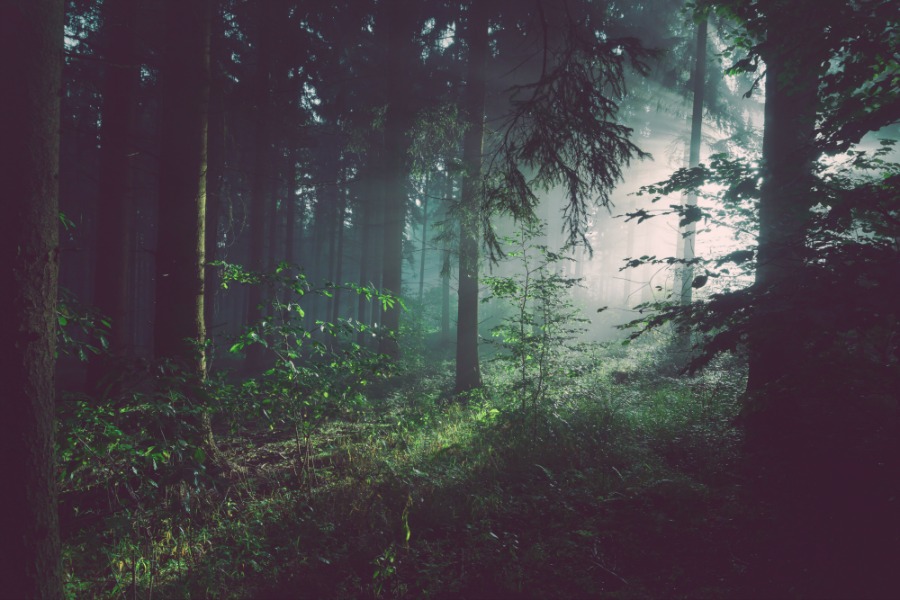
    Prose was inspired by this photo on Pinterest!


    “Fancy a glimpse into truth?” the faery asked. She smirked mischievously, holding a looking-glass to the face of a weary traveler. He’d wandered onto her favorite dirt road on the way out of the city.

    He crossed his arms, watching her with an expression not of surprise or fear, but annoyance. “They warned me I’d run into you here. They even placed bets on it.”

    “Well, you should’ve taken a different road, then.”

    “I’m not afraid of the truth.”

    Another smirk. “That’s what they all say.”

    “They also said you won’t let me continue on my journey unless I look into that mirror.”

    “That is not true,” she said, twirling a lock of her red hair with her free hand. She searched his face for the unease that was usually present when she spoke to a mortal, to no avail; he only looked at her like a pest to be rid of. “You can refuse the truth, but the choice will lurk in your memory forever.”

    “Will this mirror tell me anything I want?” he asked.

    She shook her head. “It will tell you what you most need to hear.”

    “Then can I come back later? On my journey back, perhaps.”

    The faery dropped her lock of hair, caught completely off-guard. “Well…”

    “I’ll even swear on it, if it makes you feel better. I’ll be back in a week.”

    She lowered the mirror, eyebrows knit in a frown. “One week, then. Though I’m sure there’s something you need to hear right now.”

    “No, thank you. I don’t want to be late.”

    With a polite nod farewell, he shouldered his pack, continuing on his way. Baffled, the faery sat down to wait, wondering if she’d negotiated herself into a poor deal. No one had asked to put off a reading before.

    To Be Continued…

  • The Faery’s Birthday Gift


    There was a long line of frustrated people outside of the movie theater. Rain thumped on colorful umbrellas, for those who cared to pack them. A few had come without umbrellas and were forced to wait in the rain.

    The weather was so unpredictable nowadays that it was hard to tell when an umbrella was needed. The day had been dry and miserable an hour before, sunlight bearing down on the town square where shoppers tried to get Christmas shopping done. Now it was wet and miserable; it seemed that misery was the only constant around here, and they couldn’t even escape reality at a movie theater anymore.

    “We should have gone to the theater inside the mall,” muttered Natasha, holding the yellow umbrella up over herself and her sister. Being the tallest had its disadvantages.

    “You were the one pushing for the cheap theater,” Jane said, hugging herself.

    Natasha wrinkled her nose as the rainfall intensified. “It’s your turn to hold this.” She handed Jane the umbrella.

    “Why? It’s for my birthday.”

    “But I drove. It’s going to be so wet in the theater. Maybe we should just get lunch somewhere.”

    Jane crossed her arms. “Two days ago, you said we were going to see—”

    “I know what I said. It’s not smart to make plans these days.” Natasha hoped it wouldn’t start thundering.

    The world had gone mad, ever since those buildings fell from the sky. It hadn’t even been here in Virginia; the strange phenomenon was in Florida, but seemed to have shattered every ounce of logic. The weather was so unpredictable, it seemed to be a person with real emotions. Anger came in the form of hot sun, sadness as pouring rain; she and her sister hadn’t had a real outing for months, but Jane made a special request for her birthday. The only two theaters still available within their timeframe were here and at the mall; they had to escape home while both their parents were at work.

    Jane would have to understand a change of plans for the sake of safety—right?

    Natasha eyed the movie posters, crossing her arms as she tried to work out the best decision. It was pushing luck to stand in line for more than five minutes anymore. People said that strange things happened when you were out in the open for too long.

    She took a deep breath and began, “How about we get some ice cream—”

    But Jane cut her off. “Did you see that?” she cried, craning her neck.

    Natasha looked with puzzlement at her sister’s wide eyes. “See what? There are umbrellas everywhere!”

    “I thought I saw a puff of smoke.”

    She swallowed, turning away. Her friends told stories of strange, colorful smoke appearing just before chaos. Tales filled the halls at school of curses and illusions striking those who stood out in the open, just like they were doing now. “I’m sure it’s nothing,” she said, feigning confidence. “Like I was saying, I have a coupon for ice cream at the place down the road.”

    The moment she finished speaking, there was a blur of pink before her very eyes, causing her to blink—smoke like her sister had described, and everyone at school who told stories. People stumbled away, proving to her dismay that she had not imagined it.

    From inside that blur of pink smoke, she heard a spine-chilling giggle. An echoing female voice said, “Ice cream sounds lovely.”

    Jane’s grip on the umbrella wavered. “Tasha?” she asked in a small voice tainted with fear.

    Above them, lightning flashed. In the flash of light that came with it, Natasha saw a willowy blonde woman appear before her very eyes, wearing a flowing pink dress matching the smoke she’d appeared with.

    “Surely you’ll invite me to ice cream,” said the woman, peering at them with steely blue eyes. “It’s your birthday, you say?”

    Speechless, Jane could only stare at her.

    “Everyone deserves a gift for their birthday!” the blonde woman cried, grinning. “How would you like a real escape? Not just a visit to a wet movie theater.”

    “Jane,” Natasha said in a low voice, “run.”

    Her sister did not seem to hear, or perhaps she couldn’t remember how to move her legs. She stood clinging to the umbrella, staring at the tall creature with horror.

    “Of course she doesn’t want to run away from a present. Who would? Now, you two look like you’d enjoy the woods…or perhaps the beach? Maybe you’ll enjoy both!”

    “No, don’t!” Natasha cried, but they were already being engulfed in a blinding pink fog. She waved it away, coughing, and reached for her sister but could not feel her anywhere. The sounds of rain and even the woman’s laughter faded, and she was falling, falling, falling through pink clouds.

    She passed out just before hitting the ground.

  • Excerpt: A Hundred Pages


    These days I really have been procrastinating edits by writing short stories. I’m not sure what I’ll do with them all, but some I am really happy with; I will be sharing excerpts. I don’t know how long all of them will be, and most will probably be serialized. Briony’s story is still in progress, but I already know the exciting direction in which her story will go!


    Few things were lovelier than rainy mornings. Briony knew her friends would disagree, but she looked forward to sleeping in while hearing raindrops thumping on the roof, curled up under thick blankets after dreamless sleep.

    However, rainy mornings were better on weekends. One look at the clock shattered the magic of the moment; Mom added to the effect when she knocked at the door and called, “Did you stay up late again?”

    Briony groaned and glanced at the book on her bedside table. “It was just a hundred pages,” she shouted back, forcing herself into a sitting position. “I promise.”

    “That’s what I said all the time.” Mom opened the door and peered at her. She did not look upset, but amused. “I guess I can’t scold you. Just get ready now.”

    “I will,” Briony said, smiling sheepishly. “Sorry.”

    “Oh, Bry.” Mom heaved a sigh of mock frustration. “Life has a funny way of repeating itself.” She closed the door with a soft smile.

    The cold air outside finally caught up to her. Shivering, Briony wrapped herself in one of the blankets and took a moment to ponder how just a hundred pages had somehow turned into two hundred. She ought to have saved the last chapters of her book for the weekend.

    It had been such a good book, though. She’d rushed through her math homework in order to start reading again—a first, since she was an avid hater of math.

    But Mom said that as long as she got homework done, she would be left to read all she wanted in peace. Briony was fortunate to have a mother who understood her weakness for a good story. Many of the books she read had been inherited from her mother’s childhood library.

  • Edits & Expectations


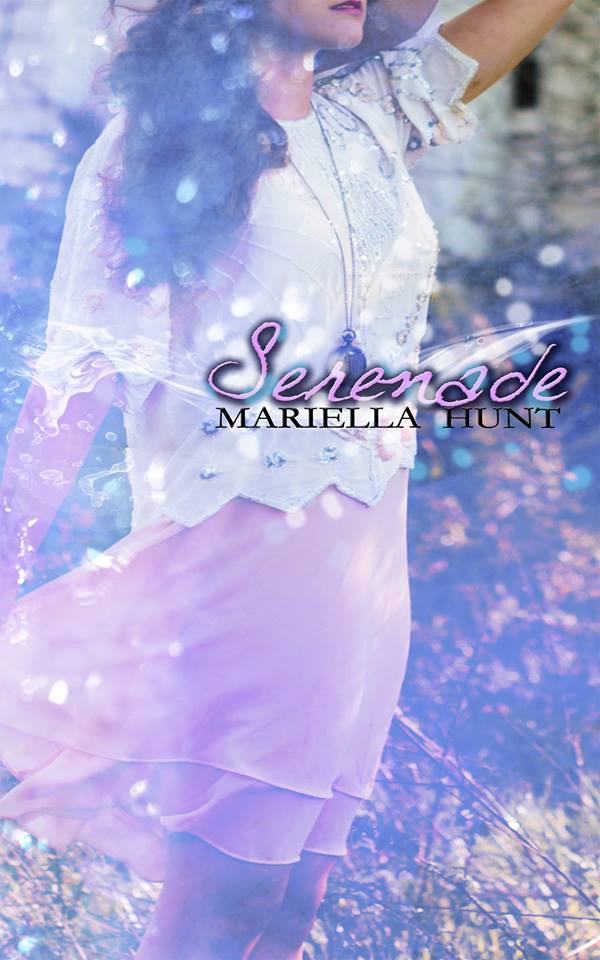
    I’ve been on hiatus for several weeks now. Yesterday, it took a long time for me to muster the courage to open Serenade and start final edits. Perhaps I was afraid it would need rewriting.

    In the past, I could only make my stories better by rewriting entire chapters. This time, it’s not the case. I worked hard to shape it up before the second beta round, apparently with good results!

    Once I got to work, I managed to control my impulse to over-edit. I don’t need to rewrite every sentence. Some need deleting, sure, and a word has to be changed here and there. Nothing drastic, though.

    skyfall

    With three chapters edited, I’ve managed to pick out some quotes that stayed in place throughout the drafting process, like the one above. Sometimes, though, it feels like I’m reading a chapter for the first time.

    That hiatus helped. Space is necessary if you want to make progress, once the time  comes to edit. It’s important to see your manuscript with fresh eyes. I’m happy with edits so far, and not scared like I was earlier.

    Do you follow a specific routine during the editing process? Is paper necessary for you to spot errors in your manuscript, or do you work better with the flexibility of a Word document? We all go about it differently; I’d love to hear your point of view!

  • Road to Serenade – Day 1


    When you’re a writer, time goes by slowly. Maybe it’s because we play with time in the stories we tell; everything appears bigger and full of mystery.

    It feels like years have passed since I started drafting Serenade. I completed the first version in early January, and in the time since then, I’ve learned a lot about writing and the story itself.

    I’ve been on a writing hiatus for several weeks, but it’s time to get back to work. Because of the second beta round, I have wonderful feedback to work with. Some friends were patient enough to read the manuscript twice, for the spring and summer beta rounds. I don’t know where I would be without them!

    On the first day of edits, I’m going to spend a lot of time rearranging my desk (hahaha…) and figuring out how to organize the critique. Each reader commented on different aspects of the novel, so I got to see it from many perspectives; I realized books take shape depending on the reader.

    I’m confident that, once combined, all the feedback will help me turn Serenade into a novel many people will enjoy. I already think it’s better than Dissonance, and the next book will certainly be better than both of them.

    I will be blogging as I edit, sharing excerpts and venting frustrations. Thank you for having accompanied me all year as I worked on this new story. I hope you get to read it soon!


  • slowly

    A while back, I was obsessed with learning to speed-read. I tried all these iPhone apps that supposedly help you read faster. I timed myself whenever I opened a book. I gave up on those weird apps almost at once, but over time did learn to speed-read.

    Though I’m not the fastest reader I know, I surprise people with how quickly I can finish a book. In many ways, it is a useful skill. However, sometimes I have to slow down and enjoy the novel I’m reading, word-by-word.

    It’s an exercise of patience, but when I’m reading a good book, it’s not too hard. Sometimes you love a book so much, you don’t want it to end.

    We’re not all the same, and things might be different for you, but here are my motivators for learning the art of reading slowly:

    1, I want to remember more. One of my favorite things about reading is when I can remember a story long after finishing it. If I can’t do that, I don’t feel that I’ve gotten all I could from the book.

    2. Magic survives into reality. Everyone knows that crash that comes after closing a good book, the shock when all the magic is gone and we are back in real life. When I speed-read a novel, the crash comes faster. If I take the time to better experience the adventure, it isn’t so hard–magic follows me.

    3. It improves my writing. When I read slowly, I’m able to pick up tricks the author used. I learn new words, get swept away in description, and put away plot bunnies to work on later. My writing is improved in ways I don’t realize until I work on my own projects again.

    I’m not saying you shouldn’t speed-read; we’re all different when we write stories, as well as when we read them. In the end, there is no right or wrong way to enjoy a book. As long as it takes you to another world, the rest is just preference.

    How fast do you read? Do you enjoy a story more when you read quickly, or take your time? Maybe you do both—let me know in the comments!


  • manuscript fright

    Writing a book is one of the most difficult things in the world. Having just finished a novel this week, I feel like it’s the most difficult thing.

    Even now that I have an almost-complete draft, putting it away for a month remains a challenge. My mind won’t settle; it keeps insisting that I have one more change to make, a change that can’t wait until my hiatus ends.

    To make matters worse, Serenade is a sequel. I have to check the first book, Dissonance, to make sure I don’t publish a sequel with contradictions. Because I’ve spent the last six months editing my work, I can’t even seem to get through my first novel without correcting each sentence, and it’s already published!

    Over time, our writing styles change. I don’t hate my writing, though—it’s more complicated than that. Sometimes I come across lovely passages and surprise myself, thinking, “Did I write that?” Other times, I struggle with the impulse to rewrite and edit everything.

    In theory, I could rewrite everything—it’s a benefit of being an indie author. That doesn’t make it the right choice, because no matter how many times I rewrite a novel, I will never be satisfied with my own work.

    If you’re a writer, you probably won’t be, either. Most writers struggle to recognize our own talent, because we are always comparing ourselves to other authors. It’s a wall we can’t get past.

    My voice will never be like Bestselling Author #1. My imagery will never be lyrical like that of Bestselling Author #2. I’d like to forget the feeling that they’re so much more talented than me, but my brain won’t allow it.

    The only way to get better at my craft is to practice, ignoring those thoughts.

    I keep writing, even though I never feel good enough. I keep writing, even though I can’t see my own progress. I keep writing, because I have stories to tell. I may not be poignant as Bestselling Author #3 now, but I’ll never improve if I give up.

    Besides, those bestsellers I compare myself to struggle with this, as well. Most writers are haunted by the very same conflict. In the end, it’s our choice—will we let the ghosts silence us, or will we continue on the storyteller’s journey?

    I’ve made my decision. It’s your turn.


  • As I stated in this post, when I am immersed in a writing project my blog suffers. It’s been weeks since my last post; every day I had the intentions of writing a review, since I did quite a bit of reading despite the writing and edits, but there never seemed to be time.

    Since my last post, I’ve made a surprising amount of progress with projects. Serenade went through heavy edits and will soon begin the second beta round. Not only that, though—in my free time after I finished the round of edits, I started a novella.

    Perhaps I had the story in me for so long that all I needed was an outline to help gain momentum. A couple of weeks after I started the project, I finished with a 41k manuscript. It’s a first draft nobody can read yet, but it was refreshing to know I could start something new and make progress.

    It’s related to Dissonance and Serenade—it’s a novella based on the character Meredith, whose backstory is powerful. It seemed fitting to give her a spotlight. I learned how different a character can look when seen through the eyes of another protagonist.

    Every writer should try seeing their characters from new angles, discovering strengths and weaknesses. It’s not necessary to write a whole book, but you learn quite a bit by exploring a different perspective for a few paragraphs.

    Later I will write a blog post about this. Today I just wanted to update the site so it isn’t so dead—I promise I was doing something productive! There are two manuscripts on the way now.

    I hope you’ve had a good summer so far! What books have you enjoyed most over vacation?


  • I’m taking another break from editing Serenade, and thought this an appropriate time for an update. I get so caught up in the editing process that I forget to tell people how I’m doing.

    I’ve learned many things since editing began, but perhaps the biggest lesson is that my books tend to be short. It’s been a cause of frustration, since I’ve always thought books should be longer as the series progresses (looking at Harry Potter as an example.)

    It means I fell into the comparison trap. If the Fallen Faery Tale series winds up being a collection of short, well-written books, I’ll be happy. Future readers will be happy, too!

    I’ve spent a lot of time worrying about what to do for my word count to increase. Whenever I focus on my book length, the story quality decreases. Not only that, I stop enjoying  the storytelling process.

    diss1

    What should I do? I’m going to let the story be. I can’t make a tale longer than it wants to be. It takes away from the magic of writing! Besides, some of the best books written are short.

    I’ve created a rule I’m struggling to follow: I’ll only worry about writing the amount of words required to tell a good story. It is not my goal to write a long story, but a good one.

    Don’t get me wrong—long books are wonderful, too. I just haven’t come up with a plot that could comfortably stretch into one. There are some plot bunnies whispering “it’ll be me!” but I’m refusing to look at them yet, as they would become distractions.

    My goal right now is to release Serenade. I’ve been working hard, which is why my blog lost momentum in the last two weeks. It’s all for a good cause.

    Until Serenade is ready, why not give Dissonance a try? Find it here!