
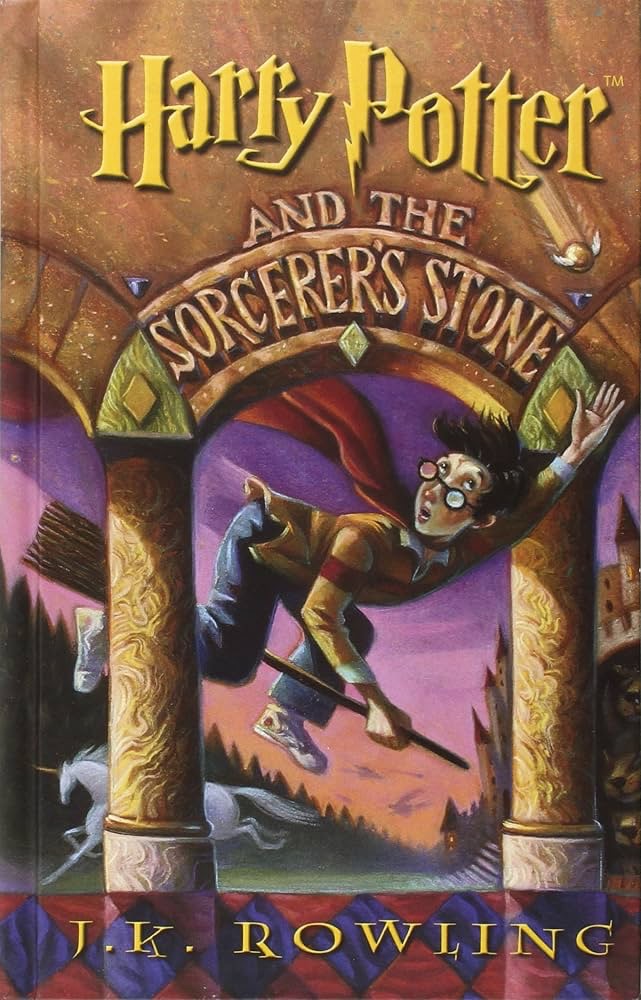
The last time I visited the Harry Potter books was at least ten years ago. Thinking back, I was so different then. I have a memory of visiting the mall during that time with people who are no longer my friends or even acquaintances. My hair was shoulder-length and I had dyed it blue-black. Indeed, I miss who I was back then; I miss what the world was like.
As the years creep by and we age, the novels that we love do not change. As our world begins to shift, what changes is how we experience an old favorite story, and the gifts that it gives us. Our emotional and spiritual needs will change drastically over the course of a decade. The best novels will have gifts to offer to both versions of a reader.
Harry Potter and the Sorcerer’s Stone hits differently at age thirty-two than it did in my teens and twenties. I have read many novels in that span of time, so I can no longer call this series my absolute favorite. I have enjoyed other stories that were better written and had lovelier prose. But Harry Potter’s adventures still stand out because they carry a specific sort of nostalgia. As a teenager, I was absolutely captivated by this series, to the point where, after all this time, that teenager has stayed at Hogwarts. I read the novels on a quest to find her again, now that life looks so different. As I struggle now, I picture her fighting a courageous battle with her school friends. At Hogwarts, her friends did not move on and forget her. This is the gift that the Harry Potter books continue to offer me, and so many other lifelong readers.
In the first book of that series, we also find some profound moral values. We are taught to say the names of things, even if we fear them, so that they have no power over us. We are taught the value of loyalty and of courage. We are taught the true power of a mother’s sacrificial love. No doubt other readers have composed more detailed lists of these morals; they are things that a young reader will take with them into adulthood as life becomes more difficult.
In many cases, adulthood makes it so much harder to practice courage. It is also difficult to be loyal and steadfast when we grow up and apart from one another. It is difficult to dream at all as a grown-up, let alone believe in magic. We are caught in only one spell: that of endless scroll and instant validation. I often wonder if the Internet might be more of a curse than a spell.
Reading as an adult, I reacted differently to some things. The Dursleys are still dreadful, of course, but those first chapters now read like exaggerated comedy. I also could not stop wondering at how badly Harry and Ron treat Hermione at the beginning. Did they feel threatened by her? Perhaps, but it soon becomes clear that they would not get very far on their adventures, or even on tests at school, without her help.
I found myself wondering, why do only some people in this world return as ghosts? Why can’t the people in photos speak, if they are able to move and even walk out of the frame? How is it that kids are not allowed to practice magic outside of school, yet many First Years claimed to have flown on broomsticks?
I wondered these things, but I know that some fiction asks readers to suspend disbelief. I do not need to know these things to enjoy the story. We could not enjoy anything in life if we demanded explanations for each detail.
We do not have magic wands in real life, nor can most of us have pet owls. But this book reminds us that we do have control over some very powerful things. This includes our ability to love, the free will to help others, and the self-respect required to say the name of our greatest fear. We can control our reactions to the dizzying changes that beat us so mercilessly as we grow. We have the wisdom to keep learning, even if there’s a nagging fear that we’ll never be good at anything. Perhaps we cannot go to Hogwarts, but there is always something to learn.
I am moving on to the second book in the series, pulled by the nostalgia, hoping to find the old version of me in those pages. I hope that it will make me stronger. I have always wanted to be like Hermione, and I find hope in her for a new reason: she struggled for a bit, but stayed true to herself, and still earned herself loyal friends.
Ten years ago, I was a Ravenclaw. As I read on now, I’ll discover if one’s House changes over the years as one ages. I feel like I have returned home, the home of a beloved book.


Leave a Reply