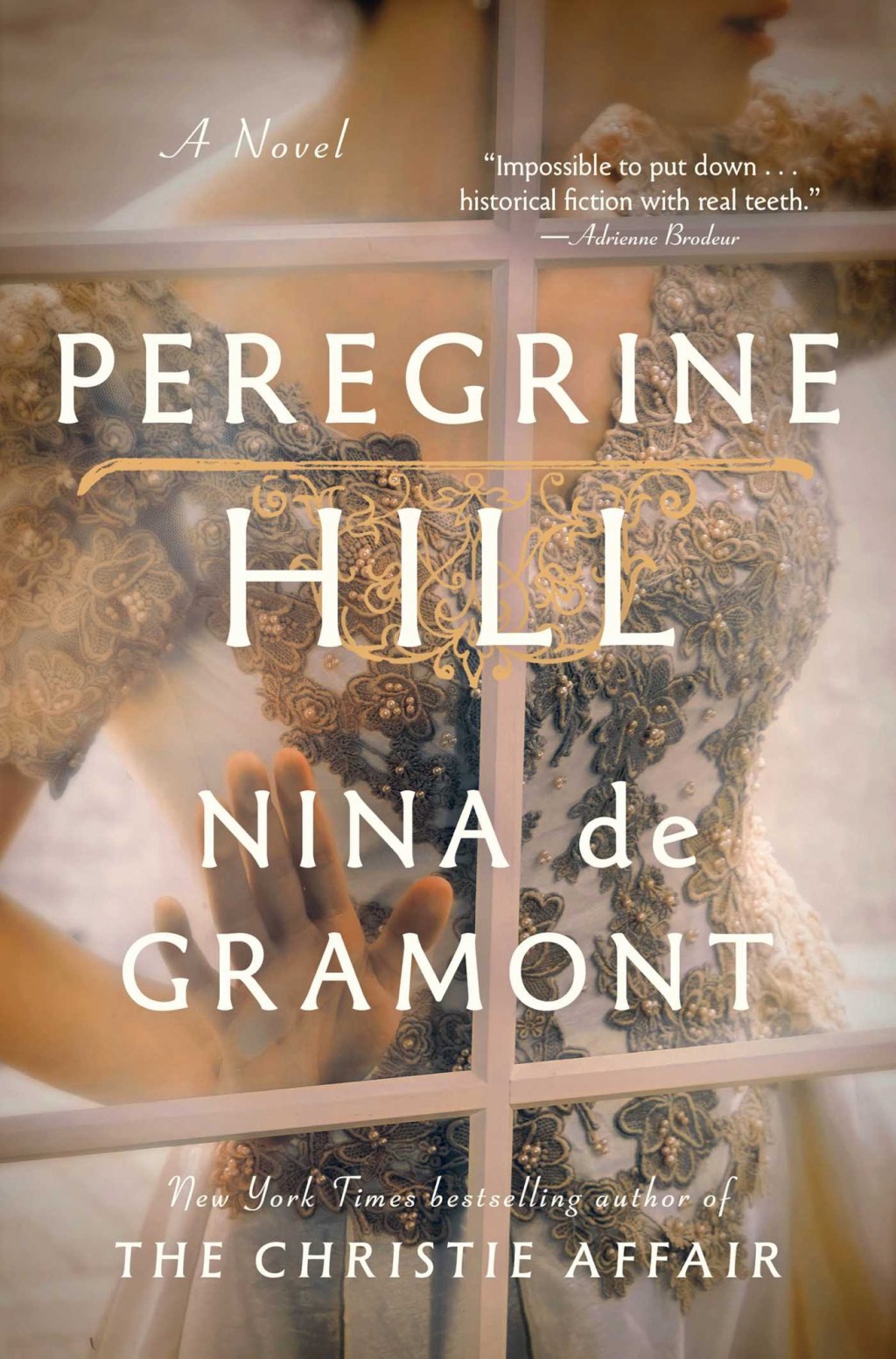
I believe this to be the third novel I’ve read in 2026 set in the Gilded Age. Along with An American Beauty by Shana Abé and The American Heiress by Daisy Goodwin, Peregrine Hill offers the sort of drama unique to such novels, and to a time period when certain wealthy families tried clinging to the lives they knew, even as the world around them was rapidly evolving.
The novel begins with the viewpoint of Isabelle Bishop. After a tragedy claimed the lives of her husband and three of her children (they perished in a shipwreck), Isabelle has been working to provide for herself, her elderly mother, and her one surviving daughter, nineteen-year-old Mariah. Mariah has already proved to be difficult: after a confused affair with a wealthy man, she became pregnant out of wedlock. Isabelle has managed to find a new home for the baby but has not fully forgiven her daughter.
Neither has society. Isabelle has been trying to win over the elderly Mr. Whitten, one of New York’s wealthiest men. But when at last he agrees to a marriage, it is not to Isabelle but to Mariah. Somehow, he has found out about the baby; if Mariah should turn him down, he will release her secret to the public and shame her. Isabelle sees no better option than to force Mariah into this marriage; in doing so, she loses the love and trust of her only surviving child.
At Whitten’s home, Peregrine Hill, Mariah’s only form of escape is story. She begins filling pages with stories and then casting them into the fire before anyone else can read them. When Hetty, an ambitious young ladies’ maid, realizes what is going on, she encourages Mariah not to destroy her work but to publish it. Hetty helps Mariah publish two stories in Harper’s magazine. It is a risk, though, as the stories are based on the life of Mr. Whitten; it’s only a matter of time before someone figures it out.
While Mariah struggles to adjust to this new life, her mother grapples with a different sort of restlessness. She has been so bent on survival since the wreck that she was not at peace to grieve. After turning Mariah over to Mr. Whitten, Isabelle begins making risky decisions spurred on by a midlife crisis and an agonized longing for her lost family. She enters a romantic affair with a man no one could ever have expected. She becomes obsessed with reclaiming what is hers, even if in doing so she hurts more people. She is proof that profound grief cannot be ignored forever.
My favorite character in Peregrine Hill was Lavinia Van Wye. She is a widow, a woman closer to Whitten’s age who actually cares for him and hoped to marry him, but he passed her over for Mariah because he wanted heirs that Lavinia could not provide. Though there is resentment toward Mariah, Lavinia is not without compassion for her youth. She might be wealthy, but in the end, she is another woman struggling to find security in a man’s world.
Even as old customs begin to change, Mariah, Lavinia, Isabelle, and Hetty are challenged to stand up for themselves and their own dignity. Their struggles might have looked different, but they were rooted in the same systems of oppression and inequality. They must survive; they must make do. Marriage does not solve their problems; no, only wit and nerves of steel will get them to happy endings.
The Gilded Age was unique—outwardly it was caught in the past, but under all of the lace and silk was the light of change, preparing to break through. Peregrine Hill illustrates this era beautifully and with superb skill.
Books are not only meant to be entertainment. While we all love novels that distract us from the realities of life for a time, they have a role that’s just as important: even the most amusing novel, the most entrancing bit of escapism, often teaches us lessons or shows us truth between its pages.
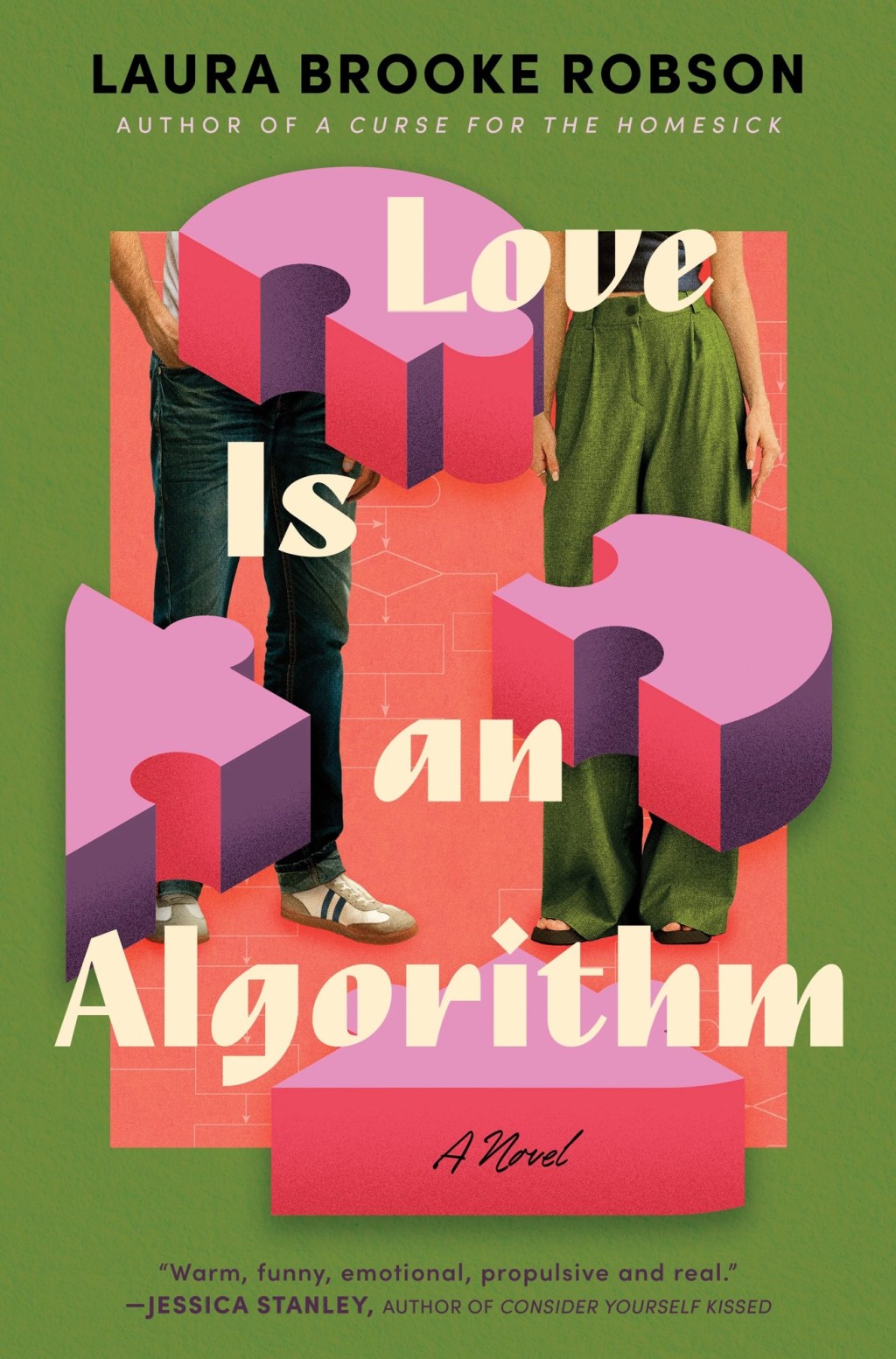
When author Laura Brooke Robson reached out to me about her novel, Love is an Algorithm, I was intrigued, not least by the title. I had come to think of “algorithm” as an ominous word, so I was curious to see how a book could take the concept and turn it into a story about love.
Robson’s novel is quite far from my comfort zone, but I was delighted by how it addressed so many of the issues we’re dealing with right now. Is AI a danger to us? Does using AI constitute a moral fault? Can we ever achieve a balance? I address these questions in my review, which I will post shortly.
For now, I asked Laura some questions about her novel and the subjects it explores. I hope you enjoy the interview!
Q: Was there a particular human difficulty—awkwardness, uncertainty, rejection, loneliness, making a mistake—that became central to the novel for you?
A: Everything you said—but uncertainty most of all! All through my teens and twenties, I was fixated on this question of “How do you know you’re in a good relationship?” I felt extremely uncomfortable tolerating this uncertainty. In retrospect, tolerating uncertainty is basically just what confidence is, and I’m glad I had to learn it. And when I think of what freaks me out about AI, I think of people not getting the chance to tolerate uncertainty.
Q: The title suggests that love might be something an algorithm can understand or even reproduce. What, to you, is the part of love that cannot be calculated?
A: Can I tell you a secret? This was the publisher’s title, not mine. My title was Fox Pass, which makes sense when you read the book.
I do believe there must be some aspects of love that could be calculated. With enough brain electrodes, I feel like you could put together some great data. But I think most of what we’d consider a “love algorithm” would be understood retroactively, not predictively. That’s something I try to get at in the book. If someone told you your relationship was a 100/100, or a 12/100, you would behave differently. You would write—or rewrite—your love story based on the information. So I think that’s what we can’t calculate—how we respond to the story as we’re living it.
Q: So many of the human relationships in Love Is an Algorithm are difficult, particularly within families. At the same time, the technology in the novel offers forms of connection that can feel easier and more immediately satisfying. Were you interested in exploring whether the very difficulty of human relationships—the misunderstanding, disappointment, and need to keep choosing one another—is actually part of what makes them rewarding?
A: This is it exactly. So often, you hear people defend technology as a way to make people feel connected when real people aren’t available. AI companion chatbots, or using social media rather than socializing. There are edge cases where this might genuinely make someone feel less alone, but on the whole, I think these tech alternatives to real human relationships A) take up the time we’d otherwise use for humans and B) atrophy our ability to ask meaningful questions and offer vulnerable answers.
Q: Do you think AI changes the way we understand our own intelligence, or does it mostly reveal things we already wanted to believe about ourselves?
A: What a fabulous question. Can I say it does both? We all know LLMs are sycophantic yes men, telling us we’re right, valid, superior—all the things we’d like to believe about ourselves that a true friend might gently help us keep within reason. But I also think AI diminishes our sense of intelligence and capability. There was a New York Times article from last week that used the phrase “cognitive surrender,” and I can’t stop thinking about it. Dependence on AI leads to cognitive surrender—refusing to begin formulating an answer before you have even fully comprehended the question. I think it makes us subconsciously believe we are intellectually helpless.
Q: Your characters interact with technology in very human ways. Did you find yourself becoming more interested in the technology itself, or in what people reveal about themselves when they use it?
A: I’m always most excited by the people using the technology. My first few novels were fantasy, and I think I treat fantastical conceits and technology the same way in my writing—it’s really just a vehicle to talk about human behavior.
Q: The cyberbullying portrayed in Love Is an Algorithm is disturbing yet painfully believable. The “mob” of people who attack Eve represents a different kind of online threat than the increasingly common problem of AI-generated “slop”: it is human hostility, amplified and organized by technology. What drew you to explore that particular kind of online mob behavior, and what did you hope readers would understand about it?
A: I worried readers might find this piece of the book outlandish or unbelievable, because it is kind of unbelievable—it’s just also happening in real life. To me, so much of this book is trying to answer the question, “How do we know what’s real?” How do we know our love is real? How do we know the story we tell ourselves about our family is real? How do we know the thing my phone is showing me is real? And I think it also gets at this experience of the internet a lot of us have had, which is—how do we continue to understand the humanity of others when they are reduced to online avatars?
Q: What did you want readers to feel when they reached the end of the novel—not necessarily what did you want them to think?
A: I wanted readers to feel a little bit less lonely. Like maybe they were in the mood to go meet a friend for coffee.
Q: How can we support human authors and artists in a rapidly changing world, particularly as AI becomes increasingly capable of producing writing and art?
A: Celebrate community around art! This is such a big, thematic part of this book, and the irony is, I was not doing a good job of it myself until after the book came out. This was the year I looked around—at all the changes in AI, all the dire data about literacy across the country—and thought, “Why am I not in ten book clubs? Why am I not starting my own book club? Why am I not attending every single literary event and art gallery opening and concert I can find?” Reading a book in isolation is great, but finding a friend to read with is the best.
Q: And finally, which three books would you recommend to us right now?
A: I’m going to go very eclectic here:
Out There by Kate Folk. A collection of short stories that are all pretty out there. I found Kate Folk via her New Yorker story of the same name, and it just keeps getting more relevant. Think: going on dates with robots and trying to figure out whether they’re human based on how careless they are with your feelings.
Dopamine Kids by NPR science writer Michaeleen Doucleff. This is a nonfiction parenting book. I do not have kids, nor am I pregnant. But it taught me so much about how technology affects my brain and how to set myself up to regain control over my attention.
Playworld by Adam Ross. Brutal and wonderfully written. Set on the Upper West Side—a great read for anyone who loves New York.
The Cinderella story has always been a popular trope among readers, and I think that it by nature offers authors a lot of fun — a “sandbox” both powerful and familiar. All humans can relate, to some degree, with the longing to one day wake up in a “better” position: a bigger house, more comforts, riches and status. The Cinderella trope touches on something ancient and more common than some of us would like to admit.
The classic fairy tale follows a very specific sequence and features an evil stepmother, a heroine covered in soot, a glass slipper and a pumpkin carriage. But modern retellings are switching these things up, adding twists, and giving real depth to characters that, before, were so overused that they began to feel like jokes.
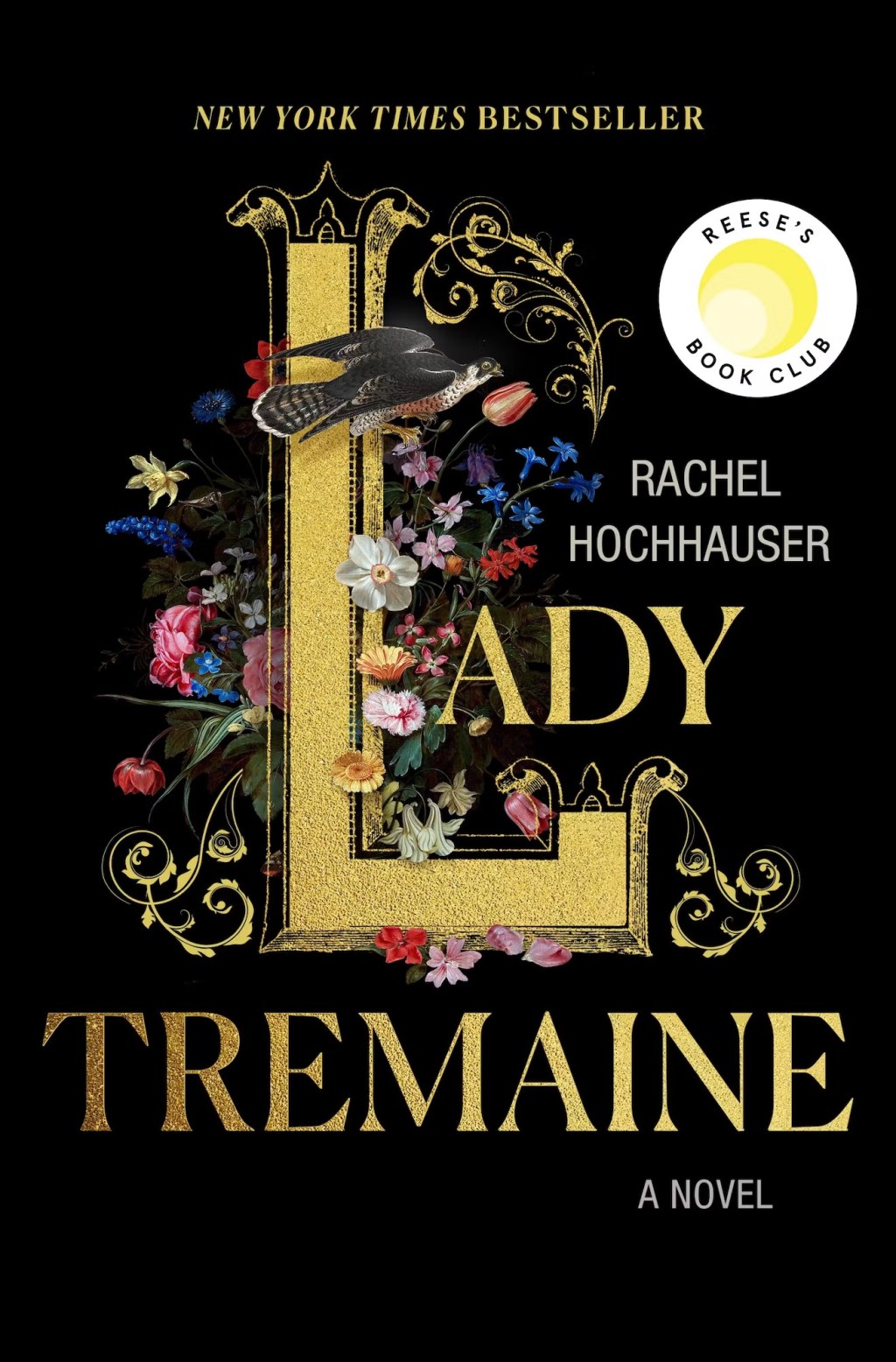
One of my longtime favorite books is a Cinderella story told from the viewpoint of one of the stepsisters — Gregory Maguire’s Confessions of an Ugly Stepsister. In a similar way, Rachel Hochhauser’s Lady Tremaine presents the same story from the viewpoint of the stepmother, and this reimagining is precious, because it does not try to frame her as a perfect person or even a kind one, but it gives her a profound motivation for the difficult choices she made in order to survive: she is a mother, bringing up two daughters — and later a stepdaughter — in a world that is not kind to women.
She is not perfect. But this novel shows the kind of world that, with its unique challenges, would drive a person to make the choices that she did. It is an anti-fairy tale: there is no “happily ever after,” and we do not get the sort of clean resolution that we have come to expect from other Cinderella-inspired books. However, in many important ways, it does the stepmother — Lady Tremaine — much more justice. She, and all of the other women, are far more relatable.
Hochhauser spins a clever tale that reminds us that we needn’t lose ourselves or our dignity in search of romance, of “a prince.” Indeed, the acquiring of “a prince” will often cause grief, rather than the happy ending that we are conditioned to expect. Life tethered to a cruel person is no life; attention is not the same thing as love; and love does not always look gentle or romantic. Sometimes it looks like a mother who will stop at nothing to ensure her daughters live lives that are both safe and dignified. She will break all barriers for this purpose. Maybe, she would kill.
The truth is that no one can have a happy ending if they abandon their own selves for another’s approval. Compromise on a few things is one matter, but a person’s value cannot fully hinge on whether they find a significant other. A person has so many other ways by which they could shine. And, in the end, the very fact of personhood is sufficient to set us apart. We should respect and honor one another’s humanity, independent to whether they “belong” to someone else.
My worth is not measured by the presence, or lack, of a prince in my life. I am more concerned with honoring the person I am now, with respecting the roles that I fill now; I will not toss them away in search of a vague “maybe.” Because love stories are good, but not all are romantic. We no longer need to grovel at some prince’s ball for validation — we have the choice of so many different paths to our “happy ending.”
Lady Tremaine exposes the parts of a Cinderella story that are often left out: most of the ladies at the prince’s ball were not there for love, but survival. They are not competing for his heart, but for a lift out of the strife and danger into which they were born.
It reminds us that the prince is not a great person. His ball preys on the vulnerable, causing them to overperform and turn on one another. Can he not find his bride in a more discreet, effective manner? Why do it in such a way that draws so much attention to him? The answer is that he, like all narcissists in history, simply can’t get enough of the spotlight.
Survival is a powerful incentive. Lady Tremaine might be called a manipulator like the prince, but she understands that life is a complex game. She learned how to play, and now does so on behalf of her vulnerable daughters. She makes mistakes, but manages to defend her household and preserve their own self-respect until the very last page. She is a mother, even to her stepdaughter, a change to the story that I enjoyed. She understands what’s worth defending.
Go to the ball — but not for a prince. Go to wear your favorite dress and dance in your own way to the music. Go, but do not leave yourself there; remember that your time is a gift, and choose wisely who you give it to. And you don’t have to go to a ball just because you’re invited. You are also allowed to reply “Thanks, but no thanks” and stay home. It is your story: choose wisely.
Notes on the transcription: Page numbers 166–169 appear at the page corners. Two spots were slightly ambiguous: the sentence “Maybe, she would kill” (the last word is written a bit like “bill”), and the title/book attribution in the third paragraph, which I transcribed as written.
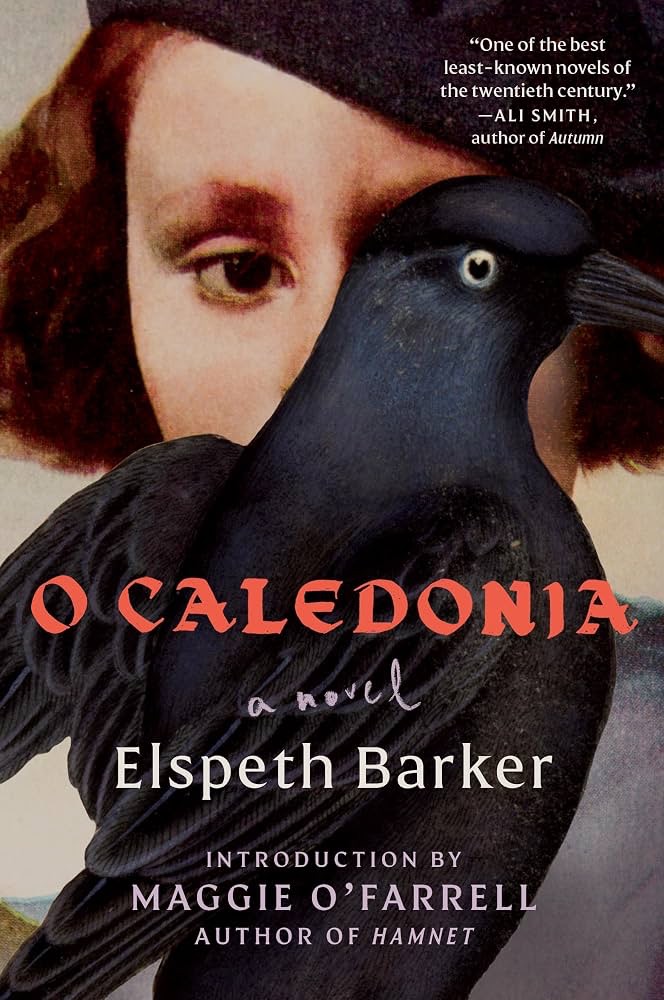
The great tragedy I have discovered this year is when I read a great novel but cannot think of reaching out to the author because they are dead. A few days ago, I discovered A Death in the Family by James Agee and quietly grieved, for Agee died young. In the case of O Caledonia, Elspeth Barker just died in 2022, a year close enough to feel cruel and taunting.
What strikes me first is the revelation in the introduction by Maggie O’Farrell: this was Barker’s only novel. She was a known literary columnist, but, as far as is known, she did not write another long-form piece of fiction. This intense, stand-alone novel has exploded into fame after the death of its author. I have no reason to despair: I might have a new novel, The Novel, in me yet; perhaps I will encounter it in old age.
The character, Janet, is a bookish daydreamer who has never fit in in her world or with her family. This passage from the first chapter struck me:
When she was older she intended to be a princess. Almost as much as its image she loved the word, with its tight beginning and its rustling, cascading end, like the gown a princess would wear, with a tiny waist and ruffles and trains of swirling silken skirts.
I find it endearing that Barker took the time to explain why a single word is so beautiful. I, too, have had such thoughts, both on words I like and words I despise; I’ve never thought to slow down and put these thoughts into words. But it made the rest of the novel feel so relatable. To dwell on a word and the sounds in it is so very human.
We know from the introduction that Janet is going to be found dead, but the novel itself passes like a fever dream. It is full of bizarre scenes, though we cannot quite see how it will escalate from teenage drama and sibling rivalry to death. After Janet is found dead, the neighbors’ comments are eerie but not really unbelievable, as humans tend to blame the wrong person:
So they blamed the mother for giving the child all those books to read: “It’s not natural for a bairn”; they blamed the father for his ideas about education; they blamed everyone and everything they could think of, but in the end there was grim assent: “the lass had only herself to blame.”
This has been said, at some point, about every woman: “She has only herself to blame.” Janet’s sixteen years are full of instances where she is harmed, and she is the victim, but society manages somehow to pin responsibility on her. Yet she continues to walk her own path, taking pride in being different. She is remarkably strong as the years pass and her dignity is repeatedly challenged. Up to her final moment, she is unapologetic about her beliefs.
Many scenes in this novel are so purely imagined that, in spite of the subject matter, I had the impression that I was reading a beloved first work — an unfiltered manuscript by an author who does not really care to placate the audience. Given that O Caledonia is Barker’s only novel, it’s not unreasonable to think this went on at times. Janet explores her world with the wide-eyed wonder of Anne Shirley, except Janet’s world is darker; Janet’s life is also sadly devoid of kindred spirits.
Janet spends most of her life not fitting in, not even able to uphold a conversation with her mother until she researches in popular magazines and learns to talk “of A-line dresses and pencil skirts, of shot taffeta ball gowns and fashion’s hideous new colour, shocking pink.” This banter pleases her mother enough that Janet finds the courage to ask for a book. “Vera remembered the books stacked slithering and topsy-turvy all over Janet’s bedroom floor. Why add to them?” But, in that instance, her mother does assent.
If Elspeth Barker were alive, I’d be trying to reach out to her. I would have so much to ask: how did her one novel turn out to be so powerful in its oddness? But perhaps it’s necessary for us to put our questions away in order to just enjoy a story. A classic like this is clearly able to speak for itself. Janet dies in the final chapter, but clearly she is not dead — neither, I believe, is the author behind her.
Sometimes Janet thought that life’s sole purpose was to teach one how to die. As in most spheres, so in this, animals did better than people.
Sometimes the most important thing a novel can do is teach us how to die — as well as how not to. In her one novel, Elspeth Barker did both.
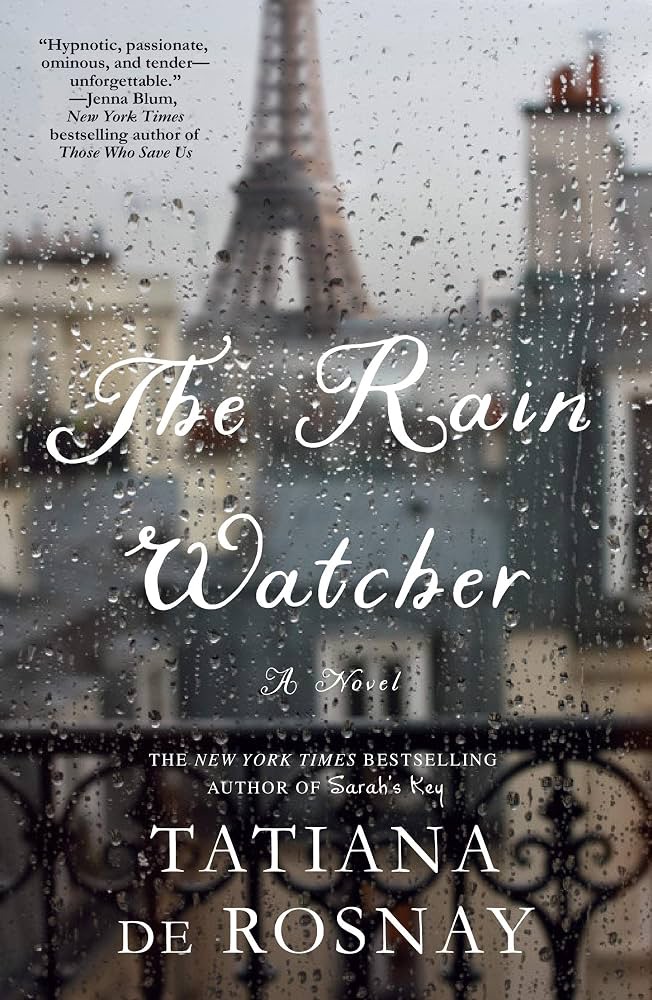
The Rain Watcher by Tatiana de Rosnay: A Novel About Family, Floods, and the Wrath of Nature
A Note on Trees
I want to begin this review of The Rain Watcher by Tatiana de Rosnay with a comment: trees are far cleverer than we give them credit for. Under the right conditions, they can live for hundreds of years, making some of them older than our major cities. In de Rosnay’s novel, we meet a character who understands the personality of trees. He loves them so much that he comes to be known as Treeman.
I would have been interested to learn more about him, but when Paul Malegarde suffers a horrific stroke, there is little opportunity for him to communicate at all. We know him mostly through flashbacks of his childhood. Though I enjoyed The Rain Watcher, I believe the novel missed an opportunity to do more with this fascinating character.
As a whole, The Rain Watcher felt like something else: a family novel in which the subject of trees sometimes seems tacked onto the larger story.
Reunion Under Water: The Plot of The Rain Watcher
The Malegarde family has agreed to meet in Paris after spending some time apart. Paul, the aforementioned Treeman, Lauren, Linden, and Tilia are gathering to celebrate Paul’s seventieth birthday. Because of the differences within the family, such a reunion was always going to be risky.
But Paris decides to make things even more complicated.
Heavy rain causes catastrophic flooding across the city, creating an almost apocalyptic backdrop for the family’s reunion. During his birthday dinner, Paul is giving a speech when he suffers a horrific stroke and is rushed to the hospital. But during a flood of this magnitude, even the hospital is not guaranteed to be a safe place. The water spares very little of Paris, and the levels continue to rise.
Linden has never had a warm relationship with his father. After discovering in school that he was gay, he did everything he could to put space between himself and Paul. He does not know how his father will see him if he tells the truth. He has reason to doubt: his mother already reacted poorly when he came out to her.
A chasm has therefore long existed between Linden and his father, one that he is forced to cross following Paul’s stroke, as Linden becomes the one who goes to keep his father company at the hospital.
However, more powerful than all of this emotional noise is the flood.
Perhaps de Rosnay did this deliberately. Nature and its merciless wrath dominate everything the characters believe is important.
All that we live and fight for is nothing in the face of the flood.
The Wrath of the River
There is a flashback scene in which Linden, as a child, goes with his father on an excursion up Lance Mountain:
The splendor of the image remained imprinted in his mind. His father finally spoke. He said it all seemed calm, so peaceful, didn’t it? Linden nodded. His father then said something he never forgot. When nature got angry, Paul said, there was nothing man could do about it. Nothing at all.
The mood underlying The Rain Watcher is bleak. Readers are repeatedly reminded that, in disasters like this, our notion of time means very little.
A tree is outwardly quiet and simple, but it may have seen more years than we could imagine. Floodwater can quickly destroy things that humans spent centuries building with their hands.
With all our clever inventions, we are not, and never have been, entirely in control. If humanity were suddenly to vanish, a tree with steadier roots would fare better than any house we ever built.
“A tree is just as much alive as they were,” Paul told his little boy, lifting him up so he could also touch the rugged, coarse surface. “A tree must fight for survival,” his father told him, “and it must do this every single second.”
Linden is forced to take on the role of head of the family when his mother becomes sick with the flu, almost at the same time as her husband’s stroke. Linden has always had the sense that he needed to prove himself to his father. Now Paul is seriously ill and Lauren is sick.
Linden is forced, unwillingly, into the role of leading his family through a storm, both literal and figurative.
What the Rain Hides
The Rain Watcher hinges on the whims of nature. During a storm, it can seem as though there is not a whole lot going on, but de Rosnay reminds us that while a storm might stop traffic, a thousand other things are happening: hellos and goodbyes are being said, dreams are being achieved, and dreams are being forsaken.
Life and nature move at their own speeds. It is futile to try to be in control.
Linden tells his father all the things he has kept inside. His father has no way of responding. Time moves at its own pace.
But Paul has one final thing to tell his son.
He communicates through a specialist assigned by the hospital to stroke patients, who writes down instructions Paul gives to Linden. These instructions lead Linden to his family home, where he is supposed to look inside an old tree.
There, inside a tin box, he finds a confession concerning an event that took place when Paul was a child and left a wound in him that never healed.
A truth for a truth.
I understand what de Rosnay was trying to do with this part of the novel, but it seemed a bit forced to me. Told in interludes, Paul’s confession sometimes seemed to distract from rather than deepen the central story.
The tree material works best when it illuminates The Rain Watcher’s larger meditation on time, mortality, and humanity’s smallness in the face of nature. When it becomes another piece of family history to be uncovered, it feels considerably less organic.
In spite of these flaws, I did enjoy The Rain Watcher, and Linden is one of my favorite characters that I have “met” this year.
An apocalypse doesn’t always involve a sinister pace. Far less predictable, and more unsettling, is the rain.
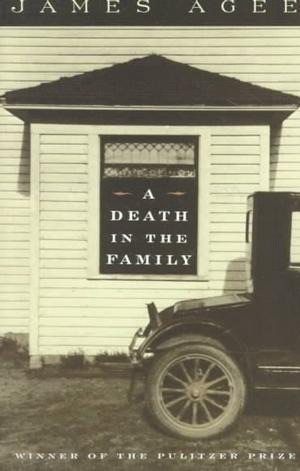
I should have known, by the novel’s title, that A Death in the Family was going to be heavy. The fact that its author, James Agee, is also dead, and that he died young, makes the novel especially haunting and poignant. I have no way of reaching out to Agee or asking him about the book; I can only come to know him through the words he left behind. And, after all, this is enough. A novelist, ultimately, wants to be known for their novels.
James Agee and A Death in the Family
An American novelist, journalist, and poet, James Agee was born in 1909 and died of a heart attack in 1955, at the age of 45. A Death in the Family was published posthumously in 1957, two years after his death, which adds something special to his words. One must wonder if he ever had a premonition of his own early demise; indeed, it would not be the first novel by a deceased person that has made me wonder about this.
Agee’s writing has the unique quality of seeing beauty in everyday things, including childhood, grief, and poverty. His descriptions seem long-winded at times, but it is worth working through them, peeling back the layers of emotion that make a novel memorable.
The novel begins when the protagonist, Jay, receives a phone call saying that his father is sick. He must go at once to visit his family and find out what has happened. On the way home, he is driving too fast and suffers a car accident that kills him instantly. The twenty chapters that follow trace a family as it navigates the first hours of grief, particularly Jay’s children, his son Rufus.
Grief and the People We Leave Behind
You couldn’t like anyone more than you happened to like them; you simply couldn’t. And you couldn’t feel more about them than that amount of liking made possible to you.
The thought crosses the mind of Jay’s wife as she waits for word about her father-in-law. It made me reflect on how, after the death of a person, everyone is compelled to think kindly of them. It seems like sacrilege to ponder their flaws or mistakes.
But in many instances, the kind thoughts exchanged after a death are dishonest, meant to soothe the conscience of the speaker. Death changes the way we remember people. Once someone is gone, we can no longer argue with them, forgive them, resent them, or ask them to explain themselves. We are left alone with our memories, and those memories can be both tender and complicated.
Rufus reflects, after his own father’s death:
He was glad his father didn’t know [about his mistake] because if his father knew he would think even worse of him than ever. But if his father’s soul was around, always, watching over them, then he knew. And that was worst of anything because there was no way to hide from a soul, and no way to talk to it, either.
This is one of the things Agee understands so well about grief: losing someone does not mean our relationship with them simply ends. We continue to think about what they knew, what they thought of us, what we wish we had said, and what we would say if we could speak to them again.
How Do You Explain Death to a Child?
How does one explain death to a child?
My heart ached to read the chapters where the adults attempted to make Rufus and his little sister, Catherine, understand that their father was never coming home. How do you explain to a young mind the magnitude of the changes that are going to rattle their world? How do you explain the idea of grief?
Their mother tells them about the wake:
But when we see Daddy today, children, his soul won’t be there. It’ll just be Daddy’s body. Very much as you’ve always seen him. But because his soul has been taken away, he will be lying down, and he will lie very still. It will be just as if he were asleep, so you must both be just as quiet as if he were asleep and you didn’t want to wake him. Quieter.
“But I do,” said Catherine.
But I do, said the young girl.
Unmoved by her mother’s religious explanation, she sees no reason why it would be wrong to try to wake the dead. Her words are not dressed and proper like those of the adults. They are honest, as only a child can be, and I find myself agreeing with her.
Religion did not soften my grief: I wanted only to wake the one who was sleeping and bring her back to the land of the living.
There is something devastatingly simple about Catherine’s response. She doesn’t understand why the adults have accepted something she cannot accept. Her father is asleep. Why shouldn’t she wake him?
Perhaps that is what makes childhood grief so painful to read. Children have not yet learned all the complicated language adults use around death. They simply know that someone they love is gone and that they want them back.
Reading A Death in the Family While Living With Grief
Books that involve grief and death hit me differently, as both are constantly on my mind. I dwell on them more than is perhaps healthy; reading this novel, so focused on these same matters and lamentations, reassured me that my mind is not the only one to have ruminated on them.
James Agee wrote a long novel exploring loss from every possible angle. He examined death through the eyes of a bereaved spouse, a grieving brother, and a confused child. My fixation may not be healthy, but I have never been alone in it.
Perhaps I will never write a novel quite this bleak. But I hope that my own writing might always be this honest.
I am more afraid of my loved ones dying than of dying myself. I have experienced that great absence, and I live with the dread that one day it will return. Books like this remind me that I am not the first person to live with such fears. I do not want to think about death all the time, but I cannot pretend that I am unusual for thinking about it.
Death is the great mystery that human beings have contemplated from the beginning of time.
A Death in the Family is a masterful study of that mystery.
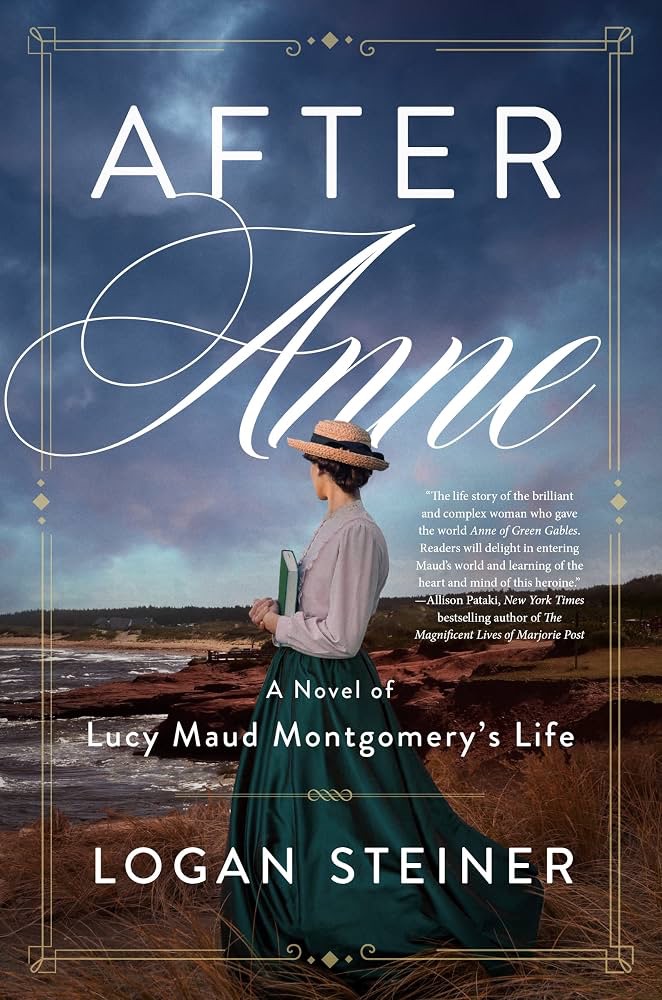
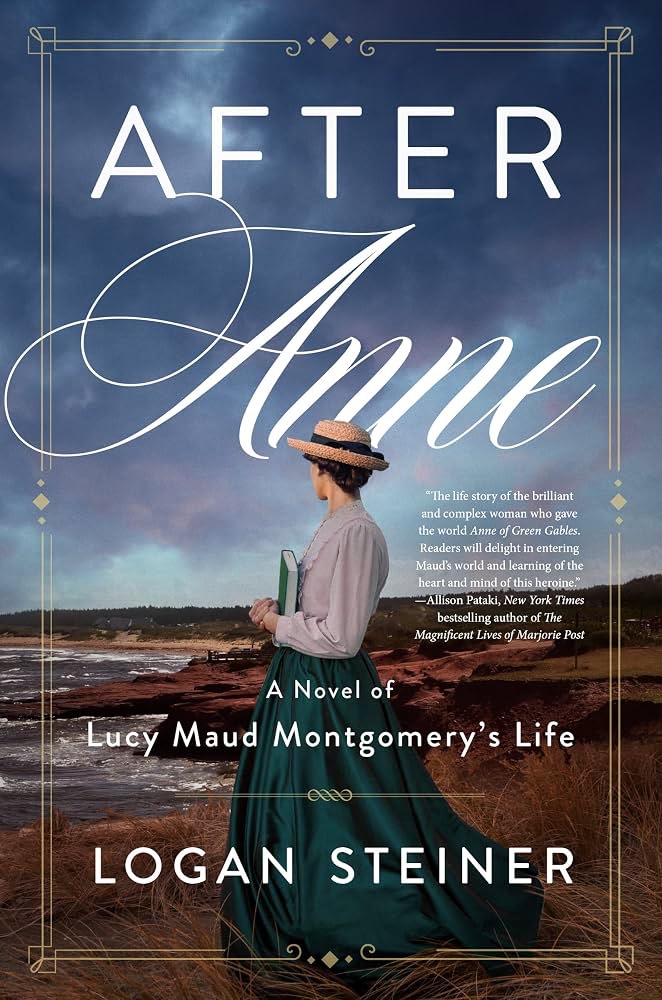
A couple of days ago, I shared my interview with Logan Steiner, author of After Anne. Her novel is a fictionalized imagining of the life of L. M. Montgomery, the Canadian author best known for Anne of Green Gables and the unforgettable Anne Shirley.
After Anne reveals a truth about Montgomery that is not often considered: she spent much of her life struggling with depression, even during the years in which she was writing about the charismatic and dreamy Anne Shirley.
Reading Steiner’s account of Maud’s struggle, it’s clear that her troubles become worse when she meets and grows to like Ewan MacGregor, the minister she will eventually marry. Ewan is not a simple villain, but he is portrayed as displaying several qualities and behaviors that we would today call red flags.
For a woman living in Maud’s time, however, the choices surrounding marriage were different. Women were expected to become wives and start families. Enough of a dreamer still lived in Maud that she hoped there would at least be feelings involved in the matter.
Steiner gives us a telling glimpse of Maud’s understanding of marriage:
“Ever since she’d first had real feelings for a man, Maud had suspected that marriage could be heaven with a man she loved, and hell with one she did not.”
Indeed, Maud repeatedly demonstrates that her heart prioritizes writing over Ewan, even after their wedding. And when I asked Steiner about this in our interview, she agreed:
“I do think Maud had a deeper love story with writing than she did with Ewan. Writing was her refuge. When those stories competed, writing inevitably came out on top, to Ewan’s dismay. That is not to say that marriage and creativity need to compete. But Maud’s story shows how difficult a creative path can be when paired with an insecure partner.”
Dreams That Won’t Settle
I thought it important to begin my review of After Anne with this point because the novel is not simply a story about a woman who wrote books.
After Anne is the story of a woman who does not want to choose between love and creativity, but is being pressured to all the same. It is the story of what happens when the thing that gives a woman life becomes a source of discomfort to the person closest to her.
In The Artist and the Feast, which I reviewed yesterday, I found a similar theme. There is a dynamic between Essie and her uncle Tata in which he cannot bear to see his niece make progress in the arts. It makes him insecure, and as a result, he does things that are evil—destroying her work and saying cruel things meant to tear her down.
When a person you live with is threatened by what you love, it can lead to a specific form of danger. Ewan MacGregor never does these things to Maud, but Steiner makes it clear that he is unhappy with many of her choices.
Ewan’s behavior is sometimes erratic, and Maud cannot ignore what remains unsaid between them. Speaking to her cousin Frede about Ewan, Maud finds herself forced to make a confession. When Frede asks:
“But Maud—you do like Ewan, don’t you?”
Maud admits:
“I do like Ewan…. But there’s a strange feeling I get sometimes around him. When I talk, you would think I was the most interesting person in the world…. But those looks also turn my stomach sometimes…. When I look in his eyes, it can be like looking in a dark tunnel….”
Maud finishes:
“Sometimes I am not so sure his long stares are about me. It is like there is a cloth covering half his face that I cannot pull aside.”
“Womanly” Ambitions
Lucy Maud Montgomery was born in Canada in 1874. After her mother died when she was very young, she was raised largely by her grandparents on Prince Edward Island, the landscape that would eventually become the setting for her beloved novels. She worked as a teacher and librarian while publishing stories and poems.
Anne of Green Gables, her breakthrough novel, was published in 1908, and she went on to write more than twenty novels. One would not have guessed from the beauty of her prose that she struggled with loneliness and despair. She died in 1942 in what has long been understood as suicide. Her journals, though edited by Montgomery herself, remain an important record of her life.
I thought that Steiner’s portrayal of Montgomery in After Anne was excellent. She reminded me of Jane Austen and Louisa May Alcott. Both of these remarkable women wrote stories about romance, but a dashing husband was never the only thing they seemed to want from life. Their books suggest a deep investment in story, imagination, and the life of the mind.
I have asked myself in the past: Did Austen and Alcott know that, once married, they would have virtually no time to write?
In After Anne, Maud finds herself rereading a letter that she wrote to Frede twelve years prior. It is a grim letter, not excited about moving forward and starting a new future. Instead, she grieves what would be lost, such as the home that she shares with her grandmother, after marriage.
Then comes a passage very much in the vein of Alcott:
“But Maud might also be an old maid with books for children and a pen for a husband. She would not be unhappy if so, she’d written, because what she’d put into life mattered more than what she got out of it.”
What’s more, it becomes evident early in their courtship that any success on Maud’s part will be uncomfortable for Ewan. In a conversation with Frede, Ewan asks about her ambition to be a professor. He smiles and says, “You’ve never spoken about [these ambitions] before.”
Frede looks him in the eye and says:
“Consider whether you would have asked [about them], had I been a man.”
I asked Steiner about this exchange, to which she replied:
“Frede put plainly what I thought many readers would feel—that societal pressures on women can run counter to living a full life. Maud and Frede’s relationship reminded me of friends in my life whose honesty and openness puts me at ease. I love being around people who say the thing without worrying constantly how someone else will hear the thing. That was Frede to Maud.”
This passage is uncomfortable, indeed. Ewan asks Frede:
“Am I to take it, then, that you don’t have any womanly ambitions?”
He adds hastily:
“I only mean—do you want a husband eventually? Or children?”
Frede gives him a firm, unflinching answer: no. Then Ewan turns to Maud and poses the same question. She wonders how the spotlight turned to her so abruptly, and she also realizes what “womanly” meant to Ewan.
Ewan considered “womanly” ambitions to mean a husband and children, of course. Not writing.
But on page 194, Maud confesses:
“Writing was what she cared about most. It was the one thing she could not bear to lose.”
She wanted, before all other things, to write. How would she make Ewan understand this?
Maud’s Lifeline
Maud’s fear of losing her writing is not unlike that of Sybil van Antwerp in The Correspondent, when she begins to lose her eyesight. But Sybil is being threatened by an actual illness; Maud’s trouble comes from an insecure man who is convinced, not only that women have one place in the world, but that her success is a threat to his place in the household.
In the novel, Ewan is not outwardly unkind. But he has deep wounds that culminate in a grim belief in his own eternal damnation. This belief creates a shadow that destroys his family and torments his wife. Maud, who was never even fully sure that she wanted to be with him, is left alone to face his personal demons.
The sting of After Anne is that the danger she faced was specific. The matter was never simply that Maud might marry the wrong man, or even that she would marry for money. It’s not even, really, that she could choose to remain a spinster.
The danger is that her choice could involve surrendering the lifeline she had already discovered in writing. Maud does not consider writing to be a hobby she could put aside when she becomes a wife. It is the thing that makes her feel most fully herself.
Ewan is not a simple villain, and Steiner does not make him one. I asked her about this, and she said:
“Like many of us, he was limited but trying, and I was intent on rounding out his character. As much as I initially wanted a different relationship for Maud, I came to understand Ewan better as I reworked his scenes. I now see their marriage as a tragedy of circumstance rather than a tale of villainy.”
Ewan’s struggles are human, even as their consequences become devastating for the people closest to him. I can sympathize with Ewan in a way that I never did with Tata, because Ewan did try, with what he could offer, to make Maud happy.
Were he and Maud a poor match? Was Maud simply not meant to marry? We’ll never know. There is something sad about watching two people enter a marriage with hopeful hearts, only to discover that love cannot always overcome what each person carries inside.
Conclusion: Finding Meaning in Words
I finished After Anne thinking about all the women writers who understood that a meaningful life could be made from something other than marriage. This could be a house full of books, a desk by a window, a good ink pen.
For Maud in After Anne, that life was not a consolation prize. It was the life she wanted. Perhaps that is what I found most moving about Logan Steiner’s portrayal of L. M. Montgomery. Anne Shirley is remembered for her enormous imagination. Anne feels great determination to make a life larger than the circumstances she was given.
Behind Anne, there lived a woman who understood that longing, herself. Maud wanted to write and make stories. Though fond of Ewan, she did not want to surrender the part of her life that belonged to her.
After Anne made me wonder what happens when a woman’s dreams refuse to settle neatly into the life imagined for her. Sometimes the dream is unwilling to be set aside. It demands that the person who carries it take it seriously.
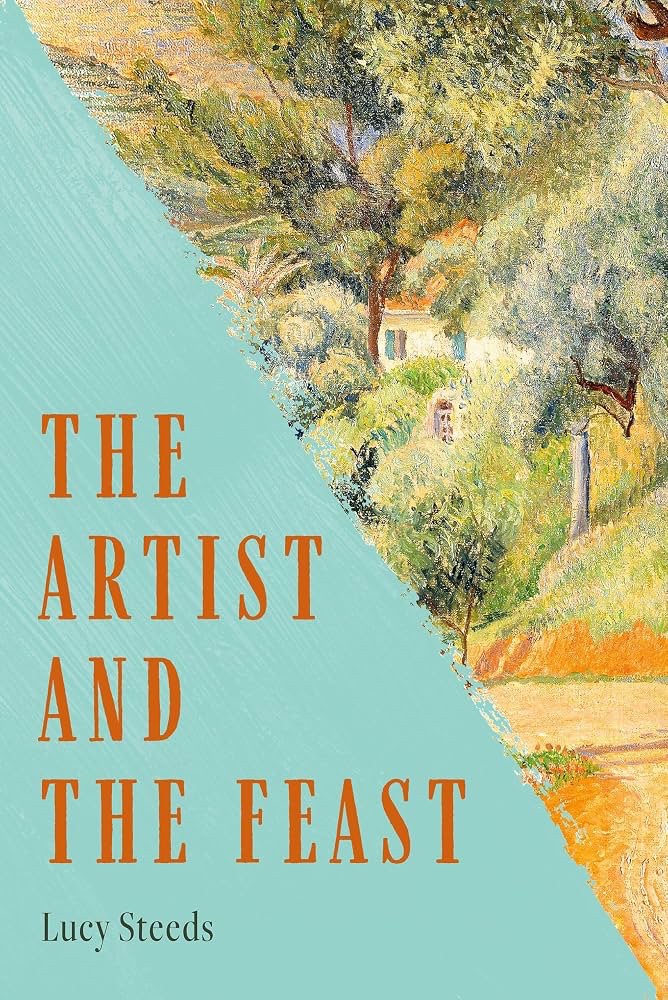
It is the one-word summons that arrives by mail, calling English journalist Joseph Adelaide to the countryside of France. With this word, he’s summoned to the home of renowned but reclusive artist Edouard Tartuffe in The Artist and the Feast.
Joseph has been waiting for this response, living in a Paris boardinghouse and hoping that he might finally be given the opportunity to tell the world about a man whose art has long been admired. But the venture is bizarre from the moment Joseph arrives at Tartuffe’s home.
For one, Tartuffe cannot read the telegram Joseph offers as proof. He has no memory of inviting the journalist. Secondly, he lives with a niece named Essie who, though quiet as if afraid to make a sound, is clearly the driving force behind her uncle’s career—and indeed, his life.
Tartuffe, or “Tata,” paints. Essie makes this possible by cooking, cleaning, minding the studio, and sorting the mail.
Questions That Disturb
The Artist and the Feast asks us, towards the end of the novel, what it means to love a monster.
We learn much about Tartuffe in the chapters written from Essie’s viewpoint. She reveals to us that her uncle detests her as much as he needs her. He detests the memory of her mother, too.
Her mother died after escaping to New York because she could no longer stand living as her brother’s servant. The trouble is that, when Essie’s mother left, she did not take the child.
As a result, Essie immediately took up all of her mother’s duties—whether she knew how to perform them or not.
Essie has felt called from childhood to create art of her own. Tartuffe destroyed those dreams—or thought that he did—by using cruel words and tearing up the pieces she was proud of.
But art is story, and story does not die so easily.
Essie soon finds other ways to follow her ambition.
Her soul is wounded, but not broken, by her uncle. And Joseph Adelaide is present at the house to witness an explosion that has been a very long time coming.
A Grief Shared
Joseph soon feels for himself the same unease that Essie has suffered from every day of her life:
“I should not fear Tata as much as I do, but there is something terrible about him, like looking into the eye of the sun. And God.”
We are never quite offered a glimpse of Tata’s childhood. Was it so filled with monsters that he became one of them?
The truth is that, to me, it does not matter if child Edouard was locked in a room with the devil himself. It is not the fault of Joseph and Essie. There is no excuse for the measures he has always taken to destroy anything that makes Essie happy, and then make it so that she has no option but to remain in his home as a slave.
It is not surprising that, trapped as she was in such an environment, Essie has developed a confused idea of what love is. Nor is it surprising that she has resorted to the solace of nightfall, the only time when she can escape his vicinity and breathe.
And in those moments of darkness, she quietly concocts a way in which she might destroy him back.
The Niece’s Revenge
Essie has never stopped painting.
She begins to copy the work of her uncle, finding solace in the process after the harrowing work of serving as a volunteer nurse during the Great War. She copies all of his work until it is impossible to tell the difference between their styles.
And then she asks herself: why is his work worth more than hers, if visually there is no difference at all? Why is there so much weight merely in his name?
He has lied and told her that women cannot go to study art. Joseph reveals the truth: certain schools are welcoming female students.
Why did Tata lie about this?
Why is he so afraid of Essie learning to use a paintbrush? Is he scared that she might leave him to care for himself in that house so far away from the world? Is he scared that she might surpass him in skill?
Is it both?
Under this dark story arc is a truly romantic subplot that I found beautiful.
Joseph sees Essie, even when she goes to great lengths to hide herself. She sees in him an honest man that she eventually trusts with her greatest secret. He sees not only a muse, but a brilliant mind, and encourages her to try once more to make art of her own.
Tata tried to muffle her, but Joseph does the opposite.
He wants to know what she has to show the world.
I believe that is true love.
Conclusion: The Artist and the Feast
The Artist and the Feast is loaded with tension from the first page. We know that something is going to explode, and we are eager to see it happen. We want to see Essie live. We want her to break free and see the world.
The novel’s ending is truly so satisfying.
What a gift of a story.
Art, and story, have always been stronger than any human attempts to stop them. A story might be “put out” for a while, but so long as there are people willing to put pen to paper, it will resurface in a new voice centuries later.
We cannot stop it any more than Tartuffe was able to.
Literature often presents itself as a bizarre form of magic. An author can find herself writing a novel that, emotionally, is far from how she feels in real life. This was the case for L.M. Montgomery, author of Anne of Green Gables, for much of her life.
Montgomery created worlds of color. These worlds were saturated with the beauty of nature, populated by protagonists such as Anne Shirley, who were prone to dreamy epiphanies. She used words to paint worlds of light. Yet it came to be known, after her death, that she suffered from depression for much of the time she spent writing about Avonlea.
After Anne by Logan Steiner is one of my favorite novels. It centers on the life of L.M. “Maud” Montgomery before and after her marriage. We are delighted by scenes in which she “meets” and begins writing about Anne. We also witness Maud’s emotional transformation as she meets her future husband, Ewan MacGregor, and develops affection for him. We soon discover that affection is not enough to erase the questions she carries into their marriage.
I reached out to Logan Steiner and asked if she would answer some questions about After Anne in preparation for my review, which I will publish soon. To my delight, she agreed, and I had the privilege of discussing one of my favorite novels with its author.
Here’s the interview. If you haven’t yet read After Anne, I highly recommend you do so. Logan Steiner can be reached at Substack and her personal website.
Q: You write Maud as someone who recognizes very early that marriage could either deepen her life or diminish it. What drew you to that tension in Montgomery’s life, and how did you approach imagining what she might have been thinking and feeling as she considered marriage?
A: Yes, this tension! You’ve captured it well. Maud’s talent and fame set her apart, but her marriage decision is so relatable. We all wish we had perfect foresight on whether and whom to marry, so I hoped this focus would help readers connect. I found Maud’s premonitions around marrying Ewan fascinating—along with the possibility that she added some of those ideas while editing her journals in midlife, with the benefit of hindsight.
I based my portrayal of Maud’s conflicting thoughts about marriage largely on her own journals. I then imagined the birthday weekend as a time missing from her journals when that tension might have come to a head.
Q: Maud’s relationship with writing is almost a love story in itself. She knows that writing is the one thing she “could not bear to lose.” Did you see her literary ambition as something that competed with her desire for love, or did you see writing as the deeper love in her life?
A: I do think Maud had a deeper love story with writing than she did with Ewan. Writing was her refuge. When those stories competed, writing inevitably came out on top, to Ewan’s dismay. That is not to say that marriage and creativity need to compete. But Maud’s story shows how difficult a creative path can be when paired with an insecure partner.
Q: Ewan is not portrayed as an obviously cruel man. Instead, his insecurities, wounds, and beliefs gradually become more troubling. Why was it important to you to write a man whose danger is more complicated than simple villainy?
A: I rewrote the scenes with Ewan more than any others in the novel. Like many of us, he was limited but trying, and I was intent on rounding out his character. As much as I initially wanted a different relationship for Maud, I came to understand Ewan better as I reworked his scenes. I now see their marriage as a tragedy of circumstance rather than a tale of villainy.
Q: Maud’s cousin, Frede, challenges Ewan when he asks about her “womanly ambitions.” She asks him whether he would have asked the same questions if she were a man. What did you hope Frede would illuminate about the expectations placed on women in Maud’s world—and, perhaps, about the kind of friendship Maud needed?
A: Frede put plainly what I thought many readers would feel—that societal pressures on women can run counter to living a full life. Maud and Frede’s relationship reminded me of friends in my life whose honesty and openness puts me at ease. I love being around people who say the thing without worrying constantly how someone else will hear the thing. That was Frede to Maud.
Q: Maud’s fear of losing her writing reminded me of Sybil van Antwerp in The Correspondent, whose eyesight threatens her ability to read and write. Both women are confronted with the possibility of losing the thing that gives their lives meaning. Did you think of Maud’s relationship with writing as a kind of survival?
A: Yes. Mary Oliver says in her poem The Journey that she wrote “to save the only life [she] could save.” Writing, particularly journaling, is a life-saving force for me. That’s one way I immediately connected with Maud; I do think it was a matter of survival for her too. Like Sybil van Antwerp (one of my favorite characters of recent decades!), when Maud started to lose her connection to writing, she lost her center of gravity.
Q: There are moments when Maud seems almost instinctively wary of Ewan, even before she can articulate why. How much did you want the novel to explore the experience of a woman sensing something about another person that she cannot yet prove or explain?
A: I’ve recently come to realize just how much intuition has guided big decisions in my life, and I’m fascinated by the extent to which some part of us just knows. Maud’s journals show the conflict that can arise between intuition and reason. Despite her instincts, part of her wanted to simply marry the man who looked good on paper, as society expected. I sought to explore that conflict in the novel.
Q: Montgomery, Jane Austen, and Louisa May Alcott all wrote extensively about romance while creating lives centered on their own work. Did your research into Montgomery change the way you think about the relationship between the romantic heroines these women created and the women they were themselves?
A: My research deepened my respect for writers who create enduring love stories out of imagination rather than direct experience. It may be that unfulfilled desire creates more yearning and interest in describing the path to desire fulfilled.
Q: If you could ask L.M. Montgomery one question about the life she actually lived—not Anne’s life, not Maud’s imagined life, but her own—which question would you most want to ask her?
A: What do you understand now that you couldn’t have understood earlier?
Q: And, because this is The Tearoom: if L.M. Montgomery could join us at the table for an afternoon, which books would you want to put beside her teacup, and why?
A: I’d love that tea. I’d be most curious about her relationship with her own work, so I’d put The Story Girl beside her (her favorite of her novels), along with a journal or two. And The Complete Poems of Emily Dickinson, so we could share favorite lines.
A Final Word
Reading After Anne made me think about the strange distance that can exist between the worlds a writer creates and the life she is actually living. Montgomery gave generations of readers a world filled with beauty, friendship, imagination, and hope, even while carrying private struggles that those readers could not see.
Logan Steiner’s novel invites us to look beyond Anne and toward the woman who created her—to consider Maud not simply as the author of beloved books, but as a woman trying to make a life in which writing, love, friendship, and independence could coexist.
I’m especially grateful to Logan for joining me at the Tearoom table to talk about these questions. Her answers only deepened my affection for After Anne, and for Maud herself.
And perhaps that is one of the gifts of literary historical fiction: sometimes it allows us to meet the woman behind the work, and in doing so, to understand the work we thought we already knew.
Not long ago, literacy was a gift that was not offered to women in quite the same way it was offered to their brothers. Boys were more likely to receive thorough educations, preparing them for university and, in many cases, professions that would give their family name another generation of distinction.
Daughters were often educated differently, if they were educated at all. Their lessons were more likely to prepare them for the work expected of them: keeping a household, cooking, sewing, raising children, and managing the many small details of domestic life. Go far enough back—to the eighteenth century, for instance—and the educational opportunities available to a girl could be astonishingly limited. Jane Franklin, Benjamin Franklin’s sister, had little formal schooling and taught herself much of what she knew.
When I think about giving a woman I love a book, I am thinking about far more than the front and back covers with pages in between.
I am thinking about the privilege of being able to open a book simply because I want to.
I dream of giving books to my girlfriends because we have inherited something that generations of women had to fight, improvise, or sacrifice to obtain: the freedom to read.
“But this sounds terribly boring,” a woman might protest, particularly if she isn’t a lover of literature in the way that I am. “Can’t you just get me a gift card?”
I understand. Reading is not everyone’s idea of a good time. Some women would much rather receive something practical, or perhaps a piece of costume jewelry to complement their latest ensemble.
And costume jewelry isn’t a bad thing. There is a place in life for everything.
But I am of the sort who wants to give books to her friends.
So, if I discovered that a birthday was approaching and I hadn’t yet found a present, these are six of the first books that would cross my mind. They are books about womanhood, education, friendship, family, independence, and the possibility of becoming more fully ourselves.
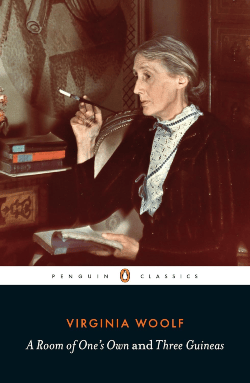
A Room of One’s Own by Virginia Woolf
This important piece of literature is so short that it is really more of an essay. In spite of its few pages, Woolf touches on subjects that remain remarkably relevant today. Her thoughts on womanhood, and on what women needed to possess in order to live and work successfully, were far ahead of her time.
I would think of gifting this to a casual reader precisely because of its length. There are equally important observations about womanhood tucked into Middlemarch, but for someone who does not particularly love books, it might be less intimidating to make their way through Woolf’s essay—and, in doing so, encounter the truths she lays out so candidly.
It is a small book that asks some very large questions.
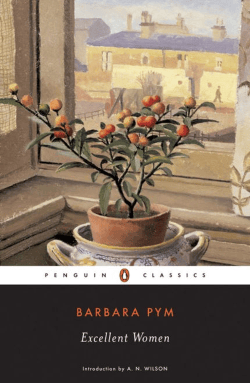
Excellent Women by Barbara Pym
Women have traditionally been looked at as the caretakers of a family. This is no bad thing. In a loving family, daughters and sons should be honored to care for their parents—or for other relatives—in the same way that they were once cared for, long before they could even walk.
There is great honor in being the person who cares for aging relatives, hurting siblings, or those in need within a community. But women are also allowed to crave more, and to acknowledge that they might want more from life.
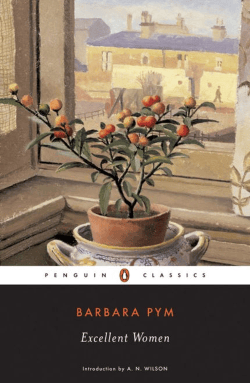
In Excellent Women, English author Barbara Pym has such a tender understanding of women who are observant, capable, and perhaps a little too accustomed to putting themselves second.
I’d want you to know that a quiet life is not necessarily a small one—and that you don’t have to disappear in order to be good.
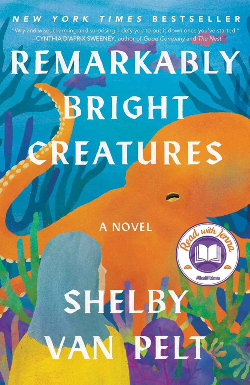
Remarkably Bright Creatures by Shelby Van Pelt
I would give Remarkably Bright Creatures to a woman who has spent so much of her life taking care of everyone else that she has forgotten she is allowed to have a life of her own.
Shelby Van Pelt’s novel is gentle without being frivolous. At its center is Tova Sullivan, an older woman whose life has been shaped by loss, loneliness, work, and responsibility. What I love most is the novel’s understanding that a life can change even after we have convinced ourselves that it is already finished changing.
There is something comforting about being reminded that friendship can arrive at unexpected ages and in unexpected forms, and that loneliness does not have to be permanent.
I would hand this book to a woman I love and tell her: there is still so much life waiting for you.
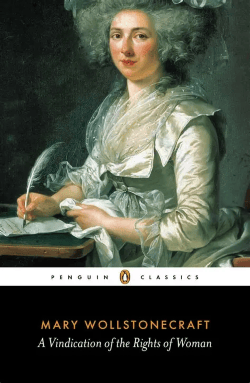
A Vindication of the Rights of Woman by Mary Wollstonecraft
I haven’t actually read A Vindication of the Rights of Woman yet, which perhaps makes its place on this list a little unusual. But it is one of those books that I want the women I love to know exists.
Published in 1792, Mary Wollstonecraft’s argument was remarkably direct: women were not born intellectually inferior to men, but were being denied the education and opportunities that would allow them to develop their minds.
That makes it a particularly fitting book for this list. When I think about the women who came before us, and how many were discouraged from reading, writing, studying, or thinking beyond the boundaries prescribed for them, I feel a certain gratitude for the fact that I can now pick up a book simply because I want to understand something.
I would give this one to a woman as a reminder of something Wollstonecraft understood centuries ago: a woman’s mind is worth cultivating.
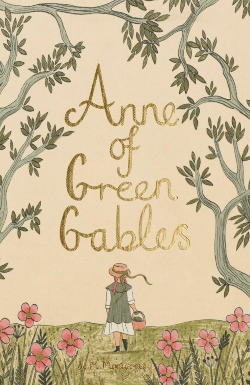
Anne of Green Gables by L. M. Montgomery
I would give Anne of Green Gables to a woman who has ever felt that she was too much of something: too imaginative, too talkative, too emotional, too strange, or simply too different from the people around her.
Anne Shirley enters the world as an unwanted orphan and gradually finds something she has desperately wanted all along: a place where she belongs. But what I love about Anne is that she doesn’t have to become less herself in order to earn that belonging. Her imagination, her ambitions, her temper, and her enormous capacity for feeling are not things she ultimately has to apologize for.
There is also something wonderfully feminine about watching Anne grow up. She wants an education. She wants friendship. She wants beautiful things. She wants to write. She wants to make something of herself.
I would give this book to a woman I love as a reminder that growing up does not have to mean becoming smaller.
You are allowed to remain a little bit Anne.
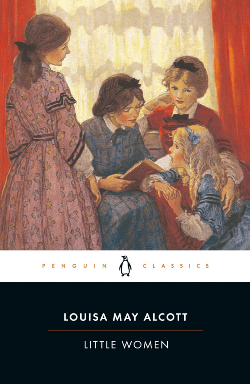
Little Women by Louisa May Alcott
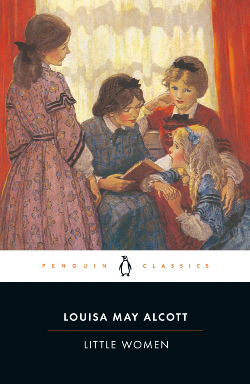
I believe every woman needs to encounter the March sisters at least once in her life. Meg, Jo, Beth, and Amy are so different from one another, yet they remain bound by one of the greatest ties there is: sisterly love.
There is a scene in which, in a fit of rage, Amy throws her older sister Jo’s manuscript into the fire. I don’t think this scene is talked about enough, because what follows is a quarrel of fearsome proportions. Sisters fight, and Amy and Jo certainly did. They each managed to wound the other deeply, and yet neither could stay angry forever.
Little Women is not simply the story of a peaceful family waiting out the winter while Father is away at war. It touches on the many sides of sisterhood, including the ugly and the unfortunate. I would want you to read it so that you might know that even if you one day fight with your sister over something that seems terribly important in the moment, it doesn’t mean that the love is gone. Reconciliation is possible.
The lessons one can uncover in Little Women are, truly, timeless.
I Love Giving Books to Women
A book is such a small thing to place in someone’s hands, yet it can contain an entire world. It can remind you that other women have felt what you feel, wondered what you wonder, made mistakes, wanted more, loved fiercely, and sometimes had to begin again.
The women who came before us were not always given the freedom to read whatever they pleased. I don’t want to take that freedom for granted. I want to celebrate it by filling the hands of the women I love with books.
So if a birthday is coming up and you’re wondering what to give your mother, your sister, your daughter, or your dearest friend, perhaps give her a book.
And if she doesn’t like it, well—there’s always costume jewelry.
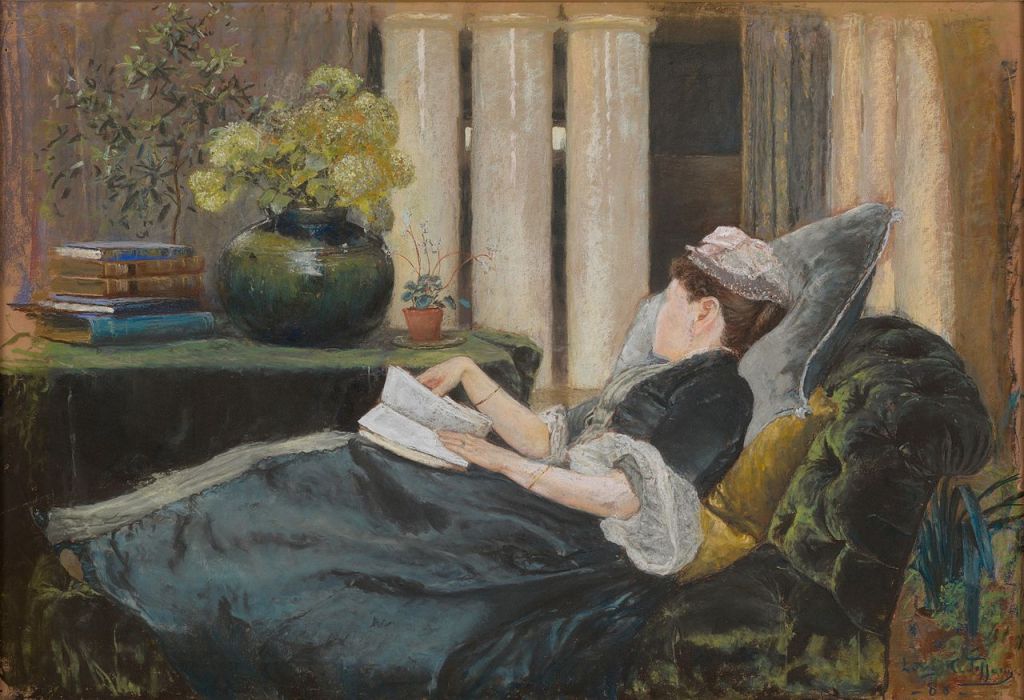
Cover Image: Louise Tiffany, Reading (1888) by Louis Comfort Tiffany
Enjoying the Tearoom?
If something you read here made you think, smile, or reach for another book, you can help keep the Tearoom brewing with a small contribution.
Your support helps me buy books, make time for this work, and keep exploring the literary world with you.
Over the years, literature has blessed us with great stories about female friendship.
These novels hit best when they offer readers a full range of color. They should not only depict happy moments, but also those of pain and grief. Light and shadow: this variety creates a strong foundation.
Such novels acknowledge that strong friendship cannot exist without storms. We will not spend our whole lives making daisy chains together in a field; there will be arguments. In some cases, there might be years of no contact because of a misunderstanding.
Humans are complicated, therefore friendship is complicated. Novels allow us to explore joyous moments between women who share the joys and sorrows of life. The strongest friends I have known, in real life and in novels, knew each other from childhood to death.
What I love most about the theme of female friendship is that not all friendships look the same. Two women can love one another, yet be bound by different seasons of life, loyalties, and more.
If you are looking for books about female friendship—perhaps to soothe a hurt, strengthen a bond, or simply remind you of the complicated beauty of having a companion—here are five I recommend.
Little Womenby Louisa May Alcott
Some might protest that Little Women does not belong here. After all, it is a novel focused on sisters and the challenges the March girls face as they grow up together. But a person who makes this argument forgets something important: one must be friends with her sisters, too.
I have heard of too many sisters who, for one reason or another, stopped speaking to each other. Eventually they lost contact. My grandmother and her sister died without ever speaking to one another again. I don’t know what caused the rift, and perhaps I never will. I can still urge you, dear reader, not to let this happen.
There are plenty of important friendships in Little Women, not only female friendship. Consider the March girls’ adventures with their wealthy neighbor, Laurie. The book would not have been the same without him and his creative energy.
Truly, Little Women has much to teach us about life—not just sisterhood or friendship, but the importance of loving people while we still have the chance.
Excellent Womenby Barbara Pym
Barbara Pym understood that female friendship does not always announce itself with grand declarations or dramatic reconciliations. Sometimes it looks like a cup of tea, a shared confidence, a bit of gossip, or simply having someone who understands why a seemingly insignificant thing matters.
In Excellent Women, Mildred Lathbury is a single woman living a quiet, respectable life in postwar England. She is the sort of woman everyone depends upon. People confide in her, ask for her help, and assume she will be there when needed. She observes the romantic entanglements and domestic complications of the people around her with a mixture of amusement, affection, and occasional exasperation.
What I love about this novel is the way it honors the friendships and relationships women build outside of romance. Mildred’s life is not empty simply because she is unmarried. Her friendships give her companionship, purpose, and a place in the lives of other people.
There is something deeply comforting about Excellent Women. It reminds us that a meaningful life can be made up of ordinary days and that friendship does not have to be dramatic to be important. Sometimes having a woman to sit beside, confide in, laugh with, or quietly observe the absurdities of life alongside is more than enough.
The Book Club for Troublesome Womenby Marie Bostwick
There has been a delightful trend in recent years of novels centered around the idea of the book club. Why are women, in particular, so drawn to the idea of gathering around books?
I suspect part of the answer is historical. For generations, women were discouraged from pursuing education and intellectual life on equal terms with men. Perhaps that is one reason we have seized the book club with such a fierce enthusiasm. We finally have our own tables.
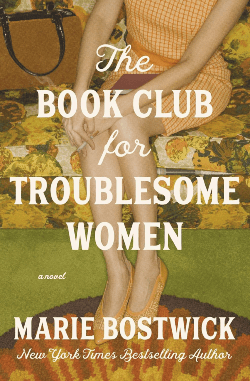
The Book Club for Troublesome Women has become a favorite among modern readers for its feminist themes and its setting in the 1960s, during the Kennedy presidency. But I think what makes this novel especially appealing is the friendship at its center. Four women, very different from one another, find themselves joined during trying times by their love of books and their desire for certain freedoms that society was only reluctantly beginning to offer them.
That is the magic of a book club. We may walk into the room as strangers, with different histories, opinions, and personalities, but we arrive with at least one thing in common: we have all read the book.
Many of us may never join an actual book club, but I think the meaning behind the idea matters just as much. We all want someplace to belong. A book possesses a strong enough foundation on which to build that place.
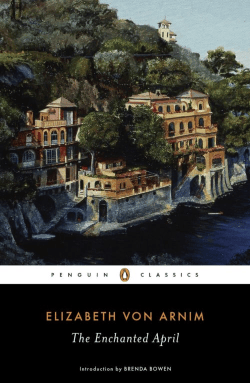
The Enchanted Aprilby Elizabeth von Arnim
Sometimes the friendships we need are not the ones we expected to make. We meet someone because of circumstance, because we happen to be sitting beside one another, or because we are all desperate to escape the same dreary February.
That is essentially how The Enchanted April begins. Four women, very different in temperament and circumstance, find themselves drawn together by the promise of an Italian castle in spring. They decide to rent it together, and what begins as a practical arrangement slowly becomes something much more meaningful.
What I love about this novel is that these women do not have to become best friends immediately. They have their differences, their grievances, and their own ideas about how life ought to be lived. But the beauty of friendship is that it can give us room to change. In the company of other women, we sometimes remember parts of ourselves that have been neglected.
The Italian garden becomes almost a character in its own right, but the real enchantment is what happens between the women. They begin to see one another differently—and, in doing so, begin to see themselves differently.
The Enchanted April is a lovely reminder that sometimes what we need most is not a solution to our lives, but a change of scenery and a few good women to share it with.
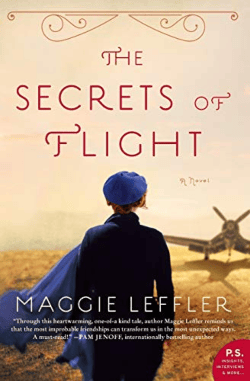
The Secrets of Flightby Maggie Leffler
There is no age limit on friendship. In The Secrets of Flight by Maggie Leffler, we meet an elderly woman who belongs to a creative writing group made up mostly of people her own age. Then a sixteen-year-old girl with dreams of becoming an author begins attending the group. She is starry-eyed about the first story she has written—the story that has opened the door to a life of creativity—and at first, her youth makes her an oddity among the older writers.
But stories have a remarkable way of making strangers understand one another. The young girl and the older women discover that the things that matter to us as human beings do not necessarily change with age. The desire to create, to be heard, to tell our stories, and to make sense of our lives belongs to all of us.
The Secrets of Flight reminds us that friendship can cross generations. We need the wisdom of those who have lived longer than we have, just as we have something to offer those who are still beginning their lives. Story becomes the bridge between them—a way for the past and the future to sit together at the same table.
We all need one another. And sometimes the person who has the most to teach us is someone we might never have thought to call a friend.
Why I Love Novels About Female Friendship
The best books about female friendship remind us that there is no single definition of what it means to be a friend. Some friendships begin in childhood. Others arrive later in life. Some are built around books, creativity, or shared interests. Others survive arguments, distance, and years of change.
That may be why stories about women and friendship remain so compelling. They remind us that none of us are meant to live entirely alone.
And perhaps the next great friendship in your life will begin with a book.
Enjoying the Tearoom?
If this essay gave you a book to add to your reading list—or reminded you of a friendship worth cherishing—you can buy me a coffee to help keep The Tearoom going.
Your support helps me buy books, make tea, keep reading, and continue building this little literary corner of the internet for women who believe books make life richer.
“There is a healthy amount of dreaming that has to be done for any project to really be worthwhile. All of those doors have to be knocked on. Some have to be slammed in your face.”
Dolly Parton – My Life and Other Unfinished Business
Our most beloved stars do us a great service when they leave behind memoirs. The quote above by Dolly Parton is not only relevant to those who seek lives in the music industry. It reminds us that no one can achieve their goals immediately.
Dreaming does, and must, take place before we reach our destination, sometimes for years and years. (Many of my favorite authors did not publish debut novels until well into their sixties.) And we must learn to be grateful for the doors that are slammed along the way; they might be numerous, but with patience, we will reach the place we were meant to be all along—we will reach home.
Storytelling Dolly
No one could have been more authorized to speak on the topic than Dolly. She was born to Robert Lee and Avie Parton on January 19, 1946; the Partons would eventually total twelve children, of whom Dolly was the fourth. They lived in extreme poverty, but Dolly was always quick to assure her listeners that, while they did not have everything they wanted, they found ways to be happy.
Her childhood was rich, in fact—rich in music and storytelling. These were skills that she honed very young and which would eventually earn her fame. As a child, she sang on local radio and television programs. She always knew that she was going to be a star. She had appeared at the Grand Ole Opry by the age of ten. At thirteen, she made her first recording for a small Louisiana label. After graduating from high school in 1964, she moved to Nashville to pursue music professionally.
Following the news of Dolly’s death on August 25, I realized that while she was the type of woman I admire, I’ve always known very little about her. I had never paid attention to any of her songs. But even considering this want of information, her loss was a shock to wake up to, and a void that I—and all of us—have been feeling consistently since it happened.
I have begun to think that, underneath all of this, what I am feeling is the absence of a great storyteller. As I sifted through some of her greatest hits, I was struck by the purity and light with which she spins her yarns.
Coat of Many Colors
“Coat of Many Colors” is a particularly tender song in which Dolly’s talent for storytelling shines.
In the early chapters of her autobiography, My Life and Other Unfinished Business, she dedicates several pages to the story behind this song. Dolly lovingly tells her audience that her mother had a gift for sewing and quilting.
Dolly writes about one particularly cold fall, during which she did not have a coat:
Mama began to make me a coat. … she knew me and my personality, so she decided to make my coat out of the brightest, most colorful colors she could find.
This matches her lyrics, which say:
My coat of many colors
That my mama made for me
Made only from rags
But I wore it so proudly
In the book, she describes her first day wearing that coat to school:
I burst through the school doors like a multicolored whirlwind, wondering just how many people I could find to admire my coat. I was so proud of it. I wanted to be seen in it. I wanted to be noticed. ‘See my new coat?’ I said to one boy. ‘Naw,’ he sneered, ‘it looks like a bunch of rags.’
In the book, she proclaims “Coat of Many Colors” to be her favorite song that she ever wrote or sang. The thing about songs like this is that we can all relate to it in some way. Maternal love is heavy in the lyrics, as is the value of a gift that takes time and effort to complete.
The original coat worn by Dolly is gone; it was passed from child to child in the Parton family until it eventually disintegrated, leaving only the loving memory of it behind. Her mother made a replica years later, and that replica was displayed, along with the handwritten lyrics to the song, at Dollywood.
Dolly, in her storytelling genius, demonstrated that beautiful art can be created using scraps of memory and the stitches of a mother’s love.
We’re Not That Different
It is evident in Dolly’s writing style that she was an avid reader: her tone is humorous and light, and she does not take herself too seriously. As I read her book, I felt as if I were sitting with a very dear friend, listening to her witticisms and anecdotes.
She is honest about the struggles she experienced, but she is also able to reflect on the ways in which they made her a stronger woman.
One of the things I loved most was encountering Dolly the reader behind the songwriter. She has spoken affectionately about books throughout her life, and some of her literary loves feel appropriate for the woman she became. She has mentioned The Secret Garden, a book about a neglected girl discovering a hidden place and, in the process, discovering herself. She has also spoken about The Little House on the Prairie books, which seems equally fitting. And then there is The Velveteen Rabbit, with its tender idea that love and experience are what make us real.
Dolly has spent her career telling people that being “real” matters more than appearing perfect. Perhaps that is part of why her songs have such warmth to them. She understood that a tale does not have to be grand to be meaningful. Sometimes it only needs a bit of hardship and someone who knows how to tell the story afterward.
For all the extraordinary things she accomplished, the woman behind them was recognizably human. She grew up with books. She loved stories. She made something of the circumstances she was given.
Reading her memoir, I kept thinking about how easy it is to imagine that people like Dolly Parton belong to some different category of human being. She is, after all, Dolly Parton. But beneath the woman in rhinestones lived a girl who had very little–but, in truth, she was rich. She had a family, a dream, and a story to tell.
And maybe that is the most encouraging thing about her.
We are not that different.
Enjoying The Tearoom?
If something you’ve read here has made you think, smile, or see a familiar story in a new way, you can buy me a coffee. Your support helps me keep reading, writing, studying, and making a little more room for books in the world.