
The month of October is often a time for stories about ghosts and hauntings. What some people don’t stop to consider is that, most of the time, true hauntings don’t occur in houses but to those who live in them. The walls of a home are not nearly so confining as the walls of a mind.
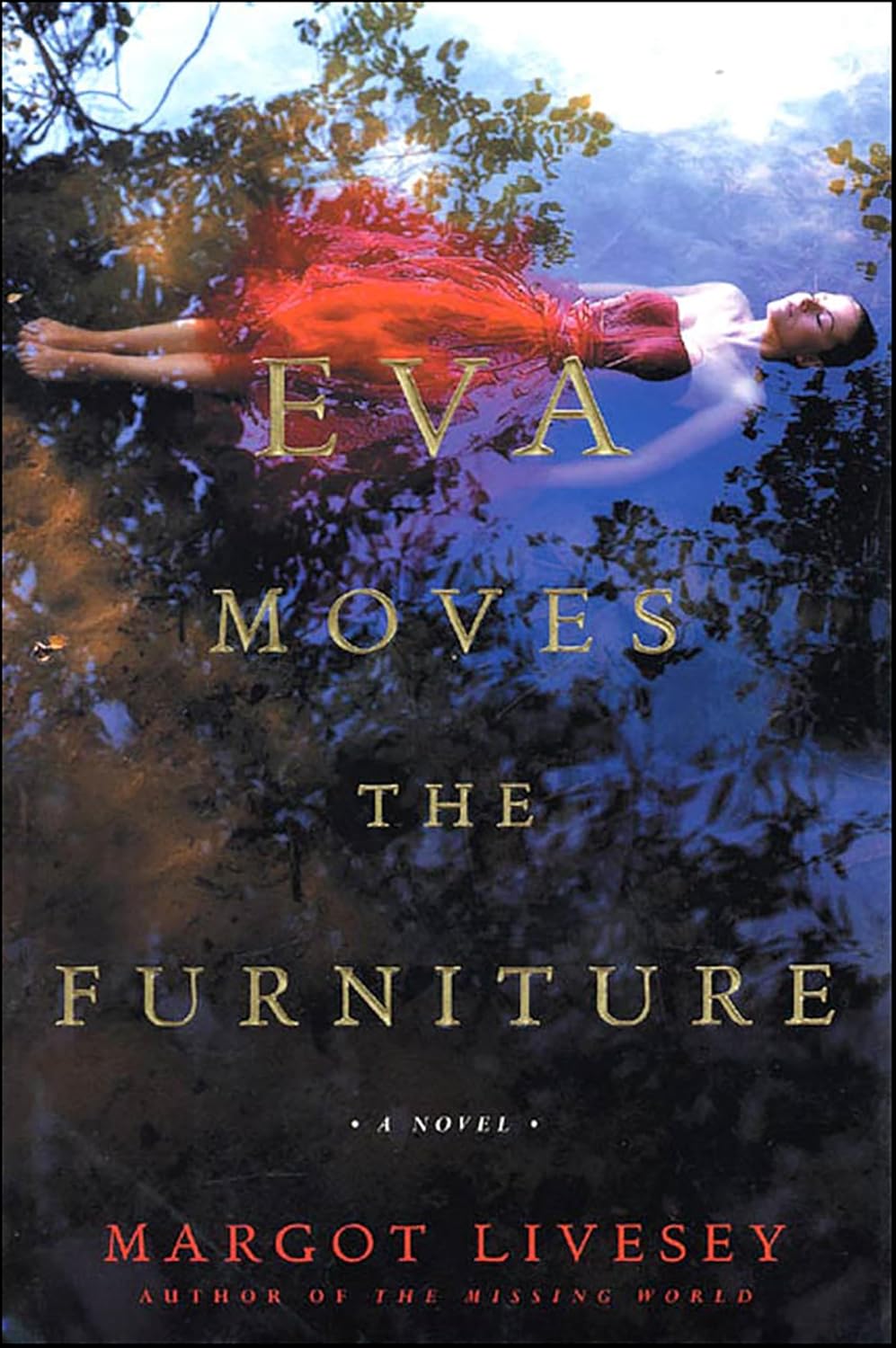
In Margot Livesey’s novel, Eva Moves the Furniture, the protagonist has been seeing two mysterious figures all her life: a silver-haired woman and a young, freckled girl. No one else can see them. As she grows older, she realizes that these spirits are interfering in her life, to the point where they might interfere with her “living” relationships. It is a wonderfully poignant story.
When I finished Eva Moves the Furniture, I reached out to Margot Livesey to ask if she would discuss her novel. Here are her responses to a few of my questions. Very shortly, I will post my full review of the novel.
Q: Eva’s companions are frightening to the people around her, but to Eva they are often a source of comfort and protection. What drew you to the idea of making the supernatural presence in Eva’s life something she would ultimately be unwilling to give up?
A: Eva is very loosely based on my mother, a nurse, who died when I was two and a half. Among the handful of stories I have about her, several involve the supernatural. She was regularly visited by poltergeists who disturbed her patients, and one story makes clear that she saw people who were not visible to most other people. When I came to write about this, it felt important to have Eva’s relationship with the companions evolve. I didn’t want to keep hitting the same note over and over again, nor did I want the relationships to be simple.
Q: Eva tells Samuel about her companions because she wants him to know her whole self, not because she wants to be cured of them. Was that distinction important to you when you were writing their relationship?
A: Thank you for this perceptive question. Yes, it was very important. At the time that I was writing Eva Moves the Furniture, not many people were writing about the supernatural in Anglo-Saxon culture. Ghosts belonged to the National Enquirer. But at the same time, the supernatural seemed very acceptable in the context of religion. When Samuel talks about Jewish folklore and religion, Eva misunderstands and thinks that he sees the world the same way she does.
Q: There is an interesting reversal in the novel: the things other people think Eva should fear are sometimes the very things that comfort her, while the people who claim to be protecting her can become sources of fear. Did you consciously build the novel around that reversal?
A: I was more conscious of the paradox of the companions: how they keep her company but make her lonely. Perhaps many gifted people experience that paradox.
Q: Eva’s refusal to betray her companions struck me as a kind of stubborn self-loyalty. Was that quality of Eva something you admired as you wrote her?
A: For a long time, she doesn’t understand that she has chosen the companions, that she could have ignored or denied them, and they would have disappeared. Several of the children in my life have had invisible friends who have disappeared as they got older. So I don’t think I saw Eva’s refusal to betray the companions as self-loyalty so much as a piercing recognition—all along, she’s been choosing this.
Q: One of the most painful parts of the novel for me was Eva’s experience of not being believed about her physical symptoms. What interested you in placing this experience of medical dismissal alongside her experience of being disbelieved about the companions?
A: This was my mother’s experience when she finally went to the doctor. He told her not to be a hypochondriac and sent her home. I hadn’t known if I would use it—I changed many, many details—but when I reached that part of the novel, it seemed to make perfect sense that once again there was another invisible presence in her life and that no one believed her.
Q: Eva experiences an almost strange relief when she finally learns that she has cancer because, at last, someone has confirmed that something really is wrong. Why did you want that moment of vindication to be part of her story?
A: All her life, she struggles with the fact that the people closest to her don’t know one of the most intimate things about her. So there is, finally, a quixotic relief in being understood.
Q: The title Eva Moves the Furniture feels almost playful at first, but by the end it seems to carry a much larger meaning. What did “moving the furniture” mean to you as you wrote the novel?
A: I first came up with the title when one of my mother’s patients told me how the poltergeists would come in the night and move the furniture in the wards where she worked. In the mornings, she would move it back. As I wrote, the title gradually evolved until, late in her life, she tries to move the furniture with tragic results.
Q: And finally, which three books would you place on the Tearoom table now?
A: The Daffodil Days by Helen Bain, Fifteen Wild Decembers by Karen Powell, and Flesh by David Szalay.


Leave a Reply