• Mona Lisa’s Romantic Disappearance

    Vanished Smile: The Mysterious Theft of Mona Lisa by R. A. Scotti is a book that helps put Mona Lisa’s fame into perspective. Most people know her as Leonardo da Vinci’s masterpiece.

    We can get a better grasp of her fame after learning about the drama that took place in 1911.

    In August 1911, the Louvre Museum was stirred from its routine by horrific news. Usually displayed in the Salon de Carré, where she was visited by artists and suitors, Mona Lisa had vanished. Under the spot where the portrait had hung was a plaque reading her name, but she was nowhere to be found.

    Her empty frame was discovered in one of the corridors, as well as the glass case meant to protect her from outsiders. A broken doorknob indicated a route of escape that the thief might have taken.

    1910 Map of the Louvre

    Pre-Theft Louvre

    How was this possible in a museum containing so many treasures? The ugly truth is that the Louvre Museum before Mona Lisa’s theft was lax in security. It was understaffed and too large for there to be guards everywhere.

    The director of the museum was fired after Mona Lisa’s disappearance.

    In 1911, the Louvre had more exits available for thieves to slip through. Visitors were allowed to grab paintings for photographs without written consent. Curators and guards were so busy that none of them noticed Mona Lisa’s disappearance for three days.

    She was last known to have been in the Salon de Carré on Sunday evening; her absence was not discovered until Tuesday morning.

    Parisians were outraged that it had been so easy for the painting to disappear under guards’ very noses. The greatest available detective would be required to solve such a mystery.

    Alphonse Bertillon was called in the very Tuesday that Mona Lisa’s disappearance was noticed.

    Alphonse Bertillon, detective. He pioneered in using photography to help solve crimes.

    Sherlock Holmes’ Hero

    Alphonse Bertillon was Chief of the Judicial Identity of the Paris Prefecture. He was the closest they could get to Sherlock Holmes in this most Holmesian of cases.

    In a short story written by Sir Arthur Conan Doyle, The Adventures of the Naval Treaty, Holmes tells Watson that he admires the French policeman Alphonse Bertillon. Naval Treaty was published in a collection of Holmesian short stories in 1893.

    Sherlock uttered these words before the Mona Lisa disappeared. Was it a premonition?

    Bertillon came with all of the tools of the trade. This included his magnifying glass, dusting powder, and a trail of assistants to photograph the scene. Photography of crime scenes was a new practice which Bertillon pioneered.

    He examined Mona Lisa’s empty frame and the glass case that held her. Using his magnifying glass, he searched for evidence that could give a name to the heinous thief: fingerprints.

    A perfect thumbprint was discovered on the glass case which had held Mona Lisa.

    Paris, France: MONA LISA THEFT, 1911. The gap on the wall of the Carre Gallery of the Louvre Museum, Paris, where the Mona Lisa was exhibited before it was stolen 1911. ©Mary Evans Picture Library / The Image Works

    Salon Full of Suspects

    Louis Lepine, Prefect of the Seine, arranged for the theft to be repeated by two groups on a different painting of the same size.

    The first group to recreate the theft was comprised of ordinary gendarmes. They struggled to remove the art from the frames and did a clumsy job of it. The second group was made up of Louvre workers–people familiar with the museum and comfortable handling art in their cases.

    The Louvre workers removed the painting from its frame and case in moments. This provided clues for Bertillon—and a great deal of embarrassment for museum staff.

    It suggested that the theft had been committed by someone who worked at the museum. He must have been familiar with the halls and glass cases, so that they wouldn’t be such obstacles.

    Could a thief have been mingling with curators and guards long enough to plan a heist?

    Seeking a Match

    Lepine requested that a list be compiled naming everybody who’d had access to the museum between that Sunday and Tuesday.

    The long window of time was discouraging. Whoever had stolen the painting could have escaped France by the time guards noticed her absence. He might be on a ship halfway across the world.

    Proceedings continued, though officers began to doubt that Mona Lisa would ever be seen again.

    Each Louvre custodian, curator, workman and photographer on Lepine’s list was fingerprinted and interrogated. One guard confessed that Mona Lisa had been left alone from eight to ten o’clock on Monday morning. He had been called away from the Salon de Carré to help move paintings in another part of the museum.

    This gave the thief two hours’ free rein to remove the painting from its frame and flee.

    Mona Lisa’s Lover

    The guard then confessed an unnerving detail.

    He had been seeing a young man pay weekly visits to the Mona Lisa. Sometimes this man would bring her flowers, as if they were lovers. Could this obsessed visitor have been alone with the object of his affections that Monday? Was he deranged enough to have stolen her?

    This revelation provided the Louvre with a way to save face. The thief was not necessarily one of their staff; it could have been one of her unstable courtiers. While police continued to question museum workers, the public was told about Mona Lisa’s admirer.

    It was the sort of story that the media cannot resist. Chicago Tribune commented wryly on the matter:

    So, Mona Lisa has another lover! … Now, after four and a half centuries, Leonardo’s subtle lady wins another lover, and her tantalizing discretion quite forgot, she flees with her wooer. Ten thousand dollars for her return, cries Paris. … No one man should have exclusive right to feed on that mysterious loveliness.


    This ends the first part of my series on Mona Lisa’s disappearance. After I’d read Vanished Smile, I struggled for a way to sum up the story for my blog.

    When Mona Lisa disappeared, the world reacted in outrage. When newspapers and the French government offered rewards for her return, false paintings were provided by people hoping for money. Billionaires like J. P. Morgan and artists like Pablo Picasso were pulled into the matter.

    To leave out one surreal detail does this story a disservice. There is more to the Mona Lisa than her mysterious smile; there’s a reason why she now has a bulletproof chamber at the museum.

    Behind every great story is an even greater story; the Mona Lisa’s is no exception. I will post more about the investigation in a few days.

  • 5 Myths About the Stars

    5 Myths About the Stars


    Stars have aided us from the beginning. Before we settled on a common calendar, they told our ancestors when to plant crops. Navigators at sea used the stars to guide them on treacherous journeys. In uncertain times, humans sought messages from these celestial lights.

    Though we have developed modern methods of navigation, the stars have not lost their significance. We yearn to see them, write songs about them, and study them from afar. They remind us of that which does not vanish; they remain above us, sources of wonder and romance.

    It would be a shame if we did not learn what the stars meant to our ancestors. Here are five interesting myths about stars. These myths come from different parts of the world.

    When you finish, go on to read mythology about butterflies.

    The ‘Digging-Stars’

    According to South African mythology, tribes anticipated the appearance of IsiLimela–the Pleiades–to warn them it was time to begin hoeing the ground. The Pleiades were called the ‘digging stars’ because of this specific role.

    These were more than ‘digging-stars.’ Xhosa boys marked the beginning of their manhood from the Pleiades’ first June appearance. Their new lives depended on the appearance of IsiLimela.

    Read more South African star myths here!

    The Pleiades

    Inca Constellations

    The Inca culture in Peru also relied on the stars for agricultural purposes. Their belief was that everything in nature is sacred, so they worshiped various Gods such as Inti (the sun) and Chuqui Illa (the God of Thunder.)

    Machu Picchu, the famous archaeological site, has long been a mystery. Who was it built for and why in that spectacular location? Recent studies suggest that, aside from being a ceremonial site, Machu Picchu was an astronomical observatory.

    PeruforLess has a good article about Inca culture and their belief system.

    Machu Picchu, Peru

    Lost Viking Tales

    Most of the known Norse mythology is found in the Eddas, though there’s little mention of stars specifically. If you’re interested in the Norse stories of creation, the Eddas provide a fascinating read. Find the Edda of Snorri Sturluson on Amazon.

    I quote this excellent essay on Norse constellations by Jonas Persson:

    In Völuspa the origin of the stars and planets are mentioned, as well as their end at Ragnarök. The world was created from the body of the giant Ymer. His skull forms the firmament and is held in place by four dwarves, where sparks from Muspellheim form the stars. Their place in the sky was determined by the gods and some were given paths they will roam.

    Having depended on the night sky to guide their ships, it’s inevitable that the Norse people knew astronomy. They had their own constellations, though the names of most of these constellations have been lost.

    Star Religion

    As a writer I’m pleased to learn that, in Egyptian mythology, the stars were represented by the goddess of writing, Seshat. The Milky Way Galaxy represented the mother goddess Nut giving birth to the sun god, Ra.

    We needn’t look farther than the Pyramids to understand the significance of stars to the ancient Egyptians. It is said that the Pyramids of Giza were built in alignment to Orion’s belt.

    If this is true, it’s no surprise. According to their religious writings, they believed the gods to be descended from those three stars (read more).

    Goddess of Falling Stars


    Greek mythology is famous for the gods and goddesses who fought amongst themselves and caused trouble on earth. Among the lesser-known is Asteria, the goddess of dreams and of falling stars.

    Asteria’s father was the Titan Coeus. He was the god of the northern axis of Heaven, around which revolve the constellations. From him Asteria gained abilities such as spelling messages in heaven with the stars.

    Zeus could not resist Asteria’s beauty (nor can we expect him to, given his record). Once when he had caught her, she transformed into a quail to slip away. Refusing to be defeated, Zeus became a bird and gave chase.

    Seeing that Zeus would never leave her be, Asteria dived into the sea and metamorphized into the Italian island now known as Ortigia. Learn more about Asteria.


    Stars have captivated us from the beginning. Regardless of where in the world our ancestors lived, the stars did not escape their attention. Further research would reveal more stories about the cosmos from other ethnic groups.

    I conclude this list with a beautiful quote:

    “Silently, one by one, in the infinite meadows of heaven,
    Blossomed the lovely stars, the forget-me-nots of the angels.”

    ― Henry Wadsworth Longfellow

  • Leonardo da Vinci: Unveiling the Genius

    Every now and then we encounter humans with incredible abilities. I don’t mean superpowers–no one can fly without special equipment, nor can they turn invisible. These abilities are acquired through study. Mastering an art form, throwing oneself into a field of science, or sailing around the world–these can be done by any human.

    They can be done–but not without study and courage.

    We have little hope of reaching the expertise of Leonardo da Vinci. He dabbled in everything–art, science, architecture, and more. All of these were his superpowers. They were trades and disciplines that he had a firm grip on because curiosity drove him to tireless study. Though he is best known for having painted the Mona Lisa, you could spend a lifetime learning about his achievements.

    How did Leonardo da Vinci stand out as the genius of his time? Since I’m covering La Gioconda, I have decided to limit this blog post to his life as a painter. Maybe later I can explore his other talents.

    Self-Portrait, Leonardo da Vinci

    Priceless Education

    Leonardo da Vinci did not go to school.

    It sounds ludicrous, doesn’t it? Since he was born to unwed parents, he wasn’t allowed to study in the parish school. This might have been his great advantage: he had the opportunity to teach himself. This allowed him to open doors that his ‘luckier’ peers never thought of.

    Da Vinci learned reading, writing and arithmetic at home–three skills that were to be the foundation for his achievements later on. At the age of twenty, he left to become an apprentice at the studio of painter Andrea Verrocchio. He was taught painting, sculpture, and mechanical skills.

    16th-century art historian Giorgio Vasari wrote a fascinating account from da Vinci’s time as an apprentice. Historians today believe that he embellished the tale, but there is something charming in pondering legend.

    Vasari writes that da Vinci collaborated with Verrocchio to paint The Baptism of Christ (1474-1478). According to Vasari, Verrocchio saw the great talent of his own apprentice and was struck with despair. He allegedly threw down his own brush and never painted again.

    Baptism of Christ, Leonardo da Vinci and Verrocchio

    Enduring Art

    Leonardo da Vinci was a polymath, possessing great talent in many fields that we consider difficult or obsolete today. Since this trilogy focuses on the Mona Lisa, I thought it appropriate to summarize da Vinci’s life and success as a painter.

    Only 18 original paintings attributed to him survive. They fall into categories–those universally accepted to be his work, those traditionally accepted, and widely accepted. These categories hinge on existing evidence of his being the painter.

    The Annunciation (1472-1476) is widely accepted to have been his first completed painting. The Baptism of Christ, his collaboration with the ill-tempered Verrocchio, is widely accepted as the third.

    La Gioconda, or Mona Lisa, is universally accepted as his twenty-second work. He was in his sixties when he took on this commission. What you might not have known, though, is that Mona Lisa is an unfinished painting.

    Historical accounts from visitors and acquaintances tell us that da Vinci had a stroke. This caused a paralysis in his right hand which frustrated him while he was painting La Gioconda. How did he manage to paint what can be seen of her now? He was ambidextrous, which must have come in useful, but the paralysis still troubled him enough for the work to be unfinished.

    Vitruvian Man, Leonardo da Vinci

    Where To Find His Work

    Leonardo da Vinci’s paintings have taken on lives of their own long after the death of the master. Lovers of La Gioconda claim that her eyes appear to be following them. Stories exist of men who fell in love and brought her flowers.

    If you want to see his most famous works of art, you’ll have to travel the world. Mona Lisa reigns in a chamber of her own at the Museum of the Louvre in Paris. The famous Last Supper is located in the Convent of Santa Maria delle Grazie in Milan.

    His pen-and-ink drawing, Vitruvian Man, is an image that most people have seen. It was taken from one of the many notebooks that he filled during his mature years. It isn’t on display because it is so brittle that photographs would do it severe damage. Vitruvian Man is kept safe in the archive of the Venetian Gallerie dell’Accademia.

    Do you want to go on a pilgrimage and see his surviving works? Here is a list of where to locate them.

    Da Vinci’s Notebooks

    Leonardo da Vinci’s notebooks are available for the fanatic to read and bask in his wisdom. Gutenberg offers them for free, but they can also be purchased in book form for more comfortable reading.

    There has been a renewed interest in the journals themselves and how he wrote in them. This compelling article makes me wish I knew how to keep smarter diaries, because the article says:

    It is estimated that da Vinci produced between 20,000 to 28,000 pages of notes and sketches spanning across 50 different notebooks about work related to whatever topics that interested him – painting, engineering, philosophy, warfare, engineering, physiology, landscape, proportion, perspective, geography, geology, light and shade, inventions and various other topics.

    In my lifetime I have filled about 28 notebooks properly–meaning that I finished them cover-to-cover rather than skipping around. However, I did not cover all the topics listed above.

    If you want to know more about da Vinci, I can tell you as a diarist that journals are a great place to search. With this useful footnote I will close my attempt to capture Leonardo’s brilliance in a blog post. I hope I did some justice to his life as a painter.


    My first post about La Gioconda was an introduction to the mysterious lady and the controversy over who posed as her model. In my next article, I will review and comment on the book Vanished Smile: The Mysterious Theft of Mona Lisa by R. A. Scotti.

    Canvas could not keep La Gioconda from going on an adventure, and I’d like to tell the story. After all, how often do paintings go on vacation?

  • Learning to Teach History: Interview with Phillip Campbell

    In recent years I have discovered a new interest in history. My motto for this blog is that behind every great story is an even greater story.

    This refers to three things. First, it speaks of the effort going on behind the scenes when an author writes a book. Secondly, think of a painting. It’s easy to admire as an image, but often is so much more. If you’ve studied art, you know that very few immortal paintings exist for the sake of existing. Great works of art tend to have stories woven in between brushstrokes.

    The third and broadest type of ‘story’ I refer to with my motto is history.

    When we see the fireworks on Independence Day, we celebrate our freedom. How often do we set aside the hot dogs and ponder those men who, centuries ago, stood up in defense of their rights?

    We idolize Vincent van Gogh for his story and his poignant art, make jokes about the ear incident. Do we know why he cut off his ear? Behind every great (and I mean great in the sense of huge, not always good, as in the case of van Gogh) story is a greater story.

    We cannot let these stories become lost in time; they are relevant as the marble statues in front of the Capital building. Maybe we can’t see the stitches in that old quilt Grandma gave us; it doesn’t make the effort of perfecting those stitches less meaningful.

    I believe history should be taught thoroughly, and so does my good friend Phillip Campbell. A history teacher, he’s published a book about how to teach history.

    How do you present events with the dignity they deserve? How can you see the stitches in the quilt? What can we do to help those we are teaching to appreciate those stitches, too?


    The Catholic Educator’s Guide to Teaching History, Phillip Campbell

    I asked him a few questions about the past and its significance. I’m excited to read his book, The Catholic Educator’s Guide to Teaching History. My quest for this blog, digging up those small stitches and presenting them to you, will benefit from his wisdom.

    It’s not only our duty to learn history–we must also pass it on. Purchase his book today.


    Tell us your goal in writing this book. How will it change the way readers think of the past?

    I wrote The Catholic Educator’s Guide to Teaching History to be a summary of my 15+ years experience teaching history in Catholic educational environments. This book is for parents or teachers who are trying to teach history in various settings: classroom, homeschool, or co-op. I’m hoping this book will help these people to teach history in a way that is engaging and memorable. 

    Too many people complain that they found history classes in school to be boring and uninspiring. This is a true shame, as history is full of the greatest stories one will ever encounter. History is ultimately just the story of the human race! It’s unfortunate that it is often made dull by people who teach it poorly. Hopefully my book will contribute in some small way to turning that around.

    There’s a lot to say about how to handle the past as a subject of study, but the crux of my method (at least when dealing with children) is capturing the narrative arc of history. In other words, returning the story to history. Everybody loves a good story, especially children. 

    If we can really present our historical content as a story—complete with characters, plot, climax, and resolution—it becomes immensely more accessible. And the best part is we don’t have to create the story ourselves; it’s already there, we merely need to tailor our approach in such a way that the narrative structure of history is highlighted for young minds. This is what makes history “come alive” for people.  

    Why is it important to teach and study history?

    That is a very broad question, to which many answers have been given over the years. For most people, this question immediately brings to mind the famous quote of philosopher George Santayana: “Those who cannot remember the past are condemned to repeat it.” 

    I have always disliked it as a comprehensive explanation of why we ought to study history. It takes a very pessimistic view of human civilization, essentially viewing history as nothing but an embarrassing burden we are “condemned” to deal with. Human nature is capable of great darkness, to be sure, but also great beauty. 

    I, for one, prefer not to view history as something that only dooms us, something we must constantly be struggling to escape. But beyond this, we could also critique Santayana’s maxim for being too utilitarian. While building a more peaceful society for all humanity is certainly a worthy goal, doesn’t the study of history have some rationale more intrinsic to our own character development? Something more personal?

    Traditionally, history has been a core part of the so-called “liberal arts” curriculum. The liberal arts are those studies whose purpose is to develop our own intellectual capacity and character (as opposed to professional or vocational skills). One does not study literature, poetry, or art because this knowledge keeps the electricity running or helps us make a buck. We study them because they form our character by ennobling our individual potential. They elevate our minds. They teach us to think. They make us more human. 

    The ancients viewed history in this manner. Cicero said, “To be ignorant of what occurred before you were born is to remain always a child. For what is the worth of human life, unless it is woven into the life of our ancestors by the records of history?” Understanding the things that came before our own life experience is essential to understanding not only the world we live in, but our very selves. 

    A person unfortunate enough to suffer complete amnesia loses their identity entirely, for a person who doesn’t know where they have been does not know who they are. Similarly, to the degree we live without knowledge of where we have been, to that degree we remain stunted in our understanding of ourselves. In the words of Cicero, we are still, in some sense, a “child.”

    Did any authors or historical figures influence this book?

    I was deeply influenced by the classical approach to history as exemplified by the Greeks and Romans. The Greeks assigned history its own muse, Clio, the “Proclaimer”, the inspirational goddess of history. That history should be numbered amongst the Nine Muses—with such subjects as poetry and dance—gives us profound insight into the real value of historical study. 

    The Muses were goddesses of inspiration; that is, the arts of the Muses are those that inspire and require inspiration. They help us transcend the workaday world and find value in life in an existential manner, connecting with things bigger than ourselves. That was part of my vision, to enable people to be inspired by history in a way that helps them connect with their own existence in a more meaningful way.

    I mentioned Cicero above. Another inspiration is Livy, the ancient Roman author who compiled a history of Rome from the founding of the city to his own day. Livy stressed the moral value of history as a lesson in human nature—we are edified by the deeds of the righteous and horrified by the evils of the wicked. I just think the ancients were so much more in tune with the character building aspect of history than modern people.

    If a person decided to study history, which three books would you recommend to them?

    It depends on what era of history you want to study, and one’s level of cognition. 

    Assuming we are talking to adults, I have a few recommendations: an excellent book that gives a solid introduction to the Middle Ages is Norman Cantor’s book The Civilization of the Middle Ages. My go-to book for ancient Rome is Michael Grant’s 1978 masterpiece History of Rome. It gets so much more fragmented when you get into modern history, and American history especially. 

    It’s challenging to recommend a single comprehensive book. I guess I will take the opportunity to make a shameless plug for my own two texts on modern Europe and American history: Story of Civilization Volume 3: The Making of the Modern World, and Story of Civilization Volume 4: The History of the United States. These books are meant for younger readers, but adults enjoy them as well because, as I said, everyone loves a story!

    It’s important to read lots of books to obtain a well-rounded view of history. For example, no one would say, “If you want to appreciate literature, what three books would you read?” Because the reality is, we develop our literary taste by reading a great variety of books. 

    Obviously we have to start somewhere, and I think that’s what your question is getting at. But ultimately if we want to be historically literate, we need to get our history from a diversity of sources as well. I don’t have just one book about a given period. Incidentally, this also helps inoculate you against historical bias, because the more history you read the more discerning your historical sense becomes.

    END


  • Mona Lisa: The Queen of the Louvre

    Throughout my years of blogging I’ve been faithful to the topic of literature. As a storyteller, it seemed like the most natural thing: reading is my vocation. Almost a decade later, I’m itching to write about more.

    My interests as I’ve grown and learned have developed considerably. Having read The Storytelling Animal by Jonathan Gottschall, I’ve come to understand that story isn’t limited to words on a page.

    Story is a magic that’s not limited to paper and ink. In the beginning, sagas were spoken by bards. Before common people could read, they learned their history through sketches and paintings. Story can also be sung or played on musical instruments.

    Lost in the rabbit hole of the Internet, a person can live their lifetime without ever really looking at a painting. Masters such as Van Gogh or Beethoven are more than online trends. I want to talk about the artists whose work helped form society.

    La Gioconda, Leonardo da Vinci

    Most Famous Smile

    We’re going to begin by discussing the most famous painting in the world.

    Is there a better way in which to introduce fine art? Mona Lisa has made it to meme fame; her face is on trendy t-shirts and bags. It’s tragic that people know what she looks like but few know who she is. 

    Mona Lisa, known in Italian as La Gioconda, has had an exciting life despite being trapped on canvas. She has been speculated over, stolen, and pulled into one of the wildest conspiracy theories.

    At this time, she lives in the historic museum of the Louvre. So many tourists go there to visit La Gioconda (including myself!) that she has been given a room of her own. It’s bulletproof and its temperature is strictly controlled to protect her.

    Who Is Mona Lisa?

    Completed by the master Leonardo da Vinci in 1517, La Gioconda is categorized as a half-length painting. This is a term which refers to a portrait that only shows the subject’s upper half and hands.

    Mona Lisa was commissioned by a wealthy silk merchant named Francesco del Giocondo. It was a portrait of his wife, Lisa, and took sixteen years for Leonardo to complete. It’s thought to have been painted in celebration of the birth of their second son.

    Before Lisa del Giocondo was identified as the model, this painting presented a staggering puzzle. Alternate models were proposed such as Isabella of Aragon, the Duchess of Francavilla, and Renaissance art patron Isabella d’Este.

    Some insist that Leonardo used himself as the model, but 21st century art historians refute this.

    What’s It Like At Her House?

    The Louvre had a history before it became a tourist hot spot. It was a fortress during the turbulent Middle Ages, a palace during the time of the monarchy, and Napoleon’s showcase for stolen art during the First Empire.

    I visited the Louvre with my mom and brother. Because it was designed as a fortress, it’s unlike other museums I’ve seen with their straightforward floor plans. The Louvre is enormous; we didn’t have time to see everything.

    I became pleasantly lost in the realm of the marble statues. It reminded me of the White Witch’s court in Narnia. Later I learned that the Louvre houses the Nike of Samothrace. I can’t believe I missed it, and hope to visit again for a look.

    Nike of Samothrace

    An Audience With La Gioconda

    Mona Lisa is the Queen of the Louvre. If you wish to visit her, it means standing in line for at least half an hour. You ascend three elevators crowded with tourists who want to pay homage.

    There is a sign by the entrance to her chamber. It says to make haste because of the many people who want to meet her.

    When you enter the chamber, there’s a moment in which you think Is she really here? The Mona Lisa is depicted as enormous in cartoons and memes, but she’s actually the smallest painting in the vicinity.

    La Gioconda measures 30 by 20 inches. The crowd is so packed that you must crane your neck to glimpse that famous smile. This is proof that you do not need to be the largest or most eye-catching to be powerful.

    People then rush in to get their pictures. Drawing near to the legendary painting, you feel goosebumps. Regardless of her size, this is her–this is the lady everyone knows about to some degree, the goddess of Renaissance art.

    La Gioconda in her chamber (Source: Reader’s Digest)

    Homage

    In the City of Light you cannot delude yourself into believing story is limited to pages in books.

    Stories pack the streets of Paris, waiting on the famous bridges and near bookselling bouquinistes. They linger near the ruins of Notre Dame Cathedral, where you can imagine centuries of people stopping there to pray. They are sprawled on the sidewalks which, during the Revolution, glistened with pools of blood.

    In our next tribute to La Gioconda, we’ll learn about the artist–just a little, because there’s not enough room in a blog post to depict Leonardo da Vinci in a way that’ll do him justice. I’ll enjoy my research; I hope you’ll enjoy reading it.

  • The Bookworm’s Bible: FOR THE LOVE OF BOOKS by Graham Tarrant

    For The Love Of Books is the perfect gift for your picky book-loving friend. It’s the sort they’ll read over and over–for fun, as well as to learn.

    It was there in my Kindle for months before I started to read. At once I realized that it was the perfect match for me! I had already been doing my own research on writers, book series, and events that triggered classic stories. This work opened a treasure chest of details to keep me going.

    Graham Tarrant has gathered priceless facts and ‘did-you-know’ bits. I finished reading with the sense that I’d been given a crash course on literary history. 

    You finish reading this book with the sense that you’ve gone through volumes of classics, biographies, and newspaper articles. The only downside is realizing there are so many books we’ve yet to read.

    Why can’t I skip bedtime for reading time?

    Which Tasty Morsels?

    For The Love Of Books features everything to hook the bibliophile. It talks about authors’ disputes and the (mostly) indirect swings they aimed at each other. These were done via interviews–but sometimes their books featured characters suspiciously similar to their rivals.

    It provides juicy details on literary romances. If you want to learn about husband-wife cowriters, there are such romantic duos. If you prefer the dangerous, there are love affairs that authors carried out with colleagues. You’ll also find that some of them preferred the writer-hermit lifestyle to a family setup.

    Are you curious about the origin of the mystery novel? A chapter has been dedicated to mysteries and thrillers. There are many famous female mystery writers, Agatha Christie being the best known. You’ll read about spy novels that were based on the authors’ experiences.

    Of course, there is the melancholy: there are some authors who passed away before they could finish their work. I’m not talking about Dickens with Edward Drood or Jane Austen with Sanditon. No, this is a threat that all authors face! I can’t imagine anything sadder than an unfinished manuscript on my bedside when my last day comes.
    Fellow bookworm, you’ll find everything here to satisfy your appetite.

    “What Do I Read Next?”

    For The Love Of Books will make you feel enlightened. You’ll fall in love with the literary world and its history–but you might also find yourself in a panic. You won’t know what to read next! There are so many titles mentioned; it might depend on which category you’d like to explore. 
    Do you want to read the first detective story by Edgar Allen Poe? Called The Murders in the Rue Morgue, it’s said to have inspired future “career” mystery writers. Maybe you’d like to know which writers produced their best work under the influence of alcohol. If you dedicate yourself to the It’s A Fact tidbits, you will still learn much. In two or three sentences, Tarrant delights us with history to mull over and laugh at.

    Behind every great story is an even greater story. That is my motto, and Graham Tarrant has written the book to feed my obsessions: books and history, history and books. I am grateful for this gem, this must-have for book lovers, and the material it has given me to continue my research in these realms I adore.

  • The Waltz of Song & Poetry: CHAMBER MUSIC by James Joyce

    There’s music along the river
    For Love wanders there.

    – James Joyce, Chamber Music

    The Waltz of Song & Poetry

    It is common for well-loved songs to find their inspiration in poetry. Some are written with the goal of being transformed into music, including Chamber Music by James Joyce.

    Our culture is laden with songs that underwent this transformation. We’ve all heard some of them–classics such as “Auld Lang Syne,” a traditional Scottish song derived from a poem by Robert Burns (1759-1796). “America the Beautiful” was the work of Katharine Lee Bates (1859-1929).

    Secular music has also been touched by poetry. A collection of songs exist based on the work of Edgar Allan Poe. (Listen to Annabel Lee by Stevie Nicks of Fleetwood Mac fame). We can’t forget songs inspired by novels or poems about music and its power.

    Seeking the link between music and poetry sends a person down a literary and musical rabbit hole.


    The Words of James Joyce

    Joyce himself was not very romantic when he spoke of the title Chamber Music. He said of it that he referred to the sound made by a lady using a chamber pot. Most literary experts consider this mere off-color humor.

    When composer Geoffrey Molyneux Palmer (1882-1957) composed a tune for Chamber Music, Joyce was pleased with the outcome. Palmer was not the only one who gave a tune to Joyce’s verses, though Palmer’s was Joyce’s favorite attempt. Other composers took up the challenge, including Moeran, Bliss, and Charlotte Milligan Fox.

    Joyce said in a letter to Palmer regarding the work, “(…) you may set all of Chamber Music in time. This was indeed partly my idea in writing it. The book is in fact a suite of songs and if I were a musician I suppose I should have set them myself.”

    While casual readers can enjoy Chamber Music and the imagery within, it was not received with enthusiasm on its publication in 1907. Joyce was criticized for using many styles and forms, making the piece difficult to label.

    What’s more, Chamber Music was published during a year of political turmoil in his native country of Ireland. Fellow Irish writers scorned that it did not “serve the cause.” Compatriot poet Yeats complained that Joyce had no interest in Irish politics.


    What Happened in Ireland?

    I wondered while researching why it was such an issue to Yeats that Chamber Music was not political. What was this strife in Ireland capable of turning talented writers against each other? IrishRep summed up nicely:

    After nearly eight centuries under forced British rule, the late 1800s brought a wave of Irish nationalism in the form of The Gaelic Revival, which encouraged the reemergence of the Irish language, and the Irish Literary Renaissance, which revived Irish folklore and other storytelling tradition through new works by famed authors including W.B. Yeats, James Joyce, John Millington Synge, Lady Gregory, and more.

    read more

    We then understand that it was a literary issue. Joyce’s apparent indifference in Chamber Music may have been labelled treason. We can’t forget that he was unique with his writing–anyone who has glanced at Finnegan’s Wake knows what I mean.

    Ponder for a moment that this poem can be linked to pop-culture today as well as old political spats. A poem is never just a poem, a book never only a book! The poem’s troubled history is part of its legacy. All things considered, the imagery remains beautiful.

    I’ve read a few literary essays by professors, but cannot agree that there is a flaw in Chamber Music. It makes me want to try my own hand at composing music for a few stanzas.

    Enriched by the history of Chamber Music, we can enjoy it in all its depth. I live to dig up the “story behind the story.”

    How do music and poetry mingle in your life? The two have waltzed for centuries as if in a forbidden romance. Search your Spotify playlist for tracks where they embrace for three magical minutes.

  • The Creators of CARMEN: Prosper Mérimée and Georges Bizet

    My recent recommitment to learning the piano led me to a passion for classical music. I have a book of simplified classic songs my late grandmother gave me. It is one of my most treasured gifts from Grandma Colleen.

    I’ve been working through the pieces for a little over a month. To my delight, I came across one of my favorite songs: Habanera from the opera Carmen.

    Habanera is not a difficult song to play. It’s packed with energy that keeps me awake as I’m practicing it. It makes me want to dance in a frilly skirt and sing off-key. I would venture to say Habanera is one of the songs that most people have heard in passing, even if they do not know where it is from.

    There is no such thing as a coincidence, but something delightful happened last month, after I had begun practicing Habanera. I was reading the spectacular memoir The Seine by Elaine Sciolino, and she brought up composer Georges Bizet. He wrote the songs for Carmen’s opera adaptation.

    Sciolino told the story of the opera’s premiere. With its sensuality and suggestive language, Carmen scandalized crowds, so its first reviews were heavy with outrage.

    Those were different times, indeed.

    Depressed by this cold reception of Carmen, Bizet fell victim to depression. It became so crippling that when he died, people speculated he had taken his own life. Carmen was the labor of his hard work and tears; any artist could understand the effect of scathing reviews.

    That Bizet took his life appears to be a Parisian myth. In reality, Bizet had suffered from health problems throughout his life. He made a rash decision that winter to go for a swim in the Seine river. This is a bad decision because the Seine was freezing–but also because it’s dirty! After his swim, he contracted a violent fever. This induced a heart attack which led to his death on 3 June, 1875.

    If only he could have known that the play would become timeless. Like Vincent van Gogh, his work was not appreciated in his lifetime.


    When I had read about Georges Bizet in that chapter of The Seine, I was struck with curiosity about the man who wrote the story–the novella off of which the opera was based. 

    Prosper Mérimée, born in 1805, was a French writer. He pertained to the movement of Romantic literature. Mérimée was one of the pioneers of the novella, which is defined as a short novel or a long short story. Carmen is a novella, and I finished it in a day.

    Mérimée learned Russian and went on to translate the works of important writers such as Pushkin and Gogol. From 1830 to 1860, he became an inspector of French historical monuments, overseeing their preservation. This included the cathedral of Notre-Dame de Paris. I can only imagine his heartbreak if he could see what has become of it now!

    A Still from Carmen. Source: The Guardian

    Mérimée seemed destined for great things, because he also made an important discovery that would forever change the world of visual art.

    Along with author George Sand, he discovered the famous tapestries known as The Lady and the Unicorn. Not only did he write Carmen, a story which become a timeless opera; he also discovered those tapestries that enchant us today!

    There is so much more to the story of Carmen and her creators, but it would not fit into a blog post. I’m a history geek and I had a field day reading about these incredible men. When I read Carmen, it dawned on me that a story can take on many forms: written and musical. 

    When you read intentionally, you find that underneath every great story is a greater story. History is important because it shows us what humans are capable of. Truth is indeed stranger than fiction, and the lives of these two remarkable men could pass as yarns of fiction.

    Never disbelieve that there is wonder in this world: all you have to do is explore history to find it.

  • The Writer’s Lifeline: JANE AUSTEN’S BEST FRIEND by Zoe Wheddon

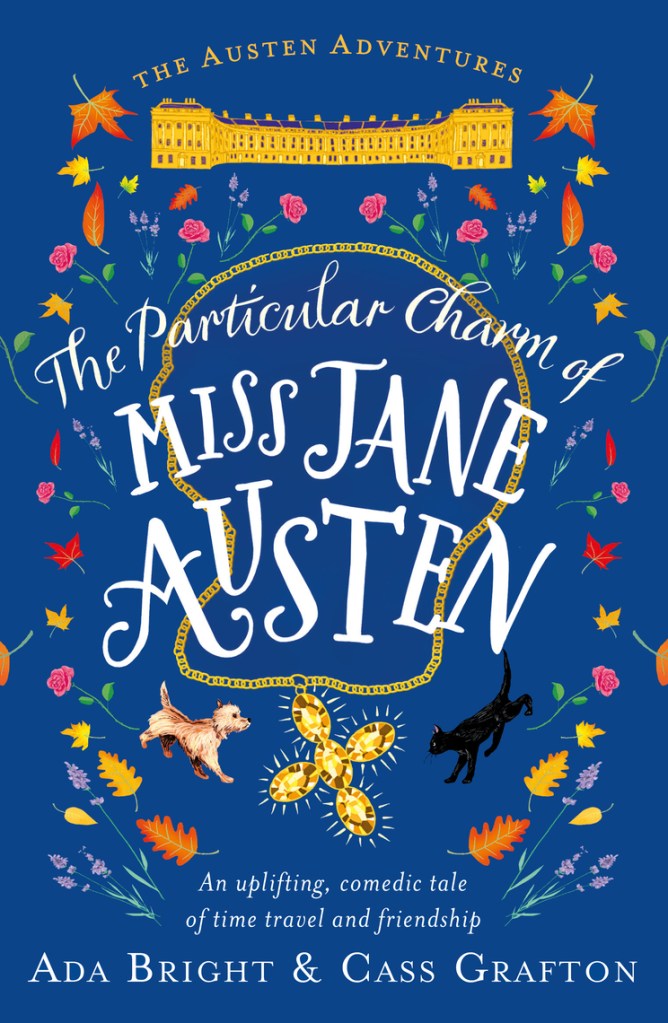
    It is also a truth universally acknowledged that a woman in possession of a great talent must be in want of a brilliant best friend.

    This twist on the first sentence of Pride and Prejudice ushers us into the book Jane Austen’s Best Friend, a touching piece that sheds a new light on the most famous authoress in history. 

    We often picture Miss Jane Austen alone at her desk, poring over her manuscripts. Rarely do we remember she was also a woman. She had a human heart that longed for affection and needed friends to keep her sane.

    Thankfully for Jane, such a friend existed. Her name was Martha Lloyd. No drawings of her exist, but Austen scholars have managed to piece together a vague description based on snatches from letters.

    Martha had the personality of a devout Christian woman; acts of charity were part of her nature. She was not blessed with a lovely face: as a child, she suffered a violent bout of smallpox. Though she survived, it marked her countenance–a fact which played against her chances of finding a husband, and indeed she remained a spinster.

    A caring, gentle soul, Martha was always nursing the sick and at the bedsides of the dying. She did this so often that their families left her allowances on which she survived. There were times when the Austens were struggling to get by; they could always count on Martha to help them through hard financial times.

    This book humanizes Jane Austen. I can picture her as a teenage girl writing her Juvenilia, giggling with Martha at the scandalous scenarios. The first to read Jane’s work in their rawest form were Jane’s sister, Cassandra, and Martha Lloyd.

    What a thing to envy! Many people today would love a glance at Jane’s first drafts. She later became a heavy editor, as is known in the case of her novel Northanger Abbey, which she continued to tweak until her death. As it was published posthumously, Jane Austen never saw Northanger Abbey as a book. It was that story she could never seem to get right; any author knows how that feels.

    From my own experience working on novels, I know that writing is difficult when you’re on the journey alone. There is a balance: you want to share your drafts with people, but they’ve got to be the right people. You want feedback as you go, but the thought of sending those pieces to just anyone–it almost causes a physical pain! 

    My fresh-off-the-press readers include my brother, a few critique partners, and writing buddies who don’t always read the draft but allow me to bounce ideas off of them. Jane’s version, the people who cheered her on as she wrote some of the most famous novels in history, included Martha. 

    I believe Martha deserves the chance to be known. She was a comfort to Jane, a source of inspiration, and much-needed comic relief when life became dark. Even as I type this, I can picture Jane Austen gossiping with her best friend about situations that would later wind up in her books. It makes my heart sing!

    Jane Austen was brilliant, but she wasn’t a member of a different species. She became famous after years of hard work, but was not too different from me.

    If you want a heartwarming read, Jane Austen’s Best Friend soothes the soul like a cup of tea–with lots of honey in it. It will give you more insight into Jane Austen’s life. It will also help you see more clearly what it means to be someone’s best friend.

  • Death at Scarclaw Fell: SIX STORIES by Matt Wesolowski

    Have you ever wondered what would happen if you examined a situation from multiple angles? Round up all of the people involved and ask them about what happened. You’d watch their opinions differ and their accounts mix and match.

    Matt Wesolowski’s Six Stories follows this premise. It is the written transcript of Scott King’s podcast. Scott’s goal is to rake up old graves. He takes cold cases and looks at them, not as a detective or reporter. He gives people involved a space to talk, and they are drawn to him because of this perspective.

    The characters interviewed felt so real that it might have been a true story. I appreciated how people with disabilities were given compassion. It was refreshing to read a piece where the narrator (in this case, Scott King) takes into account the status of a vulnerable adult.

    The six points-of-view were flawless to me. Motives were clear, backgrounds separate. While they all lived through the same tragedy, they approached it in distinct ways. Some were ashamed by it; others were almost indifferent. Everyone who knew the murdered kid was affected by him in distinct ways. This affected how much sympathy they showed for him later.

    I have to admit it: their stories made it easy to single out who was “it.” I wasn’t surprised when the big reveal happened. I don’t know if the author did this on purpose, focusing on the different voices and how they lead to the same conclusion. It did not take away from my enjoyment of the novel.

    Perhaps what was creepiest about the situation was how normal it felt. These teenagers were behaving like teenagers. The trouble they got into with smoking and drinking was what you would expect from angsty teens.

    Right until the end, when we learn of the horrific, we struggle to believe they are being interviewed about a murder. It might have been an intervention.

    This well-written thriller has a wonderful mythical, horror flavoring. I sometimes wondered if there could be spirits and monsters in the marsh. It is bleak, detailed, and–in my opinion–a great idea for a mystery book.

    A heads up for those who mind: the novel has strong language. It wasn’t bad enough to distract me from the plot. If you want a good thriller, I encourage anyone reading this to give Six Stories a try.

  • Top Three Books – Week 2

    It’s been a year of experimenting with different genres. For example, I hadn’t in the past enjoyed any mystery books. Now I’ve done some research and am excited to give the genre a second chance. I can find the hook in a mystery novel–if it is well written!

    I haven’t posted about any of the books featured here. There are reasons–for example, Marigolds for Malice is part three of a series. I didn’t feel comfortable reviewing it having dropped in so late. That’s why, instead of a long blog post, I’ll limit my thoughts to a few sentences.

    1- Marigolds for Malice by Bailey Cattrell

    Marigolds for Malice is a cozy mystery. It’s the sort of mystery you can read when you’re awake at night with insomnia–nothing disturbing or terrifying disrupts the sense of who did it?

    Cozy mysteries are good in small doses. They’re essentially fairy tale mysteries, mysteries without the alarm or thrill. If I read too many, would I become accustomed to not being alarmed? Isn’t that important in the mystery genre? It’s only an opinion, though, from a newbie. I do plan on reading more cozies!

    The main character Ellie is a young woman who, recently divorced, makes a living with her perfume store. Magic is a thing in this book: she knows which herbs to mix into potions to soothe any malady. This reference to the language of plants and flowers charmed me. As a gardener, I believe that different plants have different purposes–though I don’t see myself putting together healing potions!

    2- Like You Love Me by Adriana Locke

    Like You Love Me is a romance. I had just finished an intense murder mystery and my mind was reeling; I wanted to read something light and entertaining. This was the right choice. There aren’t complicated mysteries or love triangles. It’s straightforward, sweet, and everything you expect a romance to be.

    For a romance, the characters are well done. They have goals other than falling in love, they make mistakes and feel sorry. The story might be simple for a reader, but it isn’t simple for the characters at all. How do you pretend to be married for a week–and what do you do if you actually fall in love?

    I breezed through this charming story in a day. Setting was also painted for us carefully and with great detail: by the time it was over, I wished I could visit Honey Creek. The place itself has a character to it that I haven’t found in other books.

    3- Excellent Women by Barbara Pym

    The online description of Excellent Women summarizes this book quite well:

    Mildred Lathbury is a clergyman’s daughter and a spinster in the England of the 1950s, one of those ‘excellent women’ who tend to get involved in other people’s lives – such as those of her new neighbor, Rockingham, and the vicar next door.

    Some people don’t want to get involved in the affairs of the person next door–but it happens anyway. Mildred is content with her uneventful life. She’s involved at church, organizes rummage sales, and always seems to be making a cup of tea for someone who needs it.

    I laughed when, at one point, she asked herself why she always seemed to be making tea for people.

    It’s a simple book, but the beauty is in that simplicity. When Mildred’s new neighbor brings problems with her that Mildred isn’t accustomed to, she finds herself in a series of awkward situations. Will these situations shake her out of her comfort zone?


    Of these three, I enjoyed Excellent Women most. Barbara Pym’s comedy is subtle; you want to pat Mildred’s hand and tell her it will be okay, but you also giggle each time she reaches for the teapot. I thought it the best written of the three.

    Have you read any of these? Do you have a cozy mystery to recommend? I hope July brought you happy reading!

  • Evils We Seek: NORTHANGER ABBEY by Jane Austen

    Though Jane Austen never married, she’s known for being vocal about her society’s obsession with marriage and romance. Her novels feature parodies of love-matches, foolish matches, and matches of convenience. We all know the first line of Pride and Prejudice.

    Fewer people think of the messages woven into the lines of Northanger Abbey. Though it is one of Austen’s first novels, it was published posthumously in 1817 (Persuasion was also published posthumously.) Northanger Abbey is a coming-of-age story which follows Catherine Morland.

    Catherine’s childhood is summed up in the opening sentence, which packs as humorous a punch as that of Pride and Prejudice:

    No one who had ever seen Catherine Morland in her infancy would have supposed her born to be an heroine.

    Does anyone ever see themselves born to be an heroine?

    Catherine was an unremarkable child. She has no talent with the skills young ladies were taught at the time; she is a poor artist, her looks are mediocre, and she prefers playing cricket to dolls. Austen mentions that Catherine is the fourth of ten children, which can account in some way for the way she behaved.

    I could relate to Catherine in a specific way: she loves to read. She enjoys the Gothic novels that were popular in Austen’s day. Ann Radcliffe’s The Mysteries of Udolpho appears to be Catherine’s favorite story. She will talk about it with anyone who will listen.

    It’s difficult to find someone who’ll take it seriously because it’s a novel. Austen also pokes fun at society’s aversion to novels, making her opinion on this known in chapter five. She mentions that Catherine and her friend Isabella Thorpe read novels together–

    (emphasis is mine)

    Yes, novels; for I will not adopt that ungenerous and impolitic custom so common with novel-writers, of degrading by their contemptuous censure the very performances, to the number of which they are themselves adding—joining with their greatest enemies in bestowing the harshest epithets on such works, and scarcely ever permitting them to be read by their own heroine, who, if she accidentally take up a novel, is sure to turn over its insipid pages with disgust. Alas! If the heroine of one novel be not patronized by the heroine of another, from whom can she expect protection and regard? I cannot approve of it. Let us leave it to the reviewers to abuse such effusions of fancy at their leisure, and over every new novel to talk in threadbare strains of the trash with which the press now groans. Let us not desert one another; we are an injured body. Although our productions have afforded more extensive and unaffected pleasure than those of any other literary corporation in the world, no species of composition has been so much decried.

    Northanger Abbey is a parody, taking elements of Gothic literature and exaggerating them. However, I could not help thinking when reading the above that Jane let her own frustration slip. 

    In a previous post about the book Not Just Jane by Shelley DeWees, I mention a similar theme. Women wrote a great majority of novels in that time; many chose to publish with the alias By a Lady to avoid shame if discovered.

    Jane Austen never saw Northanger Abbey in print, though she tried many times. This must have been a source of great frustration. Jane was constantly editing Northanger while alive, so it is possible that she added that rant after many failed attempts with the publisher.

    I wonder if she chose to make Northanger and its heroine a reflection of herself. Catherine Morland isn’t very interesting and shows little promise (Jane was not very good at simple things such as chores–I heard in one biography that her family seemed to keep her away from the household tasks!) Morland wasn’t surrounded by suitors growing up. Friendship doesn’t come easily to her, either.

    She sees the world through the eyes of a reader, as did Jane. Visiting the Abbey, Catherine’s imagination gets the better of her. She imagines a murder and a cruel husband and all sorts of dark common in Gothic books.

    The real monsters in Northanger Abbey are greedy people with charming tongues who cheat and double-cross. This is not interesting enough for Catherine, nor is it for us.

    In real life, the monsters we face are rude bosses, traffic jams, and math equations. Seldom do we write novels about these problems; like Catherine, we search for more dramatic beasts in the books we read.

    Jonathan Gottschall’s excellent book The Storytelling Animal points out our human tendency to seek dramatic problems in story. We ignore the piling bills on the table, looking instead at the murder in a mystery novel. We like trouble–we like drama–just not the sort that we actually deal with.

    It seemed to me that Catherine Morland’s greatest character flaw was her preference for Gothic monsters and skeletons in the closet. A mysterious chest and a locked cabinet are more exciting than her backstabbing friends.

    Catherine appears to finally grow up when she realizes that fiction is exaggeration. The real monsters in life are people who make decisions to benefit themselves, who discriminate based on social status, who don’t think twice about breaking a heart.

    Truthfully, heartbreak is the worst tragedy I can think of.

    Life is not a novel. Jane Austen knew that people become addicted to the thrill of fiction. She was more clever than Pride and Prejudice; she understood humans and how they behave. Northanger Abbey was more relatable to me than Pride and Prejudice.

    If you haven’t read it yet, I invite you to do so. You might also decide that Catherine Morland represents bookworms and their habits over the centuries.