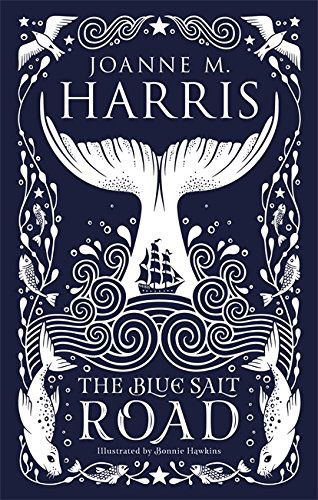
• REVIEW: The Blue Salt Road


    I believe that humans are, by nature, fascinated by the ocean—and what is not known about her. That’s why so many legends of varying kinds have crept up over time.

    The best-known sea myths involve Mermaids and their cousins, Selkies. THE BLUE SALT ROAD is the story of an adventurous Selkie who, in an act of curiosity, set foot on land a few times too many.

    Throughout the book, we do not learn his name. We know only that he is a Selkie, that he met a woman whose beauty ensnared him, and that his Selkie skin was stolen during one of their nighttime meetings.

    Losing his skin meant that he could never return to seal form, that he could not communicate with his people—indeed, forgot his memories entirely. Now a very confused human man, he does feel a draw to the ocean, but can’t say why.

    Since the woman is expecting his child, he agrees to marry her and look after his family. The Selkie, despite his amnesia, makes a valiant attempt to belong among humans. He wants to be a good man and father.

    If only he did not feel a curious emptiness, as though something had been robbed from him.
    If only the seal skins on his father-in-law’s wall did not make him so uneasy.

    When the Selkie agrees to join his father-in-law aboard a whaling ship, he finds the discomfort is too much to bear. He cannot wield the harpoon; he can’t stomach ending the life of a whale, though the reasons behind his apprehension are cloudy to him—until one night, a strange woman climbs aboard the ship.

    She claims to have known him in another form. She claims to know why he cannot fit in as a whaler, or even a human.

    The truth will set him off on a quest for revenge and freedom. It could end well; he could meet his death. But the nameless Selkie will not sit still once he knows the truth. Where is his seal skin? Why was it hidden from him by a person he had thought cared for him?

    If he managed to find that skin again, would he remember who he is and be able to return home? Would they even welcome him back after such a long absence?

    THE BLUE SALT ROAD is pure, beautiful, storytelling. If you read it, prepared to be ensnared by the lyrical prose and vivid imagery. You’ll find yourself rooting for the Selkie, too.
  • Joy in Editing


    I had forgotten that editing can be fun.

    Once I’ve moved past the stinking mess that is a first draft, edits & rewrites become puzzles–very personalized puzzles.

    When adding new scenes, I’m figuring out what the story lacks; I’m filling gaps for character development, making conversations meaningful, using words to increase tension.

    When adding/removing words and sentences, it’s much like mixing watercolors. If I want to achieve the desired tone, if I wish for prose that I will like, I don’t mind rearranging phrases over–and over–and over.

    Not a real cover, just a mock-up, but isn’t it pretty?

    Of the 58k that makes up this draft, I’ve edited about 30k. A beta reader has looked at the opening and reassured me it’s worth continuing in this direction.

    Editing tends to be a writer’s nightmare. If it’s a story I like, I always enjoy the process. I’m optimistic that I can have a sparkling novel (and prequel, with MERMAID) by the end of the year.

    Thank you for following me on this journey!

  • What Goes, Goes

    What Goes, Goes


    “The trees have begun to let go.”

    There is no immediate response, as tea is being set. I watch as Grandmother arranges plates, cups, spoons on the old dining table.

    She has left the window ajar; through it drift scents of rest, of nature preparing to slumber. Drops of dew from occasional rain. Pinecones gathering along the sidewalk. A whiff of smoke from neighbors’ chimneys.

    Grandmother does not answer until the biscuits and sugar cubes are in place. “We should let go, too,” she says.

    I pour water into my cup, wondering what I would release if I allowed myself to be bold as the trees outside. What would I be comfortable with forgetting, tossing aside, never to pick up again? Which burden, once released, would make me free to rest for months and months?

    “So should I,” adds Grandmother, sitting. “Alas, humans do not think that way. When we choose lives of worry and fuss, it is difficult to go another way.”

    Art by Bruce Crane (1857-1937)

    “Do you know what you would let go of?” I ask, fascinated for a glimpse into her mind. Her perspective has more years behind it than I can fathom.

    Grandmother offers a vague smile. “What to release after seventy years? There were bad events, yes—but all served to teach me about life.”

    I am puzzled. “Should we not let go at all, then?”

    She is stirring her tea now, a slow, patient movement, allowing the sugar to dissolve at its own pace.

    “Perhaps trees do not release their leaves,” she muses. “Perhaps the leaves release the trees—so the tree has no choice in the matter. What will go, will go, dear. You won’t ruminate later, because it is gone.”

    I look outside and see a leaf drop from a bough—breaking free, escaping, its work done.

    Grandmother might be right.

    Thoughts and memories might do the same thing for us, and we will never need to know.


  • Sometimes, on a cool autumn’s evening, what we need is light-hearted romance with a happy ending!

    The book title, THE DUKE’S WRITER, is what first hooked me.

    All of those years ago, writing was an activity shared by all. Letter-writing was an art, and most people kept some form of diary. We don’t see these things as much anymore, which is a shame.

    THE DUKE’S WRITER is a tale of two writers. Our female protagonist, Lady Maeve Felton, comes from a family that is struggling financially. They count on her to marry well, hoping she can make a match that will settle their debts.

    Maeve wants nothing but to write. Her favorite place is the writing bureau; she fills pages with stories from her heart. She wishes to see her work in print, but the publishing industry at that time was not a place for women.

    Maeve is sent to London in hopes of finding a suitable match. She brings along her friend Chloe, a daring young lady who takes risks for herself and Maeve.

    Chloe knows of Maeve’s dream to be a writer; she will push for that dream when Maeve is afraid to.

    In London, Marquess Benjamin Lestenmeer is a bachelor, though he has no shortage of ladies at his tail. None of them strike him as worth a thought; he knows that they care for little but climbing up in society.

    Benjamin’s interests are literary. In his library, he finds refuge from the chaos of the outside world. He also attends meetings with a literary society, where writers of different backgrounds gather to share work and ideas.

    A humorous first encounter make Maeve and Benjamin acquaintances. Being friends with Maeve’s brother, with whom she is staying, there are many opportunities for Benjamin to drop in for conversation.

    During one of these chats, he mentions the literary society—and regrets it. This society is for gentlemen only; he cannot bring Maeve, no matter how he wishes to.

    Maeve’s interest is piqued. A literary society! What writer does not dream of such a thing? With Chloe, she concocts a plan to attend these meetings without the others suspecting she’s a woman.

    Posing as a shy male writer, she dons a suit sewn by Chloe to one of their meetings. She brings her notebook. When her work is read aloud, it’s so well received that she’s soon in popular demand.

    Maeve, in her male writer form, has entered higher circles.

    It is a precarious plan. How long can she maintain this charade—especially when Lord Lestermeer begins to take interest in her? Can she fool him forever?

    Will Maeve have to choose between writing and love?

    This book is for lovers of happy endings. It features a female MC who wants more from life than is offered to her, a best friend who is supportive to a fault, and a transformation of almost Cinderella proportions.

    If you need a quick read to bide chillier days, or want a Happily Ever After, try THE DUKE’S WRITER.

  • Welcoming Autumn

    Welcoming Autumn


    September is here! The hot weather is retreating; pumpkin spice has returned.

    As I wait eagerly for leaves to fall from the trees, I am looking for spooky and Halloween-themed books to read.

    Ghost stories have always been among my favorites. I enjoy learning about old houses and historical figures; knowing that some people claim them to be haunted adds to the excitement!

    I don’t love ghost stories for the scare of it, though. Ghosts are fascinating because they provide a link between the past and future. A ghost is a time traveler, albeit often unwillingly. A ghost would see our world so differently, appreciating things that we take for granted, like touch or a chat about the weather.

    I have no opinion about whether ghosts are actually real, but they’re definitely fun to read about.

    Do you have plans for the autumn?


  • Originally published in Vella format, The Court Under the Sea is a tale of suspense and magic.

    Protagonist Karina Starheart lives a quiet life with her parents and sister. Theirs is a happy family, united and strong. It isn’t the sort of family that would expect a large change or challenge.

    Perhaps Karina’s life has been arranged that way on purpose. She does not know the truth about her past, the king and queen who, in times of peril, sent their baby daughter away to safety. She hasn’t a clue about the magic in her past.

    What she does know is that she’s always wanted to visit the ocean, but her parents won’t allow it. They offer no satisfying explanation as to why. It simply is not an option.

    Karina’s life loses the stability she has known when a the current king issues a decree. Prince Zarek, also known as the Dark Prince, is of age to find a wife—but he cannot marry just anyone.

    The decree states that several eligible ladies will visit the Court Under the Sea and pass a series of tests so that Zarek can meet a woman worthy of one day being his queen. Being of minor noble descent, Karina is one of these ladies—and none too excited about it, as the rumors about Zarek do not paint a wonderful portrait.

    However, she has no choice. From her parents’ savings, a modest wardrobe is purchased, and Karina finally has the opportunity to see the ocean.

    Her dream does not come true peacefully, though. When a handful of ladies are vying for the Prince’s hand, there is bound to be chaos—those who do not like him are still very fond of his title. Ambition makes a person careless; several of the competing ladies are willing to do what’s necessary to eliminate competition.

    That turns out to be the least of Karina’s troubles. Something more sinister is happening at the Palace, something too dark for any of the ladies to achieve. A series of attacks and a death interrupt the competition; all of a sudden, nothing matters to Karina or Zarek more than keeping the guests safe.

    Karina faces something intangible—her own past, a history she does not know yet. How can you deflect attacks if you do not know their nature? How do you know your enemy if you can’t even see the shape of their shadow?

    Will Karina find love in the Court Under the Sea? Will she be forced to run for her life?

    Powerful characters and description verging on magic make this a gripping read. We are eager to follow Karina into the sequel. She is very much a character to root for, because she fights for the defenseless and puts others before herself.

    Fans of romantic reads, strong female characters, and a healthy dose of suspense will enjoy The Court Under the Sea.

    If you wish to read the sequel, it is currently being published on Kindle Vella, where episodes are being released periodically.

    Don’t miss this adventure!

    Buy it here!


  • SPOILER ALERT

    I do not typically enjoy high fantasy novels, but SISTERSONG was different.

    A tale about the bond of three siblings during a time of war, SISTERSONG has everything.

    The reader is given epic scenes, romantic conflict, and a character who struggles for acceptance. I found it immersive. What was more, there wasn’t a character I did not like.

    This is a novel that portrays its antagonists in such a way that readers can sympathize with them. Their actions can be abhorrent, but when motives are presented, a reader realizes that the despicable character is human.

    The sisters in question are Riva, Sinna, and Keyne. They are princesses, but the times in which they live make life difficult. Magic is fading, their religion being replaced by missionaries, and there is no peace between kingdoms.

    As the eldest, Riva faces pressure to represent her kingdom. Sinna struggles with envy of her older sister; though Sinna is the beauty, though she has an urge to live and sing about life, she is not the firstborn.

    This hierarchy prevents the sisters from forming a meaningful bond, which will result in tragedy.

    Keyne is, of the three, most interesting. When battles break out, Keyne is comfortable taking the role of a warrior. When Riva and Sinna have petty arguments, Keyne is objective. Mistrustful those who court her sisters, Keyne has the instinct to protect.

    It is Keyne who one day inherits then kingdom, earning respect after many acts of bravery. There is a poignant sentence near the end—I paraphrase: The king finally acknowledged Keyne as the son he always had.

    It was a sentence that made me happy.

    SISTERSONG is haunting. It acknowledges that all actions have consequences; forgiveness is possible, but the results might be long lasting.

    There is not always a happily ever after.

    Some characters, through perseverance and effort, earn the respect they crave.

    There can be love in midst of evil.

    A deceased person can sing of truth.

    An honored individual can take the name they always knew was theirs.

    The complexity of this novel, as well as its readability (unlike many fantasies, I did not find it wordy and difficult) make it one of my favorites.

    You will enjoy SISTERSONG. It is a hymn about humans who make mistakes. It’s a story of envy and hurt dealt with in a realistic manner. It’s about the struggle many people face in order to be accepted for what they are.

    You might find a bit of yourself in each of these siblings. In my opinion, this is the mark of a good book.

    Buy it here!


  • I’m somewhat of a picky reader. Few novels can hook me on the first paragraph.

    I’m not looking for cliffhangers or prophecies. What I hope for in a book’s opening is beauty—beautiful words, imagery, the taste of a delicious story.

    THE MERMAID by Christina Henry — initially I saw the beautiful cover, I admit.

    Many books have pretty covers; I lifted it to see what was underneath.

    THE MERMAID has a sort of opening that I adore! Its words weave a tale perhaps not uncommon, though this is not a bad thing.

    The first page promises a love story, a love-that-transcends-worlds story. Many such tales exist; it is by the storyteller’s skill that they stand out.

    Our mermaid, Amelia, has wanted more from life since she was young.

    She wasn’t satisfied to live under the sea. She wanted to know about ships and the men who traveled on them. During one of her ventures, she found love in the form of freedom—perhaps one of the most powerful loves.

    Even above ground, mermaids live longer than humans. On the death of her husband, Amelia wore well the role a widow. With time she was accepted by neighbors as a solitary woman. She was called a witch; many rumors came to light.

    Why did she not age? Why were there no children? Years passed in this manner.

    One day, her routine was broken by a man named Levi. Sent on behalf of a showman and owner of a museum, Levi has heard rumors of a mermaid. Their show would benefit from a mermaid; he has come in the hopes that she might work for them.

    Initially, Amelia resisted—but after Levi’s departure, the truth sank in: Her husband was dead. He was not coming back. Why should she spend more time alone in a house full of memories?

    She wished to see the world. Was that not the reason why she left the ocean?

    It’s a treat to see Amelia’s personality develop. She proves herself a strong woman and mermaid when dealing with the museum owner, grappling with cultural differences, and learning to continue life without her husband.

    She might perhaps find love again. First she must meet a man with a heart good enough to merit a chance.

    Amelia is a remarkable mermaid, a character I grew to like. She is bold in my memory as one of my favorites.

    The book’s ending seemed a bit rushed for my taste, but I was enchanted enough by the opening that it did not disrupt the reading much.

    THE MERMAID is a novel for those who enjoy love stories, complex characters, and tales of courage. It is a quick read, ideal for a rainy day or chilly autumn evening.

    I’m glad that I opened the book to be enchanted by that first paragraph.

    Buy it here!


  • Hello everyone! A good friend and fellow Vella author is putting her amazing Vella out in novel format! I’ve read it and been fascinated by the prose; you will really become lost in this story. Here is the information to pre-order!
    – Mariella

    Pre-order for $1

    The Underglow

    US: https://www.facebook.com/groups/362760452582331

    UK: https://www.amazon.co.uk/dp/B0BCMCT3BH

    Aurelie Kendrick hasn’t spoken a word since she was a young girl. Lucky for her, vampires, known in her world simply as “pyres” like Alexander don’t speak either. But in a dark world where pyres are enslaved, forced to drink the blood of their masters, can the speechless find a voice?

    From the episode entitled, “A Cross Pyre And An Impatient Young Woman.”

    I confessed to myself that I had paid very little attention to the countless governesses who attempted to explain the general rules of romantic engagement for Femmes of my stature and upbringing. But despite my lack of knowledge of general rules, I had a general sense that I was breaking them, whatever they were. Generally speaking, of course.

    Closer should have made me nervous. I was not nervous, however, and so closer I went until there was no separation between his hips and mine. This was a relief to me—one difficult to explain. For I did not think there could ever be such closeness between another living thing and myself. Truly, I did not think, though they claimed to desire it, that any other living thing wanted to be so close to me.

    “You withhold”, Alexander meant to me, pulling my bottom lip between his before pressing his mouth fully to mine. I felt only the slightest prick of his fangs, for he had not lengthened them. With my head nearly swimming, I wondered if he would sink those fangs into me as he once did. But no. Instead, he intended. “I will be patient”.

    I detested patience. It was a monster that society told its victims was required, but really, it only convinced us all to work longer hours while they fattened us up for the slaughter. What is the point of patience? Who does it serve but the impatient ones?

    I wrapped my arms around his waist and held firmly, but he released my grip rather easily.

    “Patience”. With a last touch of his thumb to my lip and a final probe of his considerate eyes, he stepped away. “I will find who hurt you”.

    The Underglow
    An Elegant And Haunting Tale Of Romance, Intrigue, And Adventure
    From the Mind Of Teshelle Combs

  • On Plot Holes


    Plot holes are a constant threat in every manuscript.

    When writing a serial, I have found that, at least for me, it’s easier to forget what’s been written before.

    When I add a significant object or event, I try to work out a good place where it can be resolved before I forget it.

    It’s like a loom, and a thread has been left out until the opportune moment to work it into the tapestry.

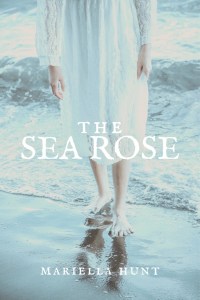
    Last night I worked one of those pesky but important threads back into THE SEA ROSE and it feels great.

    Firstly, I’m glad that I remembered it! Secondly it was a fantastic spot to have the characters bring it up again.

    Has a plot hole ever sabotaged your writing on a large scale?


  • I discovered this year that shifting focus clarifies a story.

    I’ve been toying for a while with the idea of putting THE AUTUMN PRINCE on Vella; I even dreamed of it once (too much?) but didn’t trust in my ability to do so without crossing from editing to rewriting.

    THE AUTUMN PRINCE can be read here!

    I must learn control, because all of the rewrites won’t make perfection. It doesn’t exist.

    And when I rediscovered the characters in TAP, sharing time with them, I began to understand the characters in GROUNDWATER—because I had someone to compare them with.

    Peter is not Caspar; Theo is not Winston. They’re different, and seeing them side-by-side helps me notice their strengths & weaknesses.

    –

    Autumn is approaching, and with it a season of productivity.

    I suddenly have the motivation to work on multiple stories and edit them (without rewriting).

    It’s not new; I tend to focus more when leaves begin to fall. I can hear nature preparing to yawn.

    When are you most creative?

  • A June Update


    Kindle Vella has taken over my life.

    More specifically, this story has taken over my life. I’ve never been very good at writing endings to novels. I’ve always wanted to tell a story in serial form like Dickens; I never imagined how addicting it can be.

    34 chapters have passed since I announced that The Sea Rose was going on Vella. I have gotten 9 reviews that are absolutely heartwarming. My characters, after being given the chance to come alive, are showing aspects of themselves I was clueless about when brainstorming…and I’ve got so much to thank them for!

    I’ve also read so many good stories on Vella! It is a place of awesome creativity and authors who are friendly & supportive to one another. Some Vella authors publish their stories in eBook format. Others love the serial format and continue adding for readers to keep coming back. There is no wrong way to do it.

    In my opinion, the point is to have your story told.

    Technically The Sea Rose ended at chapter 31 and we are now in the second book. For the moment, the title of book 2 is Groundwater. Subplots are spreading out like a plant’s roots and creating an intricate story that even I am becoming lost in. While I have no self control and will continue to update the story as the weeks pass, I hope to edit The Sea Rose into an eBook by the end of the year.

    How has your summer been? Have you read The Sea Rose yet? What’s stopping you?