
Wings to Please the Eye
The natural world is full of wonders beyond human imagining. Even just a walk through a nearby park will expose us to colors and sounds that we could never imitate ourselves: wild birds and rabbits, things that swim and creep.
Insects have an interesting place in this grand scheme. Many people revile them—rightfully so, perhaps, as an encounter with the wrong kind of spider could lead to a long and painful death. But there are other insects that are harmless, that exist to pollinate our favorite flowers or simply to please the eye.
Butterflies are among those creatures that seem to have been made simply to give humans something to marvel at. There are not many people who see a pair of white butterflies, called Cabbage Whites (or Pieris rapae), and recoil in fear.
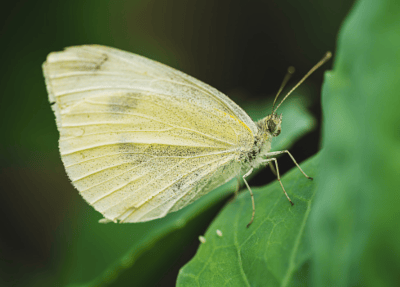
Instead, myths have been dreamed up surrounding them. While in truth they are likely mating, some believe that the sight of a white butterfly signifies the visitation of a deceased loved one.
There’s a Study for That
There is a word for the study of butterflies and moths: lepidopterology. An entire branch of science exists dedicated to these surreal bursts of color—the butterflies and moths that punctuate our otherwise uneventful lives. A walk to the mailbox on a heavy summer afternoon suddenly becomes magical at the glimpse of a monarch butterfly.
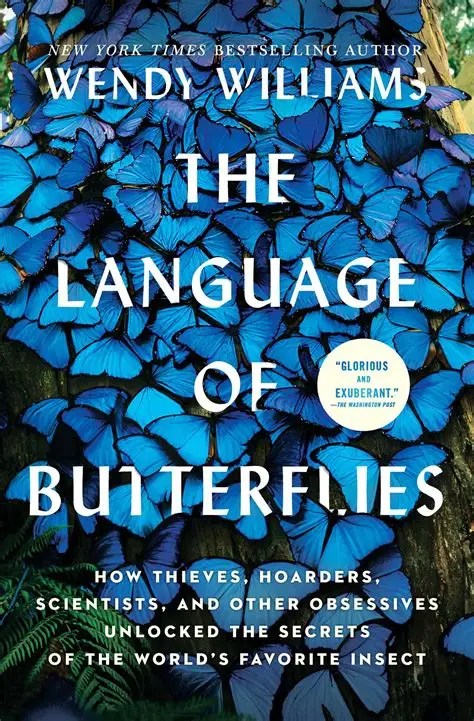
The love for butterflies is universal. In the first chapter of The Language of Butterflies, author Wendy Williams explains how these creatures have influenced society for many, many centuries, remarking that during the Victorian era, everyone—men and women—participated in the quest to collect and name these creatures:
“Throughout Europe and North America, insect collecting was considered not only a healthy activity, but a way to honor God and His earthly works—and was therefore acceptable even in dour cultures where play was frowned upon.”
She adds something poignant that paleontologist Richard Fortey wrote in his personal memoir, Dry Storeroom No. I: “Indeed, humanity had a ‘duty to inventory.’” It was a duty based in Biblical texts, recalling that God formed every living thing on Earth—then gave Adam the privilege of naming them.
Everything Needs a Name
Butterfly enthusiasts reasoned that, of course, they must be collected before they could be named. Williams adds a list of other things that the Victorians considered worthy of collecting and naming, quoting Jim Endersby in Imperial Nature:
“From shells, seaweeds, flowers, and insects to coins, autographs, books, and bus tickets, Victorians of every class collected, classified, and arranged their treasures before exchanging unwanted finds with other enthusiasts.”
The Language of Butterflies is one of the few books that I’ve read more than once. Each time, it reminds me of the beauty and sheer poetry that can be found in nature, the wonder that is available to us if we should only step out of the door.
For this reason, I took a risk and wrote to Wendy Williams herself, asking if she would be willing to answer some questions about this piece of nonfiction, this memoir that I considered so important. I was greatly honored when she replied in the affirmative, and I am delighted today to share my conversation with Wendy Williams.
The Interview
Q: When you were writing about butterflies, did you ever feel as though you were also writing about attention itself—about what it means to truly notice something small enough to be overlooked?
A: Yes. Of course, I had seen butterflies all my life. Taken them for granted. Because they were so common in my childhood, I never really noticed them. Never paid attention to them. But when I started to notice them in a deeper way, I began to experience nature in a deeper way.
There’s the old saw about stopping to smell the roses. I’d now say stop to take a look at the seemingly nondescript all around you. Consider the wildflowers that you might have been taught were “just weeds.” Now we know that these “weeds” are an essential foundation to the web of life and beauty we see all around us. So there may be more there than meets the eye.
Q: Was there a moment during your research for The Language of Butterflies when a particular species or behavior surprised you so deeply that it changed the emotional direction of the book?
A: What surprised me—truly surprised me—was the history of human passion when it came to the colors on a butterfly wing. Poor old Herman Strecker. He was so lost and alone and perpetually sad. Somehow butterflies filled that void. When he finally acquired a butterfly he’d only seen in books, his life was made whole. Why? I only wish that he could have seen the magnificent Ornithoptera actually flying, with its wings glinting in the sunlight.
Or consider the passion of Maria Sibylla Merian. She was so struck by a large blue butterfly that she embarked on her very own self-funded scientific expedition to the Western Hemisphere just to learn about its life cycle. And this was centuries ago. Of course, I fell in love with her. She just had to know.
Q: Butterflies move between fragility and resilience in a way that feels almost contradictory. Did you find yourself drawn more to their vulnerability, or to their endurance?
A: Both. Because the phenomenon begs the question: How can vulnerability and endurance co-exist in one single organism? How can a tiny insect that lives for only a few days also migrate over the Himalayas in freezing temperatures? Sometimes those of us who seem most fragile in the world turn out to be the most enduring.
Q: In the Tearoom, we often think about the way books teach us to slow down. What did writing about butterflies teach you about slowness, if anything at all?
A: I remember one time I was walking up a mountain path in a national park. The path was so crowded, and everyone was hurrying to get to the top of the mountain trail—just so they could get back down. It was a stunning day, sunny and bright and warm but not hot. Butterflies were everywhere, but no one stopped to look. They were all absorbed in their own little worlds.
When we have the opportunity to be in an extraordinary place, I’m often surprised by how few people take the time to notice—really notice—where they are. I’m gonna kvetch here: The phenomenon of competitive trail running is just a mystery to me. You get to the other end, but have no idea where you’ve been. What’s the point of racing like that?
Thoreau, of course, would be horrified: You go into the woods to live deliberately.
Q: If a reader closes The Language of Butterflies and carries only one quiet thought into their day, what would you hope it is?
A: While researching my next book, about dogs, I was recently walking through a small village on the remote Greek island of Amorgos. Meandering down a side alley, I noticed some handmade bronze earrings displayed in a glass case just outside a tiny shop. The earrings were of butterflies. Of course I had to go into the shop. It was filled with butterfly earrings. I bought a pair, which is very unusual for me. I’m just not a “buying” kind of person. Now I wear them everywhere. They remind me of the specialness of nature.
As I’m sure you know, psyche is the Greek word for butterfly—and for soul. The human love for butterflies is universal. As I explained in the book, it stopped a high-altitude climber making his way over the Himalayas, “conquering the mountain” (as if we mere humans could ever do such a thing), who never expected to see butterflies glinting in the sunlight in that frozen world.
Butterflies teach us: Expect the unexpected.
Conclusion & Beginning
It would not seem, at first glance, that humans could have much to learn from butterflies—but as Williams pointed out in our interview, certain butterflies have such determination, such an ability to respond to wind and weather, that they can fly over the Himalayas.
Our world is rapidly changing, and one could understand why some take a negative attitude toward it. Animals are going extinct, climate change is destroying some of our most beautiful places, and humans never quite figured out how to get along with one another.
But the final paragraphs of The Language of Butterflies offer words of wisdom that I believe can give us hope through all of this:
“When a five-year-old girl releases a butterfly into the air, and when that butterfly is seen by other people as it flies to its winter destination, that, to my mind, is the real butterfly effect: the joining together of countless people of many different nations, across generations, in a united effort to protect at least one small joyful piece of the natural world to which we belong.”
We can still work together to protect our beauty, our joy, and the people we love. Thank you, Wendy Williams. You are an author I have admired for a long time, and you have written a memoir that reminds us of this great truth.
If you enjoyed this conversation about butterflies and the marvels of nature, thank you for reading. I’d appreciate it if you would consider buying me a coffee to support my continued reading and research.
However, if you’re unable to contribute, I appreciate your fluttering in to spend a little of your time with me!


Leave a Reply