
One of the greatest fears in my life is that I will one day, in my old age, lose the gift of sight. Without my sight, I would lose the sacred thing that gives my life most meaning.
If I could no longer read books, if I couldn’t see hallowed words on pages, what would become of the impressive personal library I have spent so much of my life building?
I could not even think of passing it down, because no one I know loves my collection of books quite as much as I do.
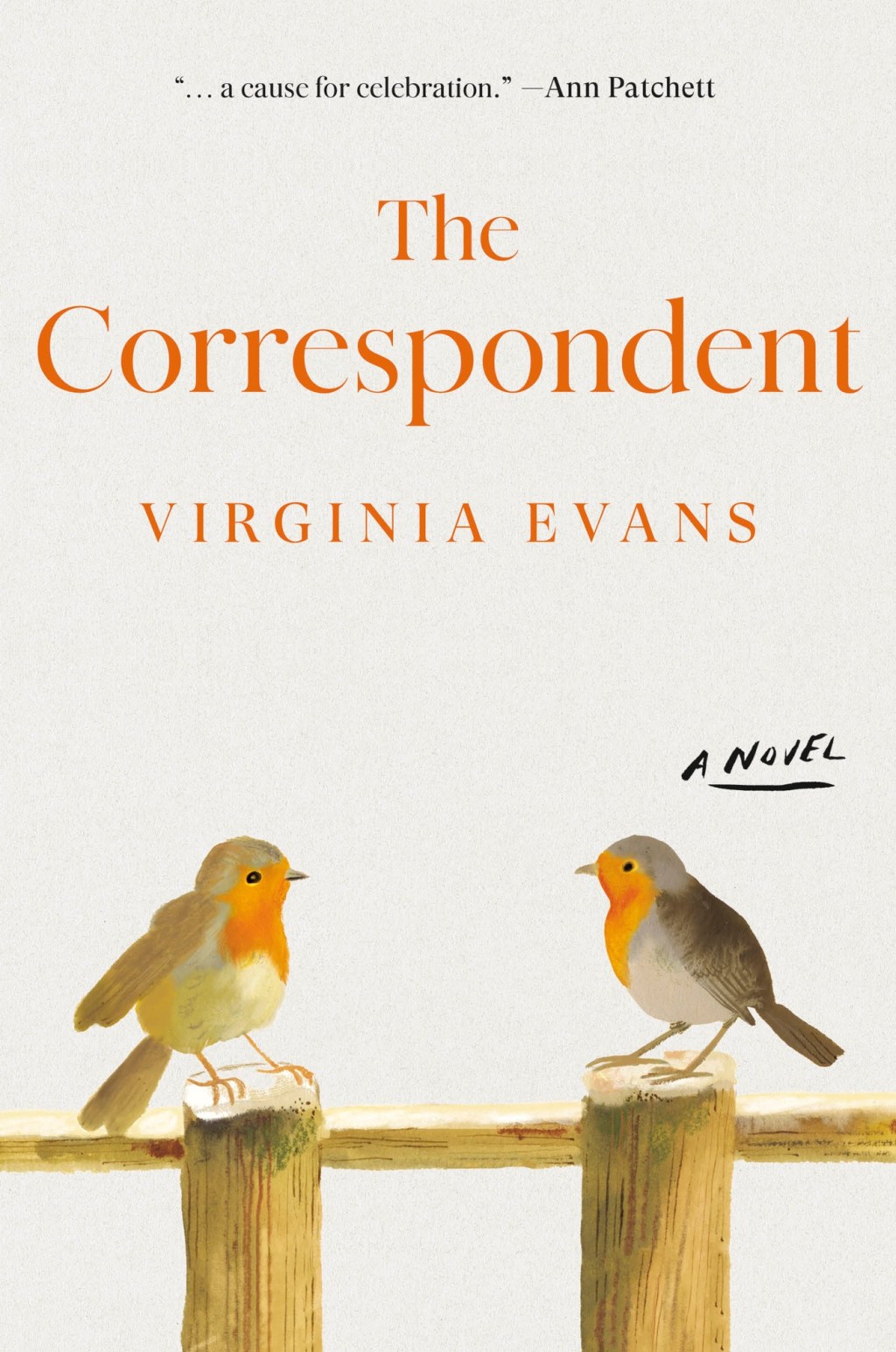
But, as much as these deeper themes resonate with me, the book is not about me. It’s about a popular novel called The Correspondent by Virginia Evans.
In The Correspondent, the protagonist is a seventy-three-year-old retired lawyer named Sybil Van Antwerp. Her story in this novel is told through letters she sends and receives. She is faithful in this habit: every morning she sits at her desk and writes missives to friends, family, and even authors she admires, such as Ann Patchett and Joan Didion.
The first time Sybil experiences a loss of vision, the description is terrifying:
I couldn’t see! But how? That stretch of time, was it a moment or was it minutes? It was as if my life was a movie and went black, meant it, but I’m not certain, and that’s what’s troubling me. I’m not certain it was my vision that went black. It was as if I’d closed my eyes; it’s as if the space of time has been deleted from my memory, up until I crashed.
Sybil’s failing eyesight leaves her vulnerable to dark memories of a tragedy that took place long ago, when one of her sons tragically died. Writing, the great comforter, forces her to confront a profound sense of guilt that, like a monster, has peered over her shoulder ever since.
Terrible accidents happen all the time to many, many people. The grief that must fill the world is incomprehensible. Our small dose felt as large as the sun, didn’t it?
Writing has an ability to calm a storm. It will not undo the grief that is “large as the sun,” but when words and stories are turned to truth and trust, they help certain scars to heal.
The process of sorting through our stories can be painful at first, but sometimes it is the only way to understand what they have done to us.
Sybil’s fear of going blind intensifies:
What has my life been, really? I’ll go blind, and then? I wonder — the letters. All the letters. I wonder if all of it was a waste. Pages and pages of letters. I wonder what has it all been, really. I’ll go blind, and they will be nothing to me. It will be as if they aren’t there, and does that mean, in a way, they were never there?
And then, as the novel nears its end, her tone changes:
I thought when I started to lose my sight in this way, when it actually began to slip away, I would cling to it with all my might, but that isn’t the way I feel now. Now that it’s become such a strain, I almost find myself ready to let it go.
What appears on the surface to be a melancholy admission is truly far more than that. Sybil is conceding that, even without the ability to see book pages and mountains and butterflies gliding in pairs, life goes on.
There is more to the experience of living out our own stories. And while I still live in dread that I could one day wind up blind, it does help to witness Sybil’s struggle — and realize that, while she is tired from it all, she is not defeated.
Migraines aren’t new foes in literature.
In this post, we discussed the character of Marilla Cuthbert in Anne of Green Gables. In Montgomery’s first Anne book, Marilla is seen frequently struggling with debilitating migraines which make it difficult for her to go about her day and manage her many household chores.
In Chapters 37 and 38, she finally consents to see a doctor, in the hopes that he might provide some relief. The news is bleak: her headaches are caused by a progressive condition which threatens her vision.
Knowing that Marilla is vulnerable and cannot manage things on her own, Anne makes a sacrifice for her — a touching scene when we recall all that Marilla has done for her.
But Marilla is still fearful.
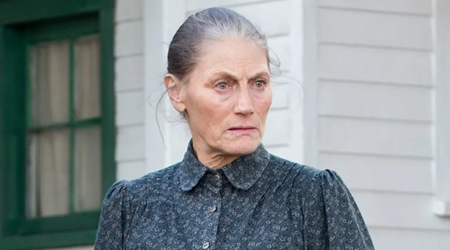
Marilla expresses panic when she is given the diagnosis:
“If I wear the glasses he’s given me and give up all reading and sewing and fine work of any kind — if I keep out of the twilight and don’t cry on any account — my eyes may not get any worse and my headaches will be cured. But if I don’t, the doctor says I’ll certainly be stone-blind in six months.”
She then mourns all that she will have lost:
“To think of me sitting here tied hand and foot and completely helpless!… My eyes have always been so good. I can’t read, nor sew, nor do anything in the twilight. I’d rather be blind altogether than just sitting around doing nothing.”
Sybil and Marilla might not have had the same disease, but they are remarkably similar in this respect. Their panic echoes one another, except that Marilla has Anne to help her through the dark days, while Sybil is, by choice, alone.
Humans have always lived in fear of darkness, of the inability to perceive beauty when standing in front of it. Books offer us perspective and — dare I say it? — peace. Even if we do face the trial of blindness, medicine has evolved, and we do not need to bear the burden alone.
More importantly, there are so many different ways to hear and tell a story. We may lose our ability to see the words on a page, but that does not mean the story — or the beauty that first drew us to it — has disappeared.
Perhaps that is one of the comforts of being human: the things we love continue to live in us, even when we can no longer experience them in quite the same way.
Keep the Tearoom Brewing ☕
If you enjoyed this essay, you can buy me a coffee as a small way of supporting the Tearoom.
Your contribution helps me keep buying books, talking with authors, writing about women and literature, and making this corner of the internet a little more interesting.
Every coffee helps—and every reader means even more to me.


Leave a Reply