
Over the years, literature has blessed us with great stories about female friendship.
These novels hit best when they offer readers a full range of color. They should not only depict happy moments, but also those of pain and grief. Light and shadow: this variety creates a strong foundation.
Such novels acknowledge that strong friendship cannot exist without storms. We will not spend our whole lives making daisy chains together in a field; there will be arguments. In some cases, there might be years of no contact because of a misunderstanding.
Humans are complicated, therefore friendship is complicated. Novels allow us to explore joyous moments between women who share the joys and sorrows of life. The strongest friends I have known, in real life and in novels, knew each other from childhood to death.
What I love most about the theme of female friendship is that not all friendships look the same. Two women can love one another, yet be bound by different seasons of life, loyalties, and more.
If you are looking for books about female friendship—perhaps to soothe a hurt, strengthen a bond, or simply remind you of the complicated beauty of having a companion—here are five I recommend.
Little Women by Louisa May Alcott
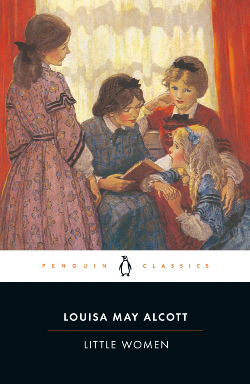
Some might protest that Little Women does not belong here. After all, it is a novel focused on sisters and the challenges the March girls face as they grow up together. But a person who makes this argument forgets something important: one must be friends with her sisters, too.
I have heard of too many sisters who, for one reason or another, stopped speaking to each other. Eventually they lost contact. My grandmother and her sister died without ever speaking to one another again. I don’t know what caused the rift, and perhaps I never will. I can still urge you, dear reader, not to let this happen.
There are plenty of important friendships in Little Women, not only female friendship. Consider the March girls’ adventures with their wealthy neighbor, Laurie. The book would not have been the same without him and his creative energy.
Truly, Little Women has much to teach us about life—not just sisterhood or friendship, but the importance of loving people while we still have the chance.
Excellent Women by Barbara Pym
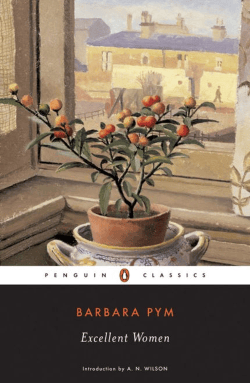
Barbara Pym understood that female friendship does not always announce itself with grand declarations or dramatic reconciliations. Sometimes it looks like a cup of tea, a shared confidence, a bit of gossip, or simply having someone who understands why a seemingly insignificant thing matters.
In Excellent Women, Mildred Lathbury is a single woman living a quiet, respectable life in postwar England. She is the sort of woman everyone depends upon. People confide in her, ask for her help, and assume she will be there when needed. She observes the romantic entanglements and domestic complications of the people around her with a mixture of amusement, affection, and occasional exasperation.
What I love about this novel is the way it honors the friendships and relationships women build outside of romance. Mildred’s life is not empty simply because she is unmarried. Her friendships give her companionship, purpose, and a place in the lives of other people.
There is something deeply comforting about Excellent Women. It reminds us that a meaningful life can be made up of ordinary days and that friendship does not have to be dramatic to be important. Sometimes having a woman to sit beside, confide in, laugh with, or quietly observe the absurdities of life alongside is more than enough.
The Book Club for Troublesome Women by Marie Bostwick
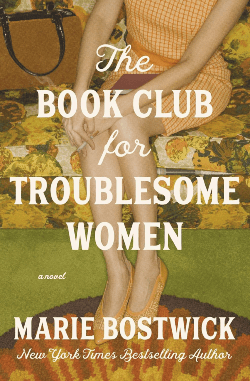
There has been a delightful trend in recent years of novels centered around the idea of the book club. Why are women, in particular, so drawn to the idea of gathering around books?
I suspect part of the answer is historical. For generations, women were discouraged from pursuing education and intellectual life on equal terms with men. Perhaps that is one reason we have seized the book club with such a fierce enthusiasm. We finally have our own tables.
The Book Club for Troublesome Women has become a favorite among modern readers for its feminist themes and its setting in the 1960s, during the Kennedy presidency. But I think what makes this novel especially appealing is the friendship at its center. Four women, very different from one another, find themselves joined during trying times by their love of books and their desire for certain freedoms that society was only reluctantly beginning to offer them.
That is the magic of a book club. We may walk into the room as strangers, with different histories, opinions, and personalities, but we arrive with at least one thing in common: we have all read the book.
Many of us may never join an actual book club, but I think the meaning behind the idea matters just as much. We all want someplace to belong. A book possesses a strong enough foundation on which to build that place.
The Enchanted April by Elizabeth von Arnim

Sometimes the friendships we need are not the ones we expected to make. We meet someone because of circumstance, because we happen to be sitting beside one another, or because we are all desperate to escape the same dreary February.
That is essentially how The Enchanted April begins. Four women, very different in temperament and circumstance, find themselves drawn together by the promise of an Italian castle in spring. They decide to rent it together, and what begins as a practical arrangement slowly becomes something much more meaningful.
What I love about this novel is that these women do not have to become best friends immediately. They have their differences, their grievances, and their own ideas about how life ought to be lived. But the beauty of friendship is that it can give us room to change. In the company of other women, we sometimes remember parts of ourselves that have been neglected.
The Italian garden becomes almost a character in its own right, but the real enchantment is what happens between the women. They begin to see one another differently—and, in doing so, begin to see themselves differently.
The Enchanted April is a lovely reminder that sometimes what we need most is not a solution to our lives, but a change of scenery and a few good women to share it with.
The Secrets of Flight by Maggie Leffler

There is no age limit on friendship. In The Secrets of Flight by Maggie Leffler, we meet an elderly woman who belongs to a creative writing group made up mostly of people her own age. Then a sixteen-year-old girl with dreams of becoming an author begins attending the group. She is starry-eyed about the first story she has written—the story that has opened the door to a life of creativity—and at first, her youth makes her an oddity among the older writers.
But stories have a remarkable way of making strangers understand one another. The young girl and the older women discover that the things that matter to us as human beings do not necessarily change with age. The desire to create, to be heard, to tell our stories, and to make sense of our lives belongs to all of us.
The Secrets of Flight reminds us that friendship can cross generations. We need the wisdom of those who have lived longer than we have, just as we have something to offer those who are still beginning their lives. Story becomes the bridge between them—a way for the past and the future to sit together at the same table.
We all need one another. And sometimes the person who has the most to teach us is someone we might never have thought to call a friend.
Why I Love Novels About Female Friendship
The best books about female friendship remind us that there is no single definition of what it means to be a friend. Some friendships begin in childhood. Others arrive later in life. Some are built around books, creativity, or shared interests. Others survive arguments, distance, and years of change.
That may be why stories about women and friendship remain so compelling. They remind us that none of us are meant to live entirely alone.
And perhaps the next great friendship in your life will begin with a book.
Enjoying the Tearoom?
If this essay gave you a book to add to your reading list—or reminded you of a friendship worth cherishing—you can buy me a coffee to help keep The Tearoom going.
Your support helps me buy books, make tea, keep reading, and continue building this little literary corner of the internet for women who believe books make life richer.


Leave a comment