• complexity

    No choice is ever simple.

    Decisions are complex, though they might seem impulsive at the time. We’re influenced by the world around us; the hows and whys of our behavior are shaped by things that seem pointless.

    Characters are people; they behave realistically when written with care. Details revealed to readers should have solid backstories; most writers spin their characters hoping to make them believable.

    Done this way, projects take longer to finish—but backstory’s worth the wait. It takes time to work out what drives our hero; no choice is random, habits don’t surface out of the blue.

    Powerful stories follow realistic characters.

    Take history as an example: Choices that shaped the world were influenced by places, flaws, disasters we don’t learn of at first. Each of these details led to the choice, even those not revealed by tour guides.

    Like tour guides, we don’t have time to tell the whole story; however, knowing it gives us stability in the writing process. Readers notice when we don’t know a character well enough.

    How should we work out our backstory? Since characters are people, we approach them accordingly. Many writers fill in personality sheets or take the Myers-Briggs test for their characters.

    All these techniques help us get to know our characters.

    A good protagonist should have hopes, fears, and motives. In real life, people are far more than outward appearance; similarly, characters should be more than words on a page. They need depth.

    It means we have to fill in blanks, taking up a necessary challenge. Too much is at stake if we put it off; it could make our story shallow, incapable of stirring emotions.

    Do you know why your villain causes trouble? Did your hero hesitate before going on the adventure—if not, why? What qualities help your couple get along, what could set them off fighting?

    If you can’t answer these questions, take a closer look.

    It’s important to know your villain’s motives and what makes your hero fearless before the unknown. In a realistic love story, there should be a balance of things in common and topics to cause friction.

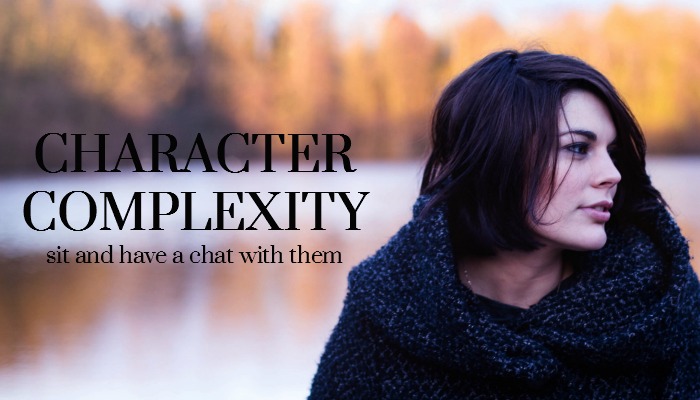
    If you don’t know what these things are, sit and have a chat with the characters. Do not skip this process.

    When the blanks are not filled, readers notice. We like our heroes to be relatable, or they become annoying fast.

    Don’t risk making your novel shallow!

    If your characters need fleshing out, there are plenty of articles on the Internet to help. My favorite is Rachel Giesel’s How to Write a Character-Driven Plot in 5 Steps. The tips elaborate on why this is so important.

    She’s Novel wrote about using the Myers-Briggs test on characters! My Favorite Method for Building Characters’ Personalities is a must-read.

    Finally, author Briana Morgan wrote a guest post for Musehollow, Creating Compelling Characters. Check out this article on her own blog, 11 Steps to Crafting Characters.

    Your hero could be vibrant enough to rise above ink and paper.

    It takes research and patience, but strong characters make a great story. If you’ve found your own way to overcome this challenge, please comment and share it with us!


  • 25430784

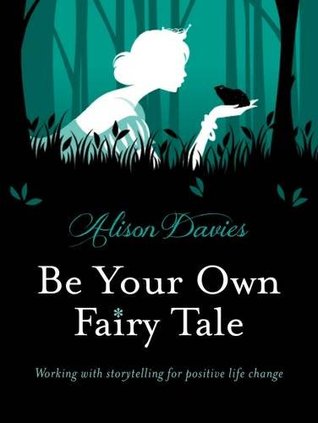
    From the beginning, Be Your Own Fairy Tale looked promising—a book any lover of magic and dragons ought to have on their shelf. With lovely illustrations, it was impossible to ignore; however, it wasn’t what I expected.

    I thought it would offer more in-depth history of fairy tales, introducing undiscovered gems. Instead, Be Your Own Fairy Tale uses the well-known stories to help us find direction in life.

    The book does give some history in the first chapter, explaining how these tales changed as they were passed down orally. I expected more history, which made it disconcerting when we switched to self-help chapters.

    Once I got over the shock, it was a pleasant surprise. They use symbolism to shift perspective. The exercises were fantastic, helping to dissect mundane things and find magic within.

    Be Your Own Fairy Tale was about helping readers recognize their hero’s journey, more so than it was about telling history. If you want a different perspective on life, try the exercises in this book; you’ll be surprised at where magic is hidden.

  • What’s Next for The Autumn Prince?

    In September I was outside enjoying the days before autumn really kicked up frost. I had my Moleskine with me; as I watched leaves let go of their branches, the words autumnal gold surfaced in my heart, and I began to write.

    What resulted was a story I would release in twenty parts on October called The Autumn Prince. I was quite nervous people would think the idea stupid; however, so many people enjoyed it, which shocked me! By the time that serial ended, people were telling me to write a novel.

    Which I did—the very next month. I was so immersed in the world of The Autumn Prince that it came to me easily. It’s currently a first draft, and of course will need a rewrite, but the point is I have something to start with.

    My plan was to self-publish the serial version of The Autumn Prince (what I had posted on my blog in October) as a novella in ebook form this year. I didn’t want to waste all that writing, and if people enjoyed it then it certainly deserved a chance. Then I would shift my focus to the novel.

    But plans change.

    3d03e7_321633d03dbf409fb4399ebce6c747c4On October I also found out about the exciting project called Crows on Heartstrings, an anthology of tales about doomed love featuring illustrations and stories from people around the world. When I submitted to Crows, my hope was to get a different story in, one called Starless.

    In an exciting twist, arrangements to include Starless in this anthology changed; it needs a lot of work. But I still had another story about doomed love that people really liked.

    The Autumn Prince has been edited into a short story to be featured in Crows with an illustration. I am glad the spark that went off on October isn’t going to vanish into history!

    We’re in the process of edits for The Autumn Prince for its next adventure in the world.

    This year I will also begin rewrites for the novel, which will be the first of a series. Momentum hasn’t slowed since I hit Publish on that first part of my serial. I have a feeling it’s not going to stop.

    Thank you to people who encouraged me to keep on with the serial, falling in love with Prince Caspar and the Barn Owl when I thought the idea would be called dumb and childish. Watching those leaves fall in September, I think I caught a story that was golden.

    Look out for Crows—not just because of The Autumn Prince! So many of us are working to give you a beautiful reading experience. Visit the Crows website here!


  • OLYMPUS DIGITAL CAMERA
    image source: Yankee Magazine

    Surfing the Internet years ago, I learned of a place in Concord, Massachusetts called Authors Ridge. It’s a corner of Sleepy Hollow Cemetery; if the mention of Sleepy Hollow doesn’t bring to your mind the Headless Horseman, don’t worry. The symbolism behind Authors Ridge deepens.

    This is a place where several greats of literature are buried practically side-by-side. You can visit Ralph Waldo Emerson, Henry David Thoreau, Nathaniel Hawthorne, William Ellery Channing, Louisa May Alcott and her family.

    I haven’t been there, but the thought of it makes me dream. I don’t think cemeteries have to be frightening, and this place would inspire me. Not everyone believes in ghosts, but any creative knows of muses.

    Ralph Waldo Emerson wrote something staggeringly appropriate: Death comes to all, but great achievements build a monument which shall endure until the sun grows cold.” Those monuments aren’t tombstones; they’re stories powerful enough to outlive their authors.

    Writers and bookworms make pilgrimages to this surreal place, leaving pens, poems and notes at the graves of their favorite authors. Perhaps they hope some talent will rub off, or want to thank them for writing characters that never died.

    Whatever the motive, Authors Ridge is full of wonderful mystery. It’s one place I hope to visit someday; perhaps I’ll leave a pen of my own.


    Read more about Authors Ridge:

    Yankee Magazine – Sleepy Hollow Cemetery: Where Concords Legends Lie

    Atlas Obscura – Authors Ridge

    New England Travel Planner

  • What Art Teaches

    What Art Teaches


    Someone dear told me once that art is about learning.This applies to writing as well—but we aren’t just learning how to improve our craft or tell a story; we’re learning how to prioritize projects.

    Right now I have two novels to edit and a little something I started in a notebook today. I’m learning to keep the plot bunnies at bay so I’ll actually put books out when I finish writing them. The Autumn Prince and Serenade both need work; if I give those plot bunnies the attention they want, I’ll be writing and writing without publishing anything.

    I was going to launch another serial this spring, Daughter of the Forest, but I don’t think I’ll have time. I’ve been working on the draft, but it won’t be done by April; it might become a summer project. I’m eager to dedicate my blog to storytelling again; however, I’m going to do it when I know I can give it my all, like I did in October with The Autumn Prince.

    Art is about learning to tell stories, no matter what your medium—but you have to figure out your limits. How much can you handle at one given time? It’s important to allow yourself a breather to binge-read a series or stare out the window at nice weather.

    The Autumn Prince (novel) and Serenade should both be presentable by the end of the year if I learn to manage my time. I will keep you updated; I am so excited to have more books out!

    If we don’t take the time to rest and reflect, our art will sound lifeless and forced. It took me this long to accept that truth. Each story will have its turn, but right now I have to focus more on editing than writing new manuscripts.

    What are your plans for this spring? How do you handle demanding plot bunnies?

  • Review: After Alice by Gregory Maguire

    Written by a master storyteller, After Alice might be the richest Alice in Wonderland retelling available if you’re looking for lyrical writing and elaborate description. I wanted to quote every other sentence or store it away in my memory, hoping Maguire’s genius might rub off.

    The plot, however, is okay at best.

    Our main character, Ada, is daunted by the responsibility of being a new big sister. In a moment of anxiety she runs away from her governess and from home, where she comes across Lydia—Alice’s sister—who claims Alice has vanished again before sending Ada off.

    Moments later Ada finds herself in the same strange world—Alice has been there, because people know who she is. Since Alice is her only friend, Ada takes it upon herself to find her and bring her back home, but in a place where nothing makes sense that might be nearly impossible.

    There are new characters, including a freed slave boy named Siam—and Charles Darwin! I might have to read the book again to understand the connection between Darwin and Alice’s Wonderland. Alice’s sister Lydia distracted me in scenes featuring the old man by flirting shamelessly with his American companion, Mr. Winters…

    Aside from the curious presence of Charles Darwin, this was a typical Alice retelling; the nonsense is there, talking plants and a Cheshire Cat. The strange creatures Ada encounters are maddening as ever; I had the constant urge to shake them.

    If you’re looking for a mind-blowing rendition of the classic, After Alice might disappoint; however, I suggest you give it a try for the writing alone. Few books these days have such a firm, beautiful control on description and language.

    It might not have been my favorite book by Gregory Maguire, but I myself am not disappointed. I wanted a good story from a master, and it was indeed a good story (not great.)

    I can only hope one day I’ll be able to write like him.

  • Review: Never Never by Brianna R. Shrum

    Readers have been enchanted by the tale of Peter Pan for generations, sympathizing with the boy who didn’t want to grow up and the children who went on an adventure with him. Having read the book twice, it was exciting to find Never Never at the bookstore–because it sheds more light on the legendary Neverland.

    When it comes to villains in a story, there’s so much we don’t know. Why did this person turn bitter and hateful? Which events turned him into such a haunted soul?

    Never Never painted such a beautiful and sad past for Captain Hook. The tables had turned when I closed the book—it was Pan I hated most.

    James Hook is a boy who has only one dream: To be a pirate. In real life, though, he longs to become a man and make his father proud. These two desires make for a powerful character, given that he’s only a boy when the novel starts, preparing to head off to boarding school.

    That’s when he meets Peter Pan who tells him about the place Neverland, where children don’t have to grow up. Even though he wants to be a man and make his father proud, he wants to see the pirates; he agrees to go with Peter to visit, trusting that he’ll be returned in time to go to Eton.

    But Peter does not keep that promise; he forgets it instantaneously after their arrival at Neverland, also forgetting that James never wanted to become a Lost Boy. James followed him to Neverland as a visitor; now he’s trapped following the whims of a scatterbrained boy who turns out to be a dictator.

    When James breaks Peter’s greatest rule and begins to grow up, he runs away to the pirate ship Spanish Main, where he’s received as captain without question. The Main was always his dream, one Peter somehow brought to Neverland.

    The sweeping novel chronicles James’ struggle to adapt as pirate captain in a place he’s beginning to hate, because it belongs to Peter; everything works at Peter’s whim, including the weather. Neverdays seem to last a lifetime, and there are so many scenes which broke my heart; in the end we find the soul of a person we grew up seeing as villain.

    Fans of Peter Pan, misunderstood characters, and book spin-offs will enjoy Never Never. It’ll make you angry, it’ll have you tearing up; most of all, you’ll sympathize with someone you despised as a child.

    Things are not always what they seem. By the end of Never Never you’ll probably hate the Pan, too.

  • Why Writers Don’t Have to Drink Coffee

    For many writers, coffee’s essential in order to practice the craft. It gives us energy, smells good, and there are many ways to drink it—you can add creamer or take it black (I love it both ways!)

    I, too, swore on coffee being the writer’s drink—until my mom got me a brilliant cocoa-latte machine. After experimenting with different things in the recipe booklet, I realized we shouldn’t limit ourselves to coffee.

    Your cure to Writer’s Block might be simple as choosing a different hot (or cold) beverage!

    Recently, homemade hot chocolate’s been my favorite when it’s time to write or edit. I’ve also tried a hot Nutella drink and a variation made with dulce de leche (if you haven’t tried this Argentine delicacy, do. It’s so sweet, you may only be able to handle one spoonful!) Other days I need a classic cup of warm tea. Since springtime weather has come, I’m planning to make cold drinks—special lemonades, iced coffee, even smoothies.

    The point of this post is we shouldn’t confine the craft to one age group, genre, or drink. I used to look at people who preferred tea with suspicious eyes, but this winter realized that limiting our writing to one beverage is like forcing us all to follow the same storyline.

    Writers shouldn’t be limited to the workspace habits of others. We build our own, choosing how to organize our desks, even picking which pens to write with. Believe it or not, this does make a difference!

    Don’t let anyone force you to drink coffee. I encourage you to experiment before you decide it’s not for you, since a lot can be done to ‘customize’ it; however, don’t do it because you feel pressured.

    You can be a writer and not like coffee. You can even be a writer and not like tea. Be a writer by being you.

    Choose your favorite writing beverage, make a playlist your muse enjoys, write in a shadowy corner or a sunny spot in the yard. I believe we would get more original stories if people would walk away from stereotypes, embracing themselves as individuals.

    What do you drink while writing—coffee, lemonade, or plain old water? Do you write in a cafe or your comfy bedroom? Do you listen to indie music or classic rock?

    Choose what feels right for you, for the sake of your story!

  • Tale: Running with Faery Dust
  • Review: The Darkest Part of the Forest by Holly Black

    The Darkest Part of the Forest is a must-read for any faery tale lover, especially the tales where Fae are tricksters, inflicting chaos on unsuspecting humans. Fairfold is a little town located near a forest teeming with faeries; they live in tentative harmony, though the humans resort to superstition in order to avoid tricks. It’s been unusual but quiet in Fairfold for many years—but that’s about to end. The horned boy in the glass coffin wakes up, and with him chaos stirs.

    I didn’t like the main character, Hazel, at first. There’s nothing special about her, and though we learn later that it was done intentionally, in the first chapter I wondered why she was the main character. Others—like her brother Ben, or his friend Jack—seemed more worthy of the title of protagonist. Of course later we learn there was more to her than the plain girl who kissed lots of boys.

    But what we’re really interested in is the horned boy who’s slept in the glass coffin since Hazel and Ben’s parents moved to Fairfold. The glass has been beaten, screamed at, kicked, defiled, but nothing wakes him up. Hazel and Ben have always wanted to wake him, but could never have imagined what would actually happen when he did wake—never predict he would have such a bizarre personality, or lead them into a world so dark and frightening.

    The Alderking rules over Fae who live perpetually dancing, drinking, eating, causing trouble to humans—but they aren’t truly free. I don’t think they know what happiness is, because they don’t know true love. The one time true love did come about, the Alderking put an end to it—something I can’t elaborate on without spoiling things. These Fae are not happy so they pick on the humans. I loved this idea of them.

    Hazel seems so plain in the beginning, but I closed the book thinking I really wanted to be her, to live where she did, to have the friends she did. This is a book that swept me away; the writing was fantastic, poetic, creating vivid imagery in my head. It would be a great springtime read for anyone who likes faeries, mythology, and complicated characters.

  • Tale: The Faery Dust Hoarder
  • The Start of Serenade Beta

    Well, guys–it’s begun.

    Earlier this year I completed a draft of Serenade coherent enough to show other people, but since it’s still a little rusty, it’s time to enter the beta reading phase. What is beta reading? It means I find people I trust who are willing to give me some of their time in order to help make Serenade the best it can be.

    This is a frightening phase for the writer. I’m second-guessing every scene I wrote and was proud of; I’m afraid the characters are unrealistic or that the entire storyline will come off as a joke. When I slip into moments of such panic, I have to remind myself that beta readers are here to help mend any such errors. I have to trust that they’ll help make this book into a diamond.

    It hasn’t been a year since I published Dissonance, and already I am weaving together the next adventure for my beloved characters. Serenade still won’t be out for a while (and there’s the possibility of a title change by the time all this is finished.) Using the notes my beta readers take, I’ll be working on it again in the autumn and arranging for publication in the winter.

    I remember when four years ago I wanted nothing but to be an author. Now I am, and it never really gets easier, but with friends to help and support me–as well as the lovely reviews I get, even honest ones!–it’s totally worth it.

    While beta readers tackle Serenade, I’m working on a few other projects, including my next blog serial expected to launch in the summer, and musehollow–a collection of shorter fiction. I want to learn to write good stories, short stories, and poetry. Yesterday I published the first musehollow tale here!

    I’m living the dream–even the editing, the work, is part of the dream. Thanks for being with me through all of this, and I can’t wait until you can read Serenade too!