
A Gift Card Will Be Fine
As a woman, have you ever felt a little out of place when telling someone that your idea of a vacation is curling up in bed with a paperback? Have you ever had the sensation that few other women exist who are willing to engage in the kind of conversation you crave?
Or perhaps you have felt that particular twinge of guilt when someone gifted you makeup or perfume, when what you really wanted was the latest Kristin Hannah novel. But you cannot exactly say that without hurting their feelings. They thought of you, after all, and I am a firm believer that it is the thought that counts.
There can be a real impulse to apologize for being different, as if one is somehow failing at being a woman—or, perhaps, that everything about us is merely performative. Loving books, living for books, and talking about books might make us appear, to the rest of the world, a little pretentious. A little strange. Maybe even a snob.
I am here to tell you—at least in most cases—that a well-read woman is not a snob.
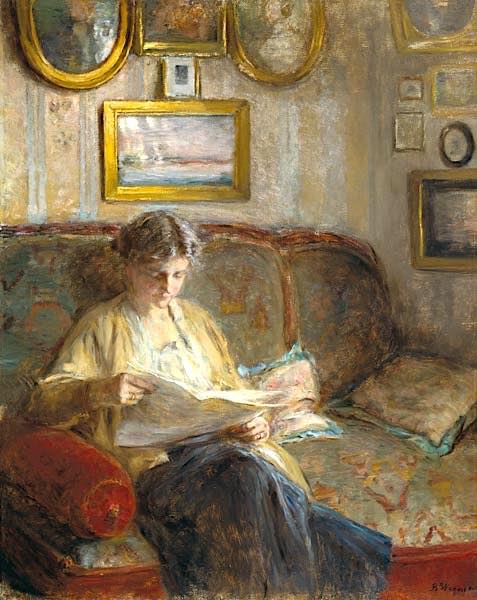
A Well-Read Woman Is Not a Snob
What, exactly, is a snob? A quick look at the dictionary offers the following definition:
snob (noun): a person with an exaggerated respect for high social position or wealth who seeks to associate with social superiors and looks down on those regarded as socially inferior.
Reader, where in this definition can you find a link between the bona fide snob and a woman who simply wants to read—to read, and nothing else?
I think that people who call such women snobbish are often bothered by some of the behaviors that come along with being a devoted reader.
In my case, at least, I do not necessarily “seek to associate with social superiors.” As an introvert, I seldom want to associate with anyone at all. I do, however, want to engage in conversation with people who do not love the sound of their own voices so much that they will not allow me to use mine.
Nor do I look down on those “regarded as socially inferior.” I do occasionally catch myself thinking about how much happier someone might be if they simply found The Novel—the book that could transport them from this world, answer all of their questions, and bring them peace. I am always looking for an opportunity to slide a book recommendation into the conversation.
I did not study literature, so you cannot accuse me of snobbery born from some particular kind of education. In our scramble to define what makes someone “well-read,” I think we often complicate things. One becomes a well-read woman in a remarkably simple way: by picking up books and reading them.
So why do we still get a bad rap?
We Have Not Always Had the Luxury of Reading
Perhaps part of the reason the well-read woman can still seem like an unusual creature is that, historically speaking, she is not nearly as ordinary as she ought to be.
For much of history, literacy was not something equally available to everyone. Education was shaped by class, wealth, geography, and, of course, gender. A woman who wanted to spend her life reading was not always simply a woman with an interesting hobby. The ability to read—and, more importantly, the freedom to decide what one wished to read—was something generations of women had far less access to than we do today.
The change has been remarkable. Globally, literacy rates have risen dramatically over the last several decades, and the expansion of literacy among women has been one of the defining parts of that progress. Yet even now, women account for nearly two-thirds of the world’s adults without basic literacy skills.
So when I think about the modern woman who carries a novel in her purse, spends her evenings wandering through a bookstore, or answers every question about what she wants for Christmas with the name of another book, I do not see a snob.
I see someone participating in a freedom that women before her could not always take for granted.
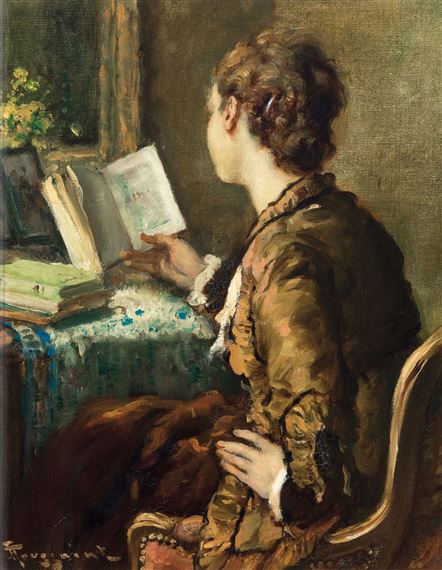
In Defense of the Romance Novel
These days, people may picture women reading and imagine a very specific form of novel: the romance novel. I’ve been asked by at least two guys whether I read “those romances” (you know the kind—the Sarah J. Maas flavor; while I don’t consider them to be my cup of tea, I don’t hate them, either).
I do not agree with a lot of the things that take place in some of these romance novels, but I absolutely support a woman’s choice: if she wishes to read something like that, she has a right to. She also has the right to say no. What other people don’t have the right to do is assume that a woman reading a book on the subway couldn’t possibly be reading a five-hundred-page philosophical drama simply because she is a woman.
This isn’t new. Many things associated with girls and women are demeaned by people who do not understand them: the color pink, lace on dresses, trips to the hairdresser. I can’t expand much on all of those things, but I’ve always had strong opinions about gatekeeping novels for women. So I, as a person who does not read romance novels, will defend them, and I will die on this hill.
Does this make me a snob?
Well—perhaps it does.
What Is a Well-Read Woman?
We have already established that a well-read woman is not a snob, simply because she chooses to spend her time reading. You might go on to ask what is a well-read woman? This is a vast question, worthy of its own post. But it is a matter I try to simplify if possible.
A well-read woman is one who likes to read. She escapes the monotony of everyday life into novels of different lengths and density. Sometimes she writes margin notes; other times, she prefers to leave her books pristine like the day when she purchased them.
A well-read woman doesn’t need to read 100 books to claim the title. She can read ten books instead and really read them—take notes, meditate on sentences, and use them to guide her through challenges in life.
We do not need to graduate from anywhere to be a well-read woman. We simply need to find the books that ignite that passion, and be unapologetic about finding time to read them. We are not snobs. We gather sentences, moments of beauty, and are more than happy to share these things with people who ask.
Snobs don’t do that.
Lovers of literature do.


Leave a Reply