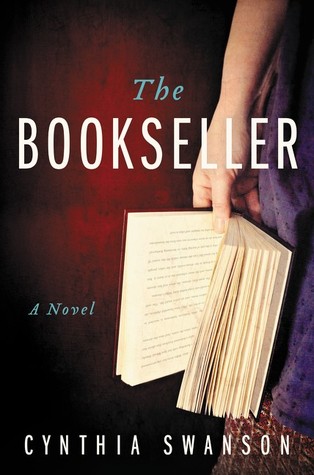
• The Bookseller follows a woman named Kitty who lives in Denver, where she runs a bookstore with her best friend, Frieda. In 1962 it’s not usual for her to be unmarried at the age of thirty-eight, but she tells herself she’s content. Having gone through a failed courtship and several dates that led nowhere, she’s come to terms with life at home with her cat.

    Things aren’t as stable as she’d like them to be. The bookstore is losing business as customers flock to big shopping centers in town. She and Frieda are struggling to pay the rent, contemplating the idea of moving to a location that’ll attract more business.

    In the midst of this uncertainty, Kitty begins to have strange dreams. Each night when she drifts off, she finds herself in an alternate universe where everything is different.

    22635858

    Kitty’s married with children in this universe. Her husband, Lars, is a man she spoke to once in the waking world, on the phone; they never met, but in the dream they are married. They have started a family; he built a lovely house for her and the children.

    In this dream universe, Kitty is wealthy and has plenty of friends. She has a closet of elegant clothing, even a maid. The world she visits in her sleep is full of contradictions to her real life; it’s like the flip side of a coin.

    As the dreams become more vivid, readers are left wondering which of the two universes is actually a dream? It becomes hard to decide. Cynthia Swanson has done a good job of taking two outcomes and making both of them plausible.

    The Bookseller addresses the timeless question “What if?” We’ve all wondered how our lives could be different if we made that choice differently, or took the left road instead of the right. How would the universe change if we embraced a different hobby? How would it change the future, how would it change us?

    This novel drew me in with its poignant writing and powerful scenes, making me question my own life. As the story progressed and fog cleared, I marveled at Swanson’s genius: She took a concept difficult to pull off, writing each reality with grace and elegance. Both of them have their pros and cons. Neither is complete.

    But life is never truly complete. This truth doesn’t escape the pages of books. The Bookseller is wonderful because it makes us ponder our own choices, compelling us to ask “What if?” the way we did when we were children.

    Life might look better in an alternate universe, but we’d find ourselves missing things we don’t notice now. The Bookseller helps us appreciate what we have, not envying others’ lives or wishing away our truths.

    Like Kitty does in both realities, we’ll wake up and realize these little things are gone. But they only seemed little when we took them for granted, because they will leave great voids.

    The Bookseller is a beautiful piece of literary fiction, one I can rate five stars without thinking twice. Give it a try and let it change your perspective on life.


  • Stories can lose their soul if edited too much. This is true regardless of the medium used—books, movies, music. It’s a struggle not to polish a piece so thoroughly that it loses its humanity, a truth told in the film Begin Again.

    Dan used to be a successful music label executive, but he hasn’t adapted to changes in the industry. It’s not that he has nothing to choose from—demos are mailed to him every day. He just doesn’t want to pick up a bad record saturated in auto-tune.

    The determination to live by his standards, not bowing to what’s popular, has gotten him in trouble. He hasn’t signed an artist in years. It’s having disastrous effects on his career, even changing the way his family sees him.

    When the record company fires him, it kills what remained of his confidence. That night he finds himself at a bar, drinking away his misfortune. In this moment of crippling hopelessness, he overhears an acoustic performance that’ll change everything.

    begin-again

    Gretta (Keira Knightley!!) is a songwriter recovering from a difficult breakup. Prompted by a friend, she’s reluctantly gone onstage to play her latest creation. No one seems to be listening but Dan, who approaches her and asks if she would consider working with him.

    He could get his job back. She could land a record deal. What really happens is healing: Dan and Gretta are both lost souls, but help each other back up.

    The songs alone are interesting, because they’re recorded on the streets of New York where life can be heard—this includes traffic, people, angry pedestrians. It created a sensation of music roaming the sidewalks, filling people with life.

    Though Gretta’s songs are powerful, I had to check online to make sure Keira Knightley was singing. It was just bizarre to see her behind a microphone. People have criticized her voice, but I thought it lovely, the lyrics human enough to draw me in.

    Begin Again teaches that art shouldn’t look or sound the same. It reminds us not to give up on our passions. Human feelings will capture hearts, time and time again. And we should not compromise who we are if it leads to unhappy success.

    If we’re passionate about something, we ought to be careful. Some paths promise happiness, but will only make us drag our feet.

    This story celebrating honest art made me contemplate my motives. Do I write because I love it, or for the sake of an audience? Would I compromise my story’s soul for the sake of a larger number? Am I going to follow trends I don’t like, just to make a name for myself?

    These are questions all storytellers should ask. It’s tempting to follow crowded paths to success, but remember—we might forget the sound of our own voices, trying to mimic others.


  • healstorytelling

    The storytelling process is often described as healing; it lets us explore situations on a deeper level. There’s nothing like uncovering heartbreak, letting wounds heal in fresh air; however, it takes courage to bare your soul in a way that’s often public and raw.

    Even truths told in allegory can be difficult for the person saying them. Readers see an eloquent passage, but the storyteller knows what it means. Many are afraid to express themselves through writing, because it’s often too powerful.

    Sometimes it isn’t done on purpose. After publishing Dissonance, I looked at scenes I’d written and marveled at how personal they felt. I’m not dealing with the same situation as Allie, but truth slipped through the cracks about my greatest struggle at the time I was writing it.

    I would elaborate on this, but it would spoil Dissonance and I want you to read it! To keep it short, storytelling heals—it’s not just a cliché. If true, the words come from your soul; you never know what’ll come to the surface of your manuscript.

    You might be nervous about writing for this reason alone, and it’s understandable. Here are three tips for people who want to use storytelling to heal. I hope you try, because the struggle is worth it.


    KEEP A FICTION JOURNAL.

    If you’re struggling with the past, someone might already have told you to write in a journal—so I’m going to take it a step further. Keep a journal where you write fiction. There is truth in fiction, though many scoff at it for being fake.

    The fact is, you might find more truth in fiction than traditional diary entries. Fiction allows us to push boundaries, expressing truths the way our hearts see them. With fiction, we have no limitations at all.


    BE PATIENT WITH YOURSELF.

    Don’t force a story if you aren’t feeling it—that just adds to the stress. Unless you’re on a deadline, there’s no hurry to get the chapter polished. This story is meant to help you heal, and no one may ever read it but yourself. You’re doing it for you.

    Besides, writing is rarely good when forced. Set small goals, and don’t beat yourself up if you can’t reach them. What matters is that you make the effort, because over time you’ll craft a story, and the effort will pay off!


    AVOID SETTING LIMITATIONS.

    In a first draft, you’re allowed to break the rules. Play with genres to find one that lets you express yourself best. It’s also fine to have fun and combine several. The point is to get your message on paper so you can see the big picture.

    What we want is to understand ourselves; no one is the same, so our work can take any shape or size. Since you don’t have to publish this piece, allow it to be different—even if only you understand it!


    The most powerful stories are based on real emotion. A lot of people think telling the truth means crossing a line that shouldn’t be touched; in reality, there might be readers experiencing struggles similar to yours. Over time, you might write the story they relate to best, helping them cope in a personal way.

    Remember, though: This writing should exist to help you, the storyteller. Don’t rush it for the sake of fame. Your masterpiece will come when it’s ready; it’ll be worth the grueling, often painful process of putting words on paper.

    Let’s fill the world with writings of truth; nothing is more original than the story you’re living now.


  • Success can be a vicious game. Unrivaled by Alyson Noel follows three young people participating in a competition to best promote the hottest new clubs in downtown LA. They all hope to win best promoter and use their victories to pursue other ambitions.

    None of them could foresee how fiery the race would become.

    Aster, Tommy, and Layla are not the only competitors, but they’re clearly putting the most effort. This whole book follows their often desperate attempts to sit well with the boss, Ira Redman. Ira owns the nightclubs, and he’s going to determine who wins this competition…but since it’s unclear what his standards are, the participants pull strategies of near Hunger Games-level riskiness.26116460

    Luring celebrities in is an obvious shortcut; by the midpoint, they’re circling like flies around Madison Brooks, impeccable actress and America’s sweetheart. (I kept thinking Taylor Swift.) Since Madison is almost impossible to come by, their second-best choice is her also-famous boyfriend, Ryan Hawthorne. Through him, they each hope to reach her.

    But the quest for Madison’s attention soon becomes a dramatic search—because she disappears. Aster, Tommy, and Layla all wind up as suspects.

    This all started because they wanted success, money to make their marks in the world.

    LA was a town of actors and storytellers, populated by those more comfortable playing an imaginary role than being themselves, and the prize always went to the one who faked it best.

    This is not a genre I typically read. I was sent a copy to review, and found myself hooked by writing that pulled me along with the characters. Some of the quotes were truly beautiful, others intense—there’s enough cussing to make scenes properly intense. All the characters, even Madison and Ryan, were sketched perfectly; they felt like real people.

    Having been in LA, it was nice to read descriptions of streets; I pictured myself strolling the Walk of Fame, could almost smell big city air. It was like stepping through a window back into California, a place where you never know what you’ll find around the corner.

    The character Aster is my only criticism. Most of her choices were too childish, like she was trying to fit into a grown woman’s shoes. Then again, this is an LA version of the Hunger Games; I can forgive her losing sight of reason in the race to beat Layla, who ironically becomes an ally towards the end.

    More than the characters, it’s the situation which I found addictive, like a bad tabloid or a reality show you can’t turn off…except this is well-written, a journey into the dark part of fame. By the end of Unrivaled, you’ll ask yourself what you’d do for success—and if it’s worth the losses.

    You might even lose yourself in the process.


  • Storytellers learn so much researching those who came before us. From them, we learn there’s never an easy path to getting an audience; tears will be shed, friends lost, and there’ll be moments in which we’re tempted to give up.

    I have a book about Walt Disney in my towering TBR pile; it will no doubt be a wonderful read, when I get around to it. I’ve already been inspired by his story because of the movie Walt Before Mickey. Stories are told in film as well as books; storytellers ought to pay attention to both.

    1759513h

    Walt Before Mickey follows Disney’s life before the creation of Mickey Mouse. It’s a movie that shows there’s genius in failure; it doesn’t only bask in the cartoonist’s success. There were powerful scenes showing Disney penniless and alone on the streets.

    In those scenes, it’s difficult to imagine him fulfilling his dream.

    This movie also shows moments of grand determination. Disney has a dream, and he’s going to work himself to the bone until it comes true. He won’t buckle under pressure from his family. He keeps going, showing willpower I can only hope to have one day.

    It’s inspiring because it shows that hard work pays off. Not only that, Walt Before Mickey celebrates things he did achieve before his greatest success. It shows that, even if we’re not where we want to be yet, the journey can be lovely.

    The setting was beautiful, costume and dialog making me want to travel by train or write on a typewriter. I could almost smell the cigarette smoke; these scenes evoked a sense of being in the story.

    Chasing a dream is never easy, and it’s often tempting to give up when we’re almost there! Walt Disney’s story shows that the greatest artists have felt disheartened. However, they persevered—and to this day, their dreams survive.

    Walt Before Mickey reminds us success might be sitting before our very eyes. In the movie, Walt finds a mouse on his desk and keeps it as a pet for a while. In the last scene, after the premiere of the first Mickey film, he encounters another mouse in an alley.

    The movie is great for people who enjoy historical fiction; it will inspire any dreamer going through rough times. Like Walt’s mouse, success might be looking right at you; harness your passion and work hard, until you can make it happen!


  • I accepted a review copy of Char, having been told beforehand that it was a good read. I think I expected it to be a good read anyway, because I love stories about faeries. The book did not disappoint me; I was excited to read this book and see what I’d find.

    It was an emotionally scarring trip through the land of fae. I could feel dirt under my feet, taste smoke in the air; my heart raced during intense scenes.

    The world of Char is one of magic and danger. Luna has embarked on a quest which costs her actual blood—a bit of her pinkie finger. It separates her from all the people she loves most, but she’s determined to follow through. She has a no-nonsense mindset, focusing on the task at hand.

    0 Actual Char Front Cover 3.16.16

    Char lived up to my expectations in almost every way. However, once I finished reading, I realized the love triangle felt over-emphasized. The interactions between Luna and her love interests were enjoyable—I certainly hopped on one of the ships!

    However, I wonder if that emphasis on love was necessary in a story driven by urgency.

    Why is Char different from the other faerie books out there? It gives you a sensation of freedom. You are living this journey with Luna, feeling her pain, facing the danger. It’s written so your heart feels like it’s dancing on the pages.

    Also, the faerie queen is not perfect. She’s got haunts and regrets so powerful, she often seems like a normal girl. We do not like everything she does, but feel enough sympathy not to judge. It was nice to see her off the pedestal, struggling alongside her people.

    Luna’s fate at the end was so harsh, it almost made me sick. It showed how human-like these faeries could be, making decisions based on feelings of fear and betrayal. Events in Char were arranged to shock readers, dropping a bomb.

    Char has several traits which make it worth the read:

    • Clever character development. It must take delicate planning to make the faerie queen so vulnerable that readers feel sympathy, despite the darker things she has done.
    • A setting written like artwork. You smell the forest as it’s described, feel grass under your feet. You aren’t turning the pages of a book—you’re living a story!
    • The ending. It has a powerful effect, shattering what was generally a peaceful setting. We are pulled along harmoniously, and the ending shatters our daydream.

    In all, Char was a beautiful book that’ll have my mind reeling for a long time. It’s a faery tale you can taste and smell. Give this book a try if you like faeries or are a lover of nature; I promise you won’t be disappointed!

  • 3 Lessons I Learned Self-Publishing

    On June 1 I celebrate my first book birthday; it marks one year since the publication of Dissonance. I am not promoting one method of publishing over another; traditional has great benefits. I am simply recounting my experience taking the ‘least popular’ road.

    If you haven’t read Dissonance, new readers make an author’s day; I hope you give it a try!


    Years before I had a manuscript ready, there was strong bias against self-publishing. Everyone called it an easy way out, a quitter’s path. An acquaintance went so far as to label it ‘literary suicide.’

    She wasn’t the only person I knew with that bitter view; we were fresh on our journeys in the writing life. All of us dreamed of being taken by a literary agency, as if only then could our talent be confirmed. It seemed that no one who took her work seriously planned to self-publish.

    Then, people realized times had changed. More people dared take the indie route, but not because it was easier—they all had their motives. As their self-pub journeys proved not to be disasters, the world of indie literature grew.

    Blank bookcover with clipping path

    By the time Dissonance was ready to go, self-publishing had become a legitimate option. That isn’t to say my choice was easy: some people were so faithful to their bias against self-pub that I lost friends I considered dear.

    Feeling rejected, it wasn’t easy to go on with my plan, but I was ready to be an author. Encouraged by friends and family, and especially my dear mother, I hit Publish and waited to see what would come next.

    It was not ‘literary suicide.’ I have learned so much about writing, publishing, and business since releasing Dissonance a year ago. Here are three ways self-publishing helped me to grow and follow my heart.


    I BEGAN TO DELIGHT IN FAILURE.

    The artist’s journey is one of discovery and pushing boundaries, doing things others haven’t tried, shattering expectations—including your own. I’ve experimented with methods of promotion which fell flat, but at least I tried.

    Historically, people have changed the world by carrying out experiments so silly no one else bothered with them. In rare occasions, those projects ended in success. Indie publishing gives me the chance to try things.

    I will keep experimenting with methods as an artist and writer, even embracing the failures. What matters is that I try.


    TIME IS LIMITED, SO I LEARNED TO PRIORITIZE.

    If you want to find gold, take time to dig. Despite what many say, writing is a job. If you don’t take your work seriously, don’t expect to be taken seriously.

    No one can write all day, and promotion never sounds exciting. However, indie publishing makes it fun! You get online and make friends, tell them about this story you wrote. Make them part of the process, and every moment you put in is worth it.

    It’s important to live offline, too. Just don’t do your story an injustice by asking readers to spend time with your work if you aren’t willing to invest it yourself. Put yourself out there and find a loyal audience!


    I LEARNED TO MOVE ON.

    Indie publishing has the advantage of letting us make changes whenever we want. All writers know it’s hard to finish a manuscript and say this is it. However, with indie books, there’s not even a limit after hitting Publish.

    You have to get the story right, and the edits, and the cover, and the marketing. But make sure you aren’t so caught up that you stop writing altogether. Your second book promotes the first.

    Readers want a second book; it will lure more readers to the first. I’m eager to put out my sequel soon. I can’t wait to meet new people, grow as a writer, and have two novels to my name.


    This is only my first book birthday, and I still have a long way to go. I have failures to learn from, friends to make, sentences to rearrange. Most of all, I have books to sign, stories to tell, and I’m comfortable knowing I took the first step.

    Self-publishing was not literary suicide to me; it was growth. I learned how I could improve and what steps to take next. I realized storytelling is a business so delicate, we have to get extra creative to succeed.

    Traditional publishing has benefits, and one day I plan to pursue it. But never let the bias of others influence your decisions. Ironically, many people who judged me for self-publishing stopped writing.

    Every path is different. Embrace your freedom, storyteller, to choose the one which suits you.


  • ParisWinter_revised2

    The Paris Winter leaves a proper chill in your soul after you finish reading it. It is the haunting story of Maud Heighton, an English painter who takes art classes in Paris, all the while struggling to get her daily meal.

    Her situation doesn’t go unnoticed at the academy, especially when she starts to lose weight and ration meals. A fellow student from Russia named Tanya has sources; she takes Maud to find a job that’ll help her survive the winter.

    Maud is employed as companion to the sister of wealthy, mysterious Mr. Morel. She is to teach Sylvie to draw, something she can do easily. It seems she’s finally found stability—she’s eating proper meals and sleeping in a warm room.

    It was all too good to be true, however. The Morels had a sinister fate planned for her all along. They did not count on her surviving it, but she wakes with anger in her heart and a desire for revenge.

    She’s been used in a scheme the Morels planned for months. When Christian Morel blames her for stealing the Countess’s tiara, she becomes a thief to society. He throws her in the river and claims she committed suicide, so she wakes up not only a thief but dead.

    They could not have done more to destroy her reputation.

    From childhood, Maud has learned to fight. They might have killed her in the eyes of society, but desire for revenge leaves her very much alive. With the help of her friends, she plans a comeback.

    She works with the help of both Tanya and Yvette. A model from the academy, it was Yvette who noticed how thin she’d been getting. Roughened by a life on the streets, she’s courageous enough to stand by Maud to battle injustice.

    Friendship is important in this novel. There’s no romance for Maud; as a main character, her strong relationships are with friends. They stand by her when she becomes the ghost of herself in pursuit of revenge.

    This emphasis on friendship made the book unique. These women are there for each other in the face of horrific things. I wish more books focused on the strength one can in find a good friend.

    Though Maud gets her justice, the ordeal changes her for life. She returns to England with Yvette, hard of heart and angry with life—but driven to start anew as an artist, respected and alive.

    This will join my collection of Paris books as a favorite, having caught my attention from the start. Not only does it have a beautiful cover, it’s got an intense plot and strong relationships.

    I recommend The Paris Winter to people who, like me, devour any book set in the City of Light. It is also great for fans of historical novels and thrillers. You will be satisfied by the ending; I am sure you’ll find a new favorite in it, as well.


  • whyrealistic

    Your hero has been chosen to carry out a risky, important task. Lives depend on their ability to get the job done. They will face countless obstacles enduring sleepless nights in the cold at the mercy of nature. There is a chance they will die carrying out this quest.

    How do they react to all this?

    Heroes shouldn’t embark on these quests feeling no apprehension for what’s at stake. It depends on the character’s personality, of course—a hero who’s been raised expecting this sort of thing will experience less fear than a peasant offered as a sacrifice to the dragon. Some characters can and should be fearless in the face of this challenge.

    Sometimes, though, writers get so anxious to finish the book that we’re tempted to skip a crucial step in making our protagonist react realistically. This is a horrible mistake: heroes need to be relatable, and if they’re not, there should at least be good reasons for why they’re so fearless.

    REACTING TO THE HERO’S JOURNEY

    Many books feature a Chosen One, and he often knows from childhood the ordeal he’ll be put through as a hero.

    A character who’s lived with this knowledge will probably make all his choices before that ordeal keeping in mind he may die early—he’ll avoid attachments or long-term commitment, he’ll train for this event all his life. He may come off as cold or unfeeling.

    Not all characters will be like this. Like in all cases, it depends on their upbringing—on what kind of parents they had, if they were revered or mocked at school for being ‘condemned’ to this quest. The point is, a character who knows what he’s going to face will live acting like it.

    Even if he dreads it and is in denial, that denial is sign that he knows he’s been chosen. There’s no escaping the emotional effects of an assignment with this magnitude.

    Now look at the unfortunate peasant plucked off the streets and chosen to fight the dragon. If he manages to slay the beast, he may be promised riches and the princess’s hand—luxuries he never dreamed could be his.

    But he hasn’t lived anticipating something like this. He’s going to be scared. He’s going to fight it, at least for a while. He’s going to question at some point whether the mission is worth it.

    WHAT’S THE DIFFERENCE?

    What I’m getting at is this: The way a person is raised determines how they react to giant plot twists. The knight raised from childhood is more likely to be cocky and fearless than the peasant who’s been mocked all his life.

    Too often, books do not notice the difference. Perhaps the peasant has had passing thoughts of a glorious quest to improve his life, but he hasn’t been living it; he probably hasn’t taken those thoughts seriously. They’ve always just been daydreams.

    When facing this possibly fatal quest, he’s likelier to get cold feet than the knight raised from childhood.

    Realistic humans don’t switch to hero mode in one night. Storytellers, make sure you explain why the peasant accepts this challenge so quickly, or why the hero doubts his mission.

    Characters need to feel human.

    WHY IS THIS IMPORTANT?

    Heroes who don’t hesitate at logical moments can be annoying. There needs to be a reason for them to change directions. If our characters behave in ways that contradict their personalities, it may seem that we don’t truly know them.

    Or worse yet, readers get the impression we think they’re too stupid to notice.

    Stories are about people. If readers can’t sympathize with the people—or at least understand them—the story will fall flat. Few people in real life would jump with excitement if told they’d be sacrificed to a dragon.

    Peasants do not become brave knights in the span of five pages. Few books would be able to pull it off; we don’t want to risk writing a story that won’t touch the heart!

    REALISTIC HEROES

    Of course, we shouldn’t cling to stereotypes! What I’m saying is to aim for realistic protagonists, people with reactions so strong and human that it hits readers right in the heart. We want readers to think, This is how I would react. I’m living through them.

    If the peasant goes on this journey despite his fear, slays the dragon, and improves his situation, readers will know even they can get past any obstacle to reach a better place. If the brave knight does it, readers learn the value of bravery, of preparing oneself for the worst but believing they can win.

    These five-page heroes need to stop. Stories are about people, and if they can’t resonate in a reader’s heart, they lack in the most important magic of all. We cannot settle for two-dimensional characters who will only mock human emotions.

    Humanity—even when fearful, unstable, or wrong—is still precious. Make sure your characters behave according to human emotions, because your readers are human; there is no better way to write a story they won’t forget!

    Are you a storyteller? Let us know how you ensure your characters act realistically!


  • children

    HOW MUCH EFFORT DOES IT TAKE YOU TO TELL A STORY?

    I don’t mean with regards to practice and skill—it’s important to produce quality writing when your storytelling medium is the written word. Readers can usually tell when we haven’t paid attention to quality, and few things are more irritating than starting to read a book and discovering it has sloppy writing.

    What I mean is, could you tell a gripping story to someone in the elevator? If a person was blind and couldn’t read, would you still be a storyteller? How dependent are you on letters and perfect phrases to transport your audience somewhere else?

    I hope to one day be able to tell stories in everyday speech with the ease and enthusiasm of a child—here’s why.

    THE HEART OF STORY

    Though books consist of words on pages, they’re so much more than that. A good book hinges more on truth than the words recounting it. I’m not downplaying the importance of talent, but there’s a difference between quality writing and complicated writing.

    Take a moment to put the notebook away and think: What’s the heart of a story?

    Consider a child with limited vocabulary who won’t stop talking. I’m sure you’ve met one who told a story so vivid the narrative blew you away. How could a six-year-old’s words impact you when they probably don’t make sense all the time?

    The difference is a fearless passion we lose growing up. Children don’t worry about the order of their words; something has happened to excite them. They want to share the excitement—it’s so great that it can’t wait, and everyone needs to hear it!

    This is the passion storytellers should aim for. We want our audience to experience tales and love characters as we do.

    3 SECRETS

    What qualities make a written story powerful, like one a child may tell?

    Children don’t filter their stories. They don’t rearrange words to make them sound better, nor do they worry about offending. Because of this, it can be difficult to follow their stories, but the beauty is that they don’t care—they keep going.

    How thoroughly do you ‘clean’ your words to keep others happy? When that clean-up is finished, is it the same story you started with? Be careful with overediting, for it can change everything.

    Children don’t compare. They aren’t trying to sound better than anyone; they just want to be heard if something has caught their interest. They speak what’s in their heart and care little about how much better that other person tells it.

    How much do you compare yourself to other writers, envying their talent or audience? Try telling your story simply to be heard; if you’re passionate, improvement will come naturally.

    Children are unapologetic. A child tells his story the way he sees it, unfiltered and raw. It’s worth asking yourself if the worldview that matters most is that of a child; there may not be a clearer mirror in which to see yourself.

    Have you changed your point of view to keep from hurting someone’s feelings? A story that walks on eggshells with readers risks becoming weak. Instead of worrying about the reader’s opinion, tell things as they are to you; that honesty might accidentally make you a bestseller.

    HAVING COURAGE TO DREAM

    Children allow room for imagination. They haven’t wandered into the trap of real life; they can see the world outside the box. Hearing a tale from them is a real gift, a flashback to that innocent world we’ve long outgrown. They remind us there is magic, and growing up is optional.

    Are you afraid to daydream and apply that magic to real life? This is a tumultuous world where people crave escape; be the one to write a story that’ll help them return to their childhood dreams.

    One sentence told with the passion of a child could touch a listener forever, because children are so real and human! It’s never too late to see the world in all its magic once more; you just have to be brave enough to see with the eyes of a child.


  • 23000308

    Desperate to prevent an abusive arranged marriage, Princess Araya flees to a neighboring kingdom, only to land at the mercy of the impulsive Crown Prince Thoredmund, who provides refuge in a secluded forest and teaches her survival skills. Her surprise at the unexpected hold the prince has on her heart mirrors his shock at falling for the one girl he can’t have.
    As the young couple’s feelings for each other grow, the fragile alliance between the two kingdoms threatens to break apart. With a vengeful duke and an enraged king fast on their trail, Thor and Araya must decide how much they’re willing to risk for love.
    Even if staying together means starting a war.

    A beautiful fantasy romance, Into the Trees follows Princess Araya’s flight from home in search of freedom.

    Araya is escaping an arranged marriage which looms over her like a shadow. Crossing into a neighboring kingdom, what is her luck? She runs into that kingdom’s prince, who has an impulse for helping people in need; hearing her story, Prince Thor swears to get her to freedom—and loses his heart to her on the way.

    It’s a quick and charming escape for those who love fantasy worlds, written at a pace to reflect Araya’s urgency. Betrothed to a disgusting man, she would rather abandon her life of luxury and her title than marry him.

    However, it’s not that easy. Having been raised a princess, she doesn’t know the first thing about living as a commoner; she can’t start a fire or figure out how people greet each other in a different kingdom.

    Small details such as these make incredible worldbuilding. More books ought to pay attention to customs, otherwise cultures sound unrealistically similar. When at times the book got too fast-paced, Maker’s worldbuilding made up for it; she put satisfying thought into the realm she created.

    I loved the scenes in the forest! I could almost smell the nature and trees—the river, moisture, flowers. This forest sometimes had more life than the characters wandering it.

    Most of this tale takes place in the forest, where great love and panic unfold. Could these trees whisper about what they saw after the story ended? I wouldn’t be surprised, for the environment teemed with magic.

    I felt the resolution was rather abrupt, but the ending satisfied me as a reader. Under the Trees is a tale where beauty and magic are balanced with corruption; there’s a charming prince as well as dark characters quick to abuse their power.

    Araya wants to escape a grim fate; she’s willing to leave her comfort zone for it. The story sweeps you into her journey, so you experience both giddy love and foreboding fear. I finished this book satisfied that everyone had gotten the ending they deserved.

    If only there were more books like this–focusing on the beauty of love in a lively setting, like that place under the trees.


  • 0553575635

    Ship of Magic sweeps us into a world of pirates and sailors, traders and sea serpents. Don’t let the length of the story frighten you: There’s hardly a dull moment in this novel, the first installment of Robin Hobb’s Liveship Traders trilogy.

    It’s crafted with so much care, I found it difficult to tell who the villains were—and harder still to dislike them. These characters grow with each plot twist. One of the book’s strengths is characterization. We feel by the end that we’ve gotten to know them personally, even the pirate and the liveships.

    The centerpiece detail of the series, liveships are vessels with talking figureheads crafted from wizardwood. They can be unpredictable and difficult to control. Some are wild with unsettled pasts, others are social and love to gossip. These ships are characters, a concept  I found very cool!

    Though most of the chapters were gold, I struggled when we switched to the sea serpent’s point of view. Those scenes seemed too out of place, rarely revealing anything. Eventually I started to skim them, something I may regret when I start book two.

    Overall it was beautiful, the characters rich with depth—like a pirate who wants to be pirate king, and an abandoned liveship named Paragon. He suffers the way a human would if left in utter solitude.

    Ship of Magic will satisfy the reader who longs for adventure at sea. I cannot wait to start the next one.