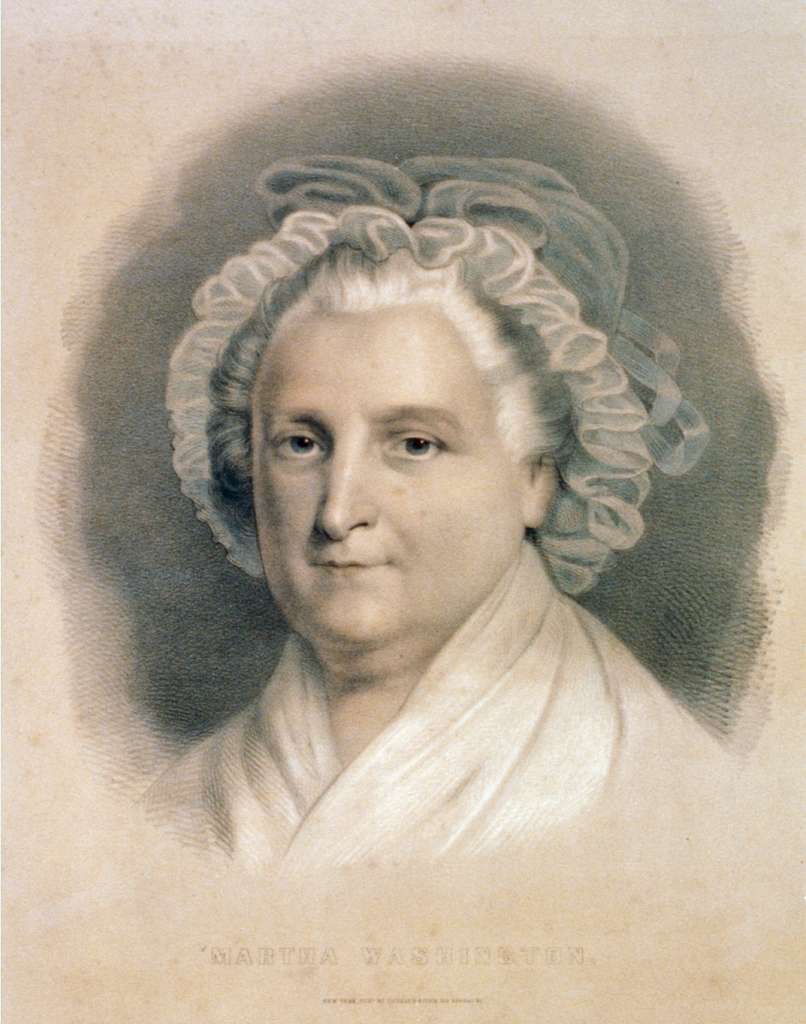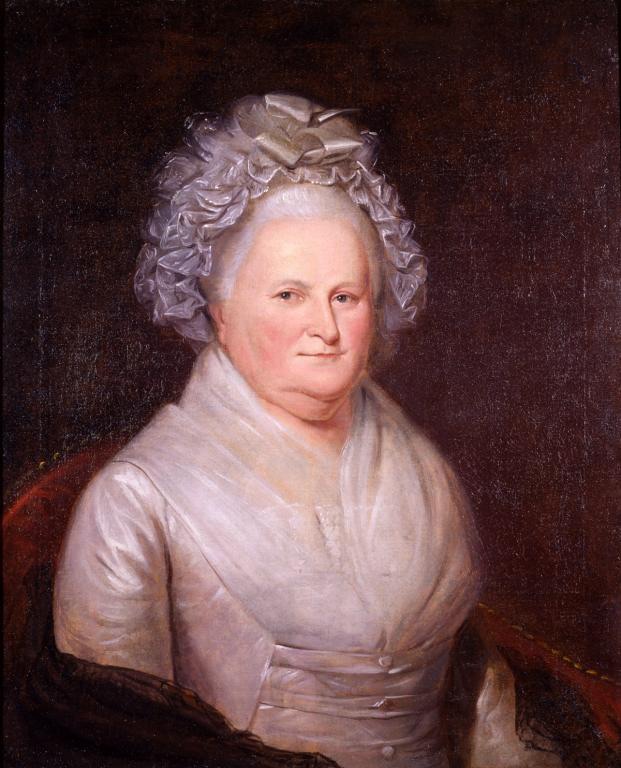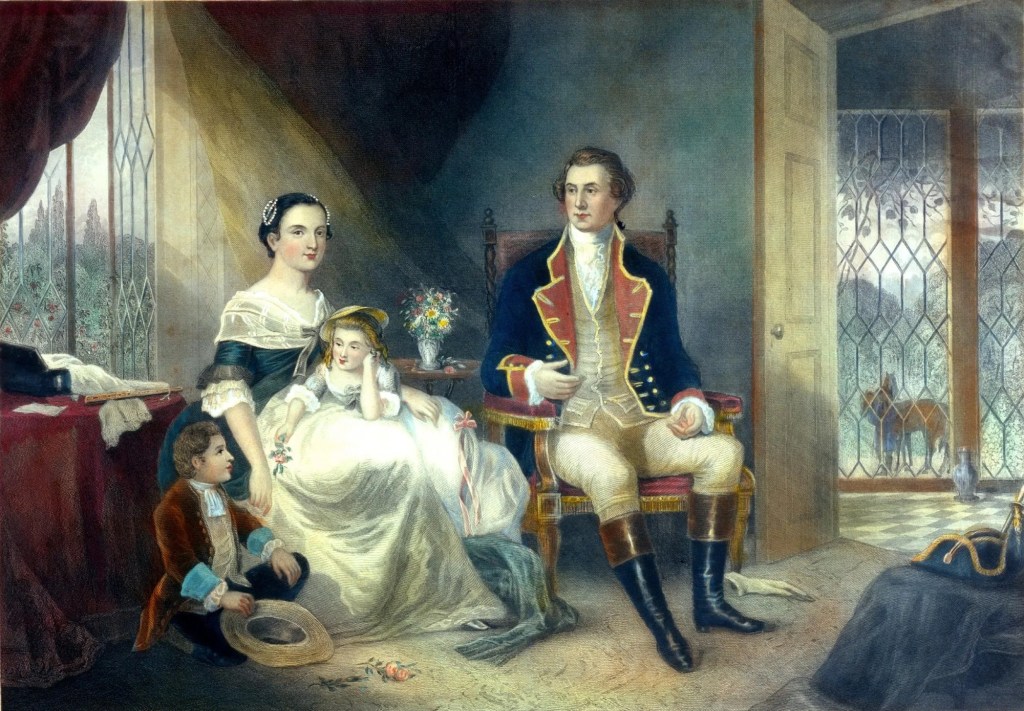
• The Early Sorrows of Martha Washington

    If you’ve been keeping up with my newsletter, you’ve seen me talking about my new project—The Tearoom: First Ladies. It’s going to be a series focusing on the wives of US Presidents. 

    They will not necessarily be posted in historical order. My inaugural First Ladies post was about Mary Todd Lincoln—read it here:

    Mary Todd Lincoln Wasn’t ‘Crazy’
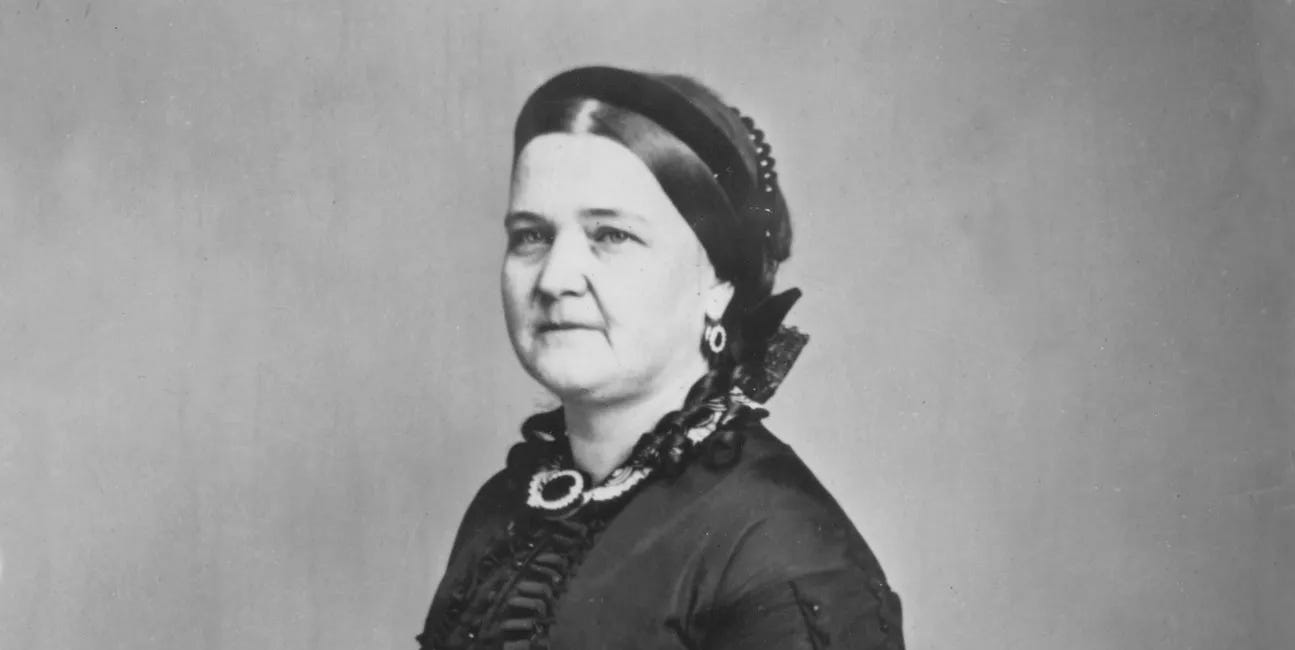
    Mary Todd Lincoln Wasn’t ‘Crazy’

    For First Ladies, I will be writing posts in the order of what grips me in the moment. It is, after all, the Muse who decides what deserves the most attention in the moment. Individual projects tend to know when they begin and finish.

    Dauntless Martha Washington

    Today, we jump from Mary Lincoln to Martha Washington. I’ve written a post about her mother-in-law, Mary Ball Washington (read it here!) I even wrote a post about the Founders’ daughters, including Martha’s. 

    Until now, it hadn’t occurred to me that she deserved a spotlight of her own. She certainly does, because her presence proved to be a tremendous source of strength to her husband.

    When George Washington was chosen as the general of the continental army, he was not yet President of the United States—but had been unanimously chosen as leader in a war where the odds were against him. 

    His wife, Martha, was very involved. She even traveled, courageously, to join him at camps near the battle sites. She did this, even when there were rumors that the British might try to kidnap her.
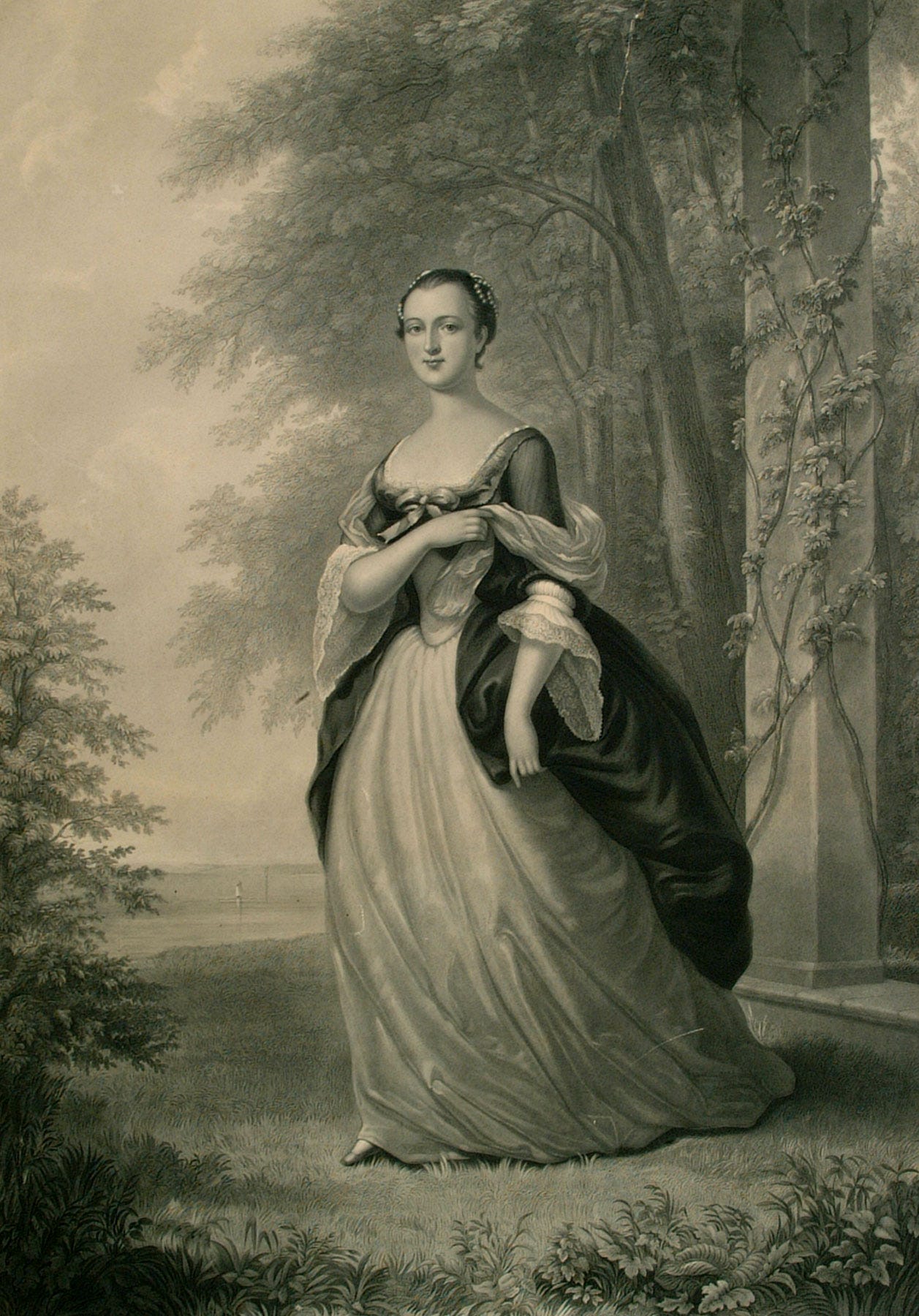
    Her story, however, began not with George Washington, but with her first husband. They married when she was in her late teens—but they were very much in love. 

    Two Different Matches

    Martha Dandrige’s romance with Daniel Parke Custis was not conventional. The Custis family were wealthy, and Martha’s parents were only middle-class. Because of this, they had to endure the protests of Daniel’s father.

    In spite of this, they chose a life together. It is with Daniel that she would have her children. After Daniel’s death in 1757, his widow received a respectable fortune—especially in the form of land.

    Flora Fraser writes in her book The Washingtons:

    In accordance with English common law, which obtained in the colony, all [Daniel’s] personal property, minus his lands and slaves, was divided equally between his widow and his children. … Eight thousand acres, the Custis mansion in Williamsburg, and 126 slaves were settled on Martha for life. Should she take a new husband, this dower share, as well as her share of her late husband’s personal property, would come under his control.

    Martha would, indeed, take a new husband. The initial motives for George Washington’s pursuit of her were worldlier. It’s no secret that her wealth was appealing to him. Some have questioned whether he was ever in love with Martha in the poetic sense. 

    His first real love seems to have been a woman named Sally Fairfax. He had been unable to pursue her because she belonged to a wealthy family, while he was of the middle class—and he, it seems, was not brave enough to fight the norm like Martha.

    Sally would go on to marry one of Washington’s friends, and after he took a wife of his own, he appears to have committed such yearnings to his past. But there’s no question about it: Martha’s money was attractive to him.

    He was interested in using it to renovate his beloved home:

    He could tend his estate at Mount Vernon with the aid of the income from Martha’s dower lands in southern Virginia. … As guardian and stepfather to the rich and well-bred Parke Custis children, he would derive worldly benefit. Washington was to describe Martha, soon after their marriage, as an “agreeable partner.” Five months later, in a letter to the same correspondent, she had become “an agreeable Consort for Life.”

    Convenience and Sorrow

    Though it was initially a match of convenience, George would learn to feel tenderness for Mrs. Washington. Later, however, when asked for marital advice by one of his young relatives, he would advise against such sentiments.

    Much of the Washingtons’ union remains a mystery. After George’s death, Martha burned most of the letters they exchanged. We can only gather from accounts of their friends, as well as scraps of surviving correspondence, that George and Martha Washington loved each other.
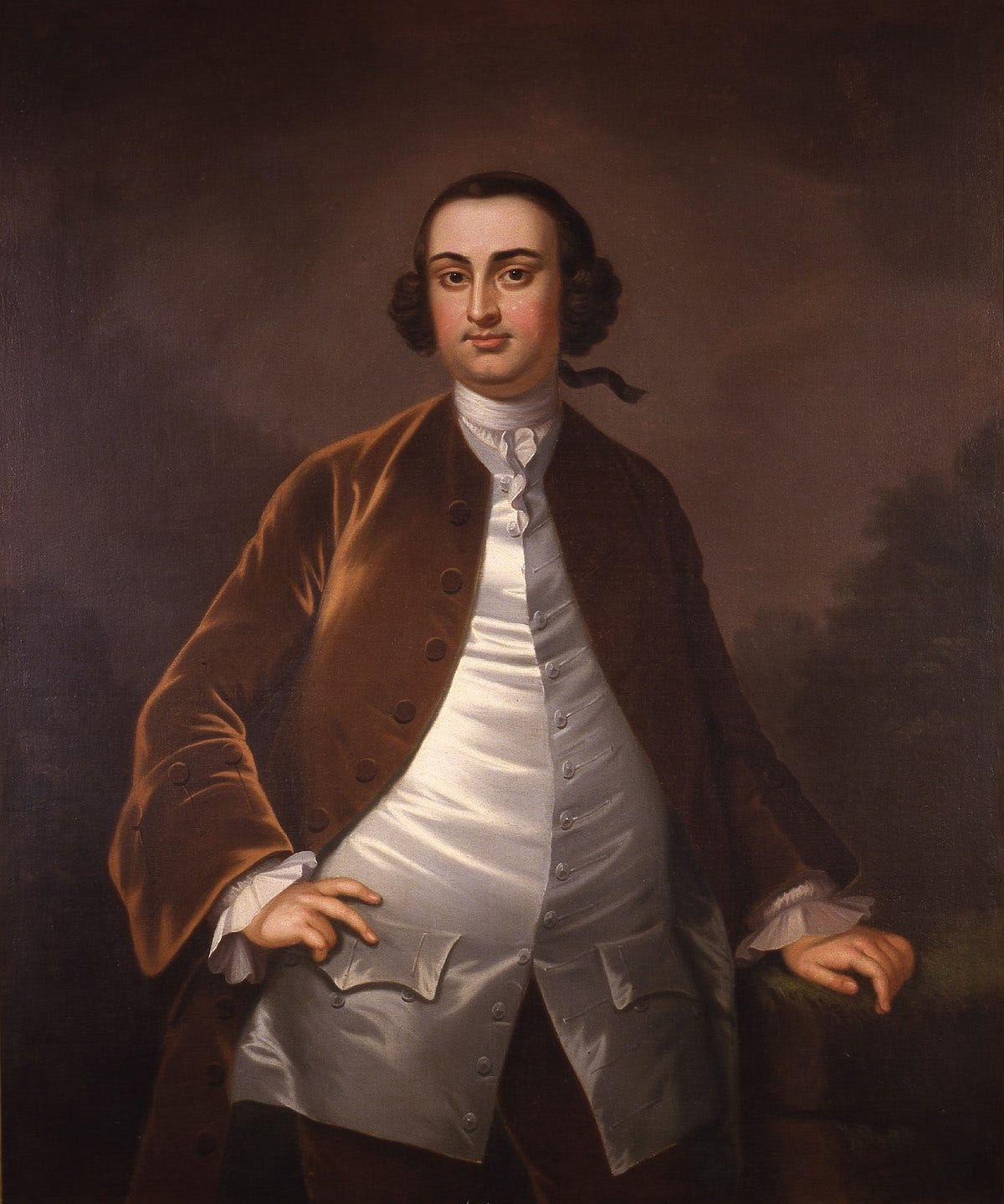
    Daniel Parke Custis (1757), John Wollaston

    In her first marriage, Martha would be strengthened by the pain of loss. This was probably one reason why she was able to accompany her second husband to battlefields.

    Though Martha and Daniel were happy, tragedy struck. In motherhood, Martha experienced crippling sorrow. Her first two children were Daniel II (born in 1751) and Frances Parke Custis (born in 1753), and this would be the beginning of the end.

    Deaths in childhood in this period were common, and there was no reason why more children should not follow. But only three months after the death of his elder daughter, Daniel himself was abruptly taken ill in July. Despite the attentions of a Williamsburg doctor, he died the following day. … Her husband and two elder children now all lay in the Queen’s Creek plot.

    It is believed that Daniel II died of malaria in 1754; his sister’s cause of death is not specified. After Daniel’s death, Martha would be left with only two children—John (known as Jacky) and Martha (known as Patsy). 

    The losses of her first two children made her a doting, anxious mother, especially when Patsy began to display signs of what historians believe was epilepsy.

    The Fortunate Stepchildren

    Fortunately for Jacky and Patsy, their stepfather was genuinely fond of them. Here, he displayed remarkable character. In spite of his hope for heirs, George Washington would have no natural children. 

    He did not allow himself to mope, instead making meticulous plans for Jacky’s education. George hadn’t had a classical education; he was determined that his stepson should enjoy that privilege.

    Washington was committed to finding a cure to Patsy’s ailments. She would live to the age of seventeen. In that short span, her stepfather contacted countless physicians and obtained dubious treatments, refusing to give up hope. He sent his stepdaughter on trips to so-called healing springs, though those trips were fruitless.

    Martha and George were not ashamed of Patsy, even when she had her so-called fits. They lived in a time when symptoms of epilepsy were hidden from society. This was not the case for Patsy, who joined her family for public activities, such as shopping and visiting acquaintances.
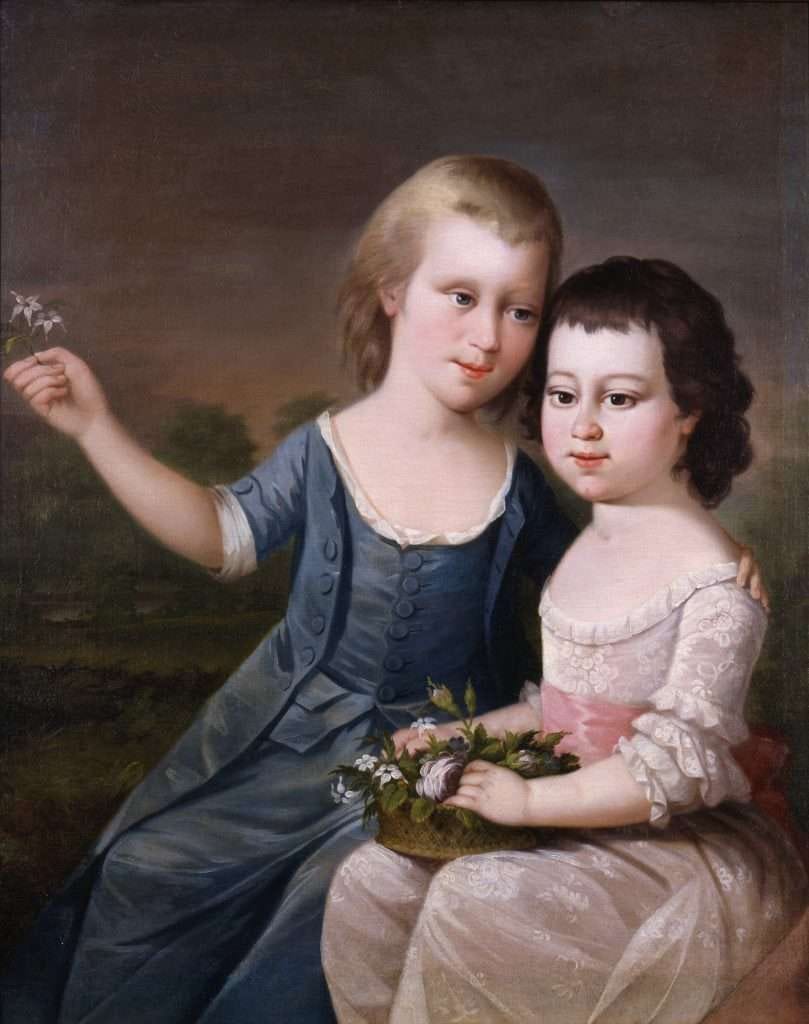
    John Parke Custis and Martha Parke Custis

    Seventeen years is not long, but Patsy Custis was happy. She was cherished by her mother until the end. She found in George Washington a stable, comforting father. He is said to have wept bitterly when she passed away.

    After the death of Patsy, Martha retreated once more into mourning. She found comfort in her husband and in Jacky, the last remaining Custis child. Though his life also ended tragically, he would survive into adulthood.

    Young John Custis proved to be a willful soul. In spite of his stepfather’s hopes, he did not have the discipline to attend a prestigious college. Instead, he proposed to a young lady named Eleanor Calvert. It does not seem as if he asked anyone for advice before proposing. What resulted was a scare for his honor that led to a rushed wedding.

    Rushed or not, the marriage seems to have been happy. It provided George and Martha with four grandchildren on whom to dote—Elizabeth, Martha, Eleanor, and George. 

    Three other grandchildren died soon after birth.

    The Final Child Dies

    Jacky’s death would be different in nature, though no less painful to George and Martha. He’d convinced his stepfather to let him join the Continental Army as an aide-de-camp during the Siege of Yorktown. 

    On the journey there, the young man came down with “camp fever”—likely a disease such as dysentery. He never saw the battle; instead, he was taken upriver to the home of an uncle. There, his mother and wife both attempted to nurse him to health. 

    Unfortunately, their efforts were in vain; he succumbed to “camp fever” at the age of twenty-six. His widow would move to Mount Vernon with their surviving children, until she remarried.
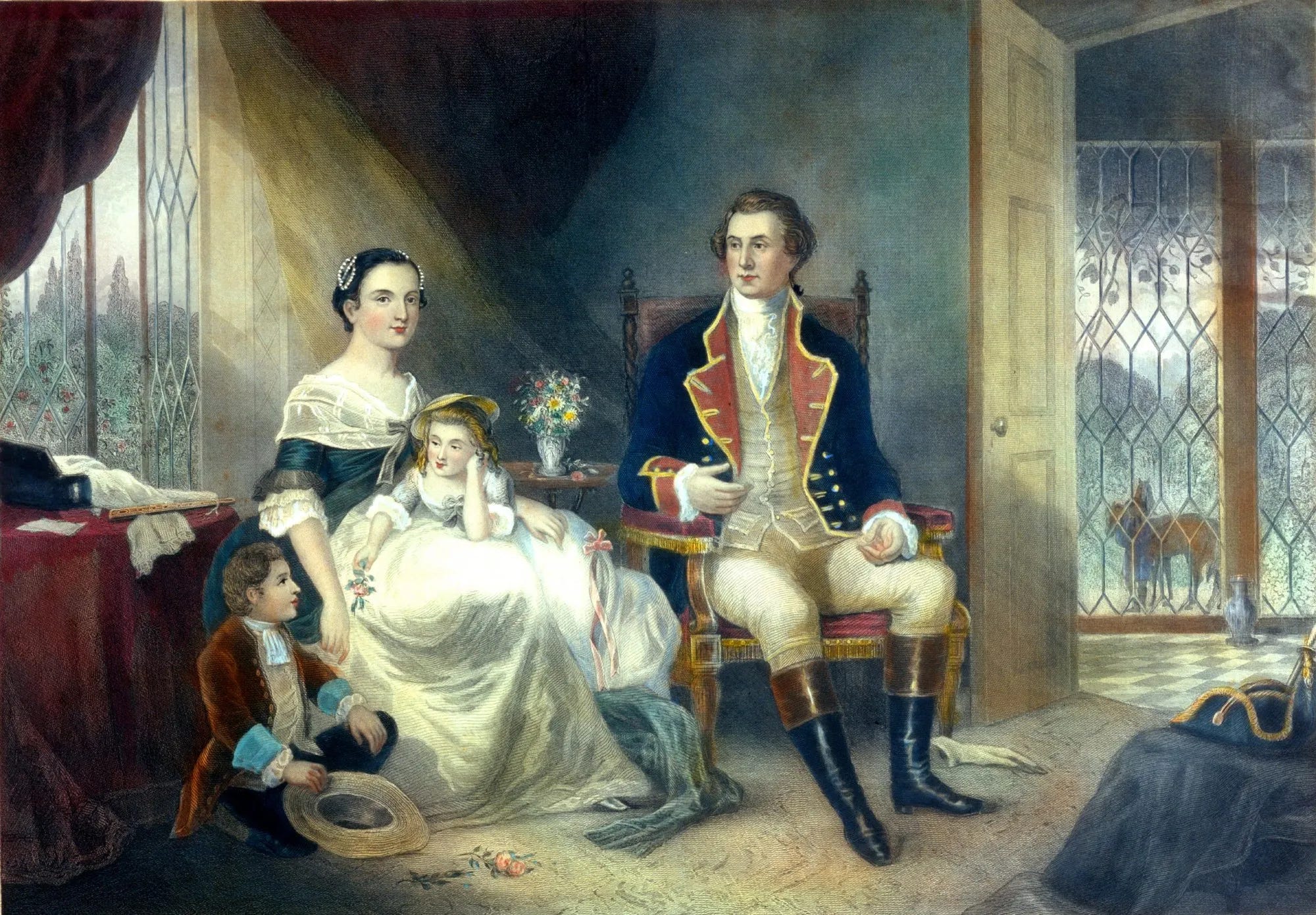
    Though Martha grieved, she did not allow herself to be destroyed. In spite of her losses, she said that it was important to meet darkness with a lively spirit. One of her most famous quotes is this:

    “I’ve learned from experience that the greater part of our happiness or misery depends on our dispositions and not on our circumstances.”

    Martha married twice. Both marriages placed her in prominent positions. She displayed her inner strength, even in the form of grief for her children. 

    Her second marriage might have seemed, at the start, to be driven by material reasons. She wouldn’t have predicted the great role her second husband would play in history. I like to think that when she married him, she did know he would be capable of caring for her and her children.

    Of Martha’s two husbands, Fraser writes:

    In contrast to Daniel Parke Custis, George was Martha’s contemporary. He was, also unlike reclusive Daniel, ambitious, for all his talk of retirement, and of an adventurous spirit. Daniel had had dark good looks. Washington, pale-skinned and with chestnut hair, had fine, classic features. He was, besides, a man of unusual height and with a powerful physique. And last but not least, when Washington came calling, he was a serving officer in uniform.

    Martha, in turn, had much to offer George, who would find himself in great need of a strong consort after the war began:

    George, for all his physical grace, was nervous at home and stiff and uncertain in company, except with intimates or fellow officers. Martha instilled in him a self-confidence that had hitherto been lacking. Under her tutelage he was to embrace possibilities of friendship and family life.

    These men were different in many ways. They had Martha in common, as well as the children who lived longest. George Washington’s story is proof that family is often chosen, not made. 

    Certain things are far more important than blood.

    Only the Start

    There was more to Martha Washington’s life than her children, of course. She was active as First Lady, setting standards to a public role that was very new. She would charm guests in her parlor, and admirers would call her Lady Washington.

    I will write about other things Martha Washington did. The truth is, she would probably have said that her children were the most important part of her life. All she did, in the end, was for the benefit of her family. That sort of sacrifice is often written off as basic, but it’ll shape a person in many ways.

    Both of her marriages were happy in unique ways. Both of her husbands valued her opinion when making choices, even if these choices had different contexts. She is, to me, an example of how strong people can adjust to great life changes.

    Like Martha Washington, we all have the ability to get back up when challenges threaten to bowl us over. We’re stronger and more adaptable than we might think.

    Have you ever found yourself in a situation where you had to reinvent yourself? Do you think that this situation helped you to grow?


    What to Read Next:

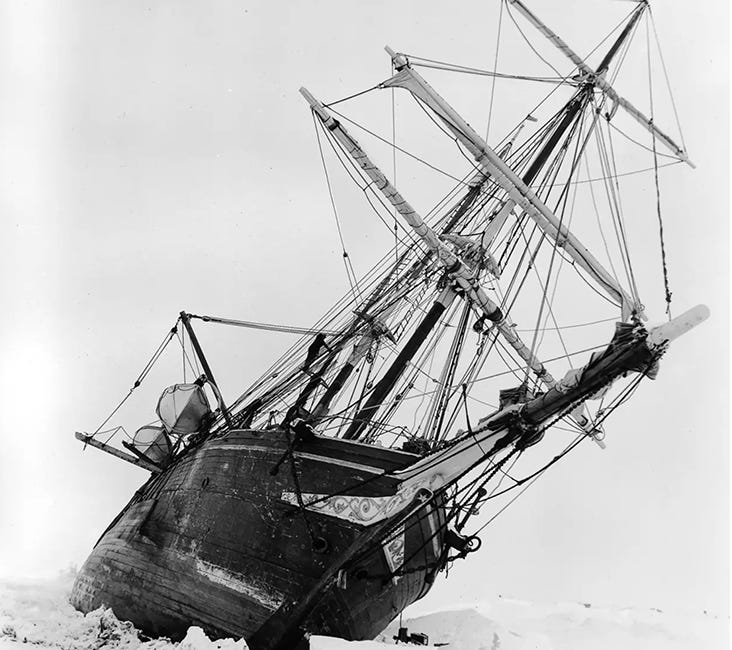
    Shackleton’s Endurance: A Tale of Survival
    Shackleton’s Endurance: A Tale of Survival
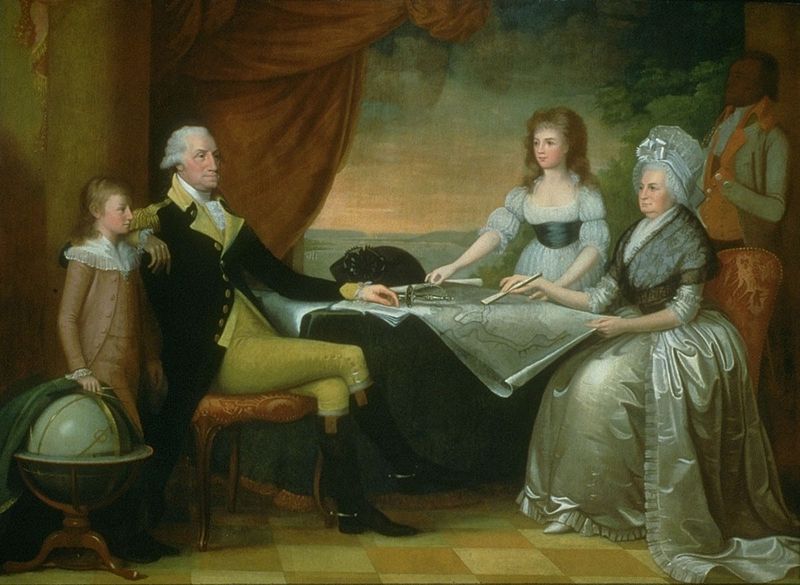
  • Martha Washington: The First Founding Mother

    We can learn a lot from history by focusing on the ladies who were alive at the time, finding out where they stood and how the changes affected them. In the case of American history, the wives of the presidents are an excellent focal point—after all, they were very often in the room when momentous decisions were made. Though they were often quiet, these women had important roles to play as well. That’s why I decided to add the First Ladies to my project this year—I had decided to read biographies of the Presidents in order, and that’s been enjoyable, but there was something missing.

    I have now read two books about the Washington family, to use as research for my First Ladies project. The first was The Washingtons by Flora Fraser. This week, I finished Martha Washington: An American Life by Patricia Brady.

    As Brady herself says in the final chapter of her book, Martha Washington is probably the most important First Lady, because what she did set an example for all of the future presidents’ wives. The irony is that very little is normally known about her. She has become a shadow to her husband and the things that he did. Thankfully, historians have done some digging; they reveal for us the portrait of an amiable, firm-willed, and courageous woman who proved invaluable to her second husband when he needed a source of strength.

    After the war against Britain for independence, the infant nation was stumbling and learning to walk; it was not yet clear what the job of this new leader would entail. George Washington, the unanimously elected first President, had to figure it all out as he went along—matters such as where he would live and how he would be addressed. It was the same for his wife, Martha, but I gathered from Patricia Brady’s book that Martha was more prepared for her role, even if she resented it. (I can’t blame her—she was looking forward to living with George in peace at Mount Vernon, and protested vividly to his being elected President, though she went with him, as usual, where he needed her).

    The reason why Martha Washington is a mystery, in spite of her prominent role in history, is a lack of evidence. Her own family seems to be a riddle, a family dating so far back that not everything is documented, and the numerous Marthas and Fannys make genealogy a puzzle indeed. Researchers do not have many letters to work with, either—after the death of her husband, she burned almost all of the correspondence they shared. This action ensured that their romantic life would remain private. It also meant that Martha herself would be shrouded in mystery.

    Not all is lost, though; just enough records exist of her life to form an image. Though hazy, this image depicts a woman who loved her family (and was deeply grieved when all of her children died). Martha had enough charm that she was able to win the heart of her first husband, Daniel Parke Custis, in spite of their social differences—he was of the upper class, and her family were middle class; those two groups did not generally mingle. After Daniel’s death, she took charge of household affairs in his stead, keeping matters organized even during her own period of grief. When her second husband was offered a role where victory was dubious, she supported him fully, though she would worry when he went off to battle. Often, she would follow George out to the uncomfortable battlefields, and she seldom complained about conditions there at all.

    I’ve already written one post about Martha and her two marriages, but now that I’ve finished Patricia Brady’s book, I wanted to share further thoughts about the Martha we aren’t told about. She was a courageous woman who took a risk, choosing to be inoculated for smallpox so that she could follow George to the most devastated camps. When she visited, the soldiers would take kindly to her, many learning to view “Lady Washington” as a mother figure when so much in their lives had become uncertain. She was a devoted grandmother who enjoyed purchasing fine gifts for her family, and when George became President, two of these grandchildren would move with them to New York, where Martha would bring them up.

    In our world, it might be a bit unusual to pair these qualities with the sort of greatness that stands out in a historical figure. The truth is, there’s great honor in the art of running a house and loving a family. Brady explains:

    It’s almost impossible to write the biography of a woman before the twentieth century without writing a lot about daily life, especially for a woman as happily domestic as Martha Washington. To write only of high points and great deeds is to ignore most of human life and the things that give the greatest joy—whether riding around the fields to check on the progress of a new strain of barley for George or Martha’s knitting stockings and hemming hankies for her grandchildren.

    As L. P. Hartley wrote, “The past is another country. They do things differently there.”

    They do things differently there. I was struck when I first saw that quote from L. P. Hartley—because it makes sense. We might struggle to understand some customs if we hold them to our modern standards. There is a great difference between people who lived in 1776, and people who are alive today. We now have more choices available with regards to our lives and how we would like to be remembered. This doesn’t mean that people in those years weren’t proud of what they did. Besides, if we think of the ease with which disease could beckon death and put an end to families, we can understand why the family unit was the most important thing. It was incredibly fragile.

    The Washingtons

    Her first husband is an obvious example of this, for he died only seven years into their marriage. After he died, Martha did not give herself much time to mope. She still had responsibilities, and she took care of them with efficiency. In Daniel’s final memorandum book, his handwriting disappears abruptly after his illness and death. The next page contains Martha’s writing, in almost instantaneous continuation. 

    She was newly widowed, but she didn’t have time to sit and wallow. The memorandum-book contains a record of an order that she placed from London. It includes a heart-wrenching item that no loving wife would wish to require:

    One handsome Tombstone—with the following Inscription and the Arms sent in a Piece of Paper on it, 10 with ‘Here Lies the Body of Daniel Parke Custis Esquire who was born the 15th Day of Oct. of 1711 & departed this Life the 8th Day of July 1757. Aged 45 Years.

    Martha was steady and economical, guiding her household, slaves included, into an appropriate period of mourning. Later, she would gracefully guide an entire nation through periods of uncertainty and fear. She did all of this while maintaining the grace and wisdom of a grandmother. She learned to function under pressure, and had a knack for befriending the right people. Her charisma was perfect, for it provided balance to the stoicism of her husband:

    Although Washington was sometimes criticized for stiff ceremoniousness, his lady was always praised for her easy friendliness. The president was a man of natural dignity and aloofness, never one for back-slapping camaraderie. – But his wife’s first thought was for her guests. In putting them at their ease, she softened and humanized her overpowering husband, allowing him to relax a bit and show something of the private family man.

    Patricia Brady’s book is a quick, enchanting read. Her writing manages, with ease, to complete the image of the first President’s wife. Using letters and other such documents as evidence, she presented the life of Martha Dandridge in a way that I’d never seen before. “Lady Washington” was, for the longest time, a silent image in my head; now I know more about her. This image has come to life, restoring humanity to this admirable woman.

    At the end of the book, Brady sums up the significance of Martha Washington’s role. She also comments on her actions, and how they still matter now:

    There is no guidebook to help a new First Lady; she must look back at her predecessors to decide how to shape her role and to survive in the limelight. Martha Washington’s imprint on the position has been decisive. As the first in a long line, she invented the role while confronting with grace its inevitable quandaries, successes, and heart-aches.

    When George finally retired for good, they were able to spend their final years at Mount Vernon. Martha continued to entertain guests into her old age, old allies and young admirers alike. She spoke to them about history and politics, an unusual activity for women at the time. She was able to answer questions in a uniquely relevant way, because she had been around to see so much of the new nation’s birth. 

    It is no wonder, then, that many saw her as a mother. Indeed, if there were Founding Fathers, there must have been Founding Mothers, too—and foremost of them all is Martha Washington. From her, we can learn to soldier on through challenging times. She shows us that humans are resilient, and can adapt to situations far from their zones of comfort. She is an example of a doting mother and supportive spouse. 

    This is what I wanted to learn when I picked up Patricia Brady’s book. I highly recommend it to anyone who would like a different angle from which to examine the American Revolution; you will not be disappointed, I assure you.

  • History in Art, #1

    History in Art, #1


    Life of George Washington – Deathbed (1851) by Junius Brutus Stearns

    Doctor, I die hard; but I am not afraid to go; I believed from my first attack that I should not survive it; my breath can not last long.

    Haunting and poignant, these are George Washington’s final recorded words, spoken as life slipped from his body. 

    His death occurred on December 14, 1799. He had lived to the age of sixty-seven. In life, he had built a reputation as a strong and capable leader, fending off the strongest army with poorly trained but determined soldiers. He was now regarded as almost superhuman. 

    However, in these final moments, illness reminded him of his humanity. We all become ill sometimes—and at one point, it will be the last time.

    These final words were recounted by Washington’s secretary, Tobias Lear. Lear was in the room with Martha and the physicians, waiting for the inevitable. 

    According to Lear, Washington continued: “Do you arrange and record all my late military papers—arrange my accounts and settle my books, as you know more about them than any one else, and let Mr. Rawlins finish recording my other letters which he had begun.”

    Washington’s body, as he spoke, was weakened by infection. An 1851 oil painting by Junius Brutus Stearns aspires to capture these moments. It is a gripping piece, heavy with emotions like awe and finality.

    Washington’s election as the first President was nearly unanimous (except for Washington himself, who did not want the title). His beloved home, Mount Vernon, was a lifelong project. Today, it remains—an elegant, dignified reflection of its master’s spirit. 

    It can be thought of as our house, the home of the people. Ironically, Washington had no natural children of his own. His adopted son and daughter—children of his wife, Martha—both died young. He has left an impressive legacy, all the same.

    His Excellency by Joseph J. Ellis describes the almost trivial circumstances which led to Washington’s illness. They began after he went riding on a cold, December day in 1799:

    Despite a storm that deposited a blanket of snow, sleet, and hail on the region, Washington maintained his regular routine, riding his rounds for five hours in the storm, then choosing not to change his wet clothes, because dinner was ready upon his return and he did not wish to inconvenience his guests with a delay. The following day he was hoarse, but insisted on going out in the still inclement weather to mark some trees for cutting. He presumed he had caught a cold, and felt the best treatment was to ignore it: “Let it go as it came,” as he explained.

    Let it go as it came—but it did not. The weather was severely cold; due to his advanced age, Washington was perhaps more vulnerable to the maladies of cold. 

    That night, he found himself suffering from shortness of breath and a severe pain in his throat. He woke Martha:

    Word went out at dawn to fetch Lear and Dr. James Craik, Washington’s personal physician and friend for over forty years. Craik immediately diagnosed Washington’s condition as serious, possibly terminal, and he dispatched riders to bring two local physicians to Mount Vernon to assist him in prescribing treatment.

    But nothing could be done. As was the custom, physicians bled him in hopes that the infection would be flushed out. Today, we know that the human body does not work like that. Many believe that he died faster because of the amount of blood that he lost.

    I have twice visited Mount Vernon, twice seen the room in which he died, decorated in such a manner that it seems I stepped back in time. The painting is a powerful reminder that times change, medicine advances, and heroes remain bright in our nation’s history. It is more impressive, even, than the real thing.

  • My Thoughts on Pope Leo XIV’s First Homily

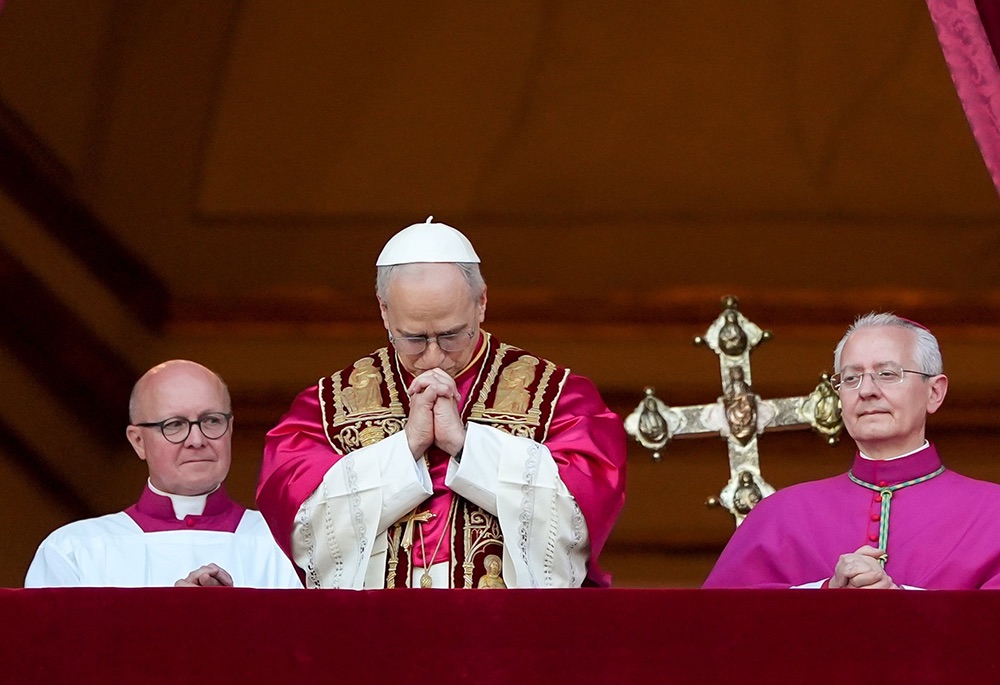
    *The featured image for this post is Pope Leo XIV when he visited the tomb of Pope Francis.

    Last week, I published a post that I was writing while watching Pope Leo XIV’s inaugural Mass at the Vatican. That post ended just before he was to begin his homily. Click here to read the transcript.

    While writing last week’s post, I considered including my thoughts about the homily in the same post. However, I realized that it would be a very different matter. Such a topic merited its own post, a place where it can have its unique commentary.

    These are my humble thoughts about some notable things the Pope said. For the sake of the length of this blog post, I will not comment on everything, though if there’s a matter you would like to discuss, feel free to leave a comment about it.

    Pope Leo XIV became emotional after receiving the Ring of the Fisherman.

    In the past few weeks, members of the Church have experienced many emotions. The death of Pope Francis filled our hearts with grief. In those difficult hours, we felt like the crowds that the Gospel says were “like sheep without a shepherd” (Mt 9:36).

    From the beginning, Pope Leo XIV acknowledged his predecessor. I found it touching because I, like many, do miss Pope Francis. I thought often about how Pope Francis, after such a long stay in the hospital, managed to wait. He did not go to the house of the Father until after Easter. It feels as if he did this on purpose, so that we could have joy during Holy Week.

    Did Pope Francis know his time was nearly up? Perhaps he had that thought in mind when giving us his final blessing.

    My family and I watched this Mass, and the celebration that followed, on television. I listened to the bells ring joyously over St. Peter’s Square. They rang for a long time, a striking sound. It never crossed my mind that this would be the last time they would ring with that Pope alive.

    The next time I heard those bells on television, the Pope was at peace. The grieving Church was orphaned, waiting to find out who God had in mind for the next pontiff. I wondered every day, and even then it never occurred to me that Pope Francis’ successor would be American.

    Pope Francis giving his final blessing to the faithful on Easter Sunday, 2025

    Pope Leo acknowledged this. His words were: “we received his [Pope Francis’] final blessing and, in the light of the Resurrection, we experienced the days that followed in the certainty that the Lord never abandons his people but gathers them when they are scattered and guards them “as a shepherd guards his flock” (Jer 31:10).”

    Next, Pope Leo acknowledges the importance of the faithful during a conclave, and especially their prayers. He expresses this thought poetically:

    “Accompanied by your prayers, we could feel the working of the Holy Spirit, who was able to bring us into harmony, like musical instruments, so that our heartstrings could vibrate in a single melody.”

    Pope Leo then expressed his hope to be a good shepherd:

    “I was chosen, without any merit of my own, and now, with fear and trembling, I come to you as a brother, who desires to be the servant of your faith and your joy, walking with you on the path of God’s love, for he wants us all to be united in one family.”

    Do not overlook the part where he asks for unison.

    The Church has had trouble in recent years. Many opposing ideas have threatened disorder. It is truly a great promise that ‘the gates of hell will not prevail against her’ (Matt. 16:18). We should not be arguing, but prayerfully discerning the will of God—and it’s not so difficult to know this. He desires for us to love one another.

    Too many people attempt to keep their faith under wraps. It is certainly valid to serve Him on one’s own, by means of personal devotions and sacrifices such as fasting. However, we cannot forget the value of living the Christian life together. We were not created to be alone.

    I could not express it any better than Pope Leo did, in this striking statement:

    “Love and unity: These are the two dimensions of the mission entrusted to Peter by Jesus.”

    Love and unity. God desires for us to love, even when it seems like we can’t. We are encouraged to listen to one another with patience and compassion. All humans, even those who have strayed, were created by God.

    As the late Pope Benedict XVI stated:

    “Each of us is the result of a thought of God. Each of us is willed, each of us is loved, each of us is necessary.”

    We sometimes have the idea that love is passive and cannot bring about great change. This is simply untrue. True love is not passive. Love can require great effort. It asks us to put aside our prejudices. It moves us to offer gifts—even immaterial gifts, like time and a kind word—to individuals that we don’t think deserve them.

    Love improves us, and even if it does not happen immediately, the person being loved does benefit from it. Why? Because God is love. God is not passive. We cannot always see Him, but He never tires of loving us. We should strive to imitate Him in doing the same.

    The homily urges us to go forth and spread the Good News. Another poignant phrase from Pope Leo XIV calls for unity:

    “Brothers and sisters, I would like that our first great desire be for a united Church, a sign of unity and communion, which becomes a leaven for a reconciled world.”

    What does this mean? It’s impossible to ignore that, due to various reasons, some Catholics have been arguing amongst themselves. Rather than spreading the Gospel, they try to one-up each other. It is a bad look for outsiders who might be interested in the Church. If we do not show love for each other, how can we compel a possible convert to come near?

    The human soul seeks peace in the arms of God. I can understand why many would avoid a place of worship where strife exists.

    Rather than being unkind to converts, we should welcome them and share the faith we love. Rather than obsessing over types of Mass (I consider the Novus Ordo and Latin to both be valid), we should be thankful people are compelled to attend. It’s human to have preferences, but I’ve encountered too many people who sneer at one form or the other.

    Rather than initiating arguments, should we not take time to learn what the other party believes? As stated in my previous post, I’ve learned much about God by conversing with people who don’t worship in the same way I do. Through their help, I have come to enjoy a closer relationship than ever with the Lord.

    Let’s focus our energy on becoming fishers of men. Cliquish behavior does not call to the broken. Only love can lure the shattered, for love is the greatest of balms. Love is Christ; love saves.

    I believe our new Pope understands this. It is very similar to what Pope Francis called for. Pope Francis’ words were often taken out of context. I dare say that his message was the same: We must love one another like Christ loved us (John 13:34-35).


    This month, Google searches for ‘how to become Catholic’ have begun to rise. I challenge you to educate yourself about your faith. Be prepared to answer questions, as they will surely come.

    During this pontificate, there is a high likelihood that you will meet people with questions. We should be prepared to give reasons for our faith. Let us be warm and welcoming to the people making those Google searches.

    It is time to be unified again. It is time to rethink what it means to do things as Christ did, with love.

    Did something in particular strike you about Pope Leo XIV’s homily? I would love to hear from you!

  • Pope Leo XIV & New Beginnings

    As I edit this blog post, the television is on. I’m watching as Pope Leo XIV rides in the Popemobile through St. Peter’s Square. This is the first of many times that he will do this.

    He is waving at people from all different countries. I see American and Peruvian flags in the crowd. They both make me feel warm inside; my mother is Peruvian and I was born and live in the USA. Diplomats and world leaders have traveled to Rome to attend this inaugural Mass. 

    At this moment, the world is curious and optimistic about the 267th Pope of the Catholic Church. It’s not every day that we are presented with blank slates in which to make history.

    Ten days ago, that famous chimney sent forth white smoke. Believers all over the world were filled with joy; the Church had been orphaned since the death of Pope Francis. 

    During the Conclave, names of specific Cardinals were put forth as favorite candidates. I always considered this a bit silly; the Church does not work like Presidential elections. Polls are not as useful in this context.

    What takes place during a Conclave is secret. Those inside take vows of silence, at risk of excommunication. If no one can go in to eavesdrop, I hardly think our speculation will do much good.

    It’s fair to say that everyone was surprised when Cardinal Prevost stepped out as the new successor of St. Peter. The common opinion was that there would not be an American Pope anytime soon. I am still surprised that the 267th Pope, elected a week ago, is an American. With a Peruvian mother, living in the country where Pope Leo XIV was born, I feel that I can see a unique angle of his papacy.

    I intend to use this angle and be open with my faith; to begin with, I wanted to reintroduce myself as a Catholic. Twenty years ago, at the age of fifteen, I chose to be baptized in the Catholic Church.

    It seems like a remarkable coincidence that an American Pope should begin his papacy on this significant personal anniversary. 

    I want to write about my faith journey and what it means to me. I used to do it on this blog, but became discouraged because I did not consider myself to be knowledgeable enough; I did not feel Catholic enough to put forth worthy commentary. I now understand that all of our voices deserve to be heard, and if I do not understand something, I can learn. We never do finish learning.

    We are discouraged from speaking about politics and religion, for fear of stepping on toes. I am going to assume my readers are able to respect my faith.

    If you’ve been following my Substack blog, you’ve seen my historical articles. American history is important to me. This opportunity is perfect! I have a chance to write about American history as it is happening. Why should I refrain?

    I was baptized in the 2005, after the death of Pope John Paul II. I’m not a convert; I was given the chance to choose when I was old enough. I had been exposed to Catholicism and its traditions by my grandmother, who would come from Peru to visit with prayer books, holy cards, and statues. She would keep these on her bedside table, where they fascinated me.

    After Pope John Paul II died, my mother remembered that I hadn’t been baptized, and asked me if I would like to be. That spring I celebrated my Baptism, Holy Communion, and Confirmation. At this time, Pope Benedict XVI was elected. I was alive for the four most recent Popes in history, but had only been baptized for three of them.

    The fact that I chose baptism at an age when I understood it, probably helped me love the faith more. I’ve met a lot of cradle Catholics who don’t seem to think much about the Church’s beauty. It seems that a person who grows up in an environment can sometimes (not always) become desensitized to tradition.

    I also have periods in which I lose interest; I’m by no means full of perfect zeal. I constantly have phases when I forget to care about things of God, but I do go back to Him. 

    As flawed humans, it can be difficult to love something we cannot see. Blessed are those who believe without seeing. We cannot see air, but there’s evidence of it when wildflowers sway in its presence. A thing can be invisible and still make an impact on objects around it.

    In a like manner, a Person can be ‘invisible’ to the sight, yet still sensed by a seeking soul. Those who wish to encounter Him, can ask; in humility, they will find Him. 

    In my mind, three things are true: God is real. God is not always visible. I could not be happy without God.

    Religion is difficult to speak of, because many are not able to discuss opposing ideas calmly. While I don’t plan to put forth multiple posts about dogma, there are many interesting events in church history! Certain Saints’ stories are inspiring, even for people who don’t believe. A lot of traditions are misunderstood, yet beautiful after explained.

    It is my hope to offer knowledge. It is not my mission to make you believe, as faith can only come from God. The Internet is a great place to find different perspectives. I, for one, have enjoyed learning what friends of different religions and philosophies believe.

    Though we are trained to think people of opposing beliefs cannot be friends, the truth is that my most fulfilling friendships have been with people who approach the world differently. There is no need to pick a fight. I might not feel inclined to believe everything my friends do, but I’m always honored when they take time to explain something that was foreign to me.

    I know this world has become hostile, intolerant, fearful. People are quick to anger when they encounter something they disagree with. Again, it is not my intention to force a belief down your throat.

    I do know that in the coming years, there will be a rise in people wanting to learn about Catholicism. They might not want to convert, but I hope that, since humans are curious by nature, there might be questions in their hearts. It’s my intention to inform, entertain, and celebrate the special time we are living now. 

    As I write this final paragraph, Pope Leo XIV is about to soon begin his homily. I am eager to hear his words; I’m also eager to share them.

    Thank you for reading this post. I look forward to experiencing history with you, and hopefully, having engaging discussions. There is great joy in learning together. Let us not waste this opportunity.

  • Book Review: Once Upon a Wardrobe by Patti Callahan

    I finished reading this last night. I had started in October but became sidetracked due to life things; I’m glad I came back to it during the Christmas season, because it is a perfect book to read during Advent.

    George is a sickly child who is aware that he won’t live to adulthood. He finds solace and escape in C.S. Lewis’ book The Lion, The Witch and the Wardrobe. He asks his older sister, who is a college student, to find the author at his home in Oxford and ask where Narnia came from. She is willing to do anything for him, so she agrees.

    His sister, Margaret, is skeptical of anything that isn’t factual like math. She has a sick brother she’s going to lose any time – how can she have hope? How can she daydream? But as she sits down for regular conversations with Professor Lewis, she finds her heart beginning to change. Maybe George was right all along…

    This book very nearly made me cry towards the end. It helps us see grief, especially expected grief, from a different perspective.

    It’s a short read; I do recommend it.

  • 31 Years Old & Reading Fairy Tales

    I remember when I first began writing in this blog. Recently, I received an email from WordPress informing me that my blog was over a decade old. I believe the number is verging on thirteen years now; while I have been inconsistent in updating it, I have never stopped writing, and in 2025 I’m going to make (another) concerted effort to keep you all informed about my creative pursuits.

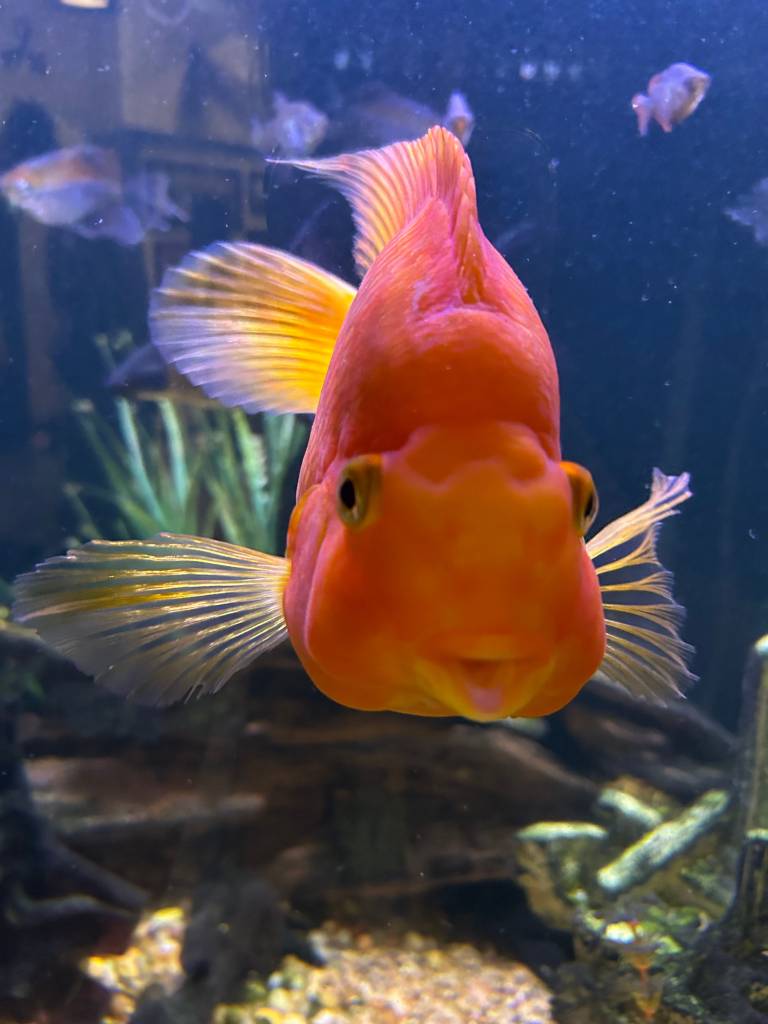
    Today was my 31st birthday. I went with my mom and brother to a fish restaurant, where I met with a very friendly orange fish named Shipwreck who behaved rather like a little puppy:

    He was a bit of a flirt. I think I’ll return soon and see if he recognizes my face. Isn’t he just adorable, though? He was the happiest creature in the room! (I bet he didn’t know that most of the plates on the tables were carrying bits of fried fish).


    At the young age of 31, though I wish I’d managed to achieve more by now, I am reminded of the C.S. Lewis quote: I am old enough to begin reading fairy tales again, and I’m going to make my reading this coming year more intentional. Of late, I’ve mostly been reading things that were popular, for the simple purpose of learning why they are popular.

    Some day you will be old enough to start reading fairy tales again.

    — C.S. Lewis

    In 2025, I’m going to read classics, such as Victor Hugo and Emile Zola. I’ve always been more interested in the classics; they help shape my writing, I think, more than new books do, though there are certainly new books that are worth reading.

    If you think it’s been quiet here lately, you’re right. I’ve spent more time on Substack, where I am weekly posting works of nonfiction as well as weekly chapters for my latest serialized novel, The Graveyard House, which I hope will be ready for a 2025 Halloween publication. I did not publish any new books this year–at least, not in paper form–but it was an important year for gathering ideas and honing my skills.

    Check out my Substack newsletter; early next year, I’ll also be releasing the chapters of my completed pirate story, Davy Jones’ Daughter. I am also doing the research in hopes of possibly starting a book themed podcast in the spring. I will keep you updated about this.

    If you would like to support any of these pursuits, I have started my Buy Me A Coffee page.

    Click here if you wish to make a donation so that these things can be possible.

    Expect for this blog to be updated weekly or biweekly from now on; I’m doing better with keeping punctual.

    I hope that 2024 has treated you well; we’ll keep in touch this coming year!

    -Mariella

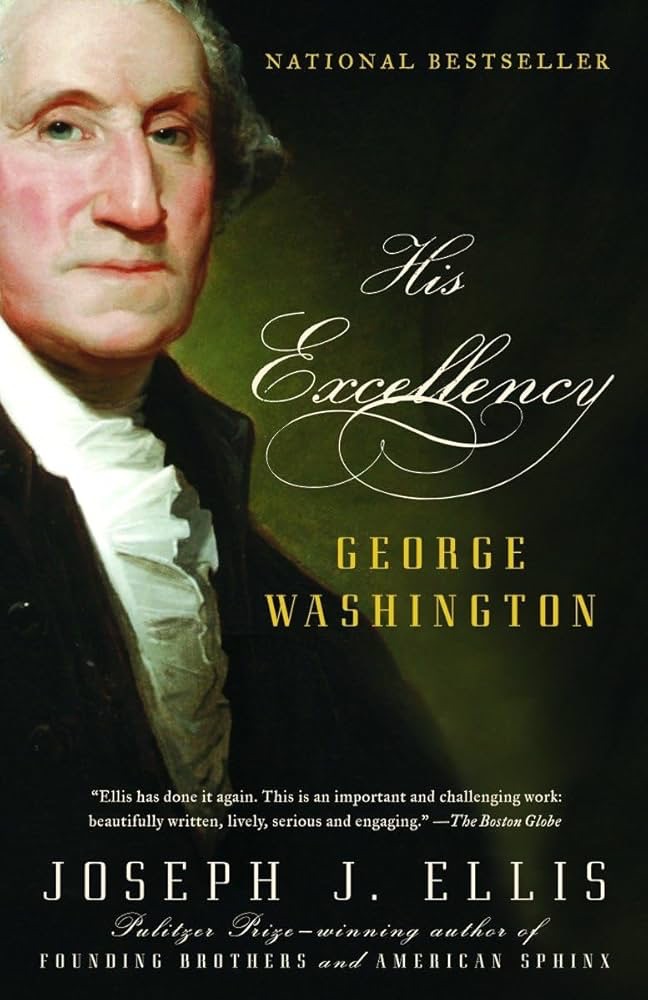
  • Review: His Excellency by Joseph J. Ellis

    In many aspects, George Washington is a mystery to us, despite the many books that have been written about him. He hadn’t even died yet before myths began to emerge surrounding him.

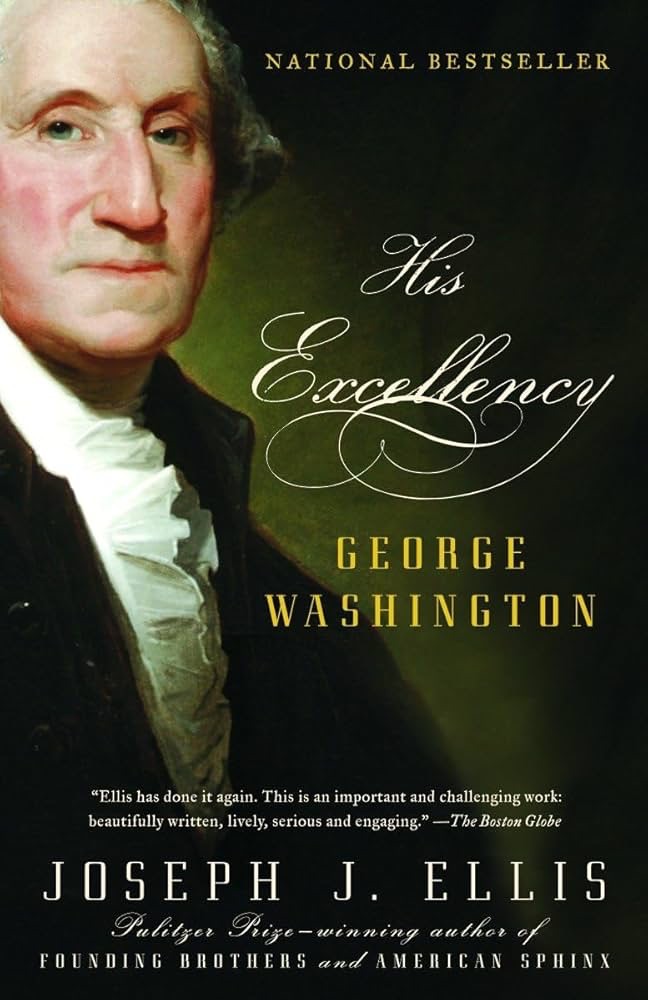
    His Excellency by Joseph J. Ellis is a concise biography of a man who has had volumes dedicated to him since the founding of this country.

    It portrays Washington’s younger years, describes moments when Washington had to use his aloofness to conceal a great passion, for he is described as a passionate man.

    Ellis points out things that were clearly myths, or are at least dubious to history—for instance, the supposed cherry-tree incident.

    He also points out Washington’s human side, mentioning things such as the love that he harbored early in life for the married woman Sally Fairfax. Ellis is also frank about Washington’s obsession with buying land, and the fact that he was in part motivated to marry the widow Martha Custis because she was wealthy.

    But he also speaks of the man’s kindness, the readiness with which he cared for Martha’s children while unable to have children of his own.

    The father of our own country could not have natural children; he was to parent something greater. All Americans have the privilege of being able to claim him as our Founding Father.

    Washington was not perfect, but he possessed incredible discipline, which he needed in order to keep at bay the energy which would help him win the war.

    I know more about him now that I have read this book, but still feel I don’t know him enough.

    I’m eager to find more books about him; there will never be another leader like him, flaws and all.

    His Excellency is not so long as to be intimidating. It covers important points in a readable style, an easy-to-follow narrative.

    Our country is built on the courage of men such as him, but of all the men who could have been chosen to do the job, most of them pointed at him to carry out the task: Washington, the one man of who very much did not want to do it.

    Or did he? 

    We shall never know exactly what he thought in those most intimidating moments.

    But we do know this: he won, and so did we.

  • Historic Bite #2: Maude Fealy, Silent Film Actress

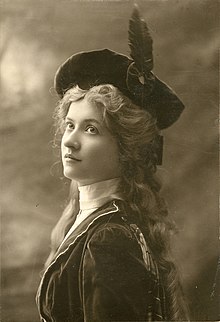
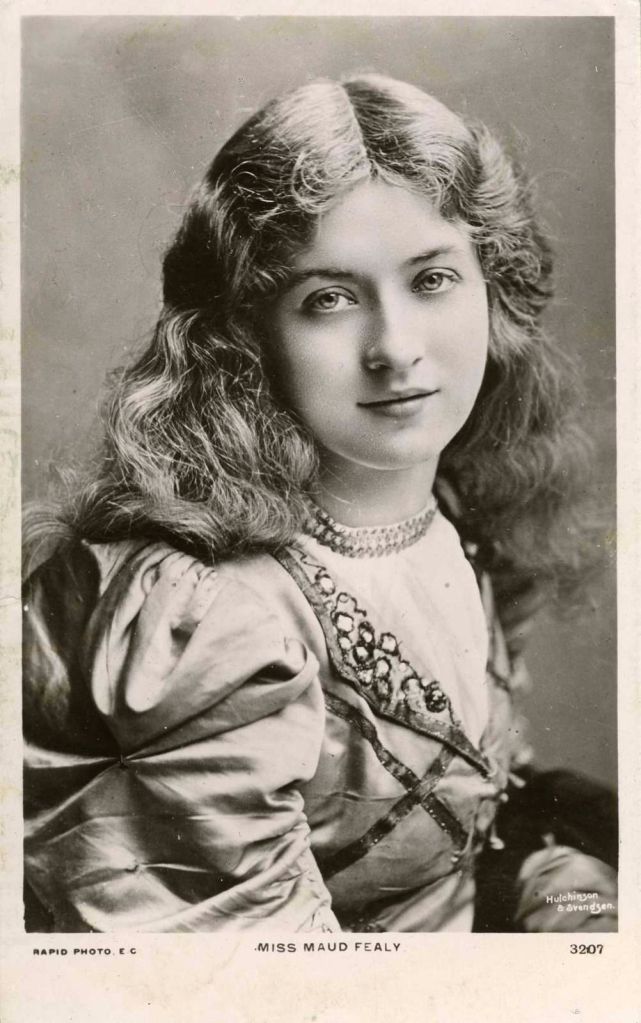
    Who was Maude Fealy, the beautiful silent film actress whose photos continue to circulate today?

    Books, music, artwork—humans have always sought respite from ordinary life in escapism. Before the cinema existed, families would gather around the fireplace, reading passages out loud from novels for everyone to enjoy.

    Though movies are still a new form of entertainment, acting has long been a popular form of self-expression. People had gathered at theatres for centuries to watch stories on stage before the cinema we know today was born. Though Shakespeare’s works were the best-known, they were by no means the only stories enjoyed by audiences.

    The late 19th century was a turning point for actors and theatre. It was the era when the silent movie was born. In 1878, the first moving picture, “Sallie Gardner at a Gallop,” was filmed by Eadweard Muybridge. 

    Though barely more than a minute long, it filled viewers with awe. If moving pictures were possible, what would come next? Could people watching that horse in movement imagine a Hollywood would exist one day?

    Maude Fealy was one of the first actresses to achieve considerable fame. She was born in 1883, when the new world of film still generated wonder. The industry had grown since “Sallie Gardner;” viewers would soon be able to enjoy longer films featuring plots, though the storylines remained simple.

    Born Maude Mary Hawk in Memphis, Tennessee, Fealy began her work as an actress on the theatre stage. She made her debut playing various children’s roles at the Elitch Theatre. Her striking looks caught the eye of dramatist Henry Churchill de Mille, who offered her a role in several plays, including The Lost Paradise. She captivated the audience’s attention with her angelic looks and rich brown hair. This beauty helped catapult her into the world of filmmaking; soon she would become an easily recognizable celebrity.

    Fealy’s first appearance in a silent film was in 1911 for Thanhouser Studios. Her performance was such a success that they featured her in eighteen other films between 1911 and 1917. After this period, she did not appear in another for seventeen years. That doesn’t mean she remained idle; she devoted this time to teaching the art of cinema and theatre to others, offering classes in many cities throughout her life. 

    At the age of fifty, Fealy returned to film by acting out a series of secondary roles. Though she no longer possessed the nymphlike beauty of youth, she was respected as an important member of the film community. She was honored with invitations to appear as a special guest in pageants. She was also asked to present lectures about acting, speaking in classrooms to eager listeners.

    Fealy did not have as much success in her personal life, seemingly unable to find true love. She first married a drama critic named Louis Hugo Sherwin in 1907, keeping their nuptials secret because her mother wouldn’t approve. Maude and Sherwin divorced in 1909. Later, she married silent film actor James Peter Dunkin, but they divorced in 1917. Her last marriage was to John Edward Cort. It ended in an annulment, and she did not try again. She never had children.

    Despite her poor luck in the realm of romance, Fealy found fulfillment in her legacy as one of the first celebrated actresses. Her passion for film ignited similar ambitions in young, aspiring actors.

    Maude Fealy died at the age of eighty-eight on November 10, 1971, and is interred in the Abbey of the Psalms at Hollywood Forever Cemetery. Photos of her continue to circulate on the Internet, rendering her iconic beauty immortal; with this post, I hope to add a story to the face that many have come to admire.

    I hope that you enjoyed this bite of history; if so, please consider subscribing to The Literary Ladies’ Tearoom for more stories about authors, actresses, and outstanding heroes!

  • Historic Bite #1 – Boticelli’s Muse

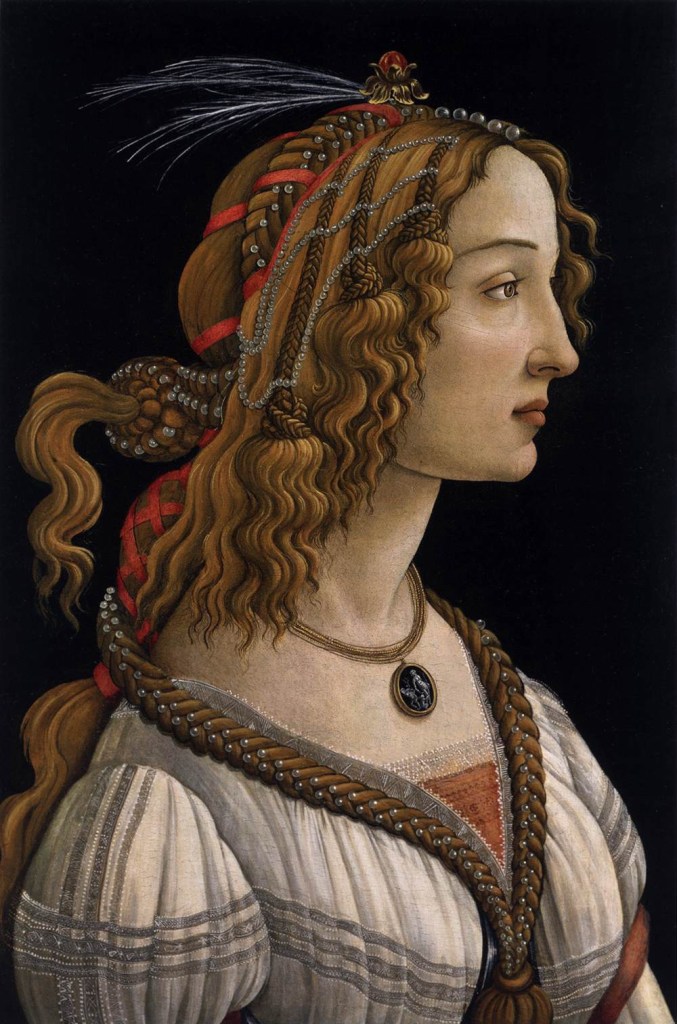
    Who was the woman that posed for Botticelli’s Birth of Venus?

    One of the most famous pieces of Renaissance art is The Birth of Venus by Sandro Botticelli. It depicts the goddess emerging from the sea on a giant shell, surrounded by two figures preparing to dress her in robes of silk. She covers herself modestly while waiting for her clothing to arrive. Her red hair is caught in the wind, as if toyed with by a lover.

    Who was the model captured in this painting? She was an Italian noblewoman from Genoa named Simonetta Cataneo, later Vespucci. Born on 20 January, 1454, she married a Florentine merchant named Marco Vespucci, the wealthy cousin of Amerigo Vespucci, who would eventually give his name to the New Continent.

    After moving to Florence with Marco, Simonetta became one of the best-known women in the city due to her intellect and looks.

    Her arrival was timely: they were in the midst of the Golden Age of Florence. Renowned artists from all over Europe recognized it as the place to be if they wished to have their work seen. Art was more than a passion; it was a competition. They all wished to outdo one another.

    It wasn’t long before one of these artists asked Simonetta to model for him. The artist was Sandro Boticelli.

    Her time as an “it” girl was rife with conflict. Soon after she began modeling for Boticelli, her jealous husband began to suspect his wife and the artist of having an affair. It is true that Boticelli was infatuated with her—the proof is in how many paintings of his depict a woman with red hair. 

    However, her most prominent suitor appears to have been Giuliano de’ Medici. When Marco discovered this, he demanded that she renounce her love for de’ Medici. Simonetta refused, so Vespucci imprisoned her, not caring that she was at the time severely ill with tuberculosis.

    Vespucci allowed de’ Medici to be with Simonetta as she was dying. She passed away at the young age of twenty-two on 26 April, 1476, but her face has been rendered immortal by Boticelli in his iconic pieces featuring her.

    Giuliano de Medici was assassinated shortly after Simonetta’s death. Furthermore, no solid proof of an affair between them was ever produced.

    As for Boticelli, he requested to be buried at the next to Simonetta’s tomb in the church of Ognissanti after his death in 1510. When she was alive, Simonetta had all of Florence at her feet; after his death, it was the artist himself who achieved the honor of staying there.


    I hope that you enjoyed this small bite from the past.

    To learn more about women and art in history, consider subscribing to The Literary Ladies’ Tearoom!

  • Mary Shelley: An Introduction & Her Dream

    We have a new guest at Literary Ladies’ Tearoom this month! For, what else can I call it when a character knocks at the door, insisting to be let in? Insisting to be ‘interviewed’? Insisting that it is now her turn to be heard?

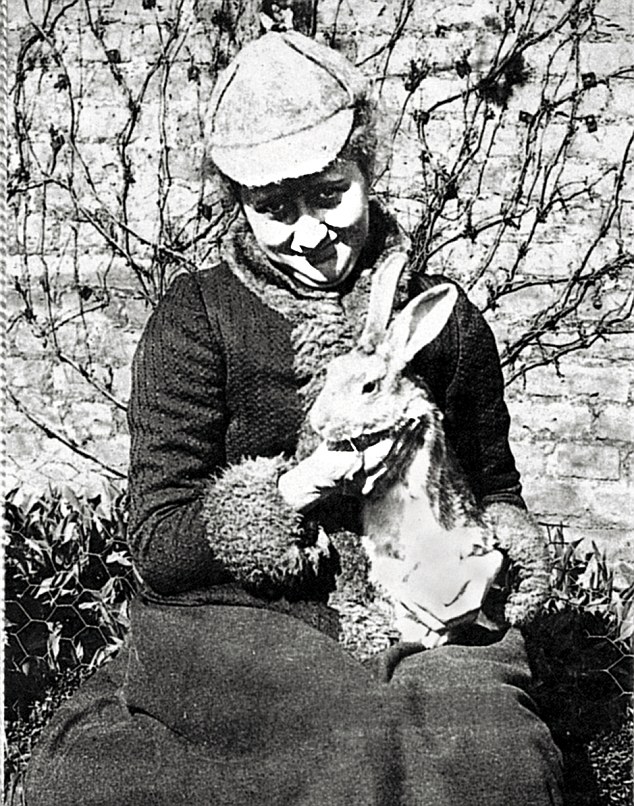
    Last week I completed a three-post series on Beatrix Potter and her fascination with fungi. For reference, I read Beatrix Potter: a Life in Nature by Linda Lear, a sprawling biography laden with detail, including excerpts from letters and journals. I felt curiously empty when I finished reading, as if I had said farewell to a good friend.

    I’ll “see” Beatrix again when I read the second biography about her that I’ve acquired. Meanwhile, I find myself ‘seated at the tea-table’ with another impressive woman. She is also a writer; she also has an interest in the sciences, despite society discouraging such pursuits in ladies.

    Her name is Mary Shelley, and she’s got quite a lot to say. I own the Penguin Classics edition of Frankenstein, and I read the introduction which tells the story of her life. Though brief, it is a gem of an introduction. I learned a lot of things about her—and her family!—that made me want to write something of my own.

    My friend Hannah and I decided to create a classic novel book club called Teacups & Tomes. Frankenstein was selected to be the first book. Our group will be going over it throughout the month of October (and November’s book will be Little Women, hosted at Hannah’s Substack!).

    As I read Frankenstein, I will be listening to Mary and posting about her, much like I did with Beatrix. I also have a couple of biographies I am eager to scour for that one tale, much like Beatrix with her fungi, that will shed a greater light on Mary as a person.

    I’ve got some fascinating companions, indeed.

    Two books I am reading in my search for Mary Shelley

    I’ve read Frankenstein before, but it was long enough ago that I remember little about it, except for that final scene. It will be an enjoyable experience to revisit the story with friends, exploring the brain-child of a woman who was both brilliant and controversial. If you would like to join our read-along, request to join the private Facebook group—or simply comment along here.

    Mary Godwin was born August 30, 1797 in Somers Town, London, to an unconventional family. While only one of her parents survived to bring her up, the unorthodox nature of her environment must have soaked into her as she entered womanhood, for she went on to live a life just as scandalous. She married the eccentric poet Percy Bysshe Shelley against her father’s wishes and ran away to the continent with him, which is where Frankenstein’s story would later begin.

    Her mother, Mary Wollstonecraft, had become notorious for using her voice to protest the treatment of women as second-class citizens. In 1794 she gave birth to an illegitimate daughter named Frances, who would later be cared for by William Godwin along with the younger Mary. Wollstonecraft is known for her treatise A Vindication of the Rights of Woman, one of the earliest works of feminist philosophy.

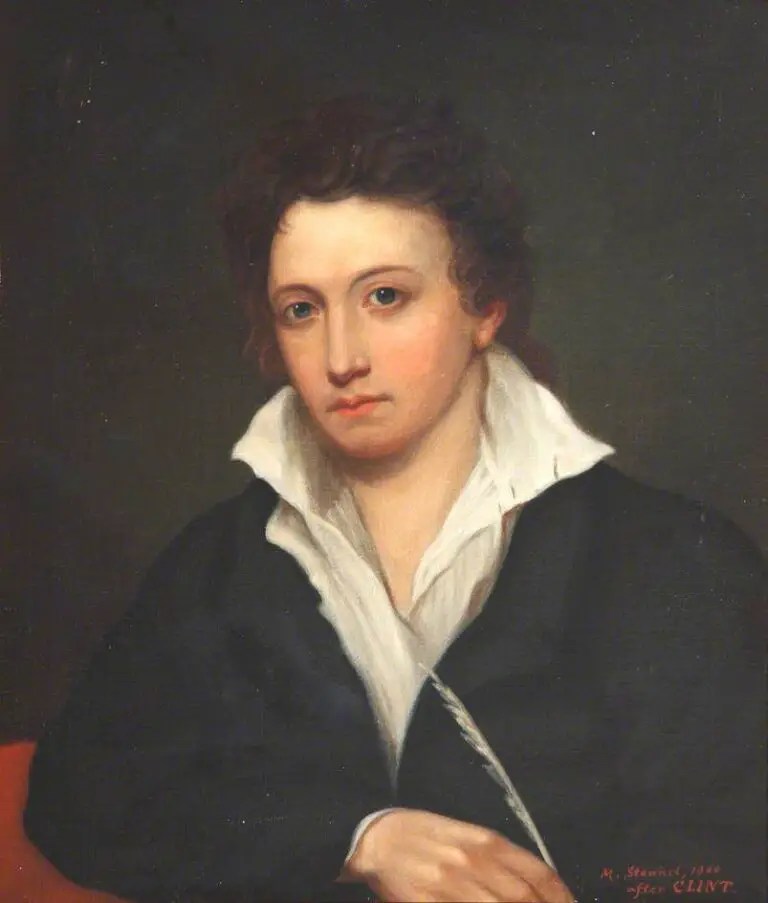
    Percy Bysshe Shelley

    Young Mary’s father, William Godwin, was a political philosopher who also raised eyebrows. This was a time of change in society, especially with regards to thought and morality, and he was one of the most vocal speakers against tradition.

    William Godwin did not believe in marriage, calling it an unfair institution. He and Mary Wollstonecraft were together for several years before she became pregnant with their daughter. Only then was he compelled to break his word, wanting for his daughter and the woman he loved to have a secure life.

    Tragically, Mary Wollstonecraft died from birth-related complications one month after her child was born.


    Most bookworms are aware of the circumstances surrounding the penning of Frankenstein. In 1816, Mary Shelley, Percy Bysshe Shelley, Lord Byron, and Mary’s stepsister, Jane Clairmont, had gathered during the summer in the scenic Villa Diodati in Switzerland. They passed their time together telling ghost stories.

    One day, Byron declared that they each should write a ghost story. While Mary Shelley took a time to decide what she would write about, her story would become the most famous of those penned during that holiday.

    When at last inspiration came for Mary’s ghost story, it was in the form of a dream. The party of four had been engaged in a conversation about the possibility of reanimating corpses—essentially taking the place of God. This conversation so unsettled her that she could not find rest.

    In the preface she wrote for her book, Mary Shelley describes her dream:

    When I placed my head on my pillow, I did not sleep, nor could I be said to think. My imagination, unbidden, possessed and guided me, gifting the successive images that arose in my mind with a vividness far beyond the usual bounds of reverie. I saw—with shut eyes, but acute mental vision—I saw the pale student of unhallowed arts kneeling beside the thing he had put together.

    I saw the hideous phantasm of a man stretched out, and then, on the working of some powerful engine, show signs of life, and stir with an uneasy, half-vital motion. Frightful must it be; for supremely frightful would be the effect of any human endeavour to mock the stupendous mechanism of the Creator of the world. His success would terrify the artist; he would rush away from his odious handywork, horror-stricken. … He sleeps; but he is awakened; he opens his eyes; behold, the horrid thing stands at his bedside, opening his curtains and looking on him with yellow, watery, but speculative eyes.

    In this way I shall wrap up this post, using Mary’s own words. There is more to come about her, as I am reading two biographies about Mary Shelley. I do not know how long this series will be, nor if it will focus on a specific thing, like Beatrix’s focus was on her fungi. I know only that Mary Shelley has quite a lot to say.

    Recently a post was published on Substack titled The Woman who Invented Science-Fiction. It is well worth the read. I will share the link here so that you can further understand the genius of Mary Shelley.

  • Beatrix Potter: Author and Naturalist, Part III (Conclusion)

    To enjoy the complete story of Beatrix Potter’s early fascination with the sciences, read Part I and Part II!


    What does it take to create a storyteller? I am sure that some of us would be able to spin a fine yarn without ever leaving their homes or venturing into other realms of art and science.

    However, the advice ‘write what you know’ rings true in most situations. A story might fall flat if the author is trying to write something they do not know, or if they try explaining something they have not researched.

    Beatrix Potter’s quest to learn about fungi is one example of this. In her case, she was not only writing what she knew; she was drawing it, as well. At the age of fifteen, she became frustrated by the lack of information about fungi in the forests surrounding her family’s estates. Even in the expensive nature books, it was a topic not often covered.

    Her studies began in childhood, continuing when she became a young lady. She conducted them independently, unable to consult experts due to restrictions imposed on women at the time.

    One of the main hubs for the natural sciences, Kew Gardens, was off-limits to anyone without a ticket (not just women). In order to obtain a ticket, a person needed a recommendation from someone whose name bore weight. In Beatrix’s case, her uncle Henry was the surest source of obtaining a ticket.

    After years of pestering, Uncle Henry finally agreed to help obtain the ticket when she was 33.1 (Read the footnote—it’s important, regarding my first two posts.)

    My previous post ended with Beatrix and Uncle Henry visiting Kew at last. Before consulting the director, he introduced his niece to several professors. Among them was a botanist named George Massee, who had been the first president of the British Mycological Society.

    Massee was now second in command at the Herbarium she was so desperate for access to. He was known as a bit of a romantic; perhaps that’s why he would later be open to conversation with Beatrix. He examined her botanical drawings, though she does not report whether he commented on them negatively or with enthusiasm. He must’ve had some confidence in her work, for his later collaboration would prove to be of great help to her.

    After their promising meeting with Massee, Beatrix and her uncle visited the director’s office in search of that elusive student ticket. This ticket would allow her unlimited access the gardens and Herbarium. It would unlock possibilities that had been unthinkable to her previously.

    Beatrix later wrote that Director Thistleton-Dyer paid greater attention to Uncle Harry. I imagine that the professor was amused by her portfolio, perceiving her as an overly curious young lady who liked to draw.

    We can hardly blame him for this infuriating mindset. After all, ladies at the time were not encouraged to pursue science; ladies were taught to be quiet and marry.

    At the end of this exchange, Beatrix Potter was granted her student ticket. However, she wrote in her journal about being patronized throughout the interview. Later, she was ignored completely, as if the director had forgotten she was there.

    Well, one might think, at least she was victorious in acquiring her ticket. This is true, but I cannot help but think about how I would feel in her position. It must have been bittersweet, indeed; I became frustrated simply reading about it.

    Beatrix would return to Kew Gardens often in the years that followed. She became a frequent face, especially after she was commissioned to make lithographs of insects for a museum. Kew had the fossils and specimen that she needed in order to add detail to her graphs.

    ***

    Though it appears that she cannot escape the title of childrens’ author, Beatrix Potter was much more than that. Her letters and journal entries demonstrate that she was sharp-tongued and iron-willed. It is this attitude that carried her through the many challenges that life presented to her, including heartbreak, loss, and war.

    Beatrix Potter was underestimated by everybody, even her family. Her mother and father tried to prevent her from doing things she was passionate about, even when faced with her success. As she grew older, her writing and illustration brought some financial independence. This enabled her able to continue following her dreams, surprising the world—and, perhaps, herself as well.

    The “fungi fixation” is one of many details that gripped me as I read the book Beatrix Potter: A Life in Nature by Linda Lear. It is brilliant book, detailed in recounting the most significant moments of Beatrix’s life. I wrote these posts because I thought more people should know about her impressive childhood hobby. It would not remain simply a hobby; later in life, she would become a champion of wildlife conservation, purchasing land to save the flora of the countryside that she had loved and studied.

    Having told my readers about this chapter of her life, I say to Beatrix, “Farewell, for now.” (Mary Shelley and Clara Schumann are demanding my attention next, and I find I can’t say no to either of them).

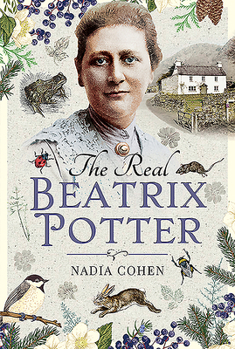
    In a few weeks, I will begin The Real Beatrix Potter by Nadia Cohen, seeking more of her story. I wish to understand her life from a different perspective as I plan my longer essay. The ultimate goal is to help readers appreciate that Beatrix achieved things aside from The Tale of Peter Rabbit.

    She was an author, of course, but she was also a resourceful and clever businesswoman, in control of her stories and subsequent merchandise. We admire modern figures for protecting the rights to their work. Beatrix Potter could almost be called the original. She was in charge of her career (at least, as much as she could have at the time, when laws where so different and pitted against women).

    I’m eager to present this essay, polished and informative. Once finished, it will be published on Substack behind a paywall. In the meanwhile, I hope you enjoyed these three free posts. I also hope you’re impressed by the great lengths Beatrix Potter went to in the name of education.

    Thank goodness young ladies do not need to jump through so many hoops now in order to learn.


    Note: I must admit to accidentally publishing misinformation in my first two posts. When I began writing, I believed Beatrix was fifteen when she first stepped into Kew Gardens. Such a misunderstanding took place because the book Beatrix Potter: A Life in Nature is dense, each page rich with detail. This is my first work of nonfiction in three years; researching/notetaking is something I will improve at in time. The moral of the story is be careful with speed-reading!

    The fact that Beatrix was ignored as a 33-year-old woman somehow makes the insult worse. I could understand a director thinking a fifteen-year-old’s investigation not worth his time, but at that point, Beatrix was not a child.