• A Dream with a Plan


    When you’re writing a novel, the concept of the actual book can be incredibly fleeting. If you’re like me, prone to rewriting and making changes, you can’t imagine there’ll ever be a time when everything is just right and it can be printed.

    The Sea Rose is a project about four years in the making. The original version is nothing like that which I have been publishing on Vella. Rewrite after rewrite saw characters evolve, plotlines shift, and places change. I believe that only Vella and the responsibility of continuing to tell the story made me stop this cycle of rewriting. In the novel version, I added some scenes, put meat on the bones–but it’s the same story. It only has more color.

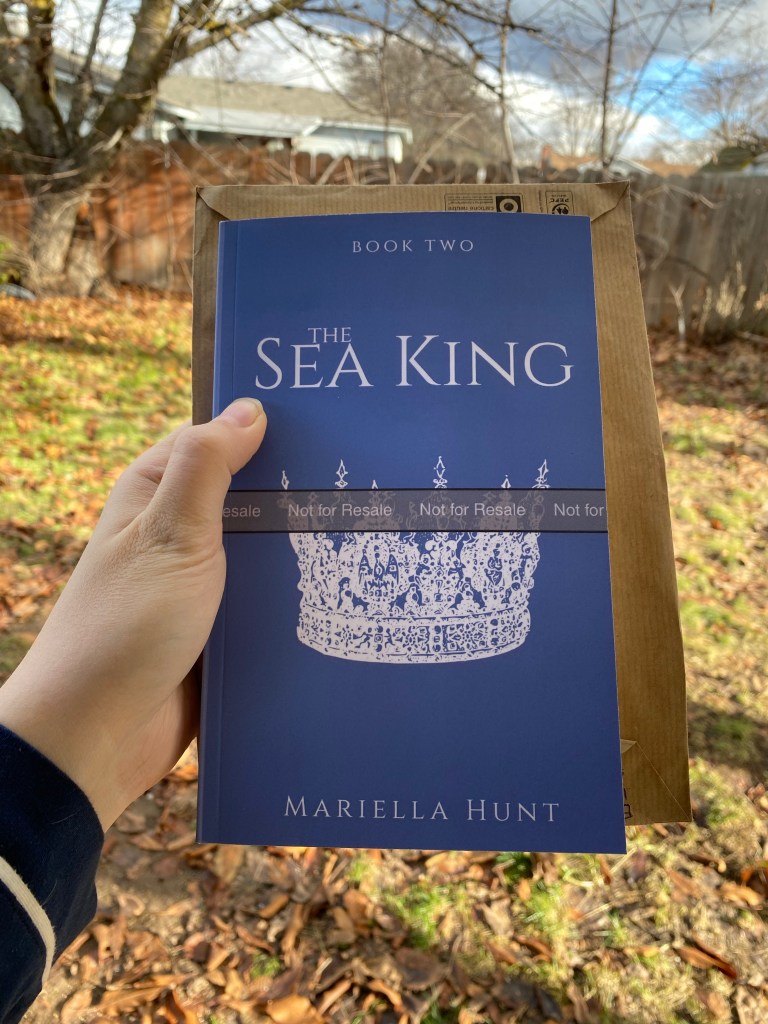
    With the help of my wonderful friend M.H. Woodscourt, who made the interior of the book into something stunning (and was patient with me when I panicked re: last minute edits), this week I held my story in the palm of my hand–on paper.

    (M.H. Woodscourt is an author of fantasy books; you should check them out!)

    This is the result of a dozen drafts, a period of burnout, and a stubborn muse who wouldn’t give up.

    This is my prize for not letting life overwhelm me away from writing. I understand that other responsibilities can take precedence, but it makes me sad when people give up on their stories.

    This is also made possible because of my dear friends on Kindle Vella, who encouraged me with their positive comments, picking my story and giving it crowns, and binge-reading.


    Having reached the age of 29, I wish I had more books bound–there are plenty of drafts rotting away in my hard drive. I could polish them all into novellas and make that shelf of works by me–a dream I’ve had since I was a child.

    With a new year about to start, a whole lot of motivation, and wonderful friends I am meeting during the publishing process, I’m optimistic that discipline will help me write more. This series already has almost two more installments drafted (they’re being uploaded on Vella.) I also want to venture into middle grade novels and switch things up a bit.

    2022 has come as an unexpected year of blessings for my writing dream, and I’m determined to make every goal I ever set into a reality.

    2023 will be even better, but I won’t get there simply by wishful thinking.

    If you’ve pre-ordered The Sea Rose, thank you! If you’ve read and enjoyed it on Vella, thank you! And if you would like to be a part of this author journey, join my group on Facebook; we’re all friends there.

    A dream without a plan is just a wish.

    I hope you’re having a wonderful Advent season!


  • I’m learning that it’s always best to err on the side of caution.

    You see, I was planning to publish The Sea Rose—to surprise-drop it on everyone—on my birthday, the 14. It seemed, at the time, like a manageable goal. After all, since I had been posting relatively polished chapters on Vella first, there was not a ton of editing to be done; it was just a matter of stitching the rest together and slapping a title on.

    Then I did my research (tip: always do research, you do not know everything) and found out that December is not a great time to release an indie book. Everybody is so preoccupied with Christmas shopping, and they don’t have as much leisure time to sit and read, and if someone is going to read by the fire they’ll probably choose that new Colleen Hoover book over me (I’ve never read Colleen Hoover. However, it seems that everyone else has.)

    So instead, I set my book to pre-order. I needed an ‘anchor’ to keep me committed to the publishing plan, because if I don’t take some form of action, I’ll just end up rewriting it again. The slow response to The Sea Rose pre-order proved to me that, for whatever reason, the month of December is hard for indie authors. We have a tough enough time selling books anyway; Santa typically doesn’t have our paperbacks in his sack of gifts.

    Publication date for The Sea Rose is now January 2. Meanwhile, I will try to breathe life back into this blog and do promotion for the novel.

    If you are feeling generous, I would be overjoyed to have you pre-order The Sea Rose for $2.99 by clicking here! It has not been changed much from its Vella version. I did add new material and change some details, such as a few place names. It is a smoother read as a novel than a Vella.

    All things considered, it’s best that I did not go ahead and use December 14 as a publishing day. The proof copy from Amazon hasn’t arrived; when I first placed the order, it said the copy would arrive on the 13. Since it was delayed, it isn’t arriving until (hopefully) tomorrow (and you will be thrown dozens of photos of the thing, since I’ve been working on it for so long!)

    Here is my update then! Thank you to all who left me birthday wishes. The moral of the story, I suppose, is to be cautious and do your research—even if you think you know most of what there is to know.

    Stay tuned for more updates, and have a happy Advent!


  • Serial fiction is not for everyone–writing it or reading it. When I joined Kindle Vella with my first story, The Sea Rose, I only did so because I already had a draft written and planned to tweak it into smaller episodes.

    The Sea Rose did end, though, and since the characters were not finished telling their stories, I went straight into Groundwater. For that book, I really was bringing episodes from scratch, hoping that each would be good enough that readers would want to click Next.

    I’m grateful that Vella taught me to have new attitudes when it comes to writing. Some of the things I have learned since becoming a Vellan include:

    1- Each chapter matters.

    When you rely on cliffhangers to keep an audience going, you can’t afford to ‘let go’ or become lazy on any chapter, even a short one. Learn to make every sentence meaningful; try not to begin a subplot that might soon lose fire. It might be the difference between a binge reader and a visitor clicking away!

    2- Writing doesn’t have to be solitary.

    I have blogged before about the glorification of the solitary writer, the one who puts pen to paper while hidden away in a tower. If you produce better content when consulting with friends, that’s also valid.

    When writing for Kindle Vella, you become part of a tightly-knit community where people look out for one another. It’s okay to be a social writer, too.

    3- There are amazing stories.

    I’ve read books on Vella that are outstanding. I often find myself wishing that such quality tales could be available at a bookstore, rather than what is currently trending.

    It’s still challenging to find a story on the Vella webpage, but groups on Facebook showcase some of the best. If you want something new, check out the stories on Vella.


    Vella stories and novels are not the same thing; I had a bit of a challenge adapting The Sea Rose back into novel form. It was fun, though, and I can’t wait for you all to read it this month.

    Vella stories help you learn some important truths about the craft of writing and building an audience. If you’re wondering whether Kindle Vella is for you, I promise it is worth the try. If you go into it with all of your heart, you will learn a great deal and improve as an author.

  • Telling the Whole Story


    (15lbs left to go for my weight goal. Each lost pound is hard earned!)

    “Don’t write through a migraine.”

    I find myself thinking this, even as a hundred new ideas barrel into me for the two pieces I’ll be focusing on come November: Sandcastles, and a novella that I sense will be about a ghost ship.

    It’s exciting. I’d like to say one day that I told the whole story, and readers can fill in the blanks. I have a habit of thinking I should write as if morning won’t come (I might also be traumatized because, the one time I took a break while writing a series, I forgot how it was supposed to end.)

    Writing with a headache won’t have good results. Either I won’t write much at all, or it’ll be incoherent, lacking the degree of commitment I can give other chapters when well-rested.

    “Read a book, then,” says my obsessive brain. “At least you’ll still be improving as a writer.”

    “But those tiny letters,” protest my eyes.

    So I find myself thankful that my phone needs to be plugged in; I can’t commit to writing on it now. My laptop is stored away. I listen to music with my beautiful mama instead, my dogs present—Pink asleep on my lap, and Stanley asleep next to my smelly slippers.

    There will be a morning, and I will feel better, and I’ll write a good chapter. People will enjoy it. I’ll still tell the whole story.

    Another bad habit of mine is panicking that I’ll never have enough time to complete this series. Will I be like Dickens, leaving a novel unfinished for eternity so fans can make up whichever ending they think best fits?

    I’m a writer. These scenarios do come to me.

    I hope you enjoy Episode 74 of Sea Rose/Groundwater when it goes live. I have a bonus chapter to write from the viewpoint of Meredith. I’ll do it when I’ve rested.

    Back to the music. Also, I got a haircut! Why do I feel so much more professional now?

    The point: Take breaks. It’s okay.

    And the kicker: I should take my own advice.

  • #2 – Roses & Sewing


    Elle trudges the battered sidewalks surrounding the market. She carries with firm hands a basket of colored threads for sewing.

    “Thread,” she calls out, “clean thread for dresses, drapes, mending…”

    Where people are forced to make their own clothing, deprived of the convenience of shopping, there is demand for things such as thread. Boredom is another factor: Ladies of the Mer district invest their free time doing needlework.

    They lack the excitement of London streets. Local parties are held on occasion, but Merpeople are busy surviving. They have no time to spare organizing a ball, but they can embroider a bit of silk, or complete a dress for a doll.

    “Here!” calls a familiar voice. “I was looking for you, Elle—Mrs. Whittle needs blue thread for a tear in her apron—”

    Artist: Richard Emile Miller (1875-1943)

    Miss Rose from the orphanage hurries across the street, reaching for her coin purse.

    Elle wonders at Rose’s energy. Perhaps it is because she is hard at work teaching orphan girls; Rose darts from shop to shop, street to street, never allowing her shoulders to slump.

    Perhaps Rose’s age is related; at eighteen, she is old enough for love and courtship, all of the things Elle cannot yet contemplate.

    “I have blue,” says Elle, gathering a selection of spools. “Which will it be?”

    “This one,” says Rose, “the darker one. Here is your payment. How is Ama?”

    Elle lifts her shoulders in a shrug. “She is coughing again today.”

    Rose’s face falls. Her blue eyes soften with sympathy. “Is she up for company? I haven’t visited her in a few.”

    “She always asks about you,” Elle says, “and I’m sure she will be pleased to see you.”

    Rose smiles. “I will see when I can slip away. Thank you.”

    Elle nods, then watches Rose vanish into the crowd once more.

    She tucks her coin into her pocket and wishes that she could one day have the same energy as Miss Rose.

    **If you enjoyed this snippet, PLEASE share it!


  • “There is no such thing as magic.”

    Young Elle’s words cause her grandmother, Ama, to flinch. “It pains me,” she answers, “to hear you say such things.”

    Elle is defiant. “How can there be magic?” she demands. “If such a thing existed, we would not be trapped here with housefires every night.”

    Ama considers her granddaughter’s skepticism.

    Outside, the singe of smoke alerts them that another shabby seaside home has gone up in flames. In the district to which they’ve been condemned, authorities do not bother to help. She hopes that the fire can be contained before a life is lost.

    She admits, grudgingly, to understanding her granddaughter’s bitterness. In her thirteen years, Elle has known only a violent home.

    Young Merpeople, folk with ocean-blood, have grown up with violence. They’ve never seen the magic their ancestors once practiced. For reasons that Ama can’t explain, the magic of Merpeople stopped—it seems to have dried up, as if the sea itself were empty.

    “I promise you,” she tells Elle, who is crying silent tears—so young, and she knows she is trapped—“I feel in my old bones that you, in your lifetime, will see magic.”

    For the sea has not dried up. Ama knows she is merely preparing, gathering her strength, for the great wave that will free her people.

    Ama might not live to see it—but she is confident, and grateful, that Elle will.


  • I have not yet read many mystery novels, my preferred genre being historical fiction. However, I’ve noticed that a mystery tends to be memorable if the protagonist—the sleuth—is interesting.

    Holmes and Watson are great sleuths! I scarcely remember the plot lines of those novels (I know, I know—due for a reread!) but I can remember their character traits and witty exchanges.

    I can name a few other sleuths, but to keep this review to the point, I will refrain. Soon, I’ll share a list of some of my favorite mystery books.

    Currently available on Kindle Vella, The Daring Adventures of Honoria Porter are hidden gems in the mystery category. Honoria is bored with being told what to do. Rather than being forced into a marriage she does not want, she packs her things and boards a ship with her maid, Lia, in search of an independent life. When a fellow passenger on the barque falls victim to jewel theft, Honoria can’t help but take a closer look—and perhaps track down the thief.

    The dialog sparkles with wit, and it is refreshing to read of a female character in a historical setting who does not simper. She knows what she doesn’t want—and what she does want—and is unafraid to tread the path she chooses, regardless of what others might think.

    With an engaging plot, lively heroine, and fascinating alternate-universe historical setting, this has become one of my favorite Vella stories. Book two is ongoing. I hope that you will give it a try!

    Read it here!


  • Though ghosts and tales about them are popular, especially around the time of Halloween, nothing is really known about them. How would a ghost spend all of that free time? Does a ghost ever wish to have a biscuit or a conversation with the living?

    THE DUKE’S GHOST BRIDE by Fanny Finch is a charming, quick read that plays on themes of ghosts and unfinished business. We meet a female protagonist, Elaine. Having fled from her wedding, Elaine is forced to play the part of a ghost bride in an old castle.

    She had gone there in hopes of finding shelter, but was found by its master, Nelson, who discovered her in the wedding dress while exploring the dusty corridors. Elaine has no choice but to make up stories explaining her presence.

    She is a ghost with unfinished business—but doesn’t mind a conversation. She does not need food, but spirits are pleased with offerings. Bits like this fool Nelson initially, but then he goes into town and learns of the runaway bride. Soon, he is playing along, not because he believes in ghosts—but because of love.

    Will their interactions become real enough for a happily ever after?

    This book was a delight and perfect for October. I hope you will give it a read; Fanny Finch is quickly becoming one of my favorite authors!

    Buy it here!

  • On the Solitary Writer


    After 70 episodes of my serial, I find myself contemplating it—wondering how it got to 70 episodes—and marveling at how great a difference it can make to have readers.

    Writing is by nature a very isolated activity. I now wonder how much of that isolation is self-imposed. Why does every writer have to brood over a typewriter in a dark room? I have found in recent months that writing blossoms when warmed by the presence of friends.

    It might be a cliche romantic notion, the lonely writer with the quill pen, hidden in a castle tower (or dungeon.) Maybe it’s just me: If I don’t have company to provide encouragement and ideas, I lose my own direction. I question the point of what I am doing. It’s easier to fall into the trap of “no one is going to read what’s on this page, so I have no need to improve anything.”

    I have written 70 episodes and that makes almost 2 novels. That would not have happened if not for the writing friends who read each episode as it was published and provided motivation. Before Vella, I did write—but those stories went nowhere, since no one was egging me on. After Vella, everything changed.

    Of course, some writers will be the sort to work better in secrecy and privacy. We are all different. But I personally have come to realize that I wouldn’t have made it to 70 episodes if I had stayed in that dark corner with my desk (or laptop.)

    Are you a social writer, or do you prefer to keep private and take your time? Have you ever tried doing the opposite of what you’re accustomed to?


  • Hi! I’m Emma Smith, the author of young adult novel ‘Guided’. I self-published it at nineteen, and I’m so proud of my story and everything it represents. 

    ‘Guided’ is about Macey Collins, a seventeen-year-old girl who is just navigating the world of being a teenager. But when she helps out at a camp one night in charge of five twelve-year-old girls, everything spirals out on control and one ends up dead. Haunted by grief and regret, Macey can’t tell anyone what really happened that night…

    My story was inspired by my own times as a teen growing up camping and girl guiding, but also witnessing horrific bullying, peer pressure and judgement. I cover all of these things throughout my book because I think it’s so important to discuss important topics in YA fiction, and to I focus as much as I can on the bullying aspects and what the consequences of bullying can be. It was such an honour to be able to write the story because of that, and share such poignant experiences.

    I decided to self-publish simply because I wanted to get my story out there to the world, and I was eager to do everything myself. Marketing, editing, controlling the story and all its elements… I wouldn’t have it any other way, even now. The book is a part of my soul, and I’m eager to help it grow by writing more and more stories which will eventually all link together through side characters like Nima and Darcie.

    I do actually have a sequel coming out hopefully next year, called ‘Wasted’. It follows four of the characters – Lucy, Chloe, Orla and Kayleigh – five years later, at a second camp, now that they’re seventeen. If you enjoy ‘Guided’, watch out for that!

    Thank you so much Mariella for giving me a space to talk about my book. It’s been great!

    Follow Emma on Instagram!

  • REVIEW: The Blue Salt Road


    I believe that humans are, by nature, fascinated by the ocean—and what is not known about her. That’s why so many legends of varying kinds have crept up over time.

    The best-known sea myths involve Mermaids and their cousins, Selkies. THE BLUE SALT ROAD is the story of an adventurous Selkie who, in an act of curiosity, set foot on land a few times too many.

    Throughout the book, we do not learn his name. We know only that he is a Selkie, that he met a woman whose beauty ensnared him, and that his Selkie skin was stolen during one of their nighttime meetings.

    Losing his skin meant that he could never return to seal form, that he could not communicate with his people—indeed, forgot his memories entirely. Now a very confused human man, he does feel a draw to the ocean, but can’t say why.

    Since the woman is expecting his child, he agrees to marry her and look after his family. The Selkie, despite his amnesia, makes a valiant attempt to belong among humans. He wants to be a good man and father.

    If only he did not feel a curious emptiness, as though something had been robbed from him.
    If only the seal skins on his father-in-law’s wall did not make him so uneasy.

    When the Selkie agrees to join his father-in-law aboard a whaling ship, he finds the discomfort is too much to bear. He cannot wield the harpoon; he can’t stomach ending the life of a whale, though the reasons behind his apprehension are cloudy to him—until one night, a strange woman climbs aboard the ship.

    She claims to have known him in another form. She claims to know why he cannot fit in as a whaler, or even a human.

    The truth will set him off on a quest for revenge and freedom. It could end well; he could meet his death. But the nameless Selkie will not sit still once he knows the truth. Where is his seal skin? Why was it hidden from him by a person he had thought cared for him?

    If he managed to find that skin again, would he remember who he is and be able to return home? Would they even welcome him back after such a long absence?

    THE BLUE SALT ROAD is pure, beautiful, storytelling. If you read it, prepared to be ensnared by the lyrical prose and vivid imagery. You’ll find yourself rooting for the Selkie, too.

  • Joy in Editing


    I had forgotten that editing can be fun.

    Once I’ve moved past the stinking mess that is a first draft, edits & rewrites become puzzles–very personalized puzzles.

    When adding new scenes, I’m figuring out what the story lacks; I’m filling gaps for character development, making conversations meaningful, using words to increase tension.

    When adding/removing words and sentences, it’s much like mixing watercolors. If I want to achieve the desired tone, if I wish for prose that I will like, I don’t mind rearranging phrases over–and over–and over.

    Not a real cover, just a mock-up, but isn’t it pretty?

    Of the 58k that makes up this draft, I’ve edited about 30k. A beta reader has looked at the opening and reassured me it’s worth continuing in this direction.

    Editing tends to be a writer’s nightmare. If it’s a story I like, I always enjoy the process. I’m optimistic that I can have a sparkling novel (and prequel, with MERMAID) by the end of the year.

    Thank you for following me on this journey!