

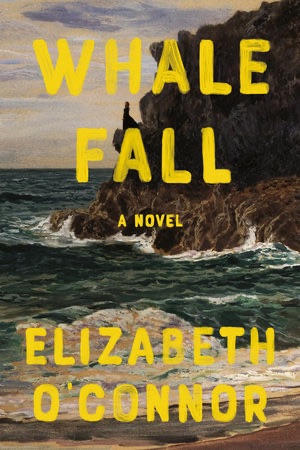
Some stories are about ambition. Others are about the cost of ambition when it is pursued without compassion. Elizabeth O’Connor’s Whale Fall is both.
At its heart, this is a story about the choices people make when they want something badly enough—and the regrets that follow. But it is also a powerful examination of how vulnerable communities can be misunderstood, misrepresented, and transformed into something they are not. When people are not given the opportunity to tell their own stories, they can become characters in someone else’s narrative: reduced from human beings into curiosities, symbols, or caricatures.
Whale Fall asks difficult questions about who gets to tell a story and what happens when outsiders seek to understand a community for the wrong reasons. Is it possible to document a people’s history without exploiting them? Can we revisit and preserve a culture’s place in the world without turning that culture into something foreign and strange?
Elizabeth O’Connor explores these questions through Manod, a young woman living on a remote island off the coast of Wales in 1938. The island is home to a small fishing community that has slowly begun to disappear. As younger generations leave in search of opportunities on the mainland, the village becomes increasingly isolated, its way of life fading with each departure.
Manod has watched many of her friends leave, and she dreams of doing the same. She longs for a different life, but leaving is not simple. Her father and younger sister depend on her, and the island—despite its hardships—is still the only home she has ever known.
Then a whale washes ashore.
The arrival of the whale becomes a strange kind of invitation, drawing attention from the mainland and bringing two visitors, Joan and Edward, to the island. The scientists claim they want to study the community and preserve its story. They want the world to know that these people exist, recording their lives through photographs, interviews, and written observations.
Because few people on the island speak English, Manod becomes their translator and their connection to the villagers. At first, she is excited by the opportunity. The visitors represent everything beyond the island: education, travel, and the possibility of another world. For a young woman who has spent her life wondering what exists beyond the horizon, their arrival feels almost magical.
But gradually, Manod begins to recognize the truth behind their interest.
Joan and Edward are not preserving the islanders’ story out of respect. They are searching for something they can sell. They are fascinated not by the complexity and humanity of the people they meet, but by how different they appear from their own world. They turn the villagers into an object of study, presenting them as strange and primitive rather than as individuals with their own traditions, knowledge, and dignity.
The tragedy is that Manod becomes part of this process.
She watches as the words of her community are altered and reshaped. She realizes that the stories she helped translate are not being shared honestly. Instead, they are being transformed into something more sensational—something that will attract attention but erase the truth.
Her guilt becomes one of the most moving parts of the novel. Manod never intended to betray her people. She was simply a young woman caught between two worlds, eager to experience something beyond the limits of her island. But Whale Fall understands that harm is not always created by cruelty alone. Sometimes it happens through ambition, curiosity, and the desire to be part of something larger.
O’Connor’s novel is a reminder that stories carry responsibility. A person’s history, culture, and identity cannot be separated from their humanity. When we take stories from people without allowing them ownership over those stories, we risk creating a version of them that is easier for others to consume—but far removed from the truth.
There is a quiet power in the way Whale Fall explores this idea. It does not simply condemn outsiders for their curiosity, nor does it portray the island community as helpless. Instead, it examines the complicated space between wanting to understand others and failing to truly see them.
The novel suggests that truth has a way of surviving, even after it has been distorted. False narratives may spread, but eventually the mist clears. The voices that were ignored find their way back into the story.
Whale Fall is a beautifully written and deeply thoughtful novel about ambition, identity, and the importance of allowing people to define themselves. It is a story about a disappearing community, but more importantly, it is a story about what happens when we forget that every community is made up of individuals with dreams, fears, and lives as complex as our own.
Want more reviews like this one? Find them at The Tearoom on Substack.


Leave a Reply