
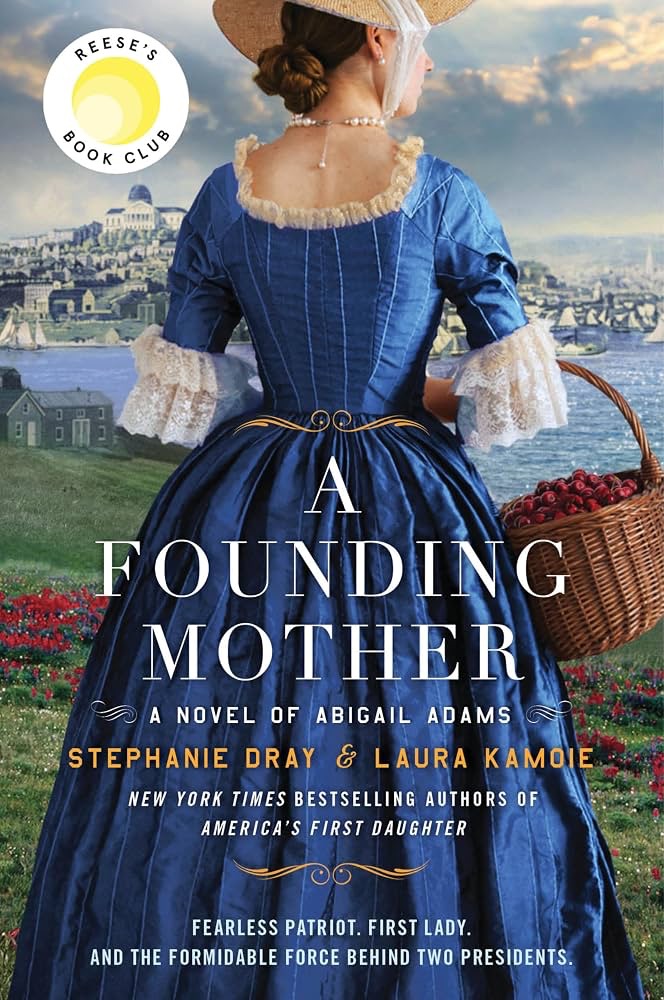
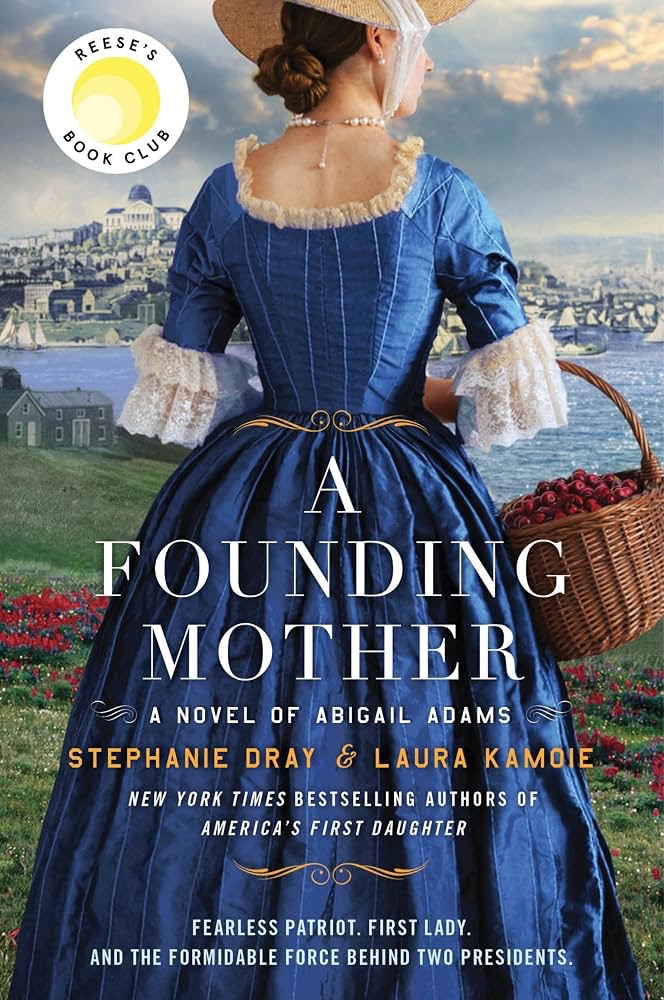
We have recently celebrated the 250th anniversary of the Declaration of Independence, making this an especially fitting time to revisit the people who shaped the earliest years of the American republic. Abigail Adams may not be the most famous figure of Revolutionary America, but I came away convinced that she—and the entire Adams family—were indispensable to the nation’s founding. Even so, she remains far less discussed than she deserves.
I wasn’t entirely sure what to expect from a novel centered on Abigail Adams. Historical fiction often walks a fine line between fact and imagination, especially when its subjects are so familiar that they almost feel like monuments. We tend to view the Revolutionary era through a carefully polished lens, shaped by generations of retelling. Yet it is worth remembering that, to those living through it, the future was anything but certain.
One of the book’s greatest strengths is its portrayal of that uncertainty. The founders were not building a nation whose success was guaranteed. They were simply trying to create something they hoped would endure. Even Washington, D.C., now the symbolic heart of the United States, appears as a hot, unfinished city that pales beside Philadelphia. These details remind us that history was once ordinary life, filled with inconveniences, doubts, and difficult decisions.
The Founding Fathers have long occupied a central place in the American imagination, but works like A Founding Mother remind us that the Founding Mothers also helped shape the republic. Women were deeply invested in the cause of independence, even if they were denied many of the rights they hoped the Revolution would secure.
Abigail Adams stands apart because she refused to remain silent. Her famous request that John Adams “remember the ladies” has become one of the defining quotations of the era, but this novel shows that it reflected a lifelong conviction rather than a single memorable phrase. She understood that liberty would remain incomplete if women were excluded from the nation’s future.
What surprised me most was not simply Abigail’s political intelligence but her practical independence. She educated herself largely through her father’s library, cultivating opinions that were unusual for women of her generation. John Adams clearly trusted her judgment, often seeking her advice while serving his country abroad.
Yet Abigail’s influence extended well beyond politics.
The novel highlights her remarkable financial skill during John’s diplomatic service in France. Wartime shortages made ordinary household goods unexpectedly valuable, and Abigail learned how to use scarcity to her advantage. She collected pins and sold them for profit while asking John to send fashionable goods from France—lace, shoes, handkerchiefs, and other luxury items—which she could sell once they reached America. Not every shipment arrived safely, but enough did for her to build an impressive personal estate.
These episodes reveal a woman who understood economics as well as domestic management. Abigail was determined not to depend entirely upon her husband for financial security. Through careful investments, discipline, and business sense, she accumulated wealth that she ultimately chose to leave to the women in her family. It is a striking reminder that independence can take many forms.
The novel also captures another side of Abigail that deserves attention: her devotion to family life. She believed deeply in the education of all her children, including her daughter Nabby, who received an education that allowed her to participate in political conversations with her brothers. At a time when many girls were denied such opportunities, Abigail quietly insisted upon higher expectations.
She recognized the inequalities surrounding her without allowing them to diminish her vision. She believed women were capable of intellectual achievement and civic responsibility, even if the law had not yet caught up with that belief. Reading these passages, I found myself appreciating more fully just how urgent these questions were during the nation’s earliest years.
What makes A Founding Mother particularly rewarding during America’s 250th anniversary is that it broadens our understanding of what “founding” truly means. Founding is not only the work of generals, legislators, and presidents. It is also the work of women who managed households through war, preserved families during uncertainty, educated the next generation, and quietly insisted that liberty should one day include them as well.
Abigail Adams planted seeds whose harvest she would never live to see. Her intelligence, resilience, and conviction helped shape the character of the young republic long before women possessed political power of their own.
That, perhaps, is the lasting message of A Founding Mother. Nations are built not only by those whose names appear in constitutions, but also by those whose influence is woven into everyday life. Abigail Adams belongs among them, and this novel offers a compelling reminder that America’s story has always been larger than the men who signed its founding documents.
Want more reviews like this one? Find them at The Tearoom on Substack.


Leave a Reply