
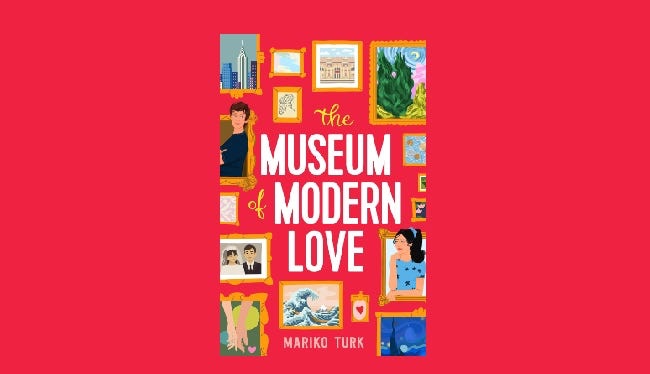
There are few things I love more than talking with a writer about the books they’ve made and the worlds that shaped them.
Today, I’m having tea with Mariko Turk, author of The Museum of Modern Love, to talk about writing, art, love, and the strange, wonderful things that happen when those worlds meet.
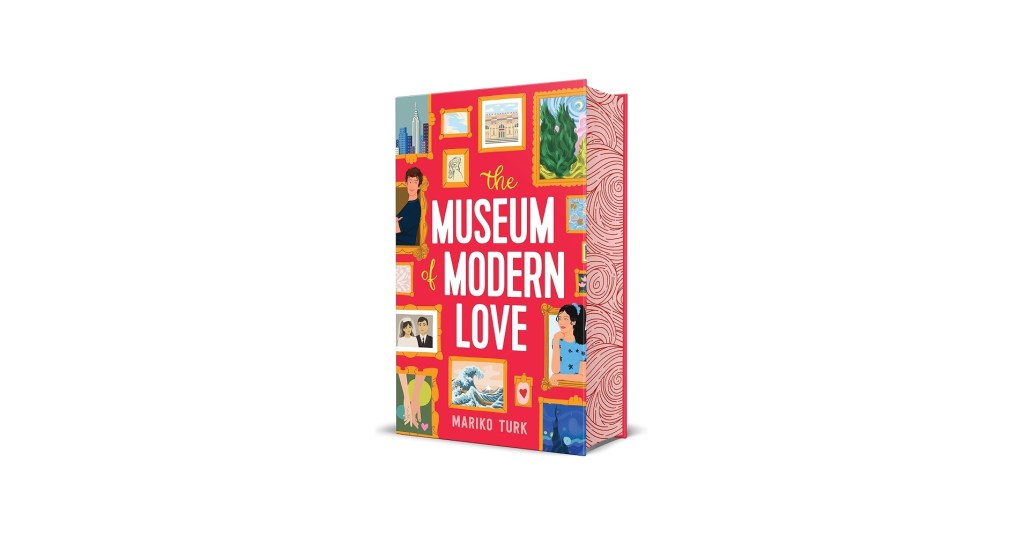
The Museum of Modern Love follows Miki, a young intern at the Metropolitan Museum of Art who plans to spend a night alone in the museum with her crush. As they make their way through the galleries, visiting the paintings her grandparents saw when they first fell in love, Miki hopes to finally tell him how she feels.
I hope you’ll pull up a chair and join us.
Q: The Museum of Modern Art in your novel feels like a space saturated with love for art in all its forms. I was especially struck by Grandma Hana’s belief that art is something we can fall in love with. How do you think we can carry that philosophy into our everyday lives, outside of museums and books?
A: What a great question! I think we can carry that philosophy into our daily lives by making time and space to appreciate beauty. Whether it’s a particularly lovely tree you pass by every day in your neighborhood, or a heartwarming scene you witness at the playground, or a perfect, peaceful moment you experience while sipping tea and listening to the birds sing. Too often we don’t pause to examine or appreciate these things because we’re distracted by all kinds of stuff, some of it very necessary (work, childcare, grocery shopping, etc.) and some of it not as necessary (the endless array of screens always at our disposal). But what if we stopped to study the pattern of veins on the leaves? Or to reflect on why that scene at the playground captured our heart? Or to linger in that peaceful moment with the birds?
This is why I love museums so much, because they force us to study and reflect and linger. They force us to slow down and really look at things, as if our only job is to marinate in art and what it makes us feel. So why not treat the world around us like a museum sometimes? I feel like we’d all be a bit happier and more fulfilled.
Q: Reading your novel over the weekend felt, at times, like stepping into the Met itself—its atmosphere is so vivid and immersive. How did you approach building that sense of place on the page? And do you have a personal history or relationship with the museum that shaped it?
A: One of my best friends worked at the Met Museum for many years, and I remember visiting her there several times in my twenties. So some of my research was drawing on memories of what it felt like to be there in that grand, awe-inspiring place, and also what it felt like to get little peeks behind the scenes.
But because I live in Colorado and can’t just skip over to the Met any time I want (though wouldn’t that be amazing?) I did A LOT of remote research about the details of the Met’s galleries. I read books and listened to podcasts about the Met. I was on the Met’s website constantly, studying floor plans and reading about exhibits and collections.
Any time a particularly fascinating piece of art stood out to me, I’d make a note of it and think about how it could fit into Miki and Lou’s love story. I can honestly say it was the most fun I’ve ever had while researching!
I found Miki and Auden’s relationship deeply recognizable, especially the intensity of their long-distance connection and the earnestness of their feelings. It made me think of how often young love is shaped as much by imagination as by reality. In your view, what creates the central tension in their relationship—distance, youth, or something more subtle between the two?
Distance and youth for sure, but also fear. Specifically, the fear of uncertainty and vulnerability, which results in the desire to cling to what is safe and familiar. I felt that fear a lot when I was a teen, which is probably why my own teen love life was 100% taking place in my imagination. I had a lot of very intense crushes that hinged on small interactions and instant message chats because it was a way to have the excitement of romance without any of the messiness and vulnerability that comes with a real relationship.
I think that a lot of teens in this generation experience that fear as well, especially since so many of their relationships also take place via a screen. Real relationships can be messy and scary, but I hope that through Miki’s journey, readers see that it can also be exhilarating and fulfilling.
Q: Were there particular artistic, literary, or cultural influences that guided you while writing this story? I’m curious what works or ideas might be quietly woven into its emotional landscape.
A: The book that first sparked the idea for this story is the 1967 middle grade classic From the Mixed-Up Files of Mrs. Basil E. Frankweiler, by E.L. Konigsburg. It’s about a brother and sister who run away to the Metropolitan Museum of Art and stay there for multiple nights. It is SO evocative, funny, thoughtful, and poignant, and I feel like anyone who read it as a kid (or an adult) has fantasies about staying overnight in an art museum. It also does such a lovely job of juxtaposing the grandeur and history of the museum with the bickering and emotional breakthroughs of its young protagonists—while treating each with the respect and gravity they deserve. It’s a juxtaposition I wanted to capture in Miki and Lou’s story as well.
The history of WWII Japanese American incarceration also features in the story, specifically Miki’s experience as a descendant of a camp survivor. I drew on my own family’s history in the camps as well as outside research to think about how Miki’s perception of art, the past, museums, and love might be shaped by this particular aspect of her family history.
Q: On a lighter note—if you could step into the world of your novel for a day, wandering the museum and its surroundings as one of your characters, where would you go first, and what would you be most tempted to take with you in your imagination?
A: I have always been drawn to portraits, especially unconventional ones when the subject doesn’t seem posed but instead just captured in a real moment from their lives. I also love paintings of people in general—family scenes, party scenes, groups of friends gathered together. There is always so much to dissect and wonder about. The relationships between the subjects, what was happening right before this scene, what will happen after, what the people were like in real life, etc.
I think I’m drawn to paintings of people because they lend themselves so well to stories. If I could wander the museum overnight, I’d find all the most intriguing people on the walls and make up stories about them all!
Q: I also found myself thinking about how certain books feel like they slow you down while you’re reading them—in the best way. Was that sense of quiet, lingering attention something you were consciously trying to build into the reading experience of this novel?
A: Yes! And I’m so glad you felt it! I wanted the experience of reading the book to mimic the experience of visiting an art museum, when you travel through centuries of beauty and history all in the span of a few hours. And then you come back out into the real world, and it feels so strange, because not a lot of time has passed, but you feel like you’ve been on an epic journey. You feel like you’ve traveled through so much time and so many emotions. You feel changed.
I wanted Miki and Lou to feel that way, to realize they needed to slow down and really see the details of the other person, the same way they slow down and look at the art. They fall in love with each other the same way they fall in love with the art that surrounds them. And I wanted the readers to feel that way, too!
 Mariella Hunt
Leave a comment