
Books Cross Borders and Cultures
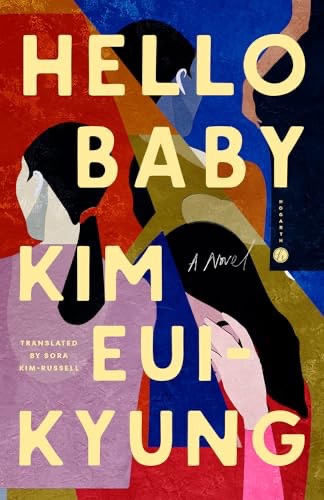
Translated from Korean, Hello Baby is my eighty-fifth read of the year. It’s a book laden with heavy but relevant topics, particularly to women.
It follows the lives of seven women of different walks of life and social classes who have one very important thing in common: they have long wanted to be mothers, but for different reasons, are unable to make this dream come true. Ages ranging from 37 to 46, they keep in touch in a private chat called Hello Baby.
They are all seeking treatment at Baby Angel Hospital, which is packed with couples hoping to start their families, even in the midst of the COVID-19 pandemic. But the first thing a reader notices in Hello Baby is the huge amount of pressure that settles on the woman.
Why So Much Shame?
The first character that we meet is 44-year-old Mun-Jeong, a journalist. In the opening scene, she is having her temperature checked by a nurse at Baby Angel, preparing to go downstairs to the IVF clinic.
She is going to the clinic alone, always alone. The reason seems so petty to me: in the past, her husband ran into an acquaintance of his while escorting her. Since then, Mun-Jeong has endured hormone treatments on her own, because her husband was overcome with shame at having been recognized in such a place. He will only attend with her if his presence is absolutely necessary.
Mun-Jeong often returns to the deep insult implied by his attitude, asking:
Was low fertility really so shameful among men? Why did they have to be so caught up in their own egos when it came to the sanctity of creating life?
I won’t attempt to answer that question. I’ll just let it sit.
Women Can Love Two Vocations at Once
Mun-Jeong also struggles with the (unfortunately) still-real expectation that, if the treatment does work, she would be expected to quit her work as a journalist and stay home.
Even if she managed to get pregnant, Mun-Jeong intended to keep writing for the magazine right up until she went into labor.
She loves her work as a journalist, relishing each interview, each achievement—yet it makes her wonder: are a husband and children the biggest obstacle to a woman’s success? It seems that Baby Angel ought to cause her more trepidation. The woman who walks into that clinic has more to lose, either way.
Yet her husband was spooked because he crossed paths with an acquaintance.
A Confession—Not an Apology
It’s true that I do not have children, but this book made me think: Surely, there is no right way these days.
Some women choose to live lives without children, and they have various, valid reasons for it. But if a woman’s dream is to be a mother, and for some reason this cannot occur naturally, the process of conceiving with medical help can be frightening and lonely.
Hello Baby is not a long read, but it does a fantastic job of exposing the various wounds that a woman, unsupported, would endure throughout it.
Some of these situations would clearly be far worse in the culture that is described in Hello Baby, but we can’t pretend that people do not still frown at one’s children—or lack thereof; that workplace equality truly exists everywhere, particularly when a family is involved.
There is also always pressure from someone—in the family or just society—for a woman to want children. I know, because I’ve experienced it. Children are not in my plans at this moment, perhaps ever. It doesn’t mean I don’t like them, or think that they’re wonderful for people called to them.
Including a character in Hello Baby called Seol-yu, a 40-year-old housewife who has “done everything right.” She has a pair of young twins that she loves. Now, she’s expecting a third baby.
Due to financial issues, she must work, but does not know where to find childcare—so she asks her mother. Her mother’s help lasts a very short time:
To Seol-yu’s surprise, her mother started crying.
“I can’t do it anymore,” she said. “If I keep this up, my cancer’s going to come back.”
Childcare…will make cancer come back? Okay.
The Real vs. Fake Baby
Then there’s Jeong-hyo, who married into a wealthy family where her mother-in-law and grandmother-in-law expect her to have children to pass on the family line. She also has a personal desire for children, but is unable to conceive naturally.
The first time she met her husband’s grandmother, the older woman’s words were:
“You look fertile. Your shoulders are round, and your hips are wide. You seem docile, but you’ve got sex appeal.”
Awkward, but it can’t mean that much…right?
Jeong-hyo’s been trying, and trying, and trying for years for a baby. But by the end of Hello Baby, after an ectopic pregnancy and the removal of a fallopian tube, Jeong-hyo’s mother-in-law chooses to “comfort” her on the way home:
“You have to hurry up and put this behind you so the new baby can come. … If you keep thinking about the baby you lost, then the real baby won’t come.”
To which Jeong-hyo finally snaps:
“Don’t you ever say that to me again. … What right do you have to say whether my baby is real or pretend?”
It’s My Village, Too
As a woman without children, I felt many times while drafting this post that I have no voice in the matter, either way. But I have friends with children who are very happy, and childfree friends who are also at peace with their lives. And I recognize when an important, powerful book needs to be shared.
The burden of parenthood should not be carried by a woman alone. A woman should not be obligated to renounce her passions when she wants a family. And matriarchs—or husbands—should not see a woman only for the children she might have.
Also, she should have friends who understand her.
Friendship is the source of strength and light in this novel. The ladies in the Hello Baby chatroom encourage one another, offer advice, commiserate, and celebrate together. They understand things about one another that the people closest to them sometimes cannot, because they are living through the same complicated mixture of hope, disappointment, fear, and expectation.
Seven Shoulders to Cry On
There is something especially beautiful about the fact that these women find one another through a shared struggle, but their friendship becomes about much more than whether they will become mothers. They see one another as whole people. In a novel so concerned with the ways women can be reduced to their bodies, their fertility, or their usefulness to a family, the Hello Baby chatroom gives them somewhere to simply be women together.
This might be what I loved most about Hello Baby. The answer to all of this pressure is not that women should make the same choices. It is that women should have the freedom to make their own choices—and the friendship and support to know that they do not have to face the consequences of those choices alone.
Hello Baby has quickly found its way into my top ten favorite books of the year. It has also reminded me why I want to seek out more international fiction. There is something wonderful about reading beyond the borders of your own culture—about entering another country’s stories and allowing a novel to complicate, illuminate, or simply broaden the way you see the world.
I’m looking forward to making more room on my reading list for translated fiction and discovering the many voices beyond my own literary landscape.


Leave a Reply