
Literature gives us so many different paths to take: adventures that would never have been possible in our own lives, and lessons we might never have learned in quite the same way.
Those of us who cannot imagine life without books know that a shelf full of them can be a source of comfort all by itself. Even when we aren’t reading everything we’ve purchased, there is something reassuring about knowing that those books are waiting for us. And yet, every reader has gone through seasons when none of the books we reach for seem to hold us.
It is the old dilemma of “I have nothing to read!” when, in fact, we have hundreds of books waiting on our shelves. It is the purgatory of reaching for bestseller after bestseller, skimming the opening chapter, and setting it aside with a resigned sigh. Eventually, you may begin to wonder whether you even enjoy reading anymore. Surely there must be something wrong when the book everyone else loves leaves you completely cold.
But there are many reasons we might keep putting down books we expected to love. I’ve spent quite a bit of time thinking about this, particularly during those periods when I felt guilty for abandoning books I desperately wanted to enjoy. Sometimes, no matter how beloved a book is or how much you want to love it, you simply cannot turn another page.
Perhaps you’ve found this article at precisely the moment you needed it. If you’re in the middle of a reading dry spell, I hope some of what follows will make it feel a little less troubling. Because I promise: this will pass. Eventually, you’ll pick up a book that meets you at exactly the right moment and wonder why you ever felt guilty for putting the others down.
Tiredness of the Mind
It’s tempting to believe that our minds are somehow above such weaknesses as might make it difficult to complete a novel. Are books not supposed to transport us to places beyond imagination?
But the truth is that reading—truly reading, in order to comprehend and remember—requires a complete engagement of the mind.
Much of the time, it isn’t the fault of the novel itself that you aren’t being pulled into it. The most gripping story ever written will be little more than mist if a reader lacks the mental bandwidth to comprehend what it is trying to do.
And no, drinking more coffee isn’t necessarily the solution. It may give you an adrenaline rush, but for most people, good reading is slow reading. We can skim our way through a novel, but will we remember any of it by the time we reach the final page?
If your mind is too tired to enjoy books the way it once did, there are a few things you can try before deciding that you’ve lost your love of reading altogether. They may prepare you to enjoy your next book without suspecting that you are doing it an injustice—or wasting your own time.
- Put the phone away. Give yourself even twenty or thirty minutes without notifications, scrolling, or the temptation to check what you’ve missed. A mind accustomed to constant stimulation may need a little quiet before it can settle into a novel.
- Take a walk. Reading doesn’t always begin when you open the book. A short walk can give your mind somewhere else to wander for a while, leaving you more capable of settling into someone else’s imagined world afterward.
- Do something with your hands. Make tea, water your plants, sketch, tidy a small corner of your room—anything that doesn’t demand much intellectual effort. Sometimes the best preparation for reading is giving your mind permission to stop working so hard.
- Read less. If you’re exhausted, there is no virtue in forcing yourself through fifty pages when ten would be enough. Read a chapter. Read a few pages. Read a poem instead. You aren’t failing at reading because you lack the energy to consume a novel at the pace you expected of yourself.
Sometimes the kindest thing we can do for our reading life is to stop demanding that our tired minds over-perform. Our books will still be there when we are ready for them.
Sometimes, Breaks Are Good
I know it sounds like sacrilege for a book creature like me to suggest that it might be good to take a break. But it is possible to take your TBR list so seriously that it begins to feel less like a source of pleasure and more like another chore.
If reading a book becomes akin to doing the dishes or mowing the lawn, of course some of us will begin to dread the time that we have set aside for it.
I can think of at least two reading dry spells that have punctuated my life. The most recent occurred when my paternal grandmother died. Words cannot describe how much her death unsettled me, making even the things I loved most seem to lose their luster. I read very few books during that time, but I remember two of the handful that did guide me through it: Marilla of Green Gables by Sarah McCoy and The Court of the Air by Stephen Hunt.
As an aside: if you can remember two novels from a difficult time that made your trials more bearable, you may have identified part of your lifetime literary canon. When you are old and necessarily selective about the books you spend your final years with, these might be the ones you’ll gravitate toward naturally.
Marilla of Green Gables will be a comfort to me when I am seventy-six and my eyesight begins to fail me. It has become an old friend. If you have books that have taken on the same significance for you, cherish them. And please tell me about them in the comments. I would love to know their titles, and why they are close to your heart.
In my experience, by the end of these reading slumps, it felt as if a dam had broken. All of a sudden, I would find myself in a bookstore, not knowing where to begin and not having the slightest desire to stop. I was fascinated by every cover and every blurb, ready to spend the next few months exploring the worlds waiting between the covers.
Perhaps that is what we forget when we are in a reading slump: the desire to read can return. We don’t have to force it back. Sometimes we simply have to give it room to find us.
Let Yourself Be a Reader
Perhaps the most important thing to remember when you find yourself abandoning book after book is that you are not required to prove that you are a reader.
You do not have to finish every book you begin. You do not have to enjoy the books everyone else is talking about. You do not have to keep reading a novel because you think you ought to be. And you certainly don’t have to turn something that once brought you pleasure into another task on your list.
Sometimes you are tired. Sometimes you are distracted. Sometimes life has become too loud for the concentration that a good novel requires. And sometimes, quite simply, the book’s not right for you.
There will be other books.
That, to me, is one of the great consolations of being a lifelong reader. There is always another shelf, another bookstore, another library somewhere. A reading slump may feel strangely permanent while you’re in the midst of it, but it’s not.
Your next beloved book may already be sitting unread on your shelf.
Some books will come at the right time. For me, Marilla of Green Gables was one of those books.
I found my way to it during one of the most difficult periods of my life, when I had little appetite for reading at all. It reminded me that sometimes we don’t need to force ourselves back into reading; we simply need to stumble upon the right book at the right time. You can read my full review of Marilla of Green Gables here.
So put the book down if you need to. Take a walk. Make tea and let your mind wander. Read something completely different—or don’t read anything for a little while.
When you are ready, open a book again. I have a feeling you’ll know the right one when you find it.
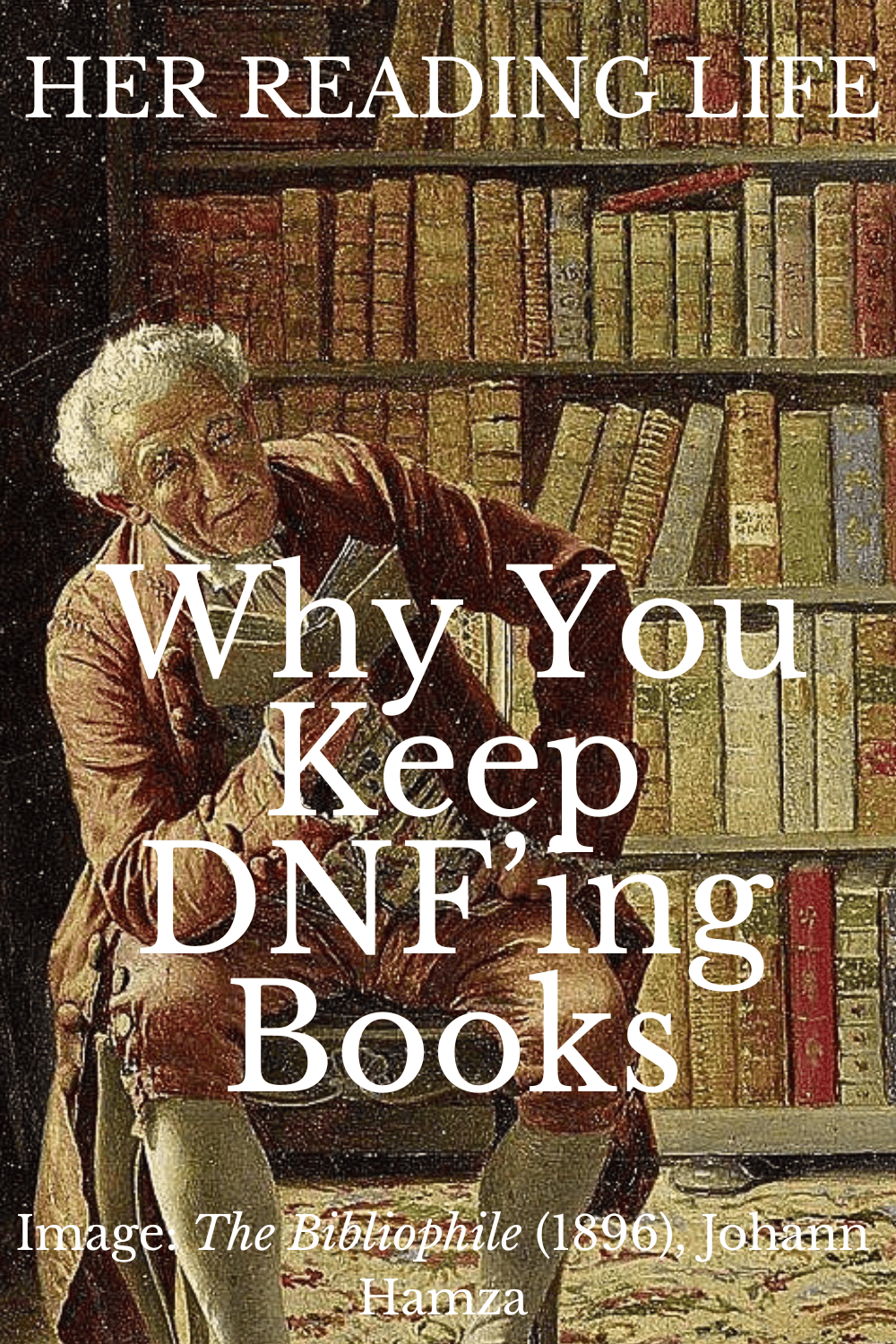
Cover Image: The Bibliophile (1896), Johann Hamza
If you enjoyed this essay and would like to support The Tearoom, you can buy me a coffee. Every little bit helps me keep making this little corner of the internet for readers like you.


Leave a Reply