• ‘The Pirate Queen’ by Ariel Lawhon

    Few figures in history are as captivating as Grace O’Malley, the legendary Irish pirate, chieftain, and political leader. In The Pirate Queen, Ariel Lawhon brings Grace O’Malley’s remarkable life to the page in a sweeping work of historical fiction that blends meticulous research with unforgettable storytelling.

    Set in sixteenth-century Ireland, The Pirate Queen follows Grace O’Malley from her childhood to the end of her life. As the daughter of chieftain and pirate Eoin O’Malley, Grace is expected to marry for the good of her clan rather than pursue a life of adventure. Yet from an early age, she is drawn to the sea, where she discovers not only freedom but also her gift for leadership.

    What makes The Pirate Queen such a compelling historical fiction novel is that Grace O’Malley is never portrayed as larger than life. She is courageous and fiercely intelligent, but she is also deeply human. Throughout the novel she experiences betrayal, heartbreak, political conflict, and personal loss, each challenge shaping the woman she ultimately becomes.

    Grace O’Malley’s greatest strength is her ability to earn loyalty through respect rather than fear. Although many men dismiss her simply because she is a woman, she repeatedly proves herself capable of commanding ships, negotiating alliances, and protecting her people. Her determination makes her one of the most memorable heroines in recent historical fiction.

    Ariel Lawhon also excels at recreating sixteenth-century Ireland. The rugged coastline, clan rivalries, and ever-present dangers of life at sea create a vivid backdrop for Grace O’Malley’s story without overshadowing the emotional heart of the novel. Readers who enjoy immersive historical fiction will find themselves completely transported.

    One of the novel’s most moving themes is the resilience of women. Grace learns early that the world is rarely kind to those who challenge expectations, yet she refuses to surrender her independence. Her relationships with her children, her crew, and the people she leads reveal a woman who understands that compassion and strength can exist side by side.

    The meeting between Grace O’Malley and Queen Elizabeth I is among the novel’s most memorable scenes. Here are two women who have each fought to maintain power in societies determined to deny them authority. Without saying much, they recognize one another as equals, making the encounter one of the emotional high points of The Pirate Queen.

    As with her previous novels, Ariel Lawhon demonstrates a remarkable ability to breathe life into historical figures. Rather than presenting Grace O’Malley as a distant legend, she allows readers to experience her fears, triumphs, failures, and hopes. The result is a historical fiction novel that feels both epic and deeply personal.

    If you enjoy historical fiction featuring extraordinary women, richly researched settings, and unforgettable characters, The Pirate Queen deserves a place on your reading list. Ariel Lawhon has crafted a heartfelt tribute to Grace O’Malley, reminding readers why her story has endured for centuries. It is a novel that celebrates courage, resilience, and the enduring power of compassionate leadership.


    If you enjoyed this essay, you might also like:

  • What Does It Mean to Know?

    Mary Shelley’s Frankenstein is often called “a book about a monster,” but having read it several times, I don’t think that’s why it endures. What makes it singular is the emotional darkness readers wade through from beginning to end — loss, anger, abandonment run through every chapter. These aren’t incidental; they connect directly to Shelley’s own struggles. She lived a life many called scandalous, wrenched again and again by loss.

    I’ve been considering the unique emotional environments of novels by Shelley and the Brontës, and the poetry of Emily Dickinson, to figure out what it means to “write what you know.” The more I sit with their work, the more it seems the advice depends entirely on what we mean by knowing.

    Does one have to have physically been there or experienced it?

    Their own lives argue no. Shelley wrote a creature’s isolation without being one. The Brontës wrote moor-haunted romance as young women who’d barely left Haworth. What they had wasn’t the event itself — it was the feeling underneath it: grief, longing, ambition. That they had genuinely lived, even if the circumstances around it were invented.

    Is it not true knowledge to experience a thing or place in imagination?

    This might be the real crux of the question. Dickinson is the clearest case — she knew longing, awe, and dread without needing the external experience most people assume is required to write about them. Imagination isn’t a lesser substitute for lived knowledge. For some writers, it’s the primary instrument for reaching emotional truths they’d have no other route to. The Brontës’ childhood kingdoms — Glass Town, Angria, Gondal — make the same case from another angle: pretend worlds, built young, trained real emotional insight that surfaced decades later in Jane Eyre and Wuthering Heights.

    Is it still worth writing what we know if the subject matter is heavy, or something we’d prefer not to know?

    Shelley’s losses weren’t chosen. She didn’t get to opt out of that knowledge — Frankenstein is what she did with it anyway. That suggests the heaviest material may be the most worth writing, not despite our reluctance to face it, but because of it. Reluctance is often a sign the material matters.

    There’s a distinction worth holding onto here, too: writing something painful in order to understand it is not the same as writing it for shock or spectacle. That difference in intention tends to show up on the page, whether or not a reader could name why.

    Taken together, these three writers suggest that “knowing” was never really about passport stamps or a full social calendar. It was about attention — paying close attention to what you feel, fear, or long for — and having the courage to put it down honestly, whether or not you ever lived the events themselves.

  • ‘An American Beauty’ by Shana Abé

    Historical fiction set during America’s Gilded Age is one of my favorite genres. It combines dazzling wealth with rigid social expectations, creating stories in which appearances are often as important as reality. As someone who once watched Downton Abbey almost obsessively, I never seem to tire of grand mansions, elaborate balls, and the complicated lives hidden behind polished façades.

    Earlier this month I returned to the Gilded Age with The American Heiress by Daisy Goodwin. Shana Abé’s An American Beauty proved to be the perfect companion novel. Richly researched and emotionally engaging, it transforms the life of one of the era’s most controversial women into a thoughtful story about ambition, survival, and the price of belonging.

    A Novel Inspired by the Life of Arabella Huntington

    An American Beauty is inspired by the life of Arabella Huntington, who was born into poverty in the American South following the Civil War. Disease and hardship shape her early years, and after the death of her father, Arabella dreams of a life far removed from the uncertainty surrounding her family.

    That opportunity appears when she meets railroad magnate Collis Huntington. Wealthy, powerful, and captivated by Arabella, Collis changes the course of her life forever. There is one obstacle, however: he already has a wife.

    Unable to let Arabella go, Collis brings her and her family to New York, surrounding them with unimaginable luxury. Yet all the wealth in the world cannot buy respectability. Their relationship becomes an open secret, and New York society largely sides with Elizabeth Huntington, Collis’s wife.

    One of the novel’s most compelling moments comes when Elizabeth, dying of cancer years later, asks to see Arabella. The meeting between the two women is surprisingly moving. Rather than reducing them to rivals, Shana Abé allows each woman to be fully human, shaped by love, resentment, disappointment, and loss.

    More Than a Love Triangle

    Although the novel centers on Collis Huntington’s complicated relationships, it is ultimately less interested in romance than in the women whose lives are defined by his choices.

    Elizabeth represents respectability and social acceptance. Arabella represents survival and reinvention. Neither woman truly wins.

    Another fascinating relationship develops between Arabella and Clara Huntington, Collis’s adopted daughter. Clara understands what it means to feel like an outsider despite extraordinary privilege. Their unlikely bond becomes one of the emotional highlights of the novel, demonstrating that belonging is not always determined by wealth or family connections.

    As Arabella grows older, she gradually realizes that years spent hiding, performing, and seeking acceptance have come at a tremendous personal cost. By the end of her life, she no longer feels compelled to earn society’s approval. She simply chooses to live as herself.

    The Double Standards of the Gilded Age

    One of the novel’s greatest strengths is its willingness to examine the unequal standards imposed upon women.

    Arabella receives endless criticism for becoming involved with a married man. While her choices are certainly controversial, the novel never allows readers to forget that Collis Huntington was equally responsible for the affair. Yet public condemnation falls almost entirely upon Arabella.

    That imbalance feels remarkably familiar.

    Even during the Gilded Age, women often carried the social consequences of choices made by both partners. A wealthy husband might recover from scandal with relatively little damage to his reputation, while a woman could remain permanently defined by it.

    Elizabeth suffers in a different way. She is, by every social measure, an ideal wife, but her inability to bear children becomes a deep source of pain and insecurity. When Arabella gives Collis a son, the emotional wounds between the two women deepen even further.

    Rather than presenting simple heroes and villains, Shana Abé explores how impossible circumstances can shape otherwise ordinary people.

    Survival Rather Than Scandal

    The wealth and glamour surrounding Arabella’s life give the novel an almost fairy-tale atmosphere. Mansions, jewels, lavish parties, and enormous fortunes create the illusion of a Cinderella story.

    Yet beneath that glitter lies something much more complicated.

    Arabella’s story is fundamentally one of survival.

    Throughout history, many women had very few opportunities to improve their circumstances. Marriage often represented economic security as much as romantic love. Every available path carried risks. Marrying beneath one’s station could lead to poverty and social exclusion, while marrying above it often brought suspicion, resentment, and lifelong scrutiny.

    There was rarely a perfect choice.

    That historical reality gives An American Beauty much of its emotional power.

    Final Thoughts

    Today, women enjoy opportunities that would have been unimaginable during the Gilded Age. Many pursue careers, remain single, marry later in life, or choose entirely different paths than previous generations.

    Yet judgment has not disappeared.

    Women continue to face expectations about marriage, work, motherhood, appearance, and countless other aspects of their lives. What has changed are the choices available—not necessarily the opinions surrounding them.

    That is what makes An American Beauty feel surprisingly modern despite its historical setting.

    History has not always remembered Arabella Huntington kindly. Shana Abé invites readers to look beyond the scandal and consider the circumstances that shaped her decisions. Whether readers ultimately sympathize with Arabella or not, they are unlikely to forget her.

    Beautifully written, emotionally intelligent, and grounded in fascinating history, An American Beauty is one of the finest Gilded Age novels I have read this year. I highly recommend it to readers who enjoy historical fiction, stories of remarkable women, and novels that explore the complicated relationship between morality and survival.


    If you enjoyed this essay, you might also like:

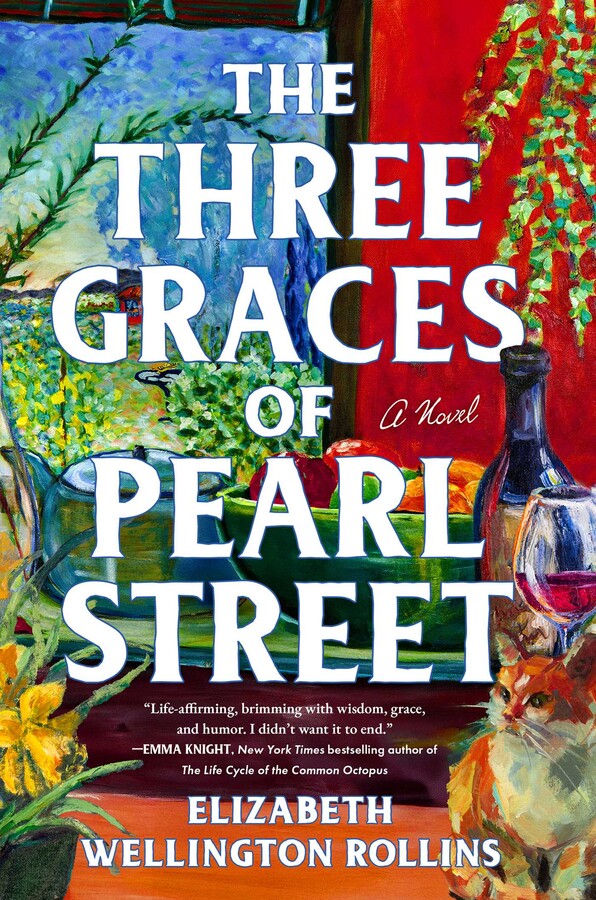
  • ‘The Three Graces of Pearl Street’ by Elizabeth Wellington Rollins

    If you’re looking for a thoughtful novel about family, aging, faith, and the quiet power of kindness, The Three Graces of Pearl Street by Elizabeth Wellington Rollins is well worth reading. This heartfelt contemporary novel explores the bonds between three generations of women while asking timeless questions about grief, service, forgiveness, and what it truly means to leave a legacy.

    Death and the natural passing of time have always been subjects I struggle with. Grief is an adversary every one of us will eventually meet, yet none of us are ever fully prepared for it. Books cannot shield us from those seasons of loss, but they can help us approach them from a safe distance. Reading about characters who wrestle with aging, regret, and mortality often makes those fears feel a little less lonely.

    Readers who enjoyed Theo of Golden may find a similar spirit in The Three Graces of Pearl Street. While the stories are different, both novels celebrate lives devoted to compassion, sacrifice, and serving others. They remind us that an ordinary life, lived with generosity, can leave an extraordinary mark on the world.

    What Is The Three Graces of Pearl Street About?

    At the center of The Three Graces of Pearl Street are three women who share the name Graziella—grandmother, mother, and granddaughter. Living under one roof, they navigate the everyday joys and frustrations of family life while learning to understand one another across generations.

    The eldest Graziella quickly became my favorite character. As a young woman, she dreamed of becoming a nun, but life led her in another direction. Even so, she never abandoned her desire to serve others. She spends much of her life running a soup kitchen, believing compassion should always come before recognition or prestige.

    Themes of Faith, Service, and Conscience

    One of the strongest aspects of The Three Graces of Pearl Street is its thoughtful exploration of faith. Graziella finds herself in conflict with the religious leaders who oversee the soup kitchen, creating a compelling discussion about authority, leadership, and conscience.

    Although Graziella is Catholic, she refuses to ignore her conscience simply because an authority tells her otherwise. Instead, she risks her own savings to establish a soup kitchen that reflects the values she believes in. Rather than presenting easy answers, Elisabeth Wellington Rollins invites readers to consider what authentic service truly looks like.

    What impressed me most was that the novel avoids reducing anyone to a villain. Instead, it recognizes that sincere people can disagree while still sharing a desire to help others.

    Family Relationships Across Generations

    Graziella’s relationship with her granddaughter, Ella, forms the emotional heart of the novel. The two argue often, largely because they are so alike. Their conversations are passionate, frustrating, and deeply believable.

    As the story unfolds, those arguments reveal something deeper than conflict. They become expressions of love between two people struggling to understand each other while speaking different emotional languages.

    The novel suggests that forgiveness is rarely instantaneous, but honest communication can slowly heal even long-standing misunderstandings.

    Why The Three Graces of Pearl Street Resonated With Me

    Although the novel contains moments of humor and warmth, it also explores fears surrounding aging, illness, grief, and saying goodbye to those we love. These themes resonated with me because they reflect questions I have wrestled with for years.

    There is a unique comfort that comes from reading a book written by someone who understands those fears. Rather than offering simple solutions, The Three Graces of Pearl Street feels like sitting beside a trusted friend who quietly reminds you that you are not alone.

    Perhaps the greatest lesson the novel offers is that every one of us can make a meaningful difference. We do not need to become wealthy or famous. We do not need to perform extraordinary acts. Sometimes the greatest gifts we can offer are our compassion, our time, and our willingness to truly see another person.

    Graziella’s greatest strength is not the number of people she helps but the sincerity behind every act of kindness. Every conversation, every meal, and every sacrifice reminds us that genuine compassion is measured not by recognition but by love.

    Final Thoughts on The Three Graces of Pearl Street

    The Three Graces of Pearl Street by Elizabeth Wellington Rollins is ultimately a novel about hope. It reminds readers that growing older is not simply a story of decline but one of continued wisdom, generosity, and purpose. Every stage of life offers opportunities to teach, forgive, and love more deeply.

    By the final pages, I found myself thinking less about death and more about legacy. The novel suggests that what ultimately survives us is not our accomplishments but the kindness we leave behind.

    If you enjoy uplifting literary fiction, family sagas, novels about faith and community, or stories that celebrate the quiet heroism of ordinary people, The Three Graces of Pearl Street is an easy recommendation. It is a moving reminder that true love is stronger than death—and that even the smallest acts of kindness can change a life.


    If you enjoyed this essay, you might also like:

  • ‘The Oxford Guide to Scandal and Lies’ by Kate Westbury

    I do not often reach for mystery novels, as many can begin to feel similar after a while. Historical mysteries, however, have always felt different to me. The combination of investigation, atmosphere, and the customs of another era can make even a familiar storyline feel fresh and unique. A well-written historical mystery does not simply ask us to solve a crime; it invites us into another world.

    Kate Westbury’s The Oxford Guide to Scandal and Lies does exactly this, transporting readers to Oxford during the time of the Great War, where secrets, grief, and old rivalries exist beneath the beauty of one of the world’s most famous universities.

    One of the strongest elements of the novel is the setting. Oxford itself becomes almost like another character in the story, filled with ancient buildings, traditions, and academic history. I especially enjoyed that one of the protagonists, Ginevra Bishop, is a female student at a time when women were still fighting for their place within academic spaces. In real life, women were allowed to study at Oxford beginning in 1879, when women’s colleges Lady Margaret Hall and Somerville Hall opened. However, full membership in the university and the ability to receive degrees did not come until October 14, 1920.

    Westbury captures the excitement and uncertainty of this transitional period. Gin represents a generation of women who are intelligent, ambitious, and ready to claim opportunities that previous generations were denied.

    The second protagonist, Sidney Braithwaite, carries his own wounds from the war. Haunted by the things he witnessed, Sidney struggles to open up and has no plans to fall in love. His focus is simply on moving forward with the life he has left. However, those plans are tested when he and Ginevra are chosen together to investigate the mysterious death of Mr. Tolliver, a librarian at Oxford’s famous Bodleian Library.

    The scenes involving the Bodleian Library were some of my favorites. During my own visit to Oxford, I was able to see the library from the outside, though I was not able to go inside. Reading about it through Westbury’s descriptions felt almost like returning for a second visit. This is one of the great gifts of books: they allow us to travel, revisit places we have loved, and experience locations we may never otherwise see.

    At first, Mr. Tolliver’s death appears connected to his work tracking down spies who were leaking information to the Kremlin. But as Gin and Sidney begin to investigate, they discover that the truth may be much closer to home. The university is filled with people who have their own motives, and old grudges, broken relationships, and past betrayals can be just as dangerous as international intrigue.

    Gin is one of the strongest aspects of the novel. She is clever, curious, and determined, but Westbury also allows her to simply be a young woman. She is bookish, but she is also attractive and socially connected. A woman can be popular, pretty, and intelligent at the same time, and I appreciated seeing that represented. Too often, historical fiction creates female characters who must reject traditional ideas of femininity in order to prove their intelligence. Gin does not need to do that. Her strength comes from being fully herself.

    Westbury also succeeds in making the world of the novel feel lively rather than distant. Although the story takes place in the past, the characters have energy and personality that make the setting feel immediate. Gin’s willingness to speak her mind feels especially refreshing for a woman of her time period, while Sidney’s quieter struggles create a thoughtful contrast.

    The relationship between Gin and Sidney is another highlight. They work well together because their connection is built on mutual understanding and respect. Both characters have experienced loss, and both carry emotional burdens they do not easily share. Their growing affection for one another is noticeable, but the romance never overwhelms the mystery. Instead, it becomes another part of the larger story about healing and trust.

    I also appreciated that Gin has friendships outside of her relationship with Sidney. Recently, many female protagonists in fiction are portrayed as isolated or disconnected from those around them. Gin, however, has a trusted group of friends who provide encouragement and support. She does not spend every moment focused on Sidney or the mystery. She has a life of her own, and that makes her character feel much more realistic.

    The Oxford Guide to Scandal and Lies introduces a fresh and memorable character to the world of historical mysteries. Gin and Sidney make a compelling team, and the combination of Oxford’s history, an intriguing mystery, and emotional character development creates an engaging read.

    I finished this book in a little over a day, and I am looking forward to continuing the series. Westbury leaves enough unanswered questions and possibilities to make the next installment exciting.

    Ultimately, this novel offers more than a mystery. It has the nostalgia of an ancient university, the hope of young women pursuing their futures, and the reminder that family is not always defined by blood. It reminds us that we do not have to endure difficult seasons alone. There are people willing to help us, and sometimes the greatest discoveries we make are not only about the secrets around us, but about the people who choose to stand beside us.


    If you enjoyed this essay, you might also like:

  • ‘Prudence Marsh Is Not a Nobody Anymore’ by Emily Krempholtz

    Some fantasy novels ask readers to save the world. Others simply invite them to enjoy a delightful adventure with memorable characters, a touch of romance, and enough magic to leave a smile behind. Prudence Marsh is Not a Nobody Anymore by Emily Krempholtz falls into the latter category.

    Although it is the second novel in the series, I was surprised by how approachable it was as a standalone. The story provides enough context that I never felt lost, something I always appreciate in a continuing series. New readers can step into this world with confidence while longtime fans are rewarded with another charming visit.

    The novel follows Prudence “Pru” Marsh, an aspiring bard determined to make a name for herself through her music. Armed with little more than her beloved violin and a dream, she leaves her quiet village of Dragons Rest in search of her own epic story.

    Her journey takes an unexpected turn when she crosses paths with a band of thieves. During the chaos of a heist, her treasured violin is accidentally destroyed by Callum, one of the thieves. Rather than disappearing into the shadows, Callum promises to replace the instrument—a promise that binds their paths together.

    As Callum and his companions prepare for an ambitious attempt to rob the Queen’s vault, Pru sets her sights on auditioning to perform at the upcoming Royal Wedding. Their separate ambitions eventually converge, raising questions about loyalty, redemption, and whether love can flourish between two people whose lives began on opposite sides of the law.

    One of my favorite elements of the novel was Bartleby, a man who has been magically transformed into a houseplant. What could have been a simple comedic side character instead becomes one of the book’s greatest delights. Watching a leafy pothos accompany the group—crafting a flute, hiding stolen knives among his leaves, and even using those same leaves for self-defense—provided some of the story’s funniest and most memorable moments.

    Like Morgan Elizabeth’s cozy fantasy novel Meet Cute Magic, this story hides thoughtful themes beneath its playful surface. While the tone remains light and optimistic, the novel explores several meaningful ideas.

    Pru’s journey reminds readers that there is value in pursuing one’s own dreams instead of living solely according to the expectations of others. Her decision to leave home in search of a musical career requires courage, uncertainty, and a willingness to embrace the unknown.

    Callum’s character also offers an important lesson in accountability. After breaking Pru’s violin, he could have walked away without consequence. Instead, he accepts responsibility for his mistake and works to make things right. His willingness to keep his promise becomes one of the strongest indicators of his character.

    The novel also presents a nuanced view of family. Loving families may be separated by distance, yet genuine affection remains constant through time apart. At the same time, Krempholtz acknowledges that not every family is healthy. Sometimes creating distance is an act of self-preservation rather than selfishness. It is a compassionate reminder that we rarely know another person’s full story.

    Despite featuring thieves, royal vaults, and magical dangers, Prudence Marsh is Not a Nobody Anymore never loses its hopeful spirit. The adventure is exciting without becoming dark, making it an enjoyable choice for readers looking for a comforting fantasy escape. The romance develops naturally alongside the adventure, while the humor keeps the story engaging.

    By the final pages, I found myself wanting to return to this world—not only because of its whimsical magic but because of Krempholtz’s warm, inviting writing style. It’s the kind of fantasy that leaves readers feeling lighter than when they began.

    This story is a reminder that becoming somebody rarely begins with fame. It begins with the courage to leave home, pursue the work that calls to you, and keep believing that your story is worth telling. For readers who enjoy cozy fantasy romances with heart, humor, and meaningful themes, Emily Krempholtz has crafted another charming adventure.


    If you enjoyed this essay, you might also like:

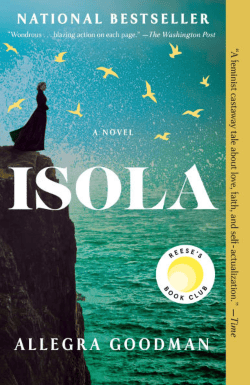
  • ‘This Is Not About Us’ by Allegra Goodman

    Allegra Goodman’s This Is Not About Us is a literary family saga that explores grief, sibling rivalry, family estrangement, and the ways unresolved conflict can echo across generations. Rather than relying on dramatic twists or fantastical settings, Goodman finds extraordinary depth in ordinary lives, creating a novel that feels both intimate and universally recognizable.

    The story begins with the death of Jeanne Rubinstein, the youngest of three sisters. Her passing reopens decades-old tensions between her sisters, Helen and Sylvia, revealing how long-held resentments have shaped not only their own lives but also those of their children and grandchildren. This Is Not About Us is ultimately a novel about the lasting consequences of poor communication—and the hope that younger generations can choose a different path.

    One of my favorite storylines follows Sylvia’s granddaughters, Lily and Sophie. Although they are still children, they recognize the pain their family’s divisions have caused and make a promise never to become estranged from one another. It is a quiet but powerful reminder that family patterns do not have to be repeated. Compassion, forgiveness, and reconciliation are choices every generation can make.

    Goodman tells the story through multiple viewpoints, gradually building a rich portrait of the Rubinstein family. While I occasionally found the large cast difficult to follow in the audiobook, I imagine the novel would be even more rewarding in print. The opening chapters, in particular, are unforgettable. Even after Jeanne dies, the family cannot agree on how she should be buried, raising questions about faith, memory, and what we owe the people we love. Goodman captures how grief has a way of magnifying even the smallest disagreements until they become impossible to ignore.

    I also loved Lily’s perspective. As an aspiring writer, she fills notebooks with wildly imaginative stories, reminding me of my own childhood composition books. Goodman beautifully captures the joy of discovering storytelling for the first time, making Lily one of the novel’s most memorable characters.

    If you enjoy literary fiction about families, emotionally nuanced character studies, or novels that examine grief and reconciliation with compassion, This Is Not About Us by Allegra Goodman is well worth reading.


    If you enjoyed this essay, you might also like:

  • The Greatest Journeys Are Sometimes Found on the Page

    Summer is a popular season for journeys. The warmer weather invites excursions, and students enjoy a break from their studies, giving families the chance to gather and create new memories. Camping trips, beach vacations, road trips, and visits to historic places all become part of the rhythm of summer.

    Yet among these groups of travelers, there is often one person who can be spotted carrying more than a suitcase: the reader. They are the ones who cannot seem to choose just one book for a week away. They bring a dog-eared paperback into historic buildings, tuck novels into beach bags, and read beneath the shade of trees. Their message is clear: while journeys across the world are wonderful, there is another kind of travel that cannot be rivaled — the journey into a book.

    The good news is that adventure is not reserved only for those who can afford distant destinations. Some people cannot travel far from home; others simply find joy in the comfort of familiar rooms. This does not mean they are unable to explore. Within the pages of a good novel, it is possible to take a beautiful holiday from the comfort of a favorite chair, wrapped in blankets with a cup of tea nearby.

    In books, the imagination travels. Novels allow us to take vacations through both time and space. They carry us into dreams as well as reality. Through their pages, we meet people who lived centuries ago, visit places that have disappeared, and experience worlds that exist only because someone dared to imagine them.

    Who, then, is on the greater adventure — the person boarding an airplane, or the person lost in an excellent novel during a long flight? The traveler stepping onto a train, or the passenger quietly writing notes in the margins of a paperback? The truth is that both are embarking on journeys. But books have a special gift: they can transform even the quietest moments into unforgettable adventures.

    Not everyone can board a plane whenever they wish, but novels are among the most accessible forms of exploration. They are affordable, they wait patiently on our shelves, and they can be passed from one generation to the next. They cross borders and languages. They remind us that adventure is not always found by leaving home.

    Sometimes, it is found by opening a book.

  • ‘Taipei Story’ by R.F. Kuang

    Learning a new language is often described as opening the door to another world. But what happens when that language is also part of your own heritage?

    That is the question at the heart of R.F. Kuang’s Taipei Story. While many readers know Kuang for her sweeping historical fantasy and literary fiction, this quieter novel turns its attention inward. It is less concerned with epic events than with the complicated process of discovering who we are when our family history spans more than one culture.

    College student Lily Chen travels to Taiwan with the goal of improving her Chinese. Like many language students, she imagines that immersion will quickly solve the problems that textbooks cannot. Instead, she discovers just how exhausting it is to live every day in a language she does not fully understand.

    Simple tasks become difficult. Reading street signs gives her headaches. Ordering food requires concentration. Conversations move too quickly. Every mistake reminds her that she is an outsider, even in a place connected to her own family history.

    Kuang captures this frustration remarkably well. Anyone who has studied another language—or moved somewhere unfamiliar—will recognize the constant mental effort that accompanies everyday life. There is a particular kind of loneliness that comes from understanding just enough to realize how much you still do not know.

    Yet Taipei Story is about much more than language.

    As Lily adjusts to life abroad, her relationships begin to unravel. A misunderstanding involving a mutual crush creates tension with her roommate, Anna, until their friendship nearly falls apart. Then tragedy strikes when Lily’s grandfather dies unexpectedly.

    His death becomes one of the emotional centers of the novel.

    Although Lily was never especially close to him, she had quietly imagined that learning Chinese would one day allow them to know one another better. Without fully realizing it, she had postponed those conversations, assuming there would always be more time.

    There wasn’t.

    The novel explores a painful truth that extends far beyond this particular family. Many of us postpone difficult conversations. We tell ourselves we’ll ask our grandparents about their childhoods next holiday, call an old friend next month, or finally pursue a dream after life becomes less busy.

    Life rarely waits for us.

    One of the strengths of Taipei Story is that it refuses to present cultural identity as something that can be mastered through effort alone. Lily often feels guilty for not speaking Chinese as naturally as someone who grew up surrounded by it. She worries that she has somehow failed her family or become disconnected from her roots.

    But the novel gently challenges that fear.

    Late in the story, Lily realizes that many Taiwanese students spend years learning English, experiencing the same frustrations she does while learning Chinese. They stumble over grammar, mispronounce words, and worry that they will never sound fluent.

    The struggle belongs to everyone.

    That realization transforms what initially seemed like a story about one woman’s heritage into something much more universal. Whether we are learning another language, beginning a new career, moving to another country, or simply trying to understand another person’s perspective, we all experience the awkwardness of being beginners.

    The novel argues that this awkwardness is not evidence of failure. It is simply the cost of learning.

    Reading Taipei Story also reminded me of another recent novel I enjoyed: Whale Fall by Elizabeth O’Connor.

    Both books explore the barriers language can create, though from opposite directions. In Whale Fall, outsiders believe they understand another culture while distorting its stories to suit their own expectations. In Taipei Story, Lily fears she understands too little, placing impossible expectations on herself until she forgets why she wanted to learn in the first place.

    Together, the novels suggest that genuine understanding requires humility. Neither certainty nor perfection brings us closer to another culture. Curiosity does.

    One of the aspects I appreciated most was the novel’s patience. Rather than offering dramatic revelations about identity, Kuang allows Lily’s understanding to develop gradually through ordinary experiences. Walking unfamiliar streets, making mistakes, grieving a loved one, and repairing damaged friendships all become part of the education she could never have received in a classroom.

    That quiet approach makes the novel feel deeply authentic.

    Perhaps the greatest lesson Taipei Story offers is that identity is not something we solve once and for all. It continues to evolve throughout our lives.

    Our family history shapes us, but so do our choices. We inherit languages, traditions, and memories, yet we also create new ones. Complete understanding—of a culture, another person, or even ourselves—may always remain just beyond reach.

    That is not a failure.

    It is simply part of being human.

    If you enjoy thoughtful literary fiction that explores family, language, grief, and cultural identity with sensitivity and intelligence, Taipei Story is well worth reading. Rather than offering simple answers, it invites readers to embrace uncertainty, remain curious, and extend themselves the same patience they would offer anyone learning something new.

    Sometimes the greatest journeys are not the ones that take us across the world, but the ones that help us understand where we came from—and who we are becoming.


    If you enjoyed this essay, you might also like:

  • The Most Important Email I Ever Sent to an Author

    The Tearoom on Substack has grown into more than a newsletter. Over the past few months, it has become my refuge and the creative project I am most proud of. There is something deeply satisfying about meeting new readers every day, watching the community grow, and laying a foundation that I hope will endure for decades. I fully intend for this little corner of the internet to still exist when I am old.

    Not long ago, I wrote about myself as a young girl—how growing up surrounded by books and slowly building a library gave my life a sense of purpose. That girl could never have imagined creating a place where readers gather to celebrate literature together. She certainly could not have imagined one day corresponding with the authors who wrote her favorite books. Even now, it still feels a little unreal.

    It all began earlier this year, after I finished reading Girl with a Pearl Earring for the second time.

    The novel has always been special to me because I first discovered it through my grandmother. Returning to it years later made me feel close to her again, as though we were sharing the same story across time.

    On a whim, I decided to write to the author, Tracy Chevalier.

    I had no expectation that she would ever read my email, much less respond to it. I simply wanted to tell her how I had found the novel, why it had become such a meaningful connection to my grandmother, and to ask whether she might be willing to answer a few questions about the book.

    Then I pressed Send.

    After that, I forgot about it.

    The weeks slipped by while I buried myself in novels and reviews. Reading has a curious way of altering time. Some books make the days stretch wonderfully long, while others disappear so quickly that you look up and realize an entire month has gone by.

    Then one afternoon, while I was working at my desk, an email notification appeared.

    It was from Tracy Chevalier.

    My heart leaped.

    I had been brave enough to reach out, but I had never truly believed that a genuine conversation might come from such a simple email.

    That reply changed something for me.

    It reminded me that authors are not distant figures living behind the covers of their books. They are people who spend years wrestling with ideas, revising chapters, questioning scenes, and wondering whether anyone will care about the stories they are trying to tell.

    As someone who hopes readers will one day cherish my own books, I should have understood this already. Yet I had unconsciously placed published authors on a pedestal, forgetting that they began exactly where every writer begins: with an idea, a blank page, and the determination to keep going through draft after draft.

    Since then, I have written to several authors whose work I admired. Many have responded with remarkable generosity, answering questions, sharing their creative process, and making time for conversations they certainly did not owe me.

    Those conversations have become one of the greatest joys of building The Tearoom, and they have reminded me that every beloved book begins with a person who once wondered whether anyone would read it.

    It also changed the direction of The Tearoom. What began as a place where I wrote about books slowly became a place where I could introduce readers to the people behind them. Interviews with authors became one of my favorite features—not because they made the newsletter seem bigger, but because they reminded me that literature is a conversation. Every novel begins with one person writing alone, but it finds its fullest life when readers respond.

    I know that if someone wrote to tell me my work had mattered to them, I would treasure that message. Why would authors be any different?

    They may not always have the time to reply, and no reader should expect one. But I have come to believe that sincere appreciation is rarely unwelcome.

    If there is an author whose work has stayed with you, tell them. You don’t need to ask for anything. Simply tell them what their book meant to you. They may never reply—but they will almost certainly be glad to know their words found a home in someone else’s life.

    Sometimes the most important opportunities begin with an email you never expect anyone to answer.


    If you enjoyed this essay, you might also like:

  • ‘Remarkably Bright Creatures’ by Shelby van Pelt

    Some of the most charming novels are those that feature an animal as a protagonist, spinning their viewpoint of the world and the humans living in it. My first favorite book series was Warriors by Erin Hunter, in which a house cat runs off into the woods to join one of four clans of wild cats. It was a long series, one I intend to revisit one day.

    Remarkably Bright Creatures does something even more unusual, as it features the viewpoint of an old octopus named Marcellus. He has been trapped in a tank at an aquarium for four years, and can feel that his life is nearing its end. The only human he has grown to like is Tova, the elderly cleaning lady who comes in at night and takes the time to greet all of the creatures in the aquarium when she arrives. Marcellus sees her kindness compared to other humans, and appreciates it.

    Marcellus has grown understandably bored in his tank, so he begins to escape on nightly excursions to wander the aquarium. Tova realizes what is happening, but sympathizes with him — so much so that she prevents the aquarium’s owner from clamping the tank shut.

    When the collapse of a stool gives Tova a sprained ankle, her doctor tells her that she needs to rest in order to recover. The aquarium hires a young man named Cameron to replace her during this time. Marcellus notices immediately that there is a biological link between the lonely old lady and Cameron — Cameron, it turns out, is looking for his biological father, having fallen on hard luck and finding himself in need of money. He gets the job at the aquarium, and ends up finding more true fulfillment there than he expected; success earned honestly is so much more memorable.

    Knowing that his days are numbered, Marcellus makes a plan to reveal the connection between Tova and Cameron, as a gift to Tova for her kindness. But humans can be incredibly dense. The octopus knows it will be a challenge to make them both understand before his time runs out. He welcomes the challenge, and soon his nightly adventures have a purpose other than entertainment. Among the stunts he pulls is stealing Cameron’s license so that Tova can see his surname. Tova, for her part, must also learn to accept help from the people who care about her — we are not meant to live this life completely on our own.

    Marcellus’ personal mission is charming because many people never stop to consider that animals can understand us. We make the mistake of believing that other species are unintelligent. While an animal in real life will not have the insight and understanding of Marcellus, it is a mistake to believe that they do not feel love, longing, grief, or excitement — a mistake to assume that they do not have souls.

    The person who spends real time with animals soon realizes that we’re not so different. They also understand that this similarity is not a bad thing. We might have minds that work differently than a dog’s or a bird’s, but we still learn much about the world around us by observing them and their behaviors. There are things in this world far greater than us and our ambitions. A bird sees the world differently than we do, and can sing songs that we could never replicate. When we begin to understand the strength and wisdom of these creatures, we achieve a new sort of freedom — the closer we come to taking off in flight ourselves.

    Tova’s bond with this octopus might have been fictional, but it is still possible to become best friends with another creature — be it a beloved pet or an animal we meet outside. We are on this planet to help one another through difficult times, and when friendship with an animal exists, it can be a source of joy beyond description. We need only be able to walk outside with open hearts.

    Remarkably Bright Creatures is a tale of loss, found family, and powerful friendship. It is a comforting novel as well as a perfect summer read. Let it inspire us all to be open to connections with hearts in the wild as well as at home.


    A Personal Reflection

    We are healthier in many ways when we allow ourselves to connect with animals and nature — it is good for our mental health as well as our physical health. If it isn’t possible to go outside (in my case, for example, seasonal allergies sometimes prevent it), there are other ways to benefit from nature, such as drawing it, writing about it, and studying it. The world is so vast that I cannot understand how a person could not love it or take any interest in it.

    Reading this novel reminded me of the memoir Grayson, which tells of its author’s adventure bonding with a baby gray whale one afternoon while out on a swim. Grayson and Remarkably Bright Creatures remind us that, with patience and a lot of love, different species can come to understand one another. Love is a language I consider to be universal. And with humility comes understanding and wisdom — a person cannot learn without first admitting that they do not know.

    A person who can find meaning in a flower or a leaf has truly learned to see nature as a source of joy, of less stress, and of imagination. It is another way we remain healthy, and always have something to create. Nature has much to offer us. It can never be fully known, but it provides a quiet wealth worth spending a life pursuing.


    Want more reviews like this one? Find them at The Tearoom on Substack.

  • ‘Meet Cute Magic’ by Morgan Elizabeth

    Romance novels are sometimes dismissed as light entertainment, but I have long believed that every genre is capable of telling meaningful stories. A good novel does more than entertain—it offers readers a chance to recognize themselves in its characters and to reflect on experiences they may never have in their own lives. Meet Cute Magic by Morgan Elizabeth is a charming reminder that cozy romance can carry surprisingly thoughtful messages beneath its whimsical premise.

    From its opening pages, the novel evokes unmistakable Gilmore Girls energy. Set in the idyllic town of Hartwood Hollow, the story immediately recalls the warmth and eccentricity of Stars Hollow. It is filled with quirky personalities, community traditions, and the comforting atmosphere of a small town where everyone seems to know one another. Although this is not a genre I usually gravitate toward, I never believe that a book is “bad” simply because it is not written for me. Every story has its audience, and I suspect readers who enjoy cozy romance will quickly feel at home in Morgan Elizabeth’s magical world.

    One of the novel’s greatest strengths is its emotional sincerity. Rather than relying solely on romance or magical hijinks, Meet Cute Magic quietly explores themes of healing, responsibility, and personal growth. It suggests that heartbreak and disappointment, painful as they may be, often teach us lessons that no magical solution ever could. The novel never pretends that life can be fixed with a spell. Instead, it argues that growth comes from enduring difficult experiences and allowing ourselves to be transformed by them.

    Another message that stood out to me is the reminder that we are not responsible for the choices of other people. We cannot control another person’s actions, feelings, or decisions; we can only control our own. That simple truth appears throughout the story and gives the novel an emotional maturity that elevates it beyond a conventional romantic comedy. It is a lesson that feels especially relevant today, and one I have noticed appearing in several recent novels.

    The relationships throughout the story also emphasize the importance of compromise. Characters with very different personalities and interests discover common ground not because they become identical, but because they choose to move toward one another. Shared goals, mutual respect, and a willingness to compromise prove far more important than superficial similarities. The novel gently reminds readers that successful relationships are built through intention rather than coincidence.

    Equally meaningful is the book’s treatment of loneliness. Meet Cute Magic argues that no one can truly thrive in complete isolation. Even those who are naturally introverted need friendship, companionship, and moments of genuine human connection. The story encourages readers to reach beyond their comfort zones without suggesting that everyone must become an extrovert. Instead, it recognizes that meaningful relationships often begin with small acts of courage.

    The supernatural elements add warmth rather than spectacle. Phillip, the ghost who quietly influences much of the story, became one of my favorite characters. Although he initially manipulates Rosie into casting a spell that serves his own purpose, his motivations ultimately come from compassion rather than selfishness. His desire to help his aunt’s grandson Jack find love gives his actions emotional weight, and he also becomes instrumental in helping Rosie confront her fears. His presence adds humor and heart while reinforcing the novel’s larger themes of generosity and personal transformation.

    The seasonal atmosphere deserves special mention. Morgan Elizabeth captures the scents, colors, and flavors of autumn with remarkable affection. Cozy cafés, crisp air, and small-town traditions make the novel an ideal companion for a quiet fall afternoon. While the magical premise is intentionally unrealistic, the emotional experiences feel authentic enough that readers can easily lose themselves in the setting. It is the sort of novel that can be read in a single day but remembered for much longer.

    Perhaps the message I appreciated most is the novel’s insistence that asking for help is not a weakness. Many of the characters discover that healing begins only when they admit they cannot solve every problem alone. There is quiet strength in acknowledging uncertainty and accepting support from others. Likewise, happiness often comes not from controlling every outcome but from allowing life to unfold in unexpected ways. That message resonates far beyond the romance genre.

    Ultimately, Meet Cute Magic succeeds because it understands that romance is about more than finding love. It is about becoming the kind of person who is capable of loving and being loved. Morgan Elizabeth blends humor, fantasy, heartfelt emotion, and autumnal charm into a story that celebrates trust, vulnerability, and the freedom to change.

    Readers looking for literary realism may find its magical premise a bit whimsical, but those willing to embrace its cozy atmosphere will discover a thoughtful story beneath the enchantment. Meet Cute Magic is an inviting reminder that even the lightest romances can leave readers with lasting truths—and that sometimes the greatest magic is simply learning to trust ourselves, accept help when we need it, and welcome the person we are becoming.


    Want more reviews like this one? Find them at The Tearoom on Substack.