
We all long, on occasion, for a fresh start. We want to walk away from the lives we already live and lay the foundations for new ones, setting off toward places where we are unknown and our mistakes are, too.
Literature is one of the few places in which we can actually live out that desire, at least for a while. Every book allows us to see the world through the eyes of a protagonist, sharing in their struggles and exploring their worldview until we reach the final page. If the book is good enough, we might find ourselves carrying some of those perspectives with us for many years afterward.
Some novels, though, follow the specific drama of a character having to start over. The circumstances behind these changes might not all be peaceful, and they might not all be happy. Not all of these protagonists want to change who they are or where they belong, but fate—and the will of the author—does not always give them a choice.
I pondered for a while on books about characters who, voluntarily or by force, had to change their identities, locations, or circumstances. Sometimes they were grateful for the change; other times, they pined forever for what they had left behind.
These are five novels about starting over in all its various forms.
1. The Enchanted April — Elizabeth von Arnim

The Enchanted April is one of those books that, although quiet, covers a great deal of ground. On its surface, it is a story of four women who rent a chateau in Italy, hoping for a break from the monotony of their lives. But as time passes and they spend more time with one another, they begin to realize that something else is taking place.
You cannot spend an entire season in a different country, surrounded by different people, without something inside you changing. These women may return to cloudy England looking the same, and their interactions with family and acquaintances may not differ all that much.
But the weeks they spend in the Mediterranean sunshine will have altered something—brought to wakefulness an energy that none of them knew they possessed.
The most powerful changes are seldom obvious, but they are the ones that last the longest.
2. Isola — Allegra Goodman
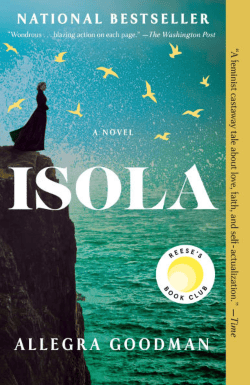
I have yet to find a novel that has made such a great impact on me as Allegra Goodman’s Isola. Not only is it beautifully written, capturing the time period in which the story takes place with remarkable precision, but we can see the transformation of its protagonist, Marguerite, in nearly every chapter.
Marguerite’s “fresh start” in Isola is not a blissful trip to Italy. She is kidnapped by her cousin and taken against her will on an expedition to remote shores near Canada. But in a cruel turn of events, her cousin abandons her on an island, along with her nurse and the man she loves. She also happens to be pregnant, which adds yet another layer of peril to the ordeal she and the others must face alone.
Tragedy after tragedy on this remote shore changes Marguerite; there is nothing she can do to stop it. She is no longer the naive girl who once lived in wealth and took pride in her title. Now she must bury the people she loves, hunt with a rifle she never learned how to use, and become accustomed to a life of solitude.
When, at last, she is rescued by a boat of fishermen, she is a different woman. She is a fearsome creature, set on vengeance, unafraid of her cousin, and stopping at nothing to achieve justice. She has had a “fresh start,” even if it is not something she pursued or something she would ever have wanted.
Our lives might not be nearly as dramatic, but sometimes we face unexpected changes of our own, and they are unpleasant. We may find ourselves in circumstances we never would have chosen, forced to become people we never expected to be.
Books teach us that we can survive this, too.
3. The Storied Life of A.J. Fikry — Gabrielle Zevin
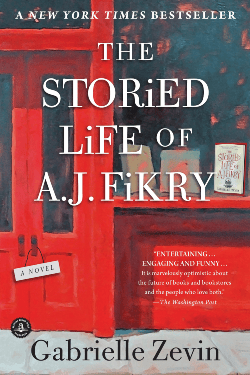
A.J. Fikry is not looking for a fresh start. In fact, by the beginning of Gabrielle Zevin’s The Storied Life of A.J. Fikry, he seems to have given up on the possibility of one altogether. His wife is dead, his bookstore is struggling, and his beloved rare copy of Poe has been stolen. He has retreated into grief and bitterness, pushing away nearly everyone who might try to reach him.
Then a two-year-old girl named Maya is left in his bookstore.
A.J. initially has no idea what to do with this unexpected child, but before long, Maya begins to change his life. He adopts her, and the bookstore that once felt like an extension of his solitude becomes a place filled with people, stories, and community. His relationship with Amelia Loman, a publisher’s representative whom he initially treats rather terribly, grows into something more. Slowly, almost without his noticing, A.J. begins to build the life he thought he had lost forever.
What I love about A.J.’s story is that his new beginning does not require him to become an entirely different person. He is still a bookseller. He still has his particular opinions about literature. He is still, in many ways, himself.
But he is no longer alone.
His fresh start comes through the people who enter his life unexpectedly and remind him that there are still things worth loving. Maya gives him someone to care for. Amelia gives him companionship. The bookstore becomes a place where he can belong rather than a place where he can hide.
Sometimes starting over does not mean leaving everything behind. Sometimes it means allowing something new into the life you already have.
A.J. Fikry learns that a life can be rewritten even after you are convinced the story has already ended.
4- The Light on Farallon Island — Jen Wheeler
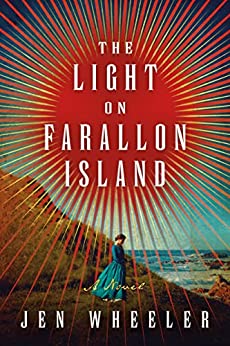
Amelia Osborne arrives on the Farallon Islands in 1859 under a name that does not belong to her. Taking on the identity of her recently deceased friend, Lucy Riley, she has come to the remote lighthouse outpost as a teacher for the keepers’ children. It is the sort of place where a person might hope to disappear completely.
Thirty miles off the coast of San Francisco, the Farallon Islands are isolated and forbidding. The sailors who know them call them the Devil’s Teeth, and Amelia soon discovers why. The cliffs are dangerous, the waters are unpredictable, and the fog can make the world beyond the island seem impossibly far away.
For Amelia, though, the physical dangers are not the greatest threat. She has come to the island hoping to leave her old life behind, but she has brought its secrets with her.
Then there is Will Sisson.
Will is a solitary man who seems to recognize the name Amelia has taken, although he does not recognize her face. Naturally, she is wary of him. But as she becomes more familiar with the small community on the island, she begins to trust him. What follows is a story about love and fear, but also about the difficult process of becoming someone new when the person you were is still haunting you.
I think The Light on Farallon Island fits this list because Amelia’s fresh start is, in many ways, a literal reinvention. She changes her name. She leaves the life she knew. She travels to a place where almost no one knows her.
But changing your circumstances does not necessarily mean escaping your past. Amelia has gone as far as she possibly can, surrounded by nothing but sea, rocks, fog, and the people who live alongside her. Yet even there, she cannot escape herself.
Sometimes a fresh start requires a new place.
Sometimes it requires becoming brave enough to stay.
5. Anne of Green Gables — L.M. Montgomery
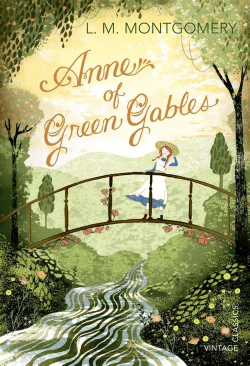
Of all the titles on this list, Anne of Green Gables might be the most hopeful. It is not only Anne Shirley who receives a fresh start when she is rescued from the orphanage. Matthew and Marilla Cuthbert receive one, too.
The Cuthberts have been living for years and years in a state of routine, unwelcoming of change and with no intentions of changing their lifestyle. They are content, but are they happy?
When Anne is accidentally brought to Green Gables rather than the boy they hoped for, it takes a little while for them to overcome the shock. After all, her personality is vastly different from theirs. But soon they realize that her monologues, drama, and garnishes make them happy. Happiness is not something they have known for a very long time.
Sometimes, like in The Enchanted April, a fresh start does not announce itself with trumpets and fanfare. Sometimes, like in Isola, it is forced growth of character. In the case of Anne of Green Gables, it takes the form of irresistible wonder. This sort of fresh start makes the world beautiful to behold, even to those watching from the sidelines.
Anne loves Avonlea and sees magic in every cranny. Soon, Matthew and Marilla begin to see it, too—and to change.
Perhaps that is one of the loveliest things about a fresh start: sometimes it does not only change the person beginning again. Sometimes it changes everyone fortunate enough to be there when it happens.
Starting Again
There is something comforting about stories of fresh starts because they remind us that our lives are rarely as settled as they seem.
Marguerite never would have chosen the island. A.J. Fikry never expected a little girl to walk into his bookstore and change everything. Amelia went to Farallon Island hoping that a new name might allow her to leave her old life behind. And Anne Shirley arrived at Green Gables without knowing that she was about to change the lives of Matthew and Marilla along with her own.
Even The Enchanted April, perhaps the gentlest of these stories, shows us that sometimes all we need is the opportunity to see our lives differently.
I think that is what I love most about a fresh start in literature. It does not always mean becoming an entirely new person. Sometimes it means discovering a part of ourselves that had been waiting for the right circumstances to emerge.
We cannot always choose when our lives will change. Sometimes change arrives as an adventure. Sometimes it comes through loss. Sometimes it appears on the doorstep in the form of a little girl who was supposed to be a boy.
But there is always the possibility that something beautiful might come of it.
Perhaps that is why we return to these stories when we need encouragement. They remind us that the ending of one chapter does not necessarily mean the end of the story.
There may still be another life waiting for us.
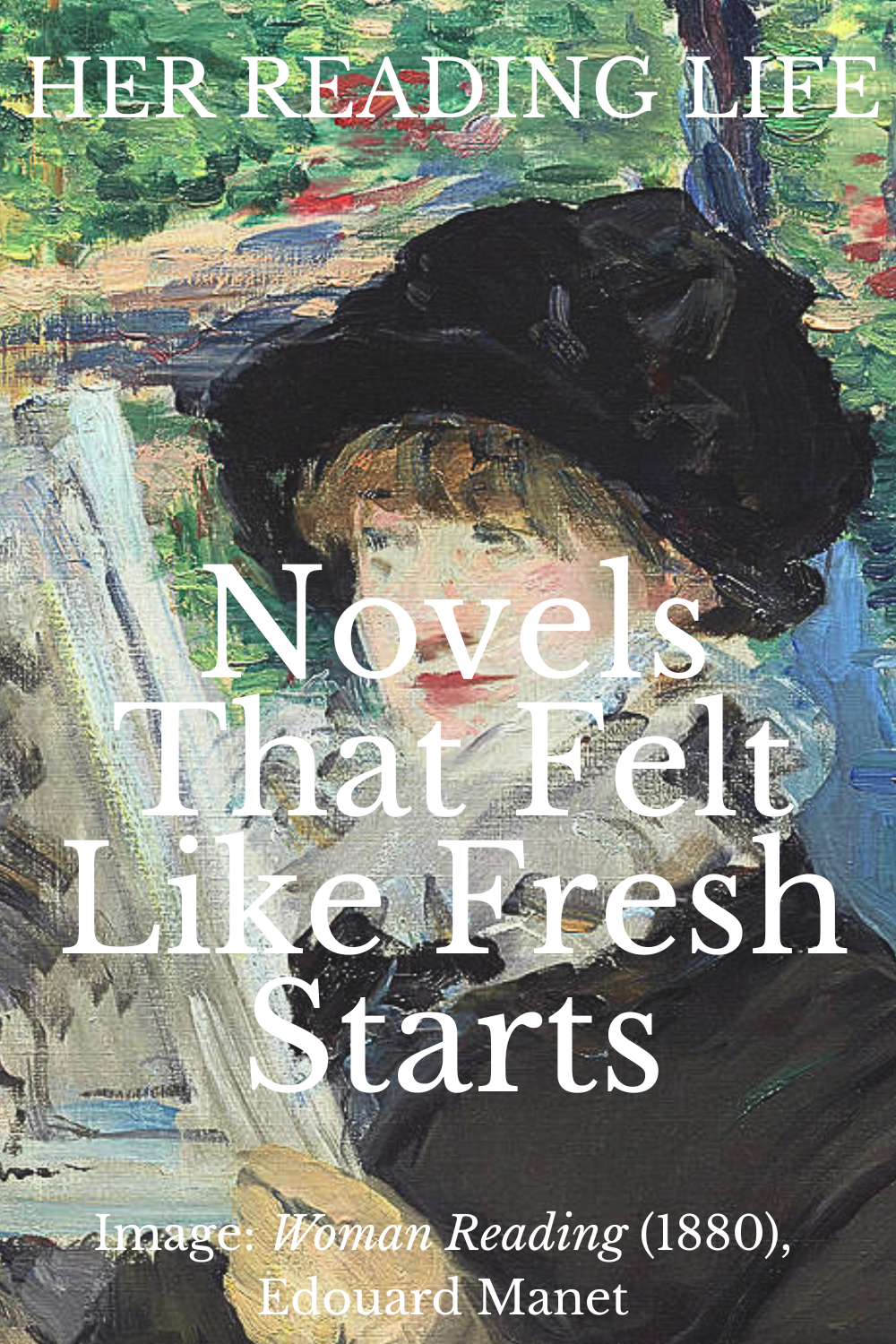
Cover Image: Woman Reading (1880), Edouard Manet
If you enjoyed this little collection of stories about beginning again, you can buy the Tearoom a coffee here. It helps me keep the kettle warm and the books coming.


Leave a comment