
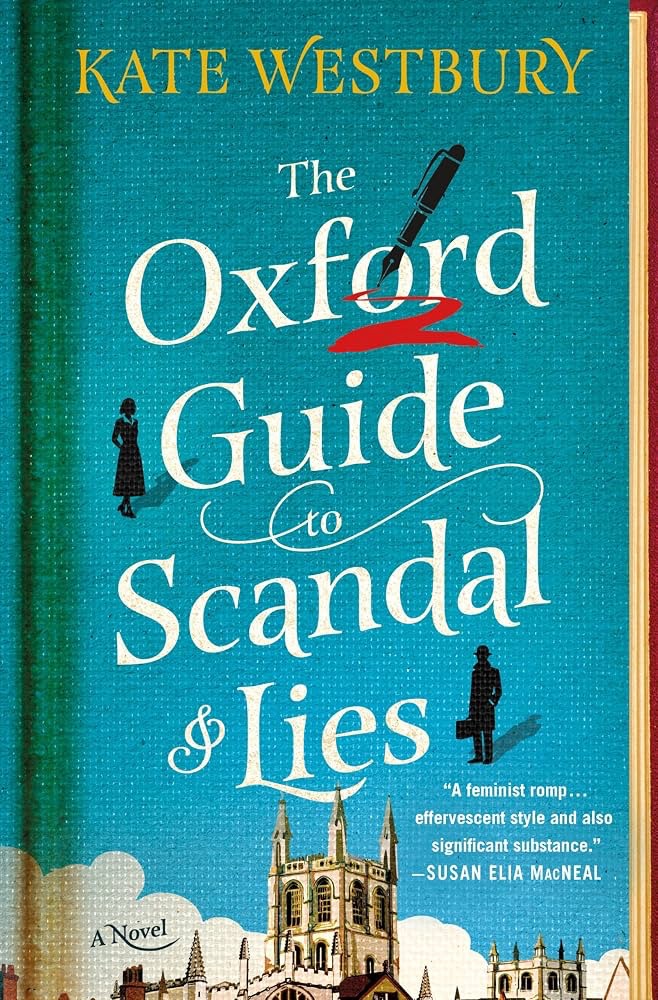
I do not often reach for mystery novels, as many can begin to feel similar after a while. Historical mysteries, however, have always felt different to me. The combination of investigation, atmosphere, and the customs of another era can make even a familiar storyline feel fresh and unique. A well-written historical mystery does not simply ask us to solve a crime; it invites us into another world.
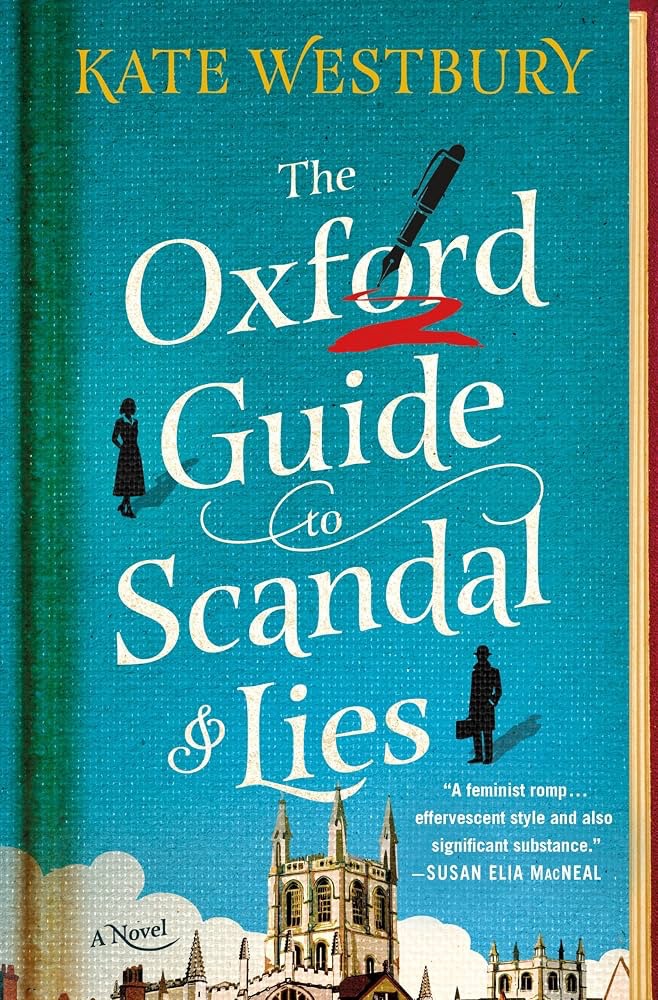
Kate Westbury’s The Oxford Guide to Scandal and Lies does exactly this, transporting readers to Oxford during the time of the Great War, where secrets, grief, and old rivalries exist beneath the beauty of one of the world’s most famous universities.
One of the strongest elements of the novel is the setting. Oxford itself becomes almost like another character in the story, filled with ancient buildings, traditions, and academic history. I especially enjoyed that one of the protagonists, Ginevra Bishop, is a female student at a time when women were still fighting for their place within academic spaces. In real life, women were allowed to study at Oxford beginning in 1879, when women’s colleges Lady Margaret Hall and Somerville Hall opened. However, full membership in the university and the ability to receive degrees did not come until October 14, 1920.
Westbury captures the excitement and uncertainty of this transitional period. Gin represents a generation of women who are intelligent, ambitious, and ready to claim opportunities that previous generations were denied.
The second protagonist, Sidney Braithwaite, carries his own wounds from the war. Haunted by the things he witnessed, Sidney struggles to open up and has no plans to fall in love. His focus is simply on moving forward with the life he has left. However, those plans are tested when he and Ginevra are chosen together to investigate the mysterious death of Mr. Tolliver, a librarian at Oxford’s famous Bodleian Library.
The scenes involving the Bodleian Library were some of my favorites. During my own visit to Oxford, I was able to see the library from the outside, though I was not able to go inside. Reading about it through Westbury’s descriptions felt almost like returning for a second visit. This is one of the great gifts of books: they allow us to travel, revisit places we have loved, and experience locations we may never otherwise see.
At first, Mr. Tolliver’s death appears connected to his work tracking down spies who were leaking information to the Kremlin. But as Gin and Sidney begin to investigate, they discover that the truth may be much closer to home. The university is filled with people who have their own motives, and old grudges, broken relationships, and past betrayals can be just as dangerous as international intrigue.
Gin is one of the strongest aspects of the novel. She is clever, curious, and determined, but Westbury also allows her to simply be a young woman. She is bookish, but she is also attractive and socially connected. A woman can be popular, pretty, and intelligent at the same time, and I appreciated seeing that represented. Too often, historical fiction creates female characters who must reject traditional ideas of femininity in order to prove their intelligence. Gin does not need to do that. Her strength comes from being fully herself.
Westbury also succeeds in making the world of the novel feel lively rather than distant. Although the story takes place in the past, the characters have energy and personality that make the setting feel immediate. Gin’s willingness to speak her mind feels especially refreshing for a woman of her time period, while Sidney’s quieter struggles create a thoughtful contrast.
The relationship between Gin and Sidney is another highlight. They work well together because their connection is built on mutual understanding and respect. Both characters have experienced loss, and both carry emotional burdens they do not easily share. Their growing affection for one another is noticeable, but the romance never overwhelms the mystery. Instead, it becomes another part of the larger story about healing and trust.
I also appreciated that Gin has friendships outside of her relationship with Sidney. Recently, many female protagonists in fiction are portrayed as isolated or disconnected from those around them. Gin, however, has a trusted group of friends who provide encouragement and support. She does not spend every moment focused on Sidney or the mystery. She has a life of her own, and that makes her character feel much more realistic.
The Oxford Guide to Scandal and Lies introduces a fresh and memorable character to the world of historical mysteries. Gin and Sidney make a compelling team, and the combination of Oxford’s history, an intriguing mystery, and emotional character development creates an engaging read.
I finished this book in a little over a day, and I am looking forward to continuing the series. Westbury leaves enough unanswered questions and possibilities to make the next installment exciting.
Ultimately, this novel offers more than a mystery. It has the nostalgia of an ancient university, the hope of young women pursuing their futures, and the reminder that family is not always defined by blood. It reminds us that we do not have to endure difficult seasons alone. There are people willing to help us, and sometimes the greatest discoveries we make are not only about the secrets around us, but about the people who choose to stand beside us.
If you enjoyed this essay, you might also like:
- The Girl and Her Books — how I became a reader at a very young age.
- Taipei Story by R.F. Kuang — a story of language, culture, grief, and being kind to oneself.
- This is Not About Us by Allegra Goodman — a story of family and conflicts that can last for generations.
- More book reviews from The Tearoom on Substack.


Leave a Reply