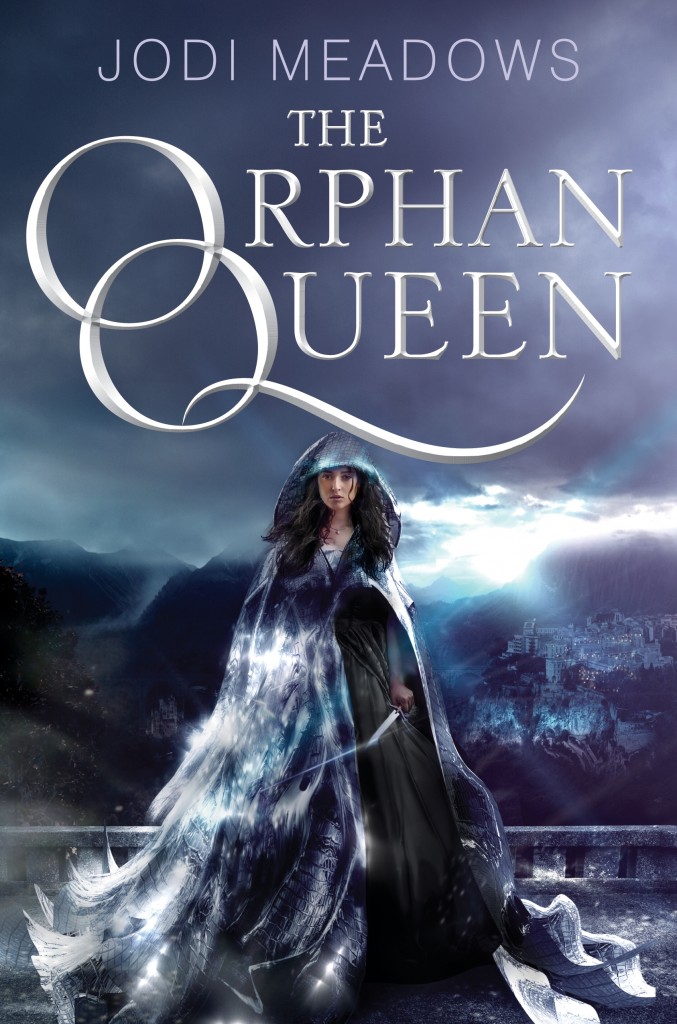
• TTB official Bookjacket
    Thicker Than Blood
    The Magicians series #3
    by Lindsey R. Sablowski

    Release Date August 2014

    Find on Goodreads!

    Pitch:

    Alaire Sencler is not the man he used to be. He left behind a foul and bloody past to be with the woman he loves, but the memories never allow him to forget what he did.

    While the White magicians rise an army, their leader hides his true reasons for going to war. Meanwhile the Dark magicians seek out a new haven, one that might keep them hidden long enough to prepare for the war that is raging on outside their doorstep.

    Though Alaire has a unique gift and the woman of his dreams by his side, he has yet to come to terms with Esmour’s death and what the future holds for him. New faces and the revealing of the fifth Dark magicians offers hope, but only the strongest will survive in the final battle.

    Whoever said “blood runs thicker than water” never knew what it is like to be a part of the current.

    I am so excited to be helping my friend Lindsey with the release of her third book. I remember when Cursed with Power was still up on inkpop–she was always passionate to have readers, and I’m proud she made it this far. She fought to get her book out there, even when things got hard, and I hope I can approach my audience with such persistence.

    I hope you will give her series a look, and hope she’ll put out many more books in the future. She is truly very inspiring. Visit her website here!

    Teaser:

    We followed the noises and passed by more trees until Léal was in our sight. He performed a spell which hit the tree in front of him. Rostland held me back and gestured he would advance first.

    Slowly stepping forward, Rostland said, “Léal, you need to stop before you hurt yourself.”

    ​He turned around and glared, but sweat covered his face and ran past his neck.

    ​Léal replied, “You knew her for one year; I knew her for five. She kept saying time and time again she was on my side, and I never once believed her until the end.”

    ​Rostland took another step forward, but Léal raised his hand. I considered moving closer to help if anything spun out of control, but I was confident in Rostland.

    ​“Do you plan to kill me again? Come now, you’re making a fool out of yourself,” Rostland said in a firm voice.

    ​Léal whispered a word and cast a spell, causing a ice shard to strike through Rostland’s chest.

    Every muscle in my body tensed, but Rostland quickly ripped the icicle out and threw it on the ground.

    The icicle broke apart into pieces, and the two men stared at each other.


  • Recently I reviewed a historical fiction book by S.J. Garland, and it completely drew me in. One element that stood out most was her use of Scottish dialect, so I asked if she’d write a post about it. Dialect is an interesting technique I hope to try some day.

    20140615-011640-4600969.jpg

    find book review of Scotch Rising here

    For an author, especially a debut author such as myself, the decision to write a form of Scots dialect into my dialogue was agonizing. I had to decide if the inclusion of all the aye’s and nays would give the text authenticity and therefore help build the narrative tension. Or if it would be cumbersome and make the reader set the book down and walk away without finishing. There are two ways an author can add a touch of dialect to their work, either by stating at the beginning of the characters speech something like: …he replied with a heavy Scottish brogue or with the addition of colloquial sayings relevant to their characters time and place. It is especially important in historical fiction to produce a balanced effort.

    Historical fiction is all about setting the mood, getting the reader hooked at the beginning of the story and building enough tension they believe the narrative. The first way to add dialect into dialogue is by stating a character has a particular brogue or accent before they speak, giving the reader a signal to imagine how the character might sound. This choice also ensures the reader will not stumble over complicated sentences with misspelled words and hyphens. However in my opinion it is the weaker of the option, as it means the author must repeat the same signal many times in the text in order to keep the dialect moving.

    The second alternative of writing the dialect into the dialogue gives readers the opportunity to experience the flavour of the character in an intimate way. Historical fiction is only one genre that can benefit from the use of direct dialogue. The key to being successful as an author using this method is to find the balance between realism and rambling gibberish. In my own work, Scotch Rising, readers found the addition of the Scots brogue into the narrative a good addition, although a couple of sentences had some people stumped. Writing is all about the learning process and I have toned the brogue down in places for the sequel Pretender at the Gate.

    As my work is historical fiction, I spent time researching the words and phrases used by Scots during the time period. I narrowed my research to a Scots poet named Robert Fergusson, and used his poem Auld Reekie as the basis for my dialect. There is a copy available on the Internet at this address, which includes translations for the Gaelic words. With Auld Reekie as my basis, I chose a number of words I could integrate into my dialogue with the result the reader would be able to decipher the meaning after reading the whole sentence. In most cases it worked out well.

    The experiment of using dialect in dialogue was rewarding, and it helped me grow as a writer. I will definitely continue to use it in my future work.


  • 20498423

    find on Goodreads

    They know that fire can burn. But they’ve forgotten how water can scald.

    Thus ends Threats of Sky and Sea, a YA Fantasy by Jennifer Ellision–who is an awesome person, I might add, and allowed me to interview her here.

    As far as greedy kings go, this novel is home to one with an unusual upper hand. He has Elementals working for him–in particular a Lady Kat, who terrorizes those around her with an affinity for air. In this world, if you’ve a gift with one of the elements, you have unusual power to make it help with your purposes.

    And Breena Perdit is about to learn she is one, herself.

    Lady Kat may be cruel and power-hungry, but Breena will hurt most from untruths in her own family–secrets that will make her question her own identity.

    It seems impossible that she would be an Adept–because she isn’t seventeen yet, making her far too young to have discovered such ability. But she’s captured by the king on that suspicion, taken with her father away from home, and nothing will be the same.

    I don’t know what’s wrong with me, because the first time I read this novel, I thought the beginning was slow. Looking back, maybe I was just reading too late at night. It really picks up about three chapters in, and you can’t put it down.

    Although the plot was intriguing, what I found most memorable were the characters. They’re wonderfully surprising: We learn that Da has been keeping a secret all along, when he seems like the last person to do it. Princess Aleta, who really isn’t as bad as we think in the beginning. My personal favorite was Tregle, the Torcher who seems to have a greater sense of conscience than Lady Katerine would like.

    I finished the book and missed the characters immediately.

    Also, I really need to say this–Riders (wind Adepts) can send a breeze to catch a conversation. That is both awesome and very creepy, and I think it would be a useful thing to have. Wind power always seemed the least impressive in other stories, but here it’s given new significance. Here I’d like to have wind power.

    Finally, the ending nearly made me cry. Not a lot of endings do that since The Book Thief (I’m not sure any book will ever beat that one.) The book was great at playing with emotions, making the characters people you will miss.

    I really want the sequel.

    You should read Threats of Sky and Sea, and check out the author interview.

    4/5 stars.


  • 20498423

    I’m always interested to learn how other authors see things. It’s a complex art, and though no two stories are the same, sometimes the craft itself has similar characteristics in everyone. I’m so glad Jennifer Ellision let me ask her some questions. You should check out her book here!

    Q: Your characters in Threats of Sky and Sea are all distinct from one another. How do you achieve such characterization–and which one of them speaks to you loudest?

    A: Hmmm, well the first part is hard to answer. I didn’t consciously decide to create characters that ranged in personality, it just sort of worked out that way. I really just wanted them to be people, you know? Meaning they’d have their flaws, strengths, innate personality quirks… I’m a pantser so I discovered those things as I wrote.

    As for which of them speaks to me the loudest, that would be my main character Breena, whose POV Threats of Sky and Sea told from. Although I have a total soft spot for Prince Caden and Princess Aleta.

    And, oddly, the antagonist Lady Kat’s voice got pretty loud for me too. So loud that I had to write her her own short story, Sisters of Wind and Flame.

    Q: In the book, many characters control elements. Which element would you choose, and why?

    A: Oh, if I could choose, I’d be a Water Thrower, hands down. I love the beach, I love the pool, and if I had no other commitments (and if I wouldn’t get sun-burnt in about 20 minutes flat), I would happily spend all day floating in the water!

    Q: What do you think classical literature will be 100 years from now? What books from our generation do you think will make it?

    A: Ahhh, classic lit. Well, I think the books that already have the labels of classics such as works by Austen, the Brontes, Shakespeare, and Dickens will likely keep their spot in the curriculum.

    As for books that I want to make it to future generations, there are SO many books that I hope do. With the massive love and commitment so many people (myself included) I think I’m safe in saying that I think Harry Potter and The Hunger Games will make it to future years.

    Elsewise, in the fantasy genre, I hope that The Girl of Fire and Thorn trilogy by Rae Carson and the Graceling Realm books by Kristin Cashore make it.

    Others that I hope make it include: Code Name Verity and Rose Under Fire by Elizabeth Wein, Chime by Franny Billingsley, Amy & Roger’s Epic Detour and Second Chance Summer by Morgan Matson, Speak by Laurie Halse Anderson, Love Letters to the Dead by Ava Dellaira, Thirteen Reasons Why by Jay Asher, The Book Thief by Markus Zusak, and The Fault in Our Stars by John Green.


  • Even though the book isn’t out till December, I keep panicking and thinking I should have had it all ready by July. But I finally have one thing on the checklist secured: A book cover artist.

    My long-time friend and pen pal Syd from Videmus Art is going to read my book and see what she comes up with. I’ve known her forever–literally–I can’t remember a time I was writing before Syd was my friend.

    Someday we’ll meet and I’ll cry.

    Go follow her blog. I’ll be posting about her a lot. She took the picture of books that I’ve been using everywhere forever. And this butterfly. She seems like just the kind of person who’d work with Muses.

    I think she did write about one once.

    It’s perfect. More updates to come!

    10257472_487007281434235_6036088066434295895_n

    i just want to challenge people to see beauty in everything.

    i currently live in Hong Kong and attend SCAD. most of the time i’m doing something else creative or woolgathering out the window.


  • 20140615-011640-4600969.jpg

    Edinburgh 1707. The English supporters in the Scottish parliament have narrowly signed the Act of Union. The controversial paper bringing England and Scotland together into one Great Britain will not be uncontested. From the Acts inception it appears doomed to carry the blood of Scots and Englishman alike. Esmond Clyde-Dalton returns to London a broken man after his wife’s death. He only seeks a dishonorable discharge. His superior Colonel Manner’s, known for his extensive spy network, has other plans. Sent to the highlands of Scotland to become an excise collector on Scotch. Esmond quickly becomes embroiled in solving the murders of two Scots men. As his investigation continues, Esmond soon realises life in Markinch is not all it seems. Esmond’s peaceful retirement turns to a fight to save not only his life, but also the lives of friends he has made in the highlands.

    Find on Goodreads

    I didn’t know what to expect, because it isn’t a genre I try often; the historical part caught my interest. It was engaging and believable, so I found it a welcome breath of fresh air from my reading comfort zones.

    In Scotland, the Captain finds himself sucked into a mystery. The tax collector before him died, and looking at the things he left behind, the story everyone tells explaining it seems dishonest. Suspicious Captain Dalton takes the mystery on himself, but it won’t be easy.

    While the setting and hook were masterfully done, on retrospect I find it disorienting that he gets into so much trouble. The things Dalton did seemed rash at times. He seemed to act on impulse a lot and got hurt…very frequently.

    It’s the one thing about his character that bugged me: He seemed to make a lot of decisions on a whim, even after recovering from injuries. But it doesn’t really take away from the story; those were moments I would have screamed at the television, were it a movie.

    My favorite character was Kieran, who in his youth is brave and sometimes more prudent than the captain. I think he will develop to be one of my all-time favorite characters, the “small” hero who proves himself to be more for his age.

    Something else I loved was the use of dialect. It made the characters very realistic, and as a whole added vibrant color to the pages.

    I would read this book again, and absolutely do recommend it. Mine was a digital copy which was the only reason I didn’t finish it in a day (reading on iPad screens is a bit irritating.) Get a print copy–I want one myself, and I really want to read the next book!


  • 7558747

    Goodreads | Barnes and Noble

    Heroes never really die.

    We all make an impact on the world. Even if we don’t make major history books, it doesn’t change this truth: No life is an accident.

    You will meet obscure heroes in strange ways, and Revolution is one such tale. Andi Alpers meets an obscure hero by finding her diary, and is swept into her life–into the French Revolution.


    Andi’s father forces her to accompany him to Paris, hoping to bond a little. Instead of making new father-daughter memories, she spends the trip researching for a paper. If she writes a good report, she can go home early to care for her mother. Her little brother’s death has affected them all; Andi’s mother has been taken by crippling depression, with Andi barely hanging on.


    Find it on Goodreads.


    My thoughts don’t dwell so much on plot, but the realistic actions of these characters.

    It was refreshing that having a love interest did not shake the main character’s resolve. It didn’t make her want to stay and tour the City of Light. It doesn’t boost her self-esteem either: There’s no magical moment where they make eye contact and she realizes how valuable she is. Her depression seeps through to the very bone, and every other feeling is only on the surface.


    That being said, all the shifts to diary format made for a sometimes grueling read. It might have done good to space them out a bit; I kept getting confused about who the main character was. That may have been done on purpose, but it still threw me off.

    The book is a bit heavy, detailed, something you approach attentively. Don’t get me wrong: It’s an impressive read if you drink it in. Revolution is deep, and I couldn’t recommend it more. I’ve read it twice, and enjoyed it both times!


    Because it was a bit of a long read, I’ll give it 3 stars. Looking forward to reading more by this author!

  • Review: The Iron King by Julie Kagawa

    This series is fascinating. The characters and concepts surprise me every time I visit.

    With a writing style that draws me in, I’m off on an adventure to a place with beautiful things–magical creatures, dragons, beautiful courts, and people who hold to promises no matter what.

    Don’t make a promise in the land of faery unless you really know what you’re doing. These creatures may be unpredictable and wild, but promises are kept.

    This honesty gave them an odd, pleasant quality–I can’t describe it–like, expect them to eat you. Expect them to turn you in to their king or queen with a broad smile. But also, expect them to do what they say they will.

    The creatures, characters, places here are wild–but this honest quality gives them something I can respect, compared to other books where they just do what they want.

    Meghan Chase is looking for her little brother, Ethan, who’s been replaced with a changeling. Finding him isn’t going to be easy, and on her way to Ethan, she finds herself in new messes and battling new obstacles. Her best friend is a faery, and there’s a talking cat named Grimalkin who doesn’t tire of reminding her that she’s human and he is a cat.

    Grim is an interesting character. I liked him most! The talking cat who’s shamelessly more intelligent is a nice change, an original character that someone needed to come up with.

    This was my second read of The Iron King. I will never tire of this world and the people we encounter.

    It’s definitely one of my favorite Young Adult series, funny and creative and engrossing. Give it a try–meet characters who will stick with you for a very long time.

    I can’t wait to get to Book 2–my heart’s still in the Nevernever.

    Find The Iron King on Goodreads!


  • by Alexa Skrywer

    Yup, you read that title correctly. TV shows – and I’m talking the real ones, the epic ones, not the Disney ones – can help immensely with plotting out your novel.

    Yeah, go ahead and laugh. I promise I won’t be offended. Finished now? Great.

    I’m going to use Supernatural as an example, because that’s a show I’ve just started watching (Yes, I know I’m way behind) and I really like the character arcs.

    supernatural
    If you haven’t seen it, Supernatural is the story of two brothers raised by their father to fight all manner of supernatural creatures. The series also holds a bit of a detective edge since they have to figure out what sort of monster is haunting the area before they can kill it, and because, amidst all this, Dean (older brother) and Sam (younger brother), are also searching for their aforementioned missing father.

    Yeah. These poor boys have a lot on their plate.

    As a huge fantasy nut, I love the action in this series. There’s a new monster almost every show – from shapeshifters to the Grim Reaper – and Sam and Dean are totally boss when fighting them.

    But what I love even more than the action, is the emotion of the story, the beautiful character arcs and the bond between the brothers. How they’re constantly killing evil spirits for normal citizens, all while battling the demons of their own pasts. I love how Sam takes care of Dean and Dean takes care of Sam and how, even though they have their share of arguments, they’re always there for each other.

    Ahem. I’ll stop fangirling now.

    On to how this can help with writing: The overall story is that of two monster-hunting brothers searching for their father. But, as I said above, there are supernaturals, too, new ones nearly every show. These create a host of mini-plotlines, keeping the action moving as our boys travel cross country, looking for their dad and learning to relate to each other.

    And those mini-plotlines are exactly what we need in our novels. You have the overall plot “Character wants this and decides to do this to get it,” and then the little obstacles and helps along the way – the little tidbits you slip into the story, arresting the reader’s attention, while building up to the final climax (which I haven’t seen in Supernatural yet, so don’t spoil it for me if you know).

    The obstacles/helps can come in the form of people (in one episode, Sam and Dean find an old friend of their father’s, and she helps them with a case) or difficult situations (…every single episode, but anyway). Sometimes, the smaller plotlines end during the story; they’re wrapped up in a pretty little bow and then we move on. Other times, they open fresh nuances in the overall plot, for instance the end of the very first episode and a certain discovery about Sam in the fifth. Both of them revealed more about the relationships of the characters, kept the story moving, and built carefully on the leaning tower that is every story, leaving me riveted, breathless, and desperate for more.

    Which, of course, is the very feeling I want to inflict on some poor reader someday.

    People always say the best way to master something is to study it, learn from the greats (practice, too, but we’re not talking about that today). So the next time someone accuses you of watching too much TV, laugh, roll your eyes like they simply do not understand, and inform them in the kindest way possible that you’re conducting writing research.

    I’m an aspiring author and beginning blogger. Find me weekly here.


  • This book was 800 pages long.

    It had been years since I even tried to read something so big. Even better, it covered different periods of time in Paris, following the same families and places. It is fantastic and completely swallowed me up.

    My mind is blown–how does one become patient enough to write something like this? How long does the project take, from research to revising? A writer lives in the world they create, so Edward Rutherfurd has definitely spent a long time immersed in Paris.

    The most exciting part of the book, in my opinion, was the beginning–where he covers Paris at the time the Eiffel Tower was being constructed.

    Gustave Eiffel is a character in this novel, and so bold! He is not loved by everybody, but they all know his name. Everyone knows he’s going to build a tower many consider ugly. Very few believe in it, and there were repeated attempts to bring it down after it was completed. Now it's iconic–irony, right?

    There is some adult content you could skim over, and language to make it gritty.

    As a whole the book is powerful and I miss it already. If you want a read that'll cover your entire summer, I highly suggest this book. I've really got to find his other work…

    Find it on Goodreads!


  • Spoiler Alert!

    PaperTowns2009_6APurchase Here

    When Margo Roth Spiegelman beckons Quentin Jacobsen in the middle of the night—dressed like a ninja and plotting an ingenious campaign of revenge—he follows her. Margo’s always planned extravagantly, and, until now, she’s always planned solo. After a lifetime of loving Margo from afar, things are finally looking up for Q . . . until day breaks and she has vanished. Always an enigma, Margo has now become a mystery. But there are clues. And they’re for Q.

    I started Paper Towns on the plane to Vegas and finished it on the way back.

    The book has such an undertone of melancholy to it. Even in humorous scenes, like when Ben is doing something crazy, we can feel that the author has an ache in his heart. Something’s missing in the character’s life and we, the readers, feel it as well: The void Margo left. We don’t care about the other kids having a good prom; we don’t care about anything except solving this mystery because we feel Q’s emptiness if he doesn’t. The main character is so real that we feel his pain.

    When Q starts finding clues Margo left behind—or at least, we presume it was her—we go with him on a thrilling, heartbreaking journey. I watched Q crack the codes she left, discovering new leads. He’s in love with this girl and wants to find her, even if he doesn’t find her alive.

    It’s not a happy kind of love: It’s a quiet, powerful, broken love. Margo fascinates him because she goes out of the box to live her life in ways he’d be scared to do himself. The first nine chapters made me smile because she has a whole plan to wreak havoc on town, and though he sometimes tries halfheartedly to talk her into sense, Q enjoys every bit of her craziness. He thinks it’s beautiful, and this is what causes him to fall in love—becoming one of the only kids in school obsessively searching when she vanishes.

    I loved the book, but towards the end I did not like Margo. Compared to the first chapters detailing the adventure they had, Margo later on seems tired and out of character. Like Q’s other friends, I question if it was worth all the trouble they went through to find her. Perhaps for Q it was, since love is love, but she took the whole thing so calmly–as if she didn’t expect anyone to follow her, an unfair reaction. The ending in general didn’t satisfy me, but as a whole I would read this book again.

    Note: If crude language bothers you, there’s quite a bit of it here, but all in character.

    It was my first John Green novel, and I see why people enjoy his writing. It isn’t super complex, yet has a depth characteristic to him only. Soon I’ll get around to reading The Fault in our Stars. I’ve avoided that book for long enough!


  • 2013-12-07 01.34.27

    This book made me excited to be a writer. I could only dream of someday having such a gorgeous voice in my work.

    Every now and then, we stumble upon the accidental read. There’s always that one book you guiltily buy because of the title–and for once, it doesn’t let you down. As this is  an adult historical book, there is some mature content. That being said, it’s a superb look into the life of Ernest Hemingway from a different perspective.

    Does a writer ever really love one person more than their art?

    This is the question we ask ourselves over and over throughout the book. It’s mostly written from the viewpoint of Ernest Hemingway’s wife, Hadley–though a couple of times, there are switches to his perspective, which I admit did catch me off-guard. They were all written in italics, which I suppose disoriented me.

    This book is set in 1920, after the war; our world bears a scar that will never go away. Some people still try finding refuge in love, hoping to start their lives over. Ernest Hemingway’s scars run deep. Writing is clearly his one true love from the beginning. Still, he tries to be one of these brave souls. He settles with the main character, Hadley, and together they move to Paris. That’s where all the writers of the day wanted to be, according to Sherwood Anderson:

    But if you want to do any serious work, Paris is the place to be. That’s where all the real writers are now.”
    —Page 71

    Ernest Hemingway in’t satisfied as a journalist. He feels they mock him, giving him jobs that seem ridiculous to write about. He wants to publish a novel that will make a dent in the literary world. While working to barely get by in Paris, he waits wait for the novel. He waits for the masterpiece that’ll launch him with the other greats–the “Lost Generation,” including F. Scott Fitzgerald and Ezra Pound.

    In Paris, you’ve got to be bulletproof. This is impossible when love comes into the picture. We soon realize Hadley’s love is deeper than that of her husband. While he makes friends and his career grows, his wife is fading. She’s become distant to him, insignificant.

    Paris has no mercy: She’s taken everything, and will continue till there’s little hope left. This novel is heartbreaking and beautiful, terrible and marvelous.

    I want to share one of the most powerful excerpts to me, as a writer. All Hemingway’s work has just been lost, and this passage–I think–holds the overall feel of the story. It’s lost and hopeless, always about starting over without a clue how to begin.

    “He puts his hand on the knob and pulls the door open and then he knows everything. There isn’t a page left in the cupboard. Not a note or a scrap. He looks and looks, standing there, wrenched out and hollow. As desolate as the cupboard is, that’s how he is too because the pages belong to him and are him. It’s like someone has taken a broom to his insides and swept them out until everything’s clean and bright and hard and empty.”
    —Page 135

    At times the writing sounds like a great poem, sweeping you away so that you’re hurting with the characters. When the book was done, I tossed it on the ground and stared at the wall miserably. Make sure you have thick skin: It’s not a light read.

    This quote on the first page sums it all up:

    It is not what France gave you but what it did not take from you that was important.
    —Gertrude Stein