
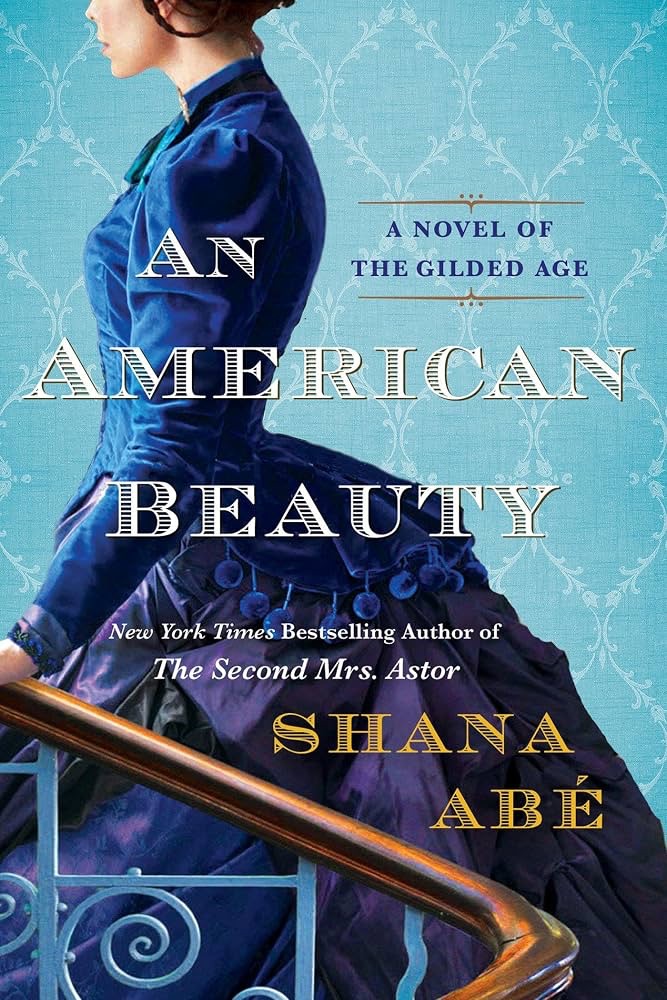
Historical fiction set during America’s Gilded Age is one of my favorite genres. It combines dazzling wealth with rigid social expectations, creating stories in which appearances are often as important as reality. As someone who once watched Downton Abbey almost obsessively, I never seem to tire of grand mansions, elaborate balls, and the complicated lives hidden behind polished façades.
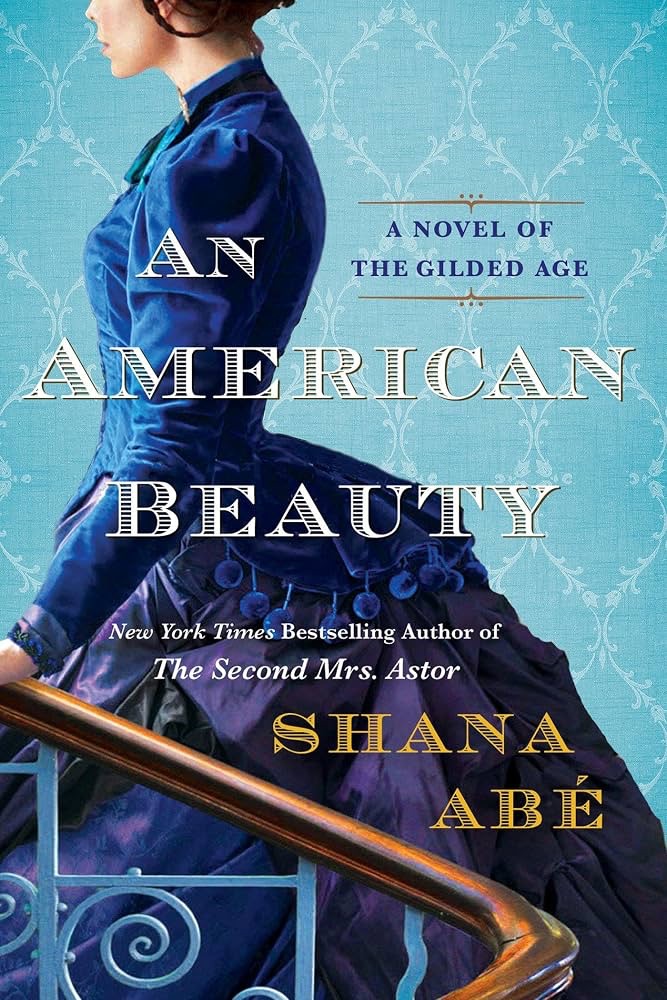
Earlier this month I returned to the Gilded Age with The American Heiress by Daisy Goodwin. Shana Abé’s An American Beauty proved to be the perfect companion novel. Richly researched and emotionally engaging, it transforms the life of one of the era’s most controversial women into a thoughtful story about ambition, survival, and the price of belonging.
A Novel Inspired by the Life of Arabella Huntington
An American Beauty is inspired by the life of Arabella Huntington, who was born into poverty in the American South following the Civil War. Disease and hardship shape her early years, and after the death of her father, Arabella dreams of a life far removed from the uncertainty surrounding her family.
That opportunity appears when she meets railroad magnate Collis Huntington. Wealthy, powerful, and captivated by Arabella, Collis changes the course of her life forever. There is one obstacle, however: he already has a wife.
Unable to let Arabella go, Collis brings her and her family to New York, surrounding them with unimaginable luxury. Yet all the wealth in the world cannot buy respectability. Their relationship becomes an open secret, and New York society largely sides with Elizabeth Huntington, Collis’s wife.
One of the novel’s most compelling moments comes when Elizabeth, dying of cancer years later, asks to see Arabella. The meeting between the two women is surprisingly moving. Rather than reducing them to rivals, Shana Abé allows each woman to be fully human, shaped by love, resentment, disappointment, and loss.
More Than a Love Triangle
Although the novel centers on Collis Huntington’s complicated relationships, it is ultimately less interested in romance than in the women whose lives are defined by his choices.
Elizabeth represents respectability and social acceptance. Arabella represents survival and reinvention. Neither woman truly wins.
Another fascinating relationship develops between Arabella and Clara Huntington, Collis’s adopted daughter. Clara understands what it means to feel like an outsider despite extraordinary privilege. Their unlikely bond becomes one of the emotional highlights of the novel, demonstrating that belonging is not always determined by wealth or family connections.
As Arabella grows older, she gradually realizes that years spent hiding, performing, and seeking acceptance have come at a tremendous personal cost. By the end of her life, she no longer feels compelled to earn society’s approval. She simply chooses to live as herself.
The Double Standards of the Gilded Age
One of the novel’s greatest strengths is its willingness to examine the unequal standards imposed upon women.
Arabella receives endless criticism for becoming involved with a married man. While her choices are certainly controversial, the novel never allows readers to forget that Collis Huntington was equally responsible for the affair. Yet public condemnation falls almost entirely upon Arabella.
That imbalance feels remarkably familiar.
Even during the Gilded Age, women often carried the social consequences of choices made by both partners. A wealthy husband might recover from scandal with relatively little damage to his reputation, while a woman could remain permanently defined by it.
Elizabeth suffers in a different way. She is, by every social measure, an ideal wife, but her inability to bear children becomes a deep source of pain and insecurity. When Arabella gives Collis a son, the emotional wounds between the two women deepen even further.
Rather than presenting simple heroes and villains, Shana Abé explores how impossible circumstances can shape otherwise ordinary people.
Survival Rather Than Scandal
The wealth and glamour surrounding Arabella’s life give the novel an almost fairy-tale atmosphere. Mansions, jewels, lavish parties, and enormous fortunes create the illusion of a Cinderella story.
Yet beneath that glitter lies something much more complicated.
Arabella’s story is fundamentally one of survival.
Throughout history, many women had very few opportunities to improve their circumstances. Marriage often represented economic security as much as romantic love. Every available path carried risks. Marrying beneath one’s station could lead to poverty and social exclusion, while marrying above it often brought suspicion, resentment, and lifelong scrutiny.
There was rarely a perfect choice.
That historical reality gives An American Beauty much of its emotional power.
Final Thoughts
Today, women enjoy opportunities that would have been unimaginable during the Gilded Age. Many pursue careers, remain single, marry later in life, or choose entirely different paths than previous generations.
Yet judgment has not disappeared.
Women continue to face expectations about marriage, work, motherhood, appearance, and countless other aspects of their lives. What has changed are the choices available—not necessarily the opinions surrounding them.
That is what makes An American Beauty feel surprisingly modern despite its historical setting.
History has not always remembered Arabella Huntington kindly. Shana Abé invites readers to look beyond the scandal and consider the circumstances that shaped her decisions. Whether readers ultimately sympathize with Arabella or not, they are unlikely to forget her.
Beautifully written, emotionally intelligent, and grounded in fascinating history, An American Beauty is one of the finest Gilded Age novels I have read this year. I highly recommend it to readers who enjoy historical fiction, stories of remarkable women, and novels that explore the complicated relationship between morality and survival.
If you enjoyed this essay, you might also like:
- The Girl and Her Books — how I became a reader at a very young age.
- Taipei Story by R.F. Kuang — a story of language, culture, grief, and being kind to oneself.
- This is Not About Us by Allegra Goodman — a story of family and conflicts that can last for generations.
- More book reviews from The Tearoom on Substack.


Leave a Reply